
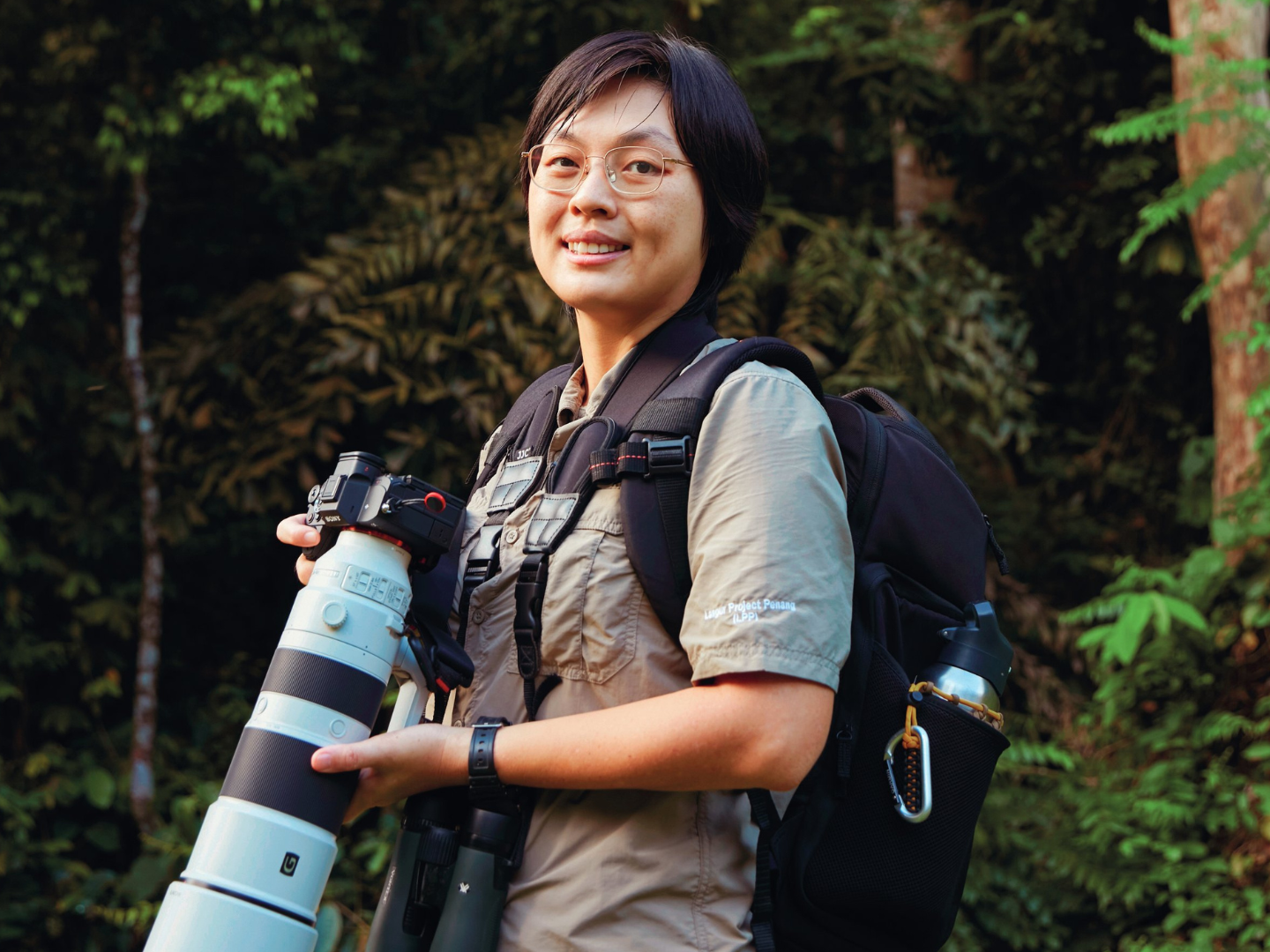
Langur Project Penang started as a postgraduate research by Yap Jo Leen (Photo: SooPhye/The Edge)
Asked what she wanted to be when she grew up, Yap Jo Leen, founder of Langur Project Penang (LPP), had plenty of answers to give, including comic artist, forensic scientist and public speaker. So, how did the wildlife researcher and environmental educator become interested in conservation work?
“I had lots of dreams and visions in life, but I had been exposed to the outdoors since I was a child, thanks to my parents. They liked hiking, camping and fishing. Watching them do the things they loved left quite an impact on me. They have aged but they still enjoy going out to immerse themselves in nature.”
She recalls visiting Cherok Tok Kun (Bukit Mertajam Recreational Forest in Penang) with her mother, an avid hiker back in the day. “The place is less than 5km from my house, so we would go there often. During hikes or jogs, I would learn about nature from friendly uncles and aunties who would tell me things about the plants found in the vicinity or the kinds of birds that could be spotted only in the area. In many ways, these small interactions sowed the seeds of love for the environment in me.”
Yap went on to pursue a degree in biological sciences at the University of Canterbury in New Zealand. In the South Island’s largest city Christchurch, known for its stunning public parks and gardens, she was captivated by the sight of humans and animals coexisting.
“Things were very different in New Zealand compared to Malaysia. In Christchurch, you could see people using green spaces to their full potential. They spent time with each other in the presence of nature and adopted a sustainable lifestyle by supporting local farmers. These scenes made me wonder: Can we actually live alongside nature for extended periods?”
Back in Malaysia, Yap secured a position as educational officer at Cave Management Group, working at a conservation site in Batu Caves, Selangor. In the course of her fieldwork while running public programmes, she would occasionally spot a troop of dusky langurs, which she describes as the “gardeners of the forest”, acting as seed dispersers that promote plant reproduction.
1.png
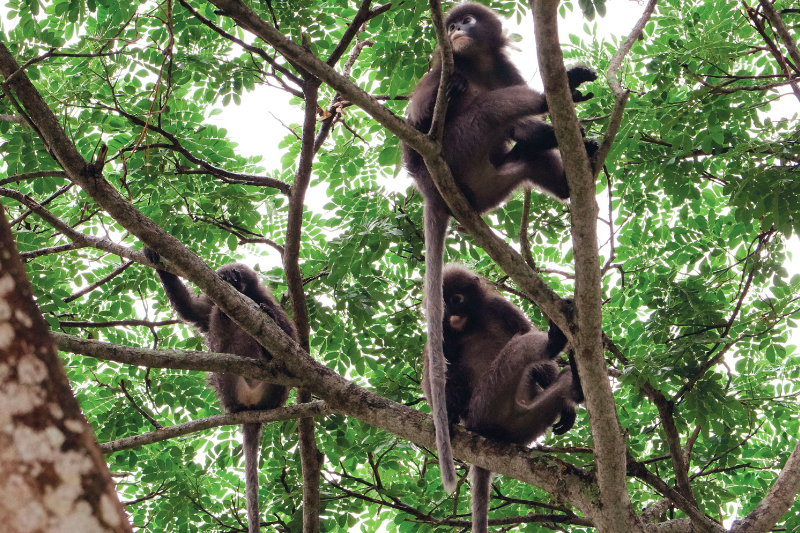
When she returned to her hometown, she honed her skills in event management, sales and marketing at Tropical Spice Garden in Teluk Bahang. At this lush haven filled with a variety of herbs, spices and tropical plants, curious dusky langurs — who feed on leaves, fruits and flowers — would sometimes visit the eight-acre, one-of-a-kind jungle. “That was how everything began. I’d caught sight of the animals in Selangor and Penang; I was wondering where else I could possibly see them.”
Yap decided to study the creature and its habitat by enrolling at Universiti Sains Malaysia for a master’s degree. She consulted her supervisor, Dr Nadine Ruppert, who told her that primates in Malaysia and Asia are generally understudied, and that more than 65% of the species worldwide are threatened or endangered. “I used my free time to research conservation efforts in our country and realised there was indeed a gap in knowledge about dusky langurs. So, I proposed to conduct a study on their behavioural ecology,” she says.
Essentially, LPP was founded in 2016 as a postgraduate research, which involved extensive investigation into dusky langurs’ home range, daily routines, dietary habits, habitat qualities, interactions with humans and the different anthropogenic environments they lived in. For some time, Yap was alone in the journey. “I would go to the Teluk Bahang forest, following the monkeys all by myself.”
As she began incorporating the concept of citizen science (the voluntary participation of the general public in scientific research) into her work, she invited some friends to join her in observing the animal and collecting data. Upon completing her doctoral degree in 2022, Yap set up LPP as a primate conservation enterprise, allowing her to attract even more people from diverse backgrounds to take part. “Previously, our team was largely made up of students and young people. But so far, we have managed to recruit around 150 individuals — including professionals and retirees.
2.png
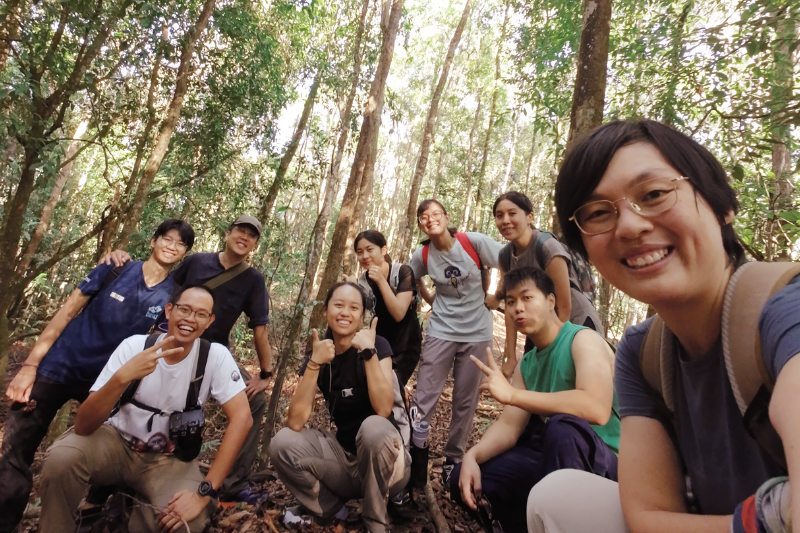
“Citizen science is the foundation of LPP and we hope to introduce this concept to more Malaysians so that everyone can do their part in being the stewards of monkeys, tapirs, orangutans or any other natural treasures and heritage in our country.”
There are different categories of citizen scientists at LPP. Fewer than 20 are long-term contributors. Meanwhile, others who apply to volunteer undergo three months of training, during which they shadow members to gain a full understanding of what happens behind the scenes.
“We teach them how to conduct research, handle tools like binoculars to identify monkeys and make connections with the local communities. If their interests evolve during that period and they want to do social media, marketing or communication, or even coordinate programmes for schools, they are welcome to do that as well. A citizen scientist is not just a researcher; you are also an educator, campaigner and advocate,” says Yap.
Establishing LPP as a business after completing her education was necessary as she was committed to pursuing it as a career. She also still had several issues she wanted to address. “I wanted to take the conservation aspect of LPP to another level. That’s why, from 2023, we shifted our focus to include urban biodiversity and landscape, instead of working solely in the forest. We wanted to examine the social interactions between humans and dusky langurs and long-tailed macaques.”
As such, community engagement is key to spreading awareness of the cause and leveraging indigenous knowledge for better understanding and management. “We continuously form friendships with people who live in areas where monkeys are often spotted. It is important to go out, communicate with them and try to alter their perspective and the way they interact with dusky langurs or macaques,” she explains.
Education is a continuous process. It is not enough to distribute pamphlets and expect transformation to happen overnight, Yap notes. “We host awareness talks that target different audiences, including residents and students. I am proud to say that my team is actively engaging with local schools. If we cannot change adults, we have to encourage change in children. That is really one of our top priorities.”
3.png
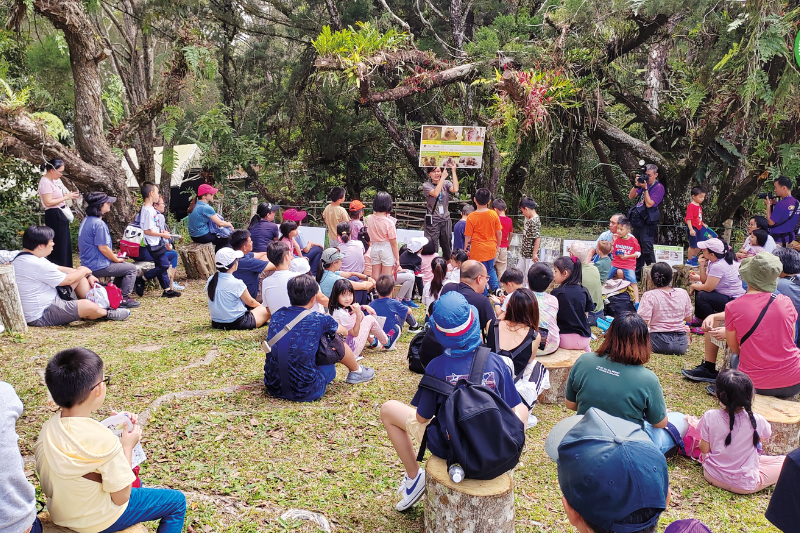
LPP will be hosting events from May 1 to 3 in conjunction with International Macaque Week, held annually in the first week of May. Set to take place in Bukit Mertajam, they are free for Penangites and feature a range of on-site activities, including storytelling sessions and rainforest experience.
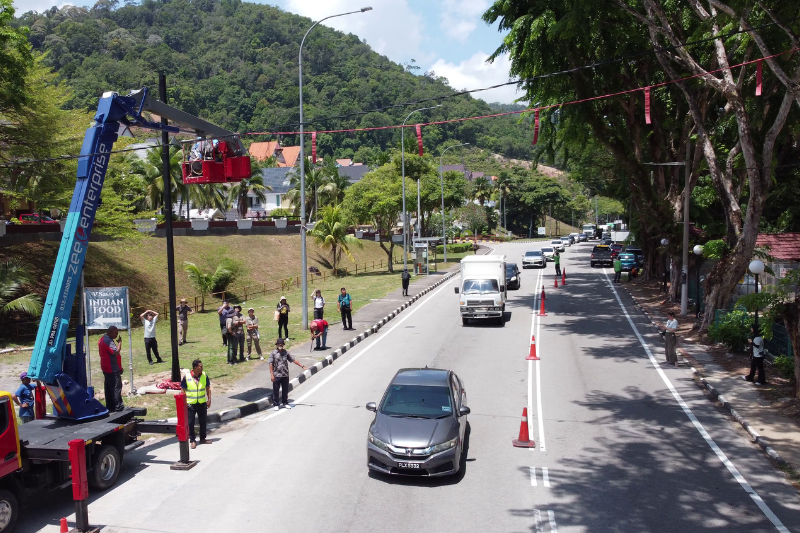
Besides science-based research, community engagement and environmental education, LPP is also involved in the road canopy bridge project in Penang to address roadkill issues across the state. In 2019, Yap successfully built the country’s first artificial road canopy bridge as part of her PhD programme. Erected at a wildlife crossing hotspot in Teluk Bahang, Ah Lai’s Crossing was designed to ease the movement of arboreal animals between habitat fragments previously disconnected by road infrastructure. Today, the path has benefited more than 5,000 wildlife.
This specialised structure marked a milestone for the country’s wildlife conservation sector and paved the way for experts to explore ways to enhance the coexistence of humans and fauna. It also drew interest from parties willing to provide financial assistance for LPP’s subsequent work. This support helped the team launch the Bridge to Coexist in 2023, when another ecoduct was set up in Tanjung Bungah. Earlier this month, the initiative expanded to Batu Ferringhi, where a crossing was installed to act as a natural corridor for nearby forest animals to move safely.
All overpasses were constructed using old, unused fire hoses supplied by Ape Malaysia, a company that develops education and volunteer programmes to improve wildlife welfare. With grants and financial support from organisations including Yayasan Gamuda, the ERM Foundation, Biji Alam Awards and Hard Rock Cafe Penang, LPP was able to roll out an improved version of the bridge for its latest initiative, The Obscura.
Yap says: “We started planning for this project in 2024. It took us two years to bring this to life because we wanted to be more mindful about the final outcome. We finally had the budget to put the material through a weathering test, which cost up to RM15,000. It exposes a sample of the fire hose to UV rays and rainfall under a certain humidity level for more than 1,000 hours. We are still waiting for the results, which will tell us the lifespan of the component.
“The Obscura is a good baseline for the previous and future projects because it gives us the opportunity to observe the condition of the material and make improvements where necessary.”
While the ultimate goal is to preserve the whole population of dusky langurs in Peninsular Malaysia, Yap says her priorities in the next five years would be to revise and elevate the quality of LLP’s current undertakings. “I want to focus on the existing key studies, expand and let them grow so we can truly measure the effectiveness and success rate of our ongoing projects.”
4.png
To achieve this, LPP needs to be financially stable so it can focus on consistent groundwork and implementation to create greater impact in society. Being fully reliant on conditional grants limits its ability to carry out its core missions, Yap says. “Applying for grants requires a lot of time because you need to write proposals, go through interviews and many other processes. We still have to do this in the long run, but we do want to balance the revenue between grants and other sources.”
To ensure sustainability, LPP has begun providing services to corporate clients interested in environmental education as part of their ESG activities. “Since we started exploring alternative income streams, we have felt more confident in our strategy to sustain the organisation. This revenue also helps complement our work in schools and with the local community.”
Yap wants to set a good example for the younger generation of conservationists who may want to venture into the field and establish their own organisation. “I can see that conservation is changing. It is no longer about working for free until your passion dies. We are not doing this because we are rich or we have so much time on our hands, but because we believe in the mission and want to improve life for both ourselves and the animals.”
That said, she has a message for those who wish to build a career in wildlife conservation: “Just do it. You have to start somewhere. I have spoken to people from various backgrounds. Whether they are fresh graduates or professionals working as a dentist, an accountant or actuary, many say they want to try this line of work but are not sure where or how to begin. It is as easy as writing to your favourite organisation and saying you are interested in volunteering.”
While the current political, economic and climate situation is dire, Yap advises staying on course and not being distracted by global developments. “I know it can feel hopeless. It’s very difficult not to feel that way, but always remember that you have the ability to make an impact where you are. That’s the key; start with what you can control and slowly make a difference day by day.”
Bridging the gap
Conservation efforts around the world to protect endangered wildlife:
Peru
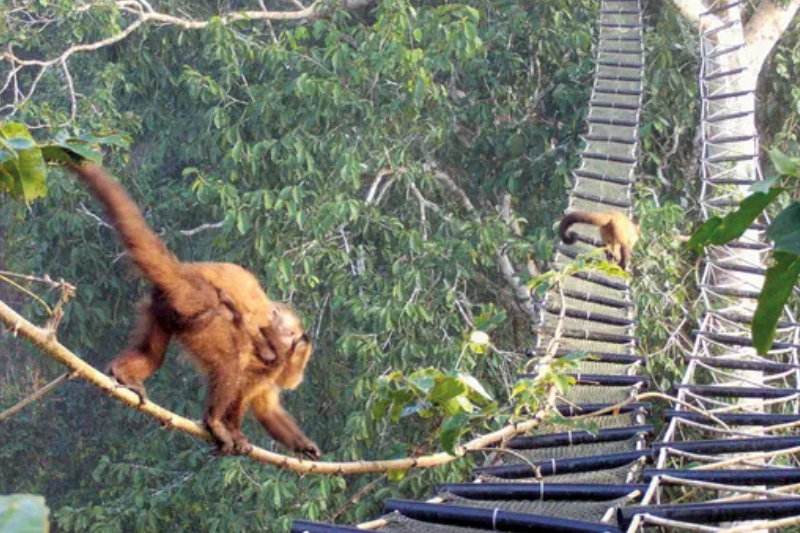
Deep inside the mighty Amazon, WWF — in partnership with forestry company Maderacre and supported by HP Inc — has installed nearly 20 canopy bridges across logging roads in Madre de Dios. The pathways are made using polypropylene rope and PVC tubes that can withstand the rainforest’s intense weather.
Costa Rica
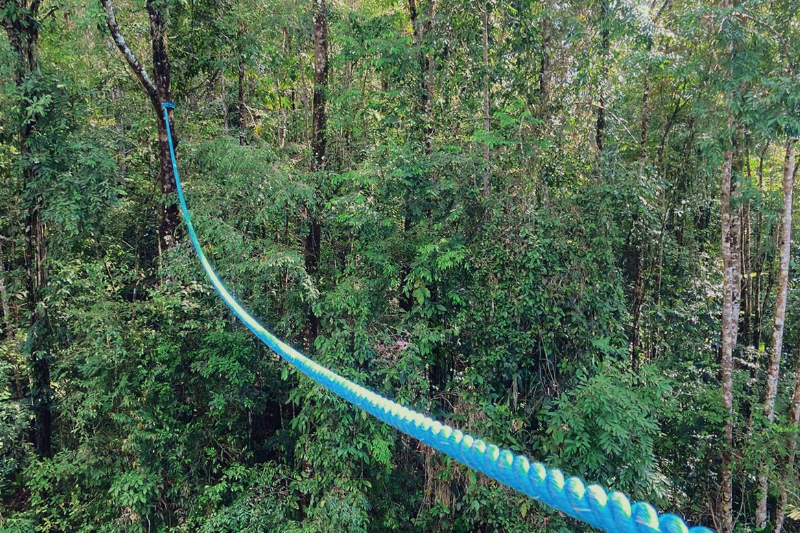
Known for its remarkable work in protecting Costa Rica’s wildest area, home to a diverse arboreal mammal community, Osa Conservation has deployed 17 canopy bridges to ensure connectivity. As part of its long-term monitoring efforts, more than 30 camera traps are affixed to the structures to record wildlife sightings.
Indonesia
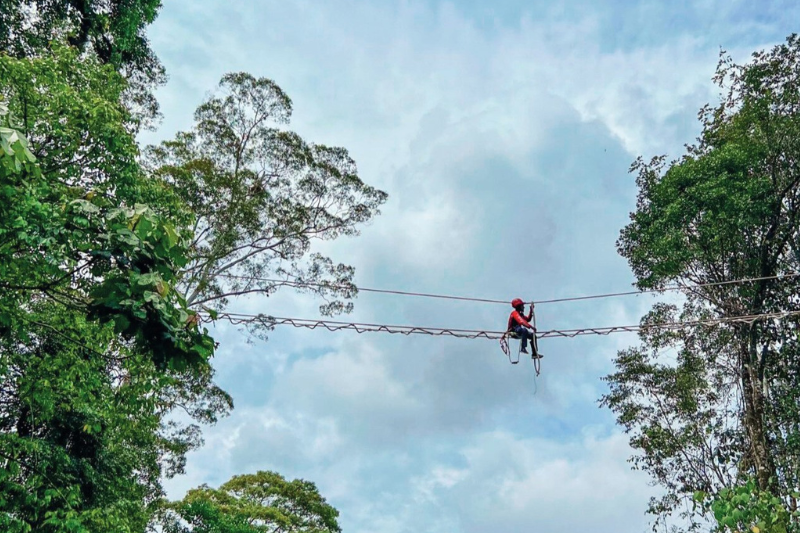
Nonprofit organisation Sumatran Orangutan Society teamed up with TaHuKah and Vertical Rescue Indonesia to construct a canopy bridge to provide a safe route for Sumatran orangutans to travel between their fragmented homes in West Toba. Thick ropes were woven together to form this durable ecoduct.
This article first appeared on April 27, 2026 in The Edge Malaysia.