

Keong Wei (left) and Pei Teeng are the executive directors of YTL Land, focusing on expanding the developer’s flagship Sentul portfolio (Photo: SooPhye)
If there is one thing the 27 grandchildren of late businessman Tan Sri Dr Yeoh Tiong Lay can pride themselves on, it is that they are all proficient mathematicians — at least on paper, according to third generation scions Yeoh Pei Teeng and Keong Wei.
“Our grandmother taught us maths as kids, and all of us went through this same programme. Whenever we’d make mistakes in our calculations, she would rub them out and teach us to do them correctly. Then, after every page, she’d mark down ‘100’. We always got perfect scores, no matter what,” chuckles the brother. “Even now, if someone’s not doing calculations fast enough, we’ll joke, ‘Better call Ah Ma!’”
Pei Teeng reflects, “That’s how we were encouraged. From the outside looking in, you see this huge family. But for us, we were very close-knit growing up. We were raised on the values instilled by our grandfather from a young age, and they are mirrored in our work culture.”
Since YTL Corp’s founding in 1955, the construction company has rapidly evolved into a full-fledged infrastructure developer with interests in industries such as cement manufacturing, utilities, hotels and resorts, and technology via its various subsidiaries.
Such an operation does not get to grow to this calibre and stay that way without a family of great size, fierce passion and absolute perseverance to oversee it. Yet, for the two youngest children of Datuk Yeoh Seok Kian, picking up the mantle was never a forced obligation to prove oneself, but an organic choice that stemmed from the genuine interest cultivated by a warm and supportive upbringing.
“We’ve always just had a love for what [the family] did. We want to emulate and build upon their legacy. That’s the next step for us — how can we expand upon what they have established, and leave that to the next generation?” says Keong Wei.
Pei Teeng and Keong Wei joined the group’s property development arm YTL Land as executive directors in 2017 and 2021 respectively. The former helms the YTL Land Design Team, with a strong focus on sales and storytelling; the latter is integral to shaping the company’s digital strategies and land acquisition. Together, they play an active role in expanding the developer’s flagship Sentul portfolio, continuing the urban renewal master plan that began 24 years ago.
As the third generation takes the baton from their forebears and discovers what it means to pave one’s own path, the siblings discuss working with family, transforming Sentul into Kuala Lumpur’s premier lifestyle hotspot and the importance of respecting both past and future.
Roots + shoots
body_pics_4.png
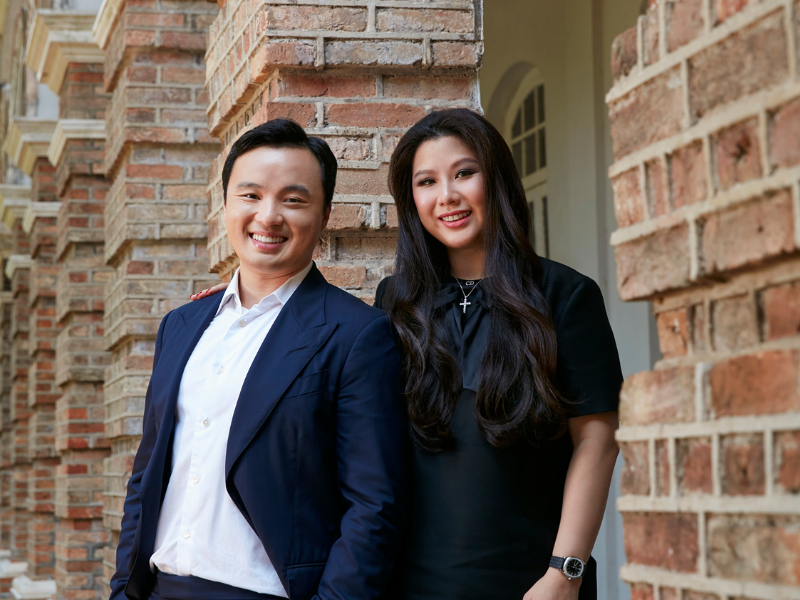
Over seven decades, the Yeohs have been the formidable patrons of an enduring legacy, but there is more to this house than executive titles sprawled across a gargantuan family tree. Though exposure to the business began early, even more vital was the sense of filial unity imbued in them by Ah Kong and Ah Ma.
“We never saw each other as cousins. We were brothers and sisters, always going to each other’s houses. Our grandparents made sure to raise us to be very tight,” says Keong Wei.
Living right across the road from their grandparents, aunts and uncles meant childhood days were spent frequently popping over to play together and getting their haircuts from the matriarch. Even when the siblings were pursuing higher education in London, the grandchildren often met up for meals and gatherings in the city — although, Pei Teeng and Keong Wei admit, finding a restaurant willing to accommodate a party of nearly 30 often proved hard.
There was always an implicit understanding between the dozens of cousins that growing up together would eventually translate into working together. “We never really thought of the business as a whole in terms of scale or size — granted, there were 27 of us in our generation. For those of us who are involved, we get to leverage one another’s strengths since we’re all in different divisions. Teeng and I are in property, others are in cement, hotels or telecommunications, and we go to each of them for different expertise.”
Both note it was never forced upon them to join the group at all, and neither trained formally in engineering. Pei Teeng graduated in chemistry from Imperial College and spent two months interning at Wessex Water before realising that “mixing water with water” was not her calling; Keong Wei read business management at King’s College London. Nevertheless, they soon gravitated towards their deep-rooted interest in property development.
“We’ve always been quite passionate about it because we’ve seen our father at work. He’d take us to project launches, site visits and construction sites. Our parents also have a big love for art, architecture and interior design,” says Pei Teeng.
6.png
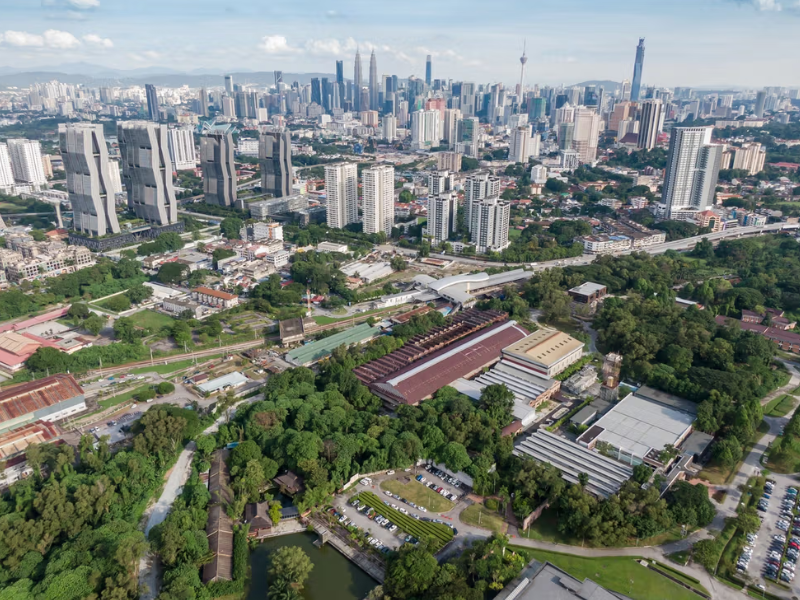
One of her earliest responsibilities was the 2018 launch of Sentul Depot — a key milestone in the area’s ongoing revival.
One of Kuala Lumpur’s last green lungs, Sentul spans about 300 acres, divided into Sentul East — a vibrant, modern residential hub — and Sentul West — an outdoor enclave of homes, offices and community spaces, including the Depot. Originally built as an engineering workshop in 1905, it continued operating after WWII under KTM Bhd before later serving as a shelter for decommissioned locomotives. YTL Land took over the area and began its urban renewal masterplan on April 16, 2002.
“It was definitely not what you see today,” says Pei Teeng. “This part of town was known for high crime, and a lot of work has been done since to change that stigma. That’s why we opened Sentul Depot to the public and had the big Riuh event, which invited most of KL to view how different and beautiful it is.”
The area is now respected not only as a popular community space but also a prime example of adaptive reuse and conservation. “After KTM left, a lot of it was abandoned and quite derelict. We decided to apportion certain pieces for development and to keep. It would have been much easier had we just torn [the depot] down and built a high rise but for us, it was unconscionable. To preserve the history and heritage of a 120-year-old building is sacrosanct,” emphasises Keong Wei.
Rail mix
2.png
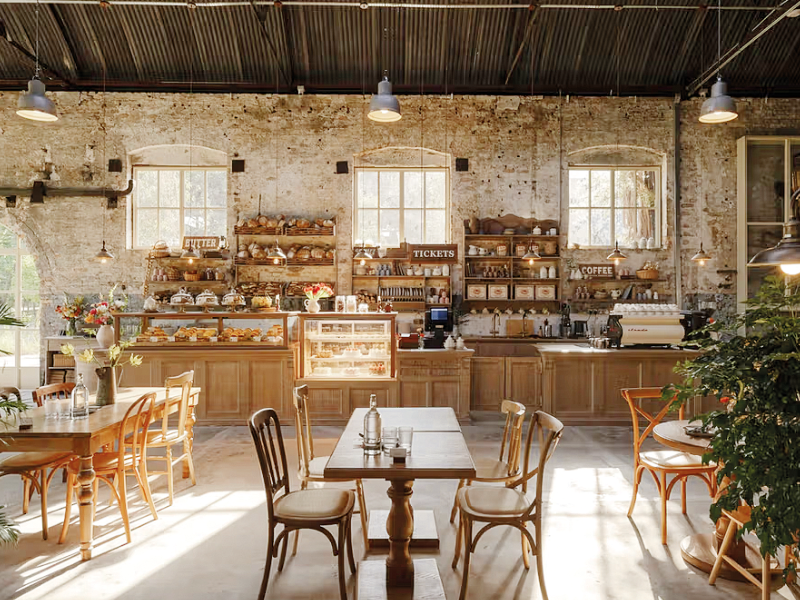
Even on a late Monday morning, crowds of stroller-pushing parents and padel players in athleisure are soaking up some sun and posing around the infinitely Instagrammable enclave. Among Sentul Depot’s most recent additions is Grumpy Bagels 1905, the second branch of KL’s hottest bakery obsession, which now occupies the Diesel Room. The defining twin arches and steel scaffolding where engines were once stored now hold a wealth of warm, chewy bagels, as well as queues of customers waiting eagerly for a bite.
“We kept the existing structure, and if you go inside, you can see the preserved roof. We’ve put another layer on top to waterproof it, but originally, it was just aluminium and metal,” Keong Wei says. “We added this new façade, but the surrounding brick is all more than 120 years old. We even found the same steel beams marked ‘1905’ on them — all the way from Scotland.”
While Sentul West has had its few faithful strongholds over the decades, Pei Teeng acknowledges how the group remains very responsive to feedback and ideas, curating new uses based on what the current demographic is most enthusiastic about — especially as third spaces become increasingly coveted.
“There is an evolution and it depends on what today’s consumers, buyers and public want. It’s quite a natural process, and we don’t want to force something into it that doesn’t work,” she says. For example, Tiffin at The Yard, a hip food court known for its eclectic food concepts, art installations and music, had a very successful post-pandemic run. “That was great for two years. Now, we’ve transitioned it into pickle and padel because it’s what people are into. There are always ideas coming to us and if we think they are worth pursuing, we take the risk and see what happens.”
Opened just last year, Pickle Depot holds a lively collection of courts that is never without folks of all ages participating in a friendly rally. The surroundings also host pop-ups, including the ongoing one by Apé Cafe, which serves fresh coffees and juices from its signature truck — a perfect spot to lounge while waiting for the bagel line to thin out, hints Pei Teeng.
3.png
Finding the right tenants for Sentul West has been no walk in the park, though. YTL Land’s vision of turning Sentul into a must-visit lifestyle destination means collaborating with partners who have the patience and foresight to embark on a very extended project together.
She explains, “We look for those with the same vision — who don’t want to be here just for the sake of being here but actually care deeply about heritage, understand the long-term plan for this place and are willing to give back to the community. There are so many people living nearby. What can you offer them?
“When we reached out to consultants, several said, ‘Why don’t you just make it like a typical mall?’ They would show us plans and tell us to put a Zara here and a Uniqlo there. But I said ‘No, that’s not something I want to do.’ I travelled quite a bit and saw what others were doing in New York City or London, like King’s Cross, where there was a lot of regeneration and which I wanted to bring back to Malaysia.”
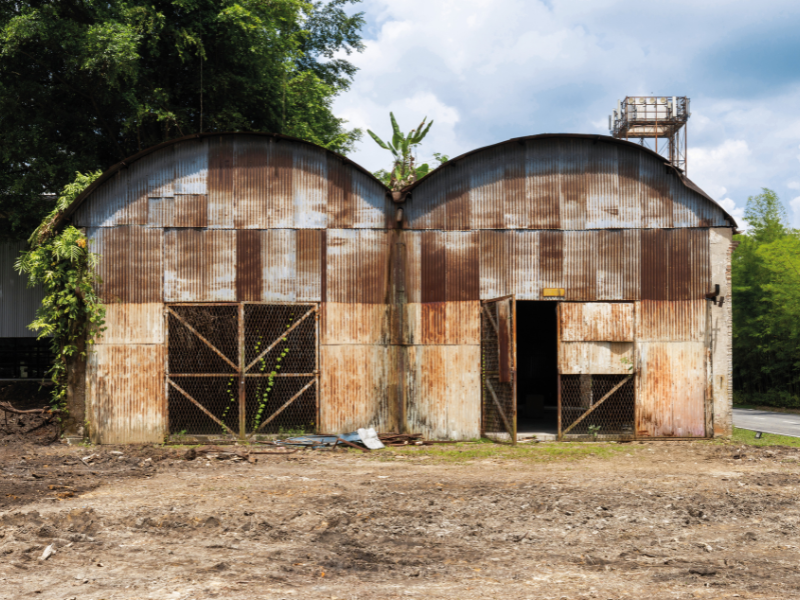
An upcoming item on the restoration agenda is the largest portion of the entire depot, Workshops 5 and 6, which cumulatively span nearly 75,000 sq ft. “We’re planning to turn those into offices while leaving the bottom part open so the public can still come and enjoy the lovely greenery,” says Keong Wei.
In its current state, the terrain is a barren shell of brick and steel utterly dominated by the whims of wild foliage and weather, yet the raw cement columns and rugged patina endow it with dignified authority. The corner was once where the yard’s most important repairs took place, including the fixing of exhaust pipes, vacuum cylinder brakes and wheels, while the rest of the structure held manufacturing and welding areas for different locomotive parts.
The saw-toothed roof of Workshop 6 optimised the flow of light and ventilation, keeping the site cool despite the heavy-duty operations. Keong Wei highlights the workers’ jackets hung up along the side of Workshop 5, practically fossilised and fused into the walls, as well as the intact railway tracks. “Our plan is to keep all of that and build around it. We want to encase the uniforms, too.”
4.png
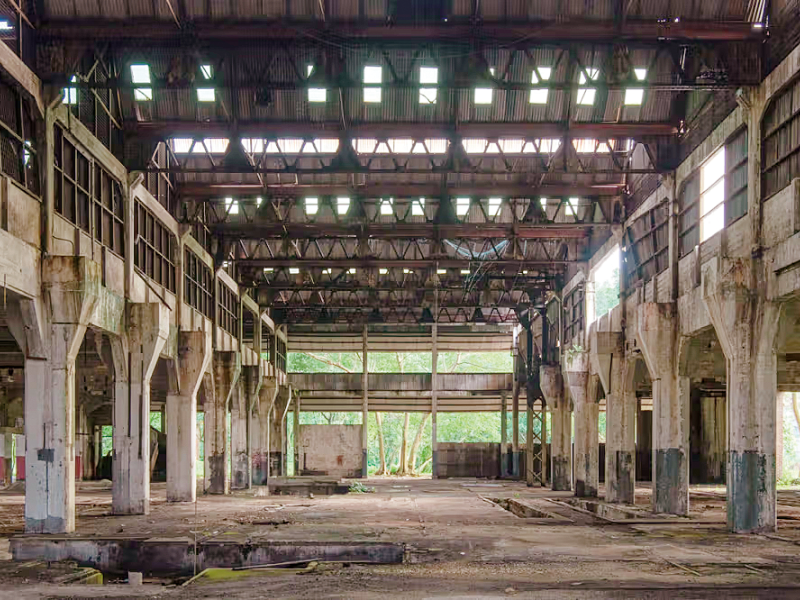
Just as crucial as maintaining heritage infrastructure is ensuring Sentul’s organic landscape is as pristine as possible. Pei Teeng recalls her first week back at YTL after a stint at Credit Suisse, whereupon her father declared they should walk the site. “I didn’t expect to go to the construction zone that day. I was holding up my dress to keep up with him, and he was cutting branches with a knife, pointing and going, ‘Okay, we’ll keep this tree.’ It was an actual jungle!”
Have there been any features they had hoped to keep but simply had to be moved? “Yes,” both say in unison. Keong Wei continues: “There are certain things like trees that have had to be transplanted away. We try to preserve as much as we can in terms of the greenery, but if it’s really in the way of, say, a wall that has to be built, we have no choice but to move it elsewhere.” Nevertheless, the group has taken great care to conserve the flora and natural landscape, culminating in the verdant oasis that is Sentul Park.
Between sorting through the practical, aesthetic and historic priorities of the reconstruction process, it can be a real challenge to negotiate these fine lines on such sites, Keong Wei says. Striking the right balance demands thorough, careful evaluation, including going directly into a building to sort out exactly which beams or elements can be kept. “We speak to our engineers as well to check whether the integrity will be affected if we remove something,” he adds.
Aside from their ample studies on the area’s written history, Pei Teeng says many families who used to work in Sentul have approached them to provide historical information on the space. Even a colleague in YTL, whose father was once part of the railway workshop, has assisted as a direct reference point for certain sections.
Beyond Sentul, the group will also be marking another milestone late this year with the unveiling of Pantai Peak, the final phase of the Pantai Hillpark masterplan. “It’s an exclusive collection of luxury homes and private estates, and represents one of the last remaining landed hillside developments in the heart of KL. Pantai Hillpark very much uses the same template as Sentul so it’s a bit of a bittersweet moment with this last instalment,” says Keong Wei.
5.png
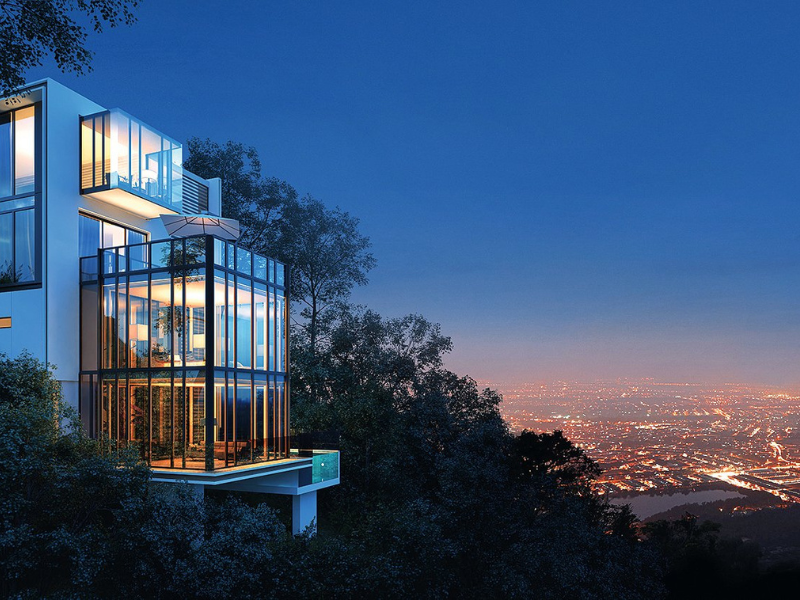
Big picture
The average person might shudder at the thought of counting every blood relation as a co-worker, but Pei Teeng and Keong Wei have, unsurprisingly, mastered their dual roles.
“It’s really fun!” assures the self-proclaimed protective big sister. “There’s so much trust and openness between us.”
Her brother adds: “We’re very frank with each other, more so than with any of our other employees because if I disagree with her on something, I tell it straight to her face.”
Asked what working together has taught them most, he quickly points out: “Teeng is very detail-oriented, and she has fantastic taste. I mean, look at all the interior design — she doesn’t give herself enough credit.”
Though the grandchildren are just now entering the limelight, the siblings are already thinking about what they will leave to their successors.
“The fourth generation is larger than the third already — there are 35 great-grandchildren,” says Keong Wei, drawing an interjection from his sister — “You can imagine how chaotic Chinese New Year gatherings are!” With the dynasty still expanding, the duo stresses how continuity and intention are the strong threads that bind the members and the work they do.
“We have to be very mindful about what we build here — to leave it on firm footing, as our parents did for us, and to pass it on to our children,” says Keong Wei.
1.png
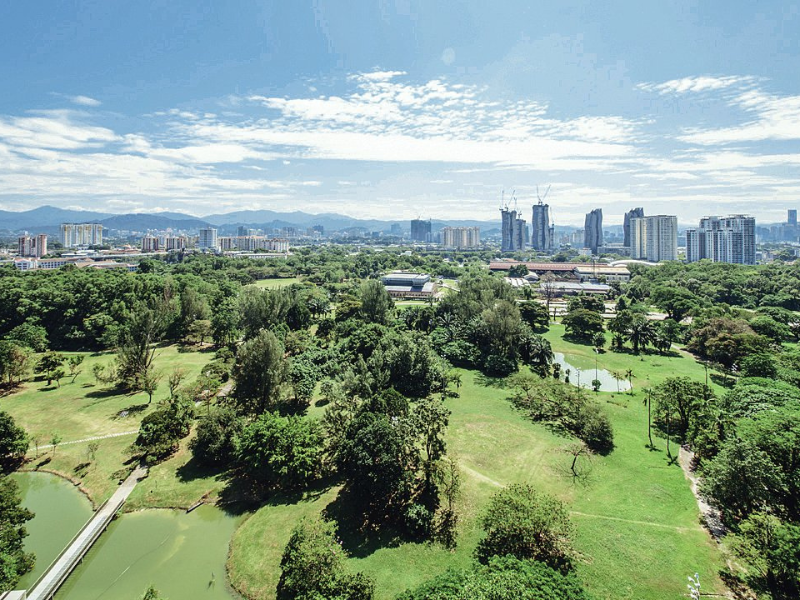
The scale of the Sentul masterplan, along with the physical legacy of its projects and portfolios, is made possible by the Yeohs’ intangible inheritance — hard work, discipline, integrity and a deep sense of responsibility to the community.
What do they envision a completed Sentul to look like? Even the question seems short-sighted. “I don’t think it will ever be done,” he says. “We will have to adapt as we go along. We want to make it such that even our children will have things to do and build upon here. There’s so much potential, and I don’t foresee us completing it in our lifetimes.”
Understanding their place in the bigger picture, while always feeling supported enough to seize unexpected opportunities, is a vital cornerstone of how the siblings plan to help YTL Land flourish under their tenure.
“There are big shoes to fill, for sure, [but the second generation] always told us to forge our own path. They have what they built, but they insisted we go out and find something new. We are very lucky to have the freedom to do so because they probably didn’t,” says Pei Teeng.
“I strongly believe it’s about stewardship and earning the community’s faith. Our generation is finally stepping in. Right now, our focus is on establishing trust and showing that we can live up to expectations,” affirms Keong Wei.
This article first appeared on May 4, 2026 in The Edge Malaysia.