
The media veteran talks about the sources of inspiration for his artworks, along with what to expect at the showcase which runs until July 28.
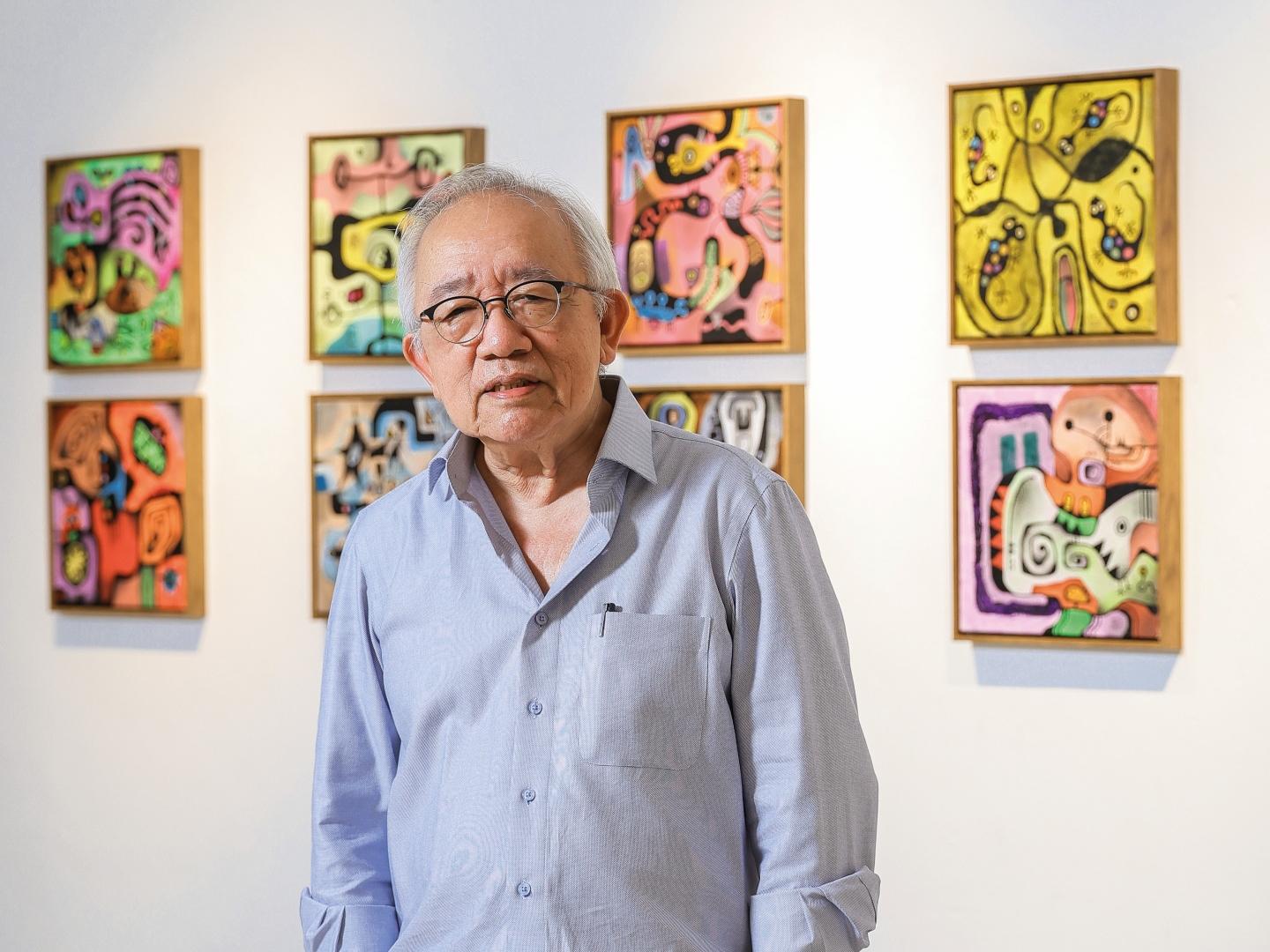
After a 30-year hiatus, Lim Siang Jin delved back into art in 2020 (Photo: Zahid Izzani/The Edge)
Options: Tell us what viewers can expect from Evolution.
Lim Siang Jin: Evolution is the first exhibition in ArtVoice Gallery’s A Conversation series, and that largely explains its structure. It is not simply a display of artworks but an invitation to investigate the experiences, ideas and influences that led me to art. Visitors will see four interconnected sets of works, ranging from acrylic paintings and minimalist drawings to a postcard series and an installation. In addition, I will be displaying selected publications I worked on over the years, along with some early, previously not exhibited artworks in glass showcases. These provide glimpses into the different worlds — sociology, journalism, publishing and communications — that influenced my journey. As part of the exhibition, I will also give presentations and answer questions from visitors at scheduled times. It is during such conversations that I will discuss some of the ideas behind the works, including how freedom and constraint influence creative expression.
Which piece do you think would provoke the most interest?
Probably the installation work Tenacious in Dissent, Hopeful in Power. It grew out of ideas I had while designing the cover of Khoo Boo Teik’s book on Anwar Ibrahim. Politics naturally attracts attention, but what interests me today is not day-to-day political debate. Rather, it is the symbolism behind political struggle — hope, aspiration, constraints, persistence and change. The installation should be seen as an artistic interpretation of these themes rather than a contribution to Malaysia’s ongoing political discourse. I am more interested in the global human dimensions of striving, dissent, leadership and the pursuit of ideals. The work asks viewers to consider these ideas and form their own interpretations.
1.jpg
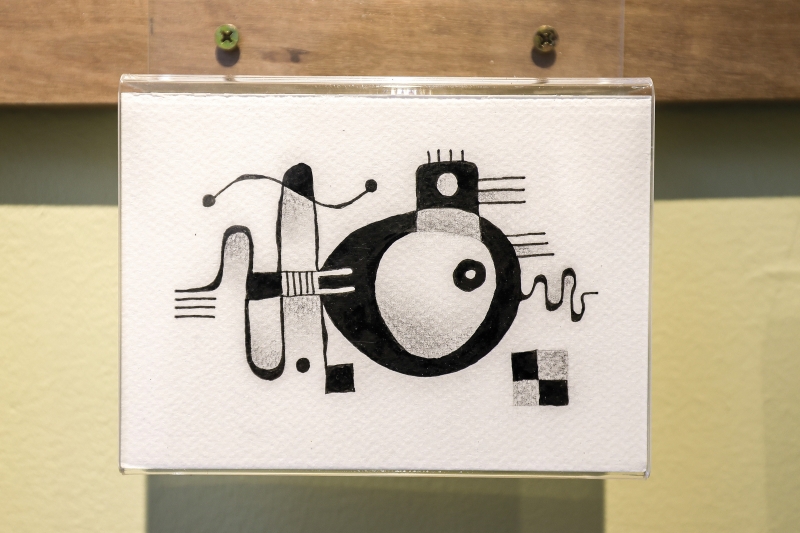
'All Eyes', part of a 50-piece postcard series (Photo: Zahid Izzani/The Edge)
What role does the world of media and your personal experiences of it play in Evolution?
A major one. I spent much of my life building communication systems and producing publications. Along the way, I witnessed enormous changes in technology, from cyclostyled class magazines to digital publishing and the internet era. Those experiences moulded how I perceive creativity. They also helped me understand that new technologies do not completely replace old ones; they absorb and transform them.
What were the main sources of inspiration for this show?
At the immediate level, curator Stephen Menon was an important catalyst for this exhibition. Beyond curating the show, he designed the catalogue and exhibition space, playing a key role in how the works and ideas are presented. His work strengthened both Evolution’s communication and overall experience. I also benefited from the support and encouragement of the ArtVoice community. The deeper inspirations came from several directions. Sociology was one of them, especially the writings of Zygmunt Bauman and classical sociologists. Bauman’s ideas on freedom and constraint, and Max Weber’s concept of verstehen, or understanding from within, have stayed with me for decades. I was also influenced by existentialist writers such as Albert Camus and Hermann Hesse, who explored meaning, freedom and the human condition. Equally important were my years in journalism, publishing and communications. I was fortunate to work with many talented colleagues and advisers who taught me how to shape, organise and communicate ideas. Producing newspapers, magazines, books and other publications exposed me to different ways of seeing the world and helped me appreciate creativity beyond the standard boundaries of art. On the artistic side, I learned largely through studying the works of others. Using Weber’s idea of verstehen, I tried to put myself in the shoes of artists such as Picasso, Van Gogh, Dali, Klee, Miro, Warhol and Toulouse-Lautrec to understand how they approached their craft. Over time, these influences blended together. Evolution is really the product of a lifelong conversation between sociology, publishing, communication and art.
2.jpg
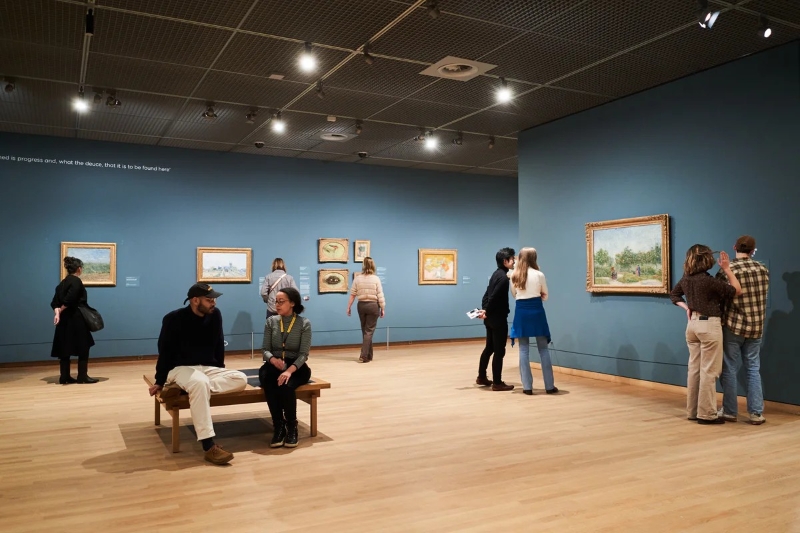
Works by Dutch painter Vincent van Gogh displayed in a gallery (Photo: Van Gogh Museum)
What led you to first pick up the brush 50 years ago?
I was studying sociology in Britain in the 1970s. Like many students, I was trying to make sense of a complicated world. Sociology gave me frameworks, but art gave me another language. I did not have much material or formal training, so I worked with markers and photocopy paper. Looking back, those limitations probably helped shape my approach. They forced me to focus on ideas rather than technique.
Who are your favourite artists?
If I had to choose, I would say Picasso, Klee, Miro, Dali, Van Gogh and Warhol. Picasso because he constantly reinvented himself. Klee because he could create entire worlds from simple lines and symbols. Miró for his lively visual language. Dali for the surrealist art genre. Van Gogh for emotional intensity. Warhol because he blurred the boundaries between art, communication and popular culture.
Do you have any favourite art museums and galleries?
I did not spend much time in museums during my university years. My learning mostly came from books, documentaries, films and even poster shops, such as Athena, which made reproductions of great art accessible to students on limited budgets. The museum that left the deepest impression on me was the Van Gogh Museum in Amsterdam. Until then, I had known Van Gogh largely through reproductions. Seeing the originals was a visual shock. The intensity of the colours, the energy of the brushwork and the physical presence of the paintings were unlike all I had experienced before. It reminded me that the artwork is not simply an image; it also has a presence that can affect us in ways reproductions cannot.
Why do you think we need art in our lives?
Art helps us see differently. Sociology taught me that many things we take for granted are socially constructed. Art can perform a similar function. It can make the familiar strange and the strange familiar. It can challenge assumptions, stimulate thought and feeling, or simply provide delight. Sometimes, it helps us understand the world; sometimes, it helps us live with its uncertainty, even cruelty.
3.jpg
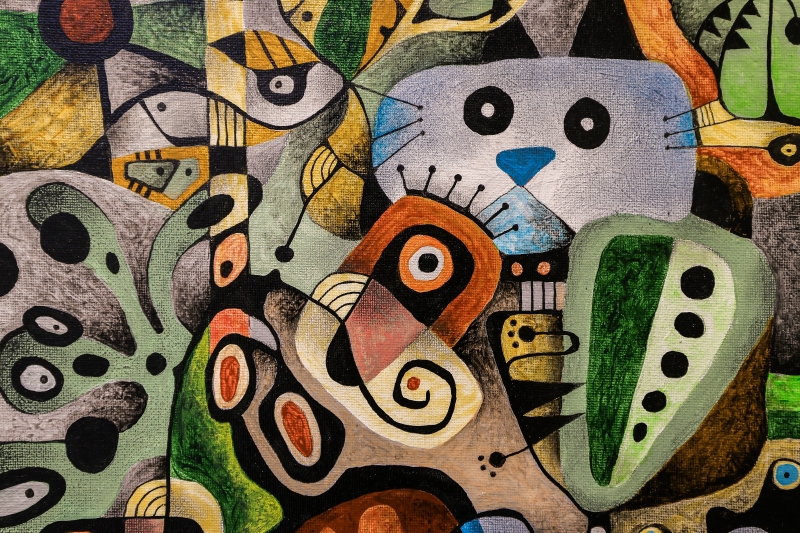
'Cat and man in garden', created with acrylic, pencil and graphite on canvas (Photo: Zahid Izzani/The Edge)
What books would you recommend people read to hone their appreciation of art?
Not all books that deepen our appreciation of art are actually about art. John Berger’s Ways of Seeing remains one of the best introductions because it teaches us how to look more carefully and critically at images. As a hands-on person, I was also influenced by Max De Pree’s Leadership Jazz. Although it is a book about leadership, it offers valuable insights into creativity, collaboration and bringing out the best in people. Edward de Bono’s writings on lateral thinking revealed to me the importance of looking at problems from unexpected angles. More recently, I read Walter Benjamin’s essay The Storyteller. I am still trying to absorb it, but it has made me think deeply about experience, memory and how meaning is transmitted. I have also been dipping into Zygmunt Bauman’s posthumously published Culture and Art, which explores the relationship between culture, creativity and society.
Any immediate plans post-Evolution?
I see Evolution as a milestone rather than a conclusion. I want to continue developing some of the visual vocabularies introduced here, particularly the icons explored in All Eyes. I am also interested in creating larger works that build on ideas first tested in the Acrylic Plus series. Beyond making art, I would like to create more opportunities to talk about it. Looking back, I probably spent more time producing art than discussing it. Yet, dialogue is an important part of the creative process. It helps us understand not only the work itself but also the ideas, experiences and influences behind it. More broadly, I hope to keep exploring the relationship between art, communication and social perception, while keeping open to wherever the next stage of the voyage may lead.
'Evolution: A Conversation' series will be held until July 28 at ArtVoice Gallery, Sentul, KL.
This article first appeared on July 6, 2026 in The Edge Malaysia.