
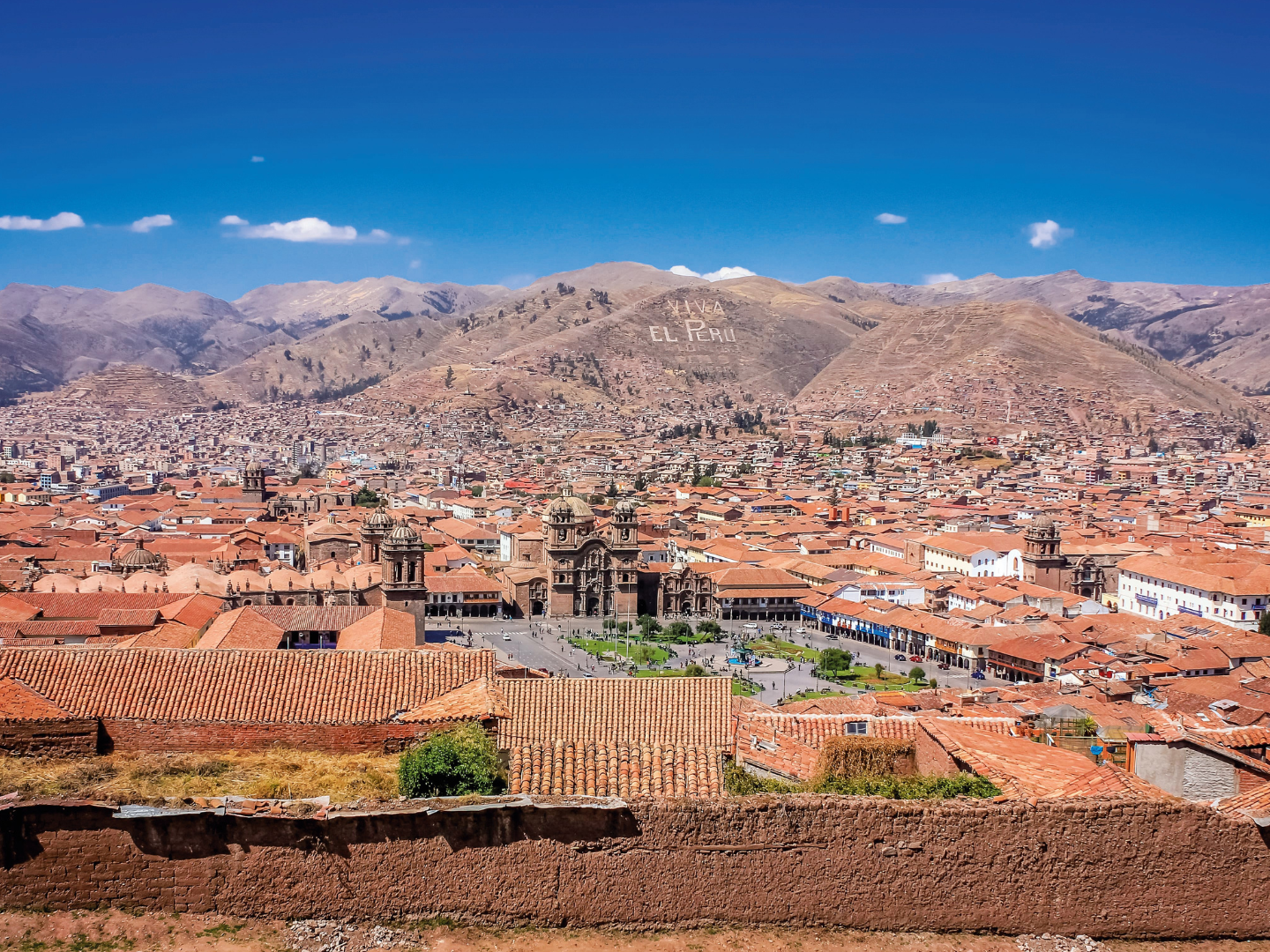
Cusco is the seventh-most populous city in Peru (Photo: 123RF)
The skulls in the glass case are elongated, almost alien, like the bullet-headed extraterrestrials of science fiction. But these are human, once belonging to the Inca elite. Artificial cranial deformation, created by tightly binding the heads of children while their skulls were still soft, produced these distorted shapes, a marker of nobility and status.
These artefacts, which serve as an evident of the nation’s sophisticated understanding of surgery and healing, are displayed inside the small subterranean Inka Museum in Cusco, Peru. After browsing through the exhibits, visitors may exit the building via a staircase that leads to a grassy field, once an astonishing courtyard filled with sculptures of animals and plants made from gold and silver such as llamas, guinea pigs, and snakes, along with corn stalks complete with cob, stalks and leaves.
On a small hill overlooking the courtyard was the most sacred temple in the entire Inca Empire: the Temple of the Sun, or Qorikancha, which means “Golden Temple”.
body_pics.png
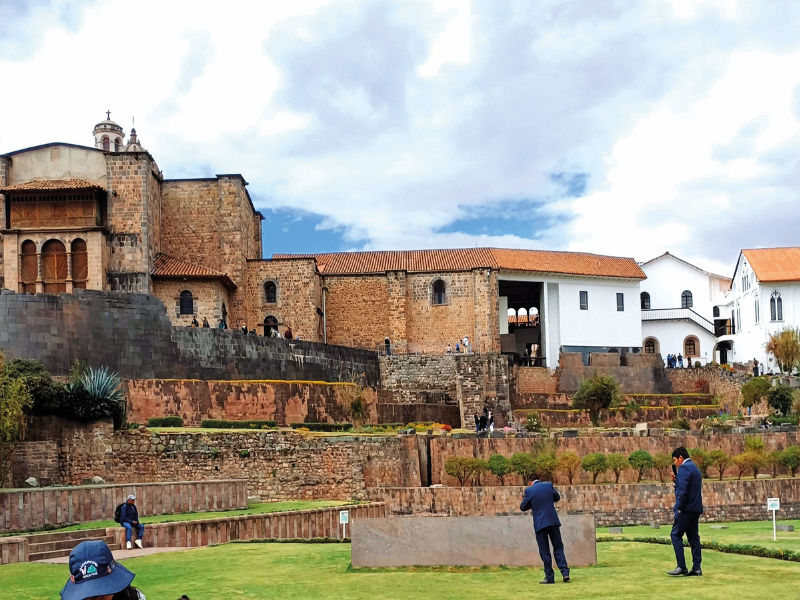
During the winter solstice, sunlight penetrated its interior, lighting up the golden disc of Inti, the Incan sun god. This was the epicentre of the vast empire. At its apogee, it stretched from Ecuador to Chile, with a population from six to 14 million people.
The temple itself was an architectural marvel, constructed of interlocking stones with such precision that a needle could not penetrate the joints. Assembled without mortar, the stones have withstood centuries of earthquakes. The temple was adorned with golden statues and gilt ornaments, and its walls gleamed with golden plates.
When the Spanish conquered the Inca, they were blinded by the treasures they encountered. In 1533, under the conquistador Francisco Pizarro, they systematically plundered vast amounts of gold and silver in the Temple of the Sun, stripping its precious ornaments to be melted and sent as booty to Spain.
1.png
Empire + conquest
To erase the Inca religious system and impose their own religion on the conquered, the Spanish built a Roman Catholic church over the foundations of the Temple of the Sun. Construction of the Convent of Santo Domingo began in the 16th century.
The convent was heavily damaged and rebuilt after the earthquakes that struck Cusco in the 17th and 20th centuries. The Inca foundations underlying the convent, however, withstood the shocks, testifying to superior Inca engineering.'
The differences between the Inca stonework and the Spanish additions are immediately apparent. The Convent of Santo Domingo is one of the most significant landmarks in Cusco, a historical marker of the transition between the native and the foreign empires, beliefs and world systems. This cultural disjoint between the two civilisations can still be seen throughout Cusco.
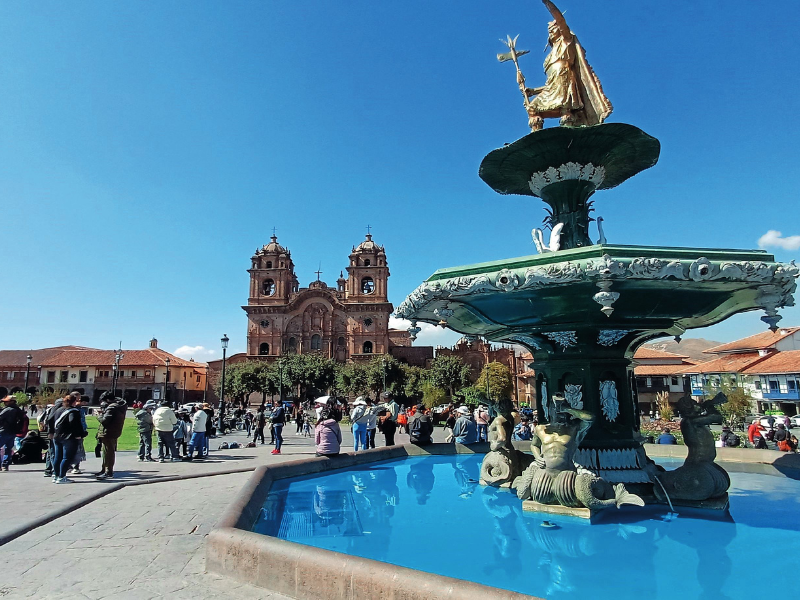
The main square of Cusco, the Plaza de Armas, is a Unesco World Heritage site, with its showpiece being the Cusco Cathedral, built in the 17th century in the Gothic Renaissance style. It is the most important religious monument in the city.
Within, the massive cathedral is airy and spacious, with elaborate altars in gold and silver, particularly the majestic main altar, wrought mainly in silver. An altar of a black crucifix, called the Lord of the Earthquakes, is especially revered in Cusco as providing protection during a severe 17th century temblor.
5.png
Art of two worlds
Many of the altars and paintings were created by local artists, rather than European ones. In the 16th and 17th centuries, Spanish authorities trained locals in European art, creating the syncretic art form called the Cusco school of art. It was confined to creating religious art, for the purpose of converting the local population to the new religion.
This art is distinguished by several characteristics: the sense of perspective is two-dimensional; figures are not well proportioned; Andean themes, such as clothing, plants and animals, were often used; and there were greater ornamentation and brighter colours than European counterparts. The most quoted example is the painting of the Last Supper inside the cathedral, where Jesus and his disciples are gathered around the dinner table, on which the meal is a roasted cuy, a guinea pig, common in Andean cuisine.
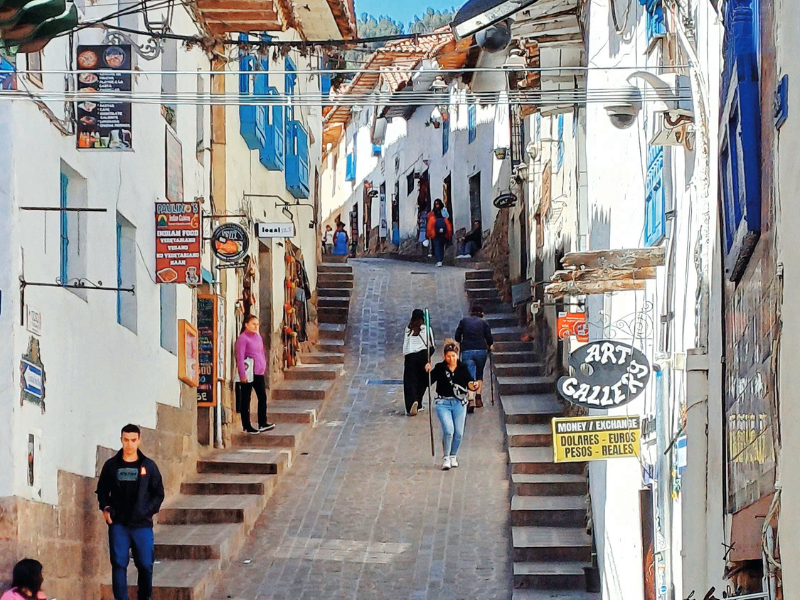
In the time of the Inca, the area of the Main Square was occupied by Inca temples and palaces, which were razed by the Spanish to create the plaza as it exists today. However, many buildings around the square retain the interlocking stonework of the Inca and even earlier cultures. On top of these massive interlocking, precision-cut stone blocks, contemporary buildings were constructed. These old stone walls are one of the most distinguishing and beautiful features of Cusco’s old streets.
2.png
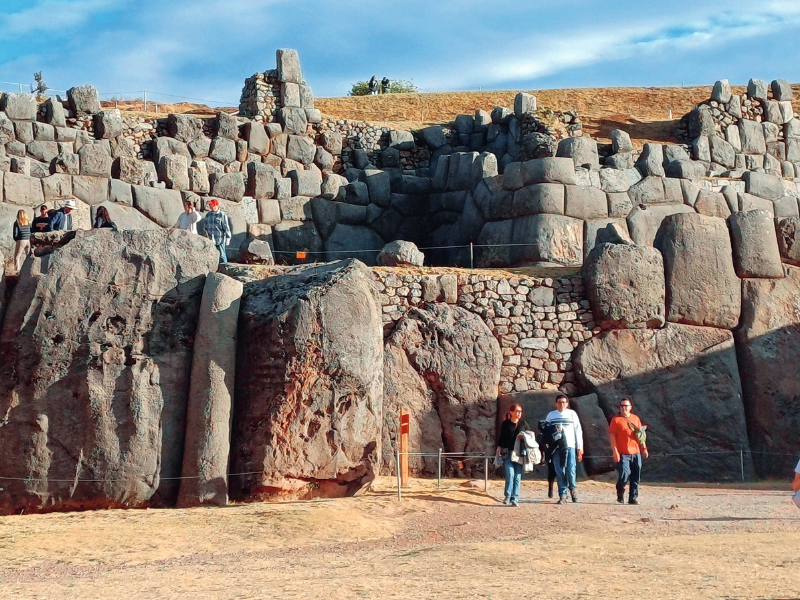
The puma's head
Three magical animals played a leading role in the Inca system of belief. These stood for the three planes of existence: the condor for the heavens, the snake for the underworld, and the puma for the earthly plane.
The mountain lion was revered for its strength, wisdom and agility. Cusco is believed to have been built in the shape of that animal: the city was the body with major features formed by landmarks such as the Plaza de Armas and the Temple of the Sun. The head of the puma was on a hill overlooking the city, on which is one of the most intriguing Inca monuments in Cusco.
This was Sacsayhuamán, long an archaeological wonder, variously believed to have been a fortress, a religious monument, a ceremonial complex, an astronomical observatory, or all of these. It was an engineering marvel that reflected the Inca belief system.
It was built in three tiers, corresponding to the three world levels in the Inca system. The most striking feature of Sacsayhuamán are its massive stones and the complex way they interlocked, rendering them impermeable to earth tremors. How the Inca achieved this mastery of stones weighing as much as 100 tonnes with only manual labour and without iron or steel tools remains a subject of speculation, study and awe.
3.png
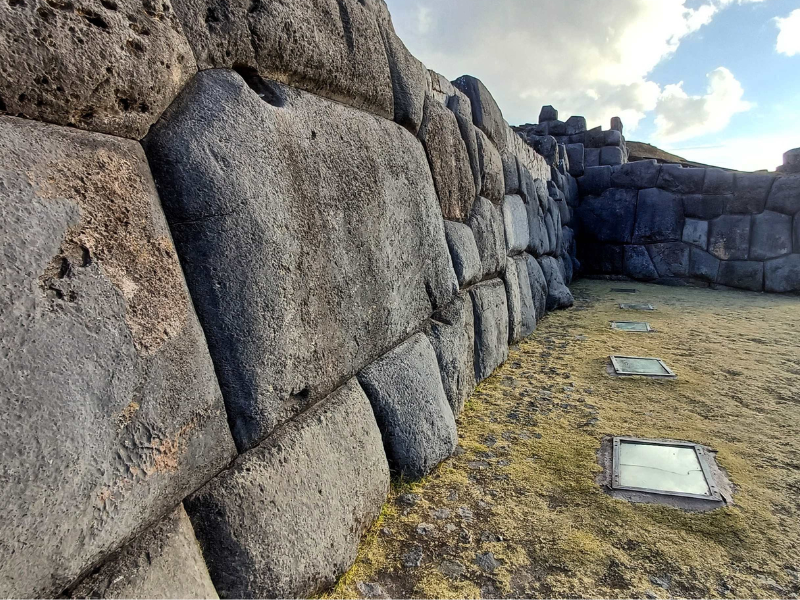
The stones of Sacsayhuamán form a long zigzag pattern, thought to represent the teeth of the puma. The tiered, zigzag construction was also a defensive wall, with the tiers becoming smaller as they ascended.
When the Spanish overthrew the Incan empire, they plundered Sacsayhuamán for its stones to construct their buildings and churches, including that of the Cusco Cathedral and surrounding churches. The significance of this magnificent monument was lost over time, and the locals continued to treat it as a ready supply of construction material until sometime in the 20th century.
What remains of Sacsayhuamán are the stones too massive to move from the site. They convey a glimpse of its splendour and magnificence. Some of the large stones onsite were worked on in situ, and incorporated into the overall architecture.
Even in its ruined state, Sacsayhuamán is overpowering and mysterious. It was aligned with the sun and astronomical phenomena in ways we may never know. What remains today in the closely interlocking stonework is art from long ago that remains a mystery.
4.png
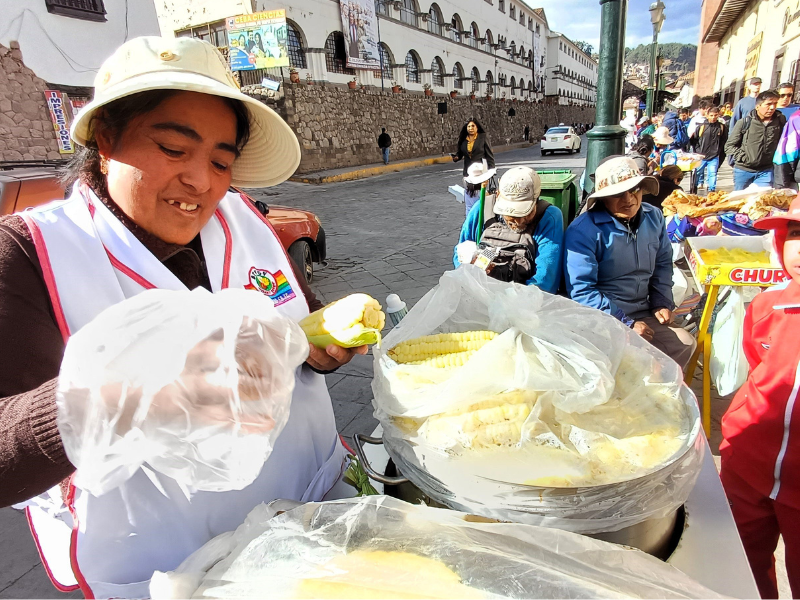
The Inca live on
Although the Inca civilisation was eviscerated, its nobility and royalty decimated, much of its traditions remain. The Quechua language, which was widely suppressed after the Spanish conquest, is still widely spoken, especially outside the major urban areas.
Much of the food and drink that existed in Inca times are still consumed today. Several thousand varieties of potatoes exist in Peru, having been cultivated and eaten since Incan times, as well as other tubers such as oca and olluco. Traditional grains of quinoa and kiwicha, and guinea pig, continue to be widely consumed, and the chicha drink is as popular now as it was then.
A visit to the San Pedro Market in Cusco, with its exotic sights, smells and sounds, is like stepping back in time, with stalls selling vegetables and fruits that have been part of the diet for centuries. In the fields, farmers observe age-old ceremonies of offerings to the land, and fertility and harvest festivals date back generations.
In the Main Square of Cusco, there is an obscure plaque. It is a marker for a legendary native who led a revolt against Spanish rule. Túpac Amaru II led a rebellion in 1780 to overthrow Spanish colonial rule and reinstate an Inca revival. The rebellion failed, and Túpac Amaru II was forced to watch his young son and wife put to death before he was mutilated, drawn, quartered and beheaded by his Spanish captors.
While the uprising was thwarted, it highlighted the deep social unrest of indigenous populations and inspired resistance against Spanish rule, leading eventually to independence for Peru in 1821.
In the evening cool of the elevated city, I felt waves of emotion for the loss — of dignity, of lives, of a civilisation. Although long gone, the Inca never died out, for the echoes of that distant past continue to reverberate in the valleys and mountains of their homeland.
This article first appeared on July 6, 2026 in The Edge Malaysia.