
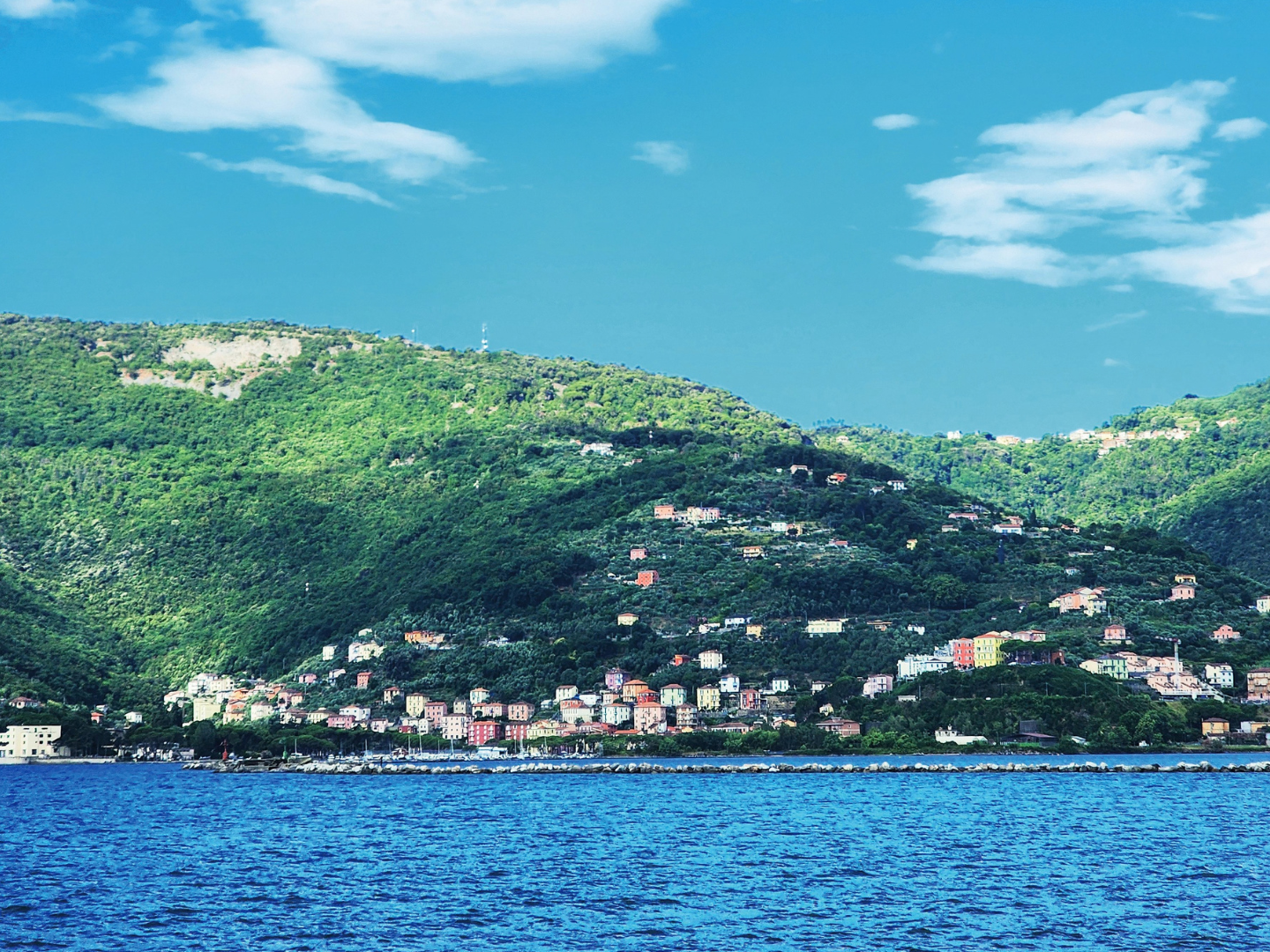
The Gulf of Poets from open water (Photo: Emily Yap/ The Edge)
Moored hull-to-hull in the sheltered bay of La Spezia, a fleet of luxury catamarans and sailboats in all manner of teak and mahogany traces the shoreline framed by Italy’s majestic Apennine Mountains. From open water, a wash of terracotta and ochre sweeps across the foothills, the buildings scattering into outcrops as the terrain grows steeper and more precarious. The city is most effortlessly approached by rail or sea, the latter frequently serving as a port of call for Mediterranean cruises.
Visitors seldom tarry in La Spezia, instead treating it as a gateway to its famous neighbours. To the west is the Unesco-listed Cinque Terre, a string of five fishing villages — Monterosso, Vernazza, Corniglia, Manarola and Riomaggiore — poised atop rugged bluffs along the coast, where pastel-hued homes and vineyards cling to precipitous terraces above the harbour. Southward across the border lies Pisa, where a notoriously askew campanile, leaning four degrees off-vertical, inevitably compels tourists to “prop” it up for the ‘gram.
However, La Spezia is more than just a waystation. Shaped by a storied naval legacy and an eclectic parade of artistic movements, the cultural port pairs Ligurian coastal heritage with an unhurried cadence that has long since been squeezed out of cities like Rome, Milan and Venice. Yet, it is no less romantic. Christened the Gulf of Poets by Italian playwright Sem Benelli, its idyllic sun-dappled waters have seduced literary titans for centuries — from Dante and Petrarch to Lord Byron and Percy Bysshe Shelley, who tragically met his end off these very shores.
4.png
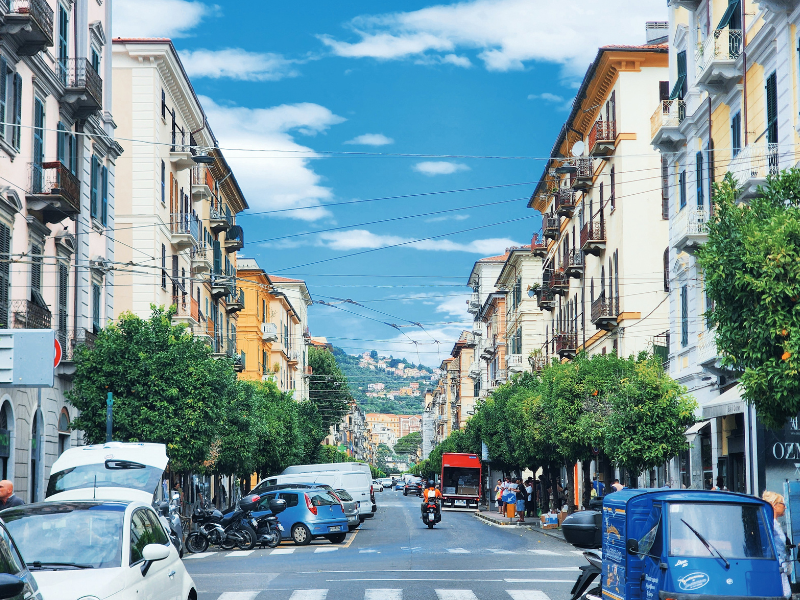
A short history lesson: Tracing its roots back to ancient Roman settlements and the medieval strongholds of the Fieschi and Genoese Republic, the city’s destiny was forever altered when Napoleon Bonaparte, captivated by its sheltered natural harbour, envisioned La Spezia as the naval bulwark of his empire. When construction for the Arsenal began in 1862, the massive undertaking reshaped the village into a hub marked by sweeping Liberty-style avenues set within a Piedmontese orthogonal grid.
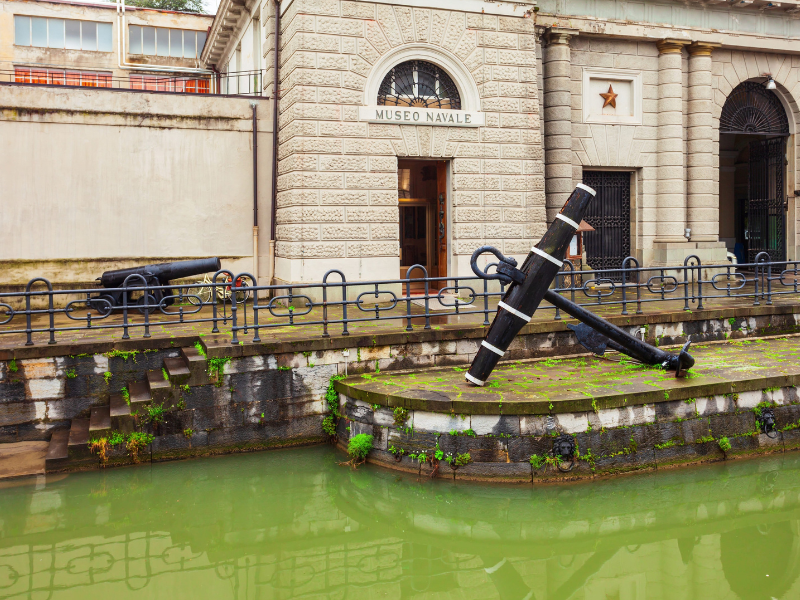
Military history enthusiasts arriving by tender boat will be glad to know that the landmark Arsenal is located right by the harbour. Adjacent to that is the Naval Technical Museum, one of Italy’s finest. It houses an impressive collection of artefacts, including replicas of Napoleon’s battleships, vintage weaponry and uniforms from different periods, as well as exhibits chronicling the region’s naval evolution. Among its accumulation of figureheads stands the enigmatic Atalanta, a 19th-century wooden sculpture salvaged from the Atlantic and rumoured to bewitch any traveller who dares linger on her gaze.
Should naval heritage hold little appeal, rather than tracing a path from shore to hinterland, day trippers are recommended to start their exploration from La Spezia’s historic core and venture outward. The heartbeat of the city is Piazza del Mercato, a morning market that bursts into activity Monday through Saturday. Cash is non-negotiable here, so make sure your mental arithmetic is sharp. Far removed from sterile tourist traps, visitors will find themselves elbow-to-elbow with locals when selecting peak produce, line-caught seafood and seasonal blooms. The artisan stalls are exceptionally well-stocked, laden with everything from wildflower honey and tinned sardines to cured salumi and the region’s prized Val di Vara cheeses.
Before leaving, take a moment to appreciate the market’s architecture. Inspired by the city’s maritime heritage, the design draws from the movement of the sea with a wave-shaped roof made of steel, aluminium and glass. It is anchored by two central glass sails that mimic a ship under full canvas. While visually striking, the structure also incorporates ventilation and lighting regulation systems that ensure an optimal microclimate for both vendors and shoppers throughout the year.
Just two lanes over is Via del Prione, or the Street of the Whetstone. Known locally as Carugio Drito (literally “the straight street”), this pedestrian artery has served as the city’s social spine for centuries. The name can be traced back to the Genoese word pria, meaning stone, referring to the pulpit from which town criers once announced municipal decrees. Over time, those civic assemblies gave way to a bustling merchant thoroughfare, evolving into La Spezia’s premier shopping promenade where you will find an emporium filled with Ligurian pantry staples.
3.png
Established in 1911 in neighbouring Imperia, Fratelli Carli is a fourth-generation boutique olive oil house renowned for its liquid gold, cold-pressed predominantly from delicate, sweet Taggiasca olives that thrive on the region’s terraced hills. Long before e-commerce, the family championed direct delivery, dispatching glass bottles and demijohns to homes by bicycle and, subsequently, local courier. Its commitment to quality once earned the business prestigious warrants as an official supplier to both the Vatican and Italian Royal Household. Patrons are invited to sample Carli’s splendid olive oil selection, from extra virgin to infused, which range from sweet and velvety to robust and piquant. Our advice? However many bottles you plan to buy, get just one more.
The shelves are also stacked with jars of vibrant traditional Genovese pesto, though the pistachio, walnut and red varieties are particularly delicious. Bundle it with a bag of durum wheat and semolina Trofiette or Foglie d’Ulivo, a short pasta dyed green with spinach and shaped to resemble slender olive leaves. Then, stock up on tapenades, spreads (the artichoke is to die for) and balsamic vinegar — these shelf-stable souvenirs are the best way to bring home a slice of the Italian Riviera’s sun-drenched coastal terroir.
Hot tip: Being friendly goes a long way. If you are nice, the hospitable staff will gladly stash your purchases in the back room while you continue navigating the city. The true challenge, however, is mustering the discipline not to double your order when you return to collect it.
1.png
For a spot of culture, Museo Civico Amedeo Lia is just up the road. Housed within a quiet 17th-century convent, its collection comprises over 1,000 works amassed and generously donated by engineer and philanthropist Amedeo Lia. The museum’s 13 galleries offer an intimate survey of European art, spanning from antiquity to the 18th century. Rather than overwhelming guests with spectacles of grand scale, the selection spotlights medieval manuscripts, Romanesque ivories, bronze sculptures, miniature paintings and glassware. Discerning visitors will most certainly marvel at the range of Italian masters on display, from the temperas of Pietro Lorenzetti and Bernardo Daddi to the Renaissance compositions of Vincenzo Foppa and Ludovico Mazzolino.
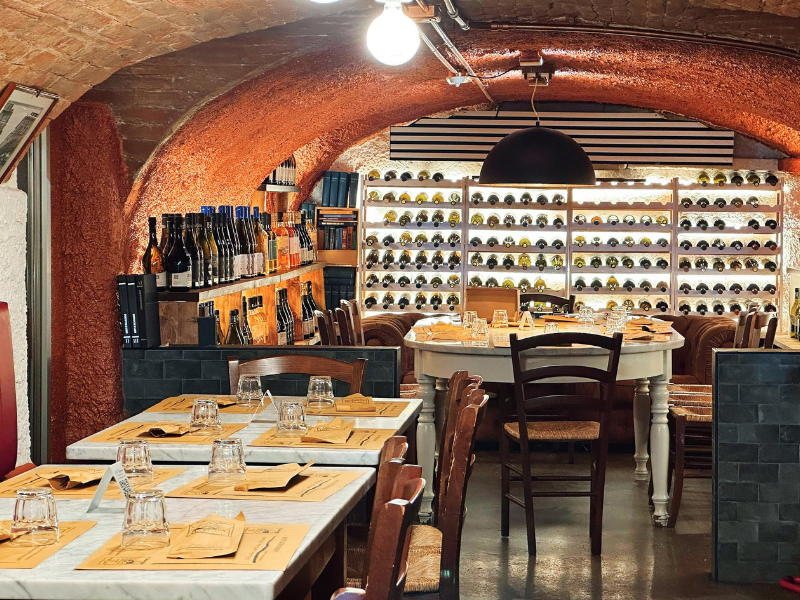
Worked up an appetite from all that perusing? Snag a table at Osteria All’Inferno dal 1905, a rustic family-run trattoria beloved for its authentic Ligurian cuisine. Tucked inside a 19th-century cellar, La Spezia’s oldest restaurant takes its fiery name from the steep stairs leading underground — a journey into “hell” that opens into a cozy, old-world tavern. The food is no-nonsense, focusing on fresh, seasonal produce and seafood prepared according to time-honoured recipes. There is no fixed menu, but diners in the summertime should not miss the traditional stuffed mussels, served right when local shellfish are at their plumpest and most flavourful.
Everything here is home-made, even the Testaroli, which if you have not tried, is an ancient dish originating from the Etruscan civilisation and best described as a cross between a crepe and pasta. The batter is first poured into a hot cast iron or terracotta pan and baked, then cut into diamond shapes and given a quick flash-boil before being dressed with fresh pesto. It yields a spongy, springy, almost “QQ” texture when cooked and was hands down our most memorable dish from the city.
Avoid the post-lunch slump and mosey up to Castello di San Giorgio, an imposing fortress that once guarded the Genoese Republic’s eastern borders. Upon reaching its stone battlements, visitors are rewarded with postcard-worthy views of the city’s red-tiled roofs stretching towards the tranquil waters of the Gulf of Poets. The castle is also home to an archaeological museum conserving historical regional material, from anthropomorphic steles in sandstone dating back to the Bronze and Iron Ages to relics found in the necropolis of ancient Luni. Be sure to check for ongoing cultural events, shows or exhibitions, particularly if you are visiting in the summer.
body_photo_56.png
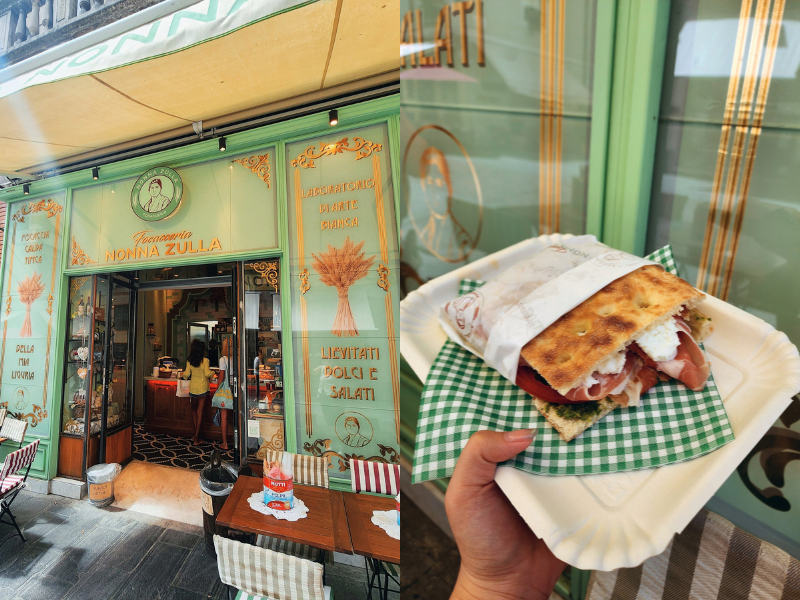
By now, those who get peckish quickly may be thinking about the few focaccia shops along the way. In fact, the dimpled, olive-oil-rich flatbread is one of Liguria’s greatest culinary gifts. Focacceria Nonna Zulla is a charming deli under 10 minutes from the castle. Baked fresh daily, the bread features a crisp, golden crust and pillowy dough that is best enjoyed warm. The classic stuffed option comes with anchovies in local olive oil, creamy burrata, fresh tomatoes and basil. But for a true taste of Liguria, try La Lunigianese, which is layered with mortadella, Caciotta cheese, peppery arugula, crushed walnuts and a generous drizzle of extra virgin olive oil. Settle into their outdoor seating and people-watch as la passeggiata draws friends and families out for an evening stroll.
Otherwise, take your sandwich to Parco Salvador Allende for a picnic. The green sanctuary runs parallel to the waterfront and encompasses public gardens dating back to 1825, a historic pine forest and the Passeggiata Costantino Morin seafront promenade framed by palm trees and flowerbeds. At the heart of the park is the Monument to Giuseppe Garibaldi, one of the few equestrian statues in the world where the horse is depicted on its hind legs. Nearby is the Music Stage, a striking Art Nouveau pagoda supported by cast iron pillars, long known for hosting performances by the Navy band and local orchestras. Woven through the park are shaded cycle paths, marble busts honouring La Spezia’s notable figures and street vendors whose lively calls drift on the gentle sea breeze.
Take a deep breath and drink it all in. After all, nowhere is it easier to practise il dolce far niente, or “the sweetness of doing nothing”, than in La Spezia.
This article first appeared on Sept 14, 2026 in The Edge Malaysia.