

To Koay, the building was never just another investment, but also an opportunity to give a historic landmark new purpose (Photo: SooPhye)
Spanning 3.7km, Jalan Burma in Penang became one of the most vital transport and economic arteries during the British colonial period in the late 18th century. Connecting the core city to outlying coastal plantations and suburbs in the north, the thoroughfare served as the primary path for bullock carts hauling wooden water barrels down from the reservoir at the Botanic Gardens to the booming George Town.
Some sections of the street were used by the authorities for the construction of residential quarters. In 1926, a double-storey building was erected on a two-acre land to provide reliable shelter for a group of immigration officers. A century later, this historic structure was revitalised in the form of 1926 Heritage Hotel Penang by The Unlimited Collection, a brand under Singapore-based lodging owner-operator Ascott Limited which focuses on destinations defined by local culture elements. Officially launched last week, 1926 marked the first Unlimited Collection in Malaysia.
High time
For decades, the building was vacant and remained under the care of Penang Development Corporation (PDC), a state-owned economic development agency established in 1969 to oversee industrial growth, township planning and urban renewal. In 1999, it renovated and converted the property into a 96-room budget hotel aimed at local and international tourists looking for affordable, no-frills lodging. When the previous management’s lease agreement ended in 2020, the building was left uninhabited again.
Amid the global economic downturn in 2023, the travel and tourism sector rebounded strongly after the pandemic. Penang alone welcomed nearly seven million tourists, up 64.5% from 2022, according to the state’s tourism and creative economy committee. PDC took the opportunity to call for local or foreign companies to participate in the request for proposal to lease, restore and upgrade the 1926 Heritage Hotel. The following year, Jetblue, a Penang-based firm that manages property development and hospitality projects, which is helmed by Datuk Koay Shao Sheong (or Frank to most), was selected as the winner of the open tender.
The contract duration is set at 15 years, with an option to extend for another 15. Jetblue bore the enormous responsibility of bringing the hotel back to life in time to commemorate the landmark’s centennial milestone. The team had less than 24 months in total for the renovation work, which cost up to RM20 million. What drew Koay to embark on such a major undertaking?
“It is a good location and it is very unique. You don’t see heritage hotels built on such a big plot of land in the city anymore. Let’s say there was a tract on the island today, I think developers would be keen to build a high-rise instead. Why would they want to make space for hospitality? It doesn’t make sense commercial-wise,” he says.
“To me, this was never just another hotel investment. It was an opportunity to give one of Penang’s historic landmarks a new purpose. Heritage buildings can only survive if they remain relevant and commercially sustainable. Rather than preserving it as a museum, we transformed it into a living heritage destination where guests can experience history with modern comfort. I hope this project demonstrates that heritage conservation and successful hospitality can go hand in hand.”
1.png
Classic yet contemporary
Although Jalan Burma still fulfils its function as a main route that links the outskirts to downtown, it has also turned into a vibrant business district dotted with all kinds of shophouses, bustling hawker stalls, offices, cultural sites and private homes.
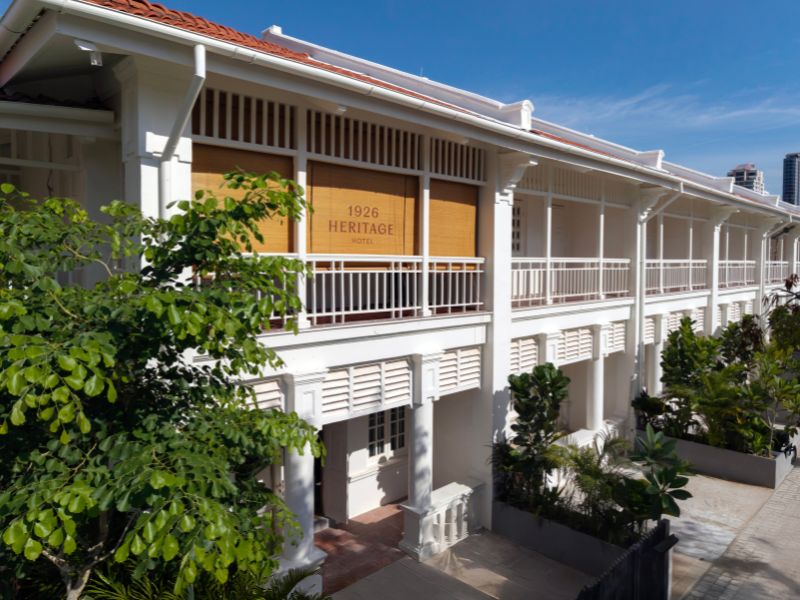
Among the cluster of attractions lining the road, 1926 stands out with its all-white exterior. Its Anglo-Malay architecture invites guests to journey through the period in which it was originally built. Here, colonial elements meet Asian nuances and heritage details are softened with contemporary elegance.
“The design reflects the history of the place, which was developed during British rule. There are only a few boutique hotels in Penang that have been restored with British colonial aesthetics. Many take references from Peranakan. So this is something entirely different we are offering,” says Koay, who personally prefers neutral palettes and clean layouts over striking combinations of colours.
“My approach to restoration is more contemporary. I maintain the exterior and transform the interior by infusing new elements to make the space feel more liveable. I prefer an accommodation with modern amenities. I’m very particular about bathrooms. I also need a good night’s sleep when I travel, so the bed must be comfortable. I don’t really care about brands as long as it does the job,” he reveals.
Leading the creative direction for the makeover is Office Of_, founded by Brian Khoo and Ng Sze Wee. Ng comments: “Our approach was never about changing the building’s story, but rather writing its next chapter. We have been meticulous in preserving the character that gives this property its identity, ensuring we retain the soul of the original structure while seamlessly adapting the space to meet the sophisticated demands of the modern traveller.”
Koay envisioned 1926 as an urban resort that can provide visitors a tranquil escape but still allow them to be in close proximity to the bustling city life. “When people come in, they can immediately enter a quiet sanctuary despite the premises being saturated with traffic and noise. They can walk all the way to the back area and feel like they are in a completely different place,” he says.
“Urban resort is not a new thing. In holiday destinations such as Bali and Phuket, there are plenty of these establishments. Villas in the city centre come complete with a beautiful landscape to make it feel like a resort.”
4.png
Total package
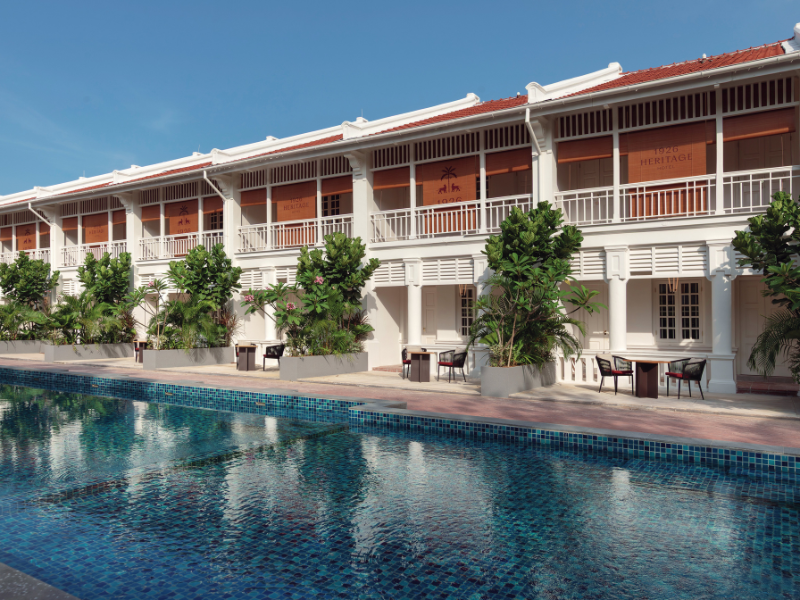
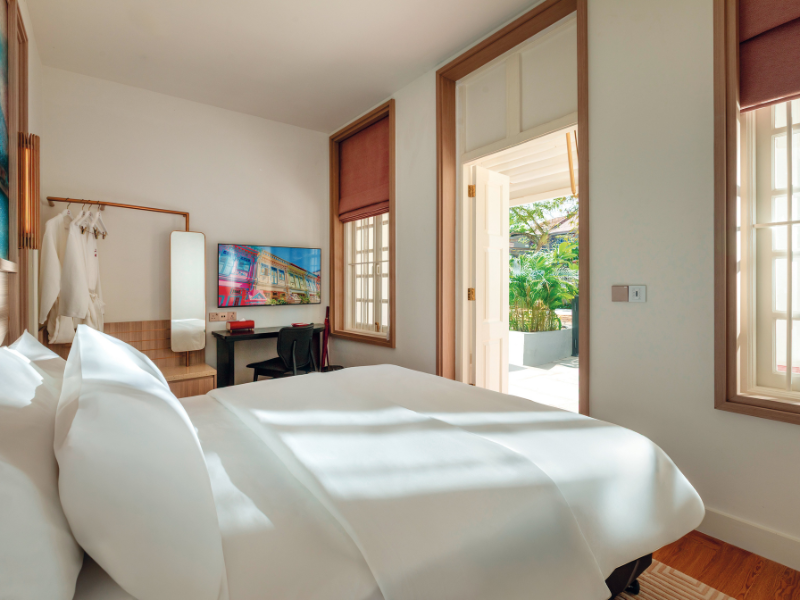
The hotel boasts 78 rooms and suites within 24 interconnected two-storey link houses. Guests can choose between Heritage Room, Colonial Twin, Colonial King, Residency Suite and Straits Suite, each equipped with premium amenities and equipment to enhance one’s stay. Some configurations have spacious lounges for quiet downtime. Meanwhile, Heritage Garden Patio provides direct access to the outdoor area where one can savour a cup of coffee in the morning overlooking the peaceful Jalan Imigresen or head straight to the pool for a quick dip.
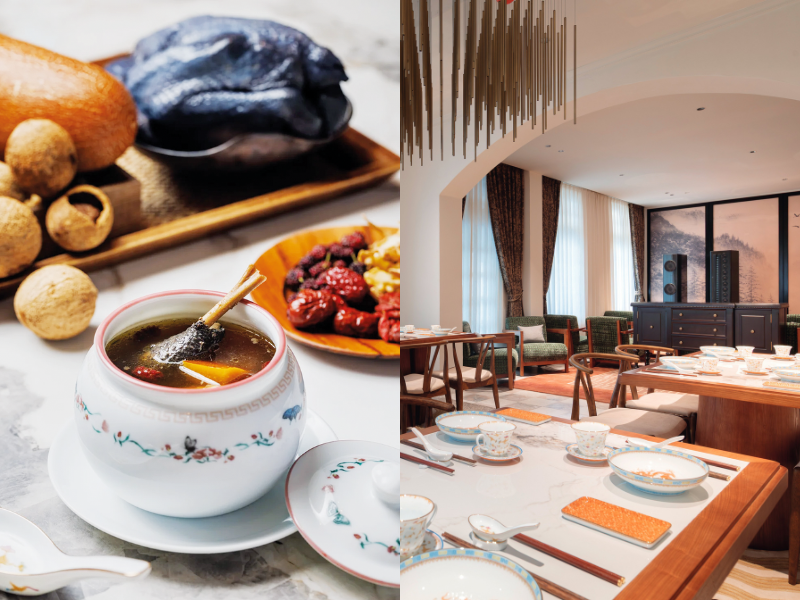
Dining is an integral part of the experience. Root House by Gēn, led by chef-founder Johnson Wong, is situated on the left side of the building, next to the reception. Reminiscent of a contemporary Chinese bistro, the restaurant spotlights a menu anchored in tradition yet expressed through a lens that traces the story of Penang’s transformation over the years. Wong incorporates local ingredients in
Salted Fish Curry with Doughstick, Jungle Garlic Black Chicken Soup and Wok Fried Beef Sirloin with Kaffir Lime Leaf, among others.
Next to the eatery is the U-Bar, where a curated list of drinks is delivered in a relaxing, convivial atmosphere. The sophisticated setting with warm lighting is guaranteed to get one in the mood to sit back and enjoy the rest of the evening.
On the other end, The Heritage Collection by Daily Coffee operates from morning to nighttime, serving specialty coffee alongside a variety of fusion food. Customers can sample dishes such as Tuna Tataki, Smoked Duck with Curry Fettuccine, Heritage Chicken Burger and Seafood Asam Pedas Risotto. The menu was created to capture the energy and familiar flavours of Penang as one of Malaysia’s culinary capitals.
Additionally, elements of art, design and community are integrated throughout the premises. Guests are able to admire the intricacy of urban landscape paintings by Penang-born watercolourist and art educator Koay Shao Peng, who is the property owner’s elder brother. More than 50 pieces of his works adorn the walls and corridors, transforming the hotel into an exhibition space. His portfolio comprises drawings of heritage buildings, historical streets and everyday scenes in Penang.
Beyond that, the hotel has a dedicated corner for U-Shop, a gift store that carries a selection of artisanal products and merchandise sourced from across the island, reinforcing the hotel’s appreciation for local makers and culture.
Even though cultural sites, interesting neighbourhood enclaves and other tourist hotspots are a stone’s throw from the hotel, Koay says it is still important for the establishment to have its own appeal. “As much as we want our guests to go out and explore the best that the state has to offer, we also want them to enjoy spending their time within the premises.”
2.png
Hands-on
This important landmark has lived through all kinds of historical events and extreme conditions. It survived a brutal military occupation marked by naval battles and heavy aerial bombing during WWII and has endured the intense tropical weather and natural disasters.
Koay recalls the state of 1926 before renovation took place in 2024. “It was in a very dilapidated condition. The damage was primarily caused by termite infestation. All the woods were hollowed out. We couldn’t even walk upstairs due to safety reasons. So many things had collapsed.”
But this overwhelming sight did not dampen his spirit. After all, he has acquired and restored almost 300 heritage buildings on the island in the last 16 years. “In 2008, George Town was inscribed as a Unesco World Heritage Site. Many people started to purchase heritage buildings for investment purposes. I was interested, but for some time, all I did was observe and study the market. Then in 2010, I bought Farquhar Mansion as my first investment, and the rest, as they say, is history,” he explains.
“After working on so many buildings, I discovered how interesting it was that each building had its own characteristics. You never find a single project that’s similar to another. You have to treat each differently because there’s always a new problem every time,” he says with a laugh.
Koay likens restoring a ruin to mending a beloved bag that has lost much of its shape and accessories. “It’s like going to a repair shop and telling the uncle that a fragment of your bag is missing. Then you ask him to recreate the part and return it to its original state. That’s not really possible.”
With his background and experience, it seems like no one else could have done a better job on 1926, one of the most challenging projects he has undertaken. “We were presented with this run-down building with a lot of structural damage. So any plan to renovate or repair had to be made based on what we saw on site.”
Koay began by doing extensive research on the building’s past, even though the information was not easily accessible. “When we restore, we have to dig up old information, try to imagine how the building was — its shape, colours, materials, the joinery and a lot more. That’s the difficulty with restoring period buildings. But knowing its history is important because it will impact the way we plan its future design.
“For example, this building was constructed in 1926, which was during the British colonial period. It would not be right to do it in Peranakan style instead. Developing a new building is easy. You can draw inspiration from everywhere. But when it comes to heritage buildings, you need to work within certain guidelines.”
That said, Koay is completely against the idea of replicating the original layout of the building from the inside out. “While working on this project, the challenging thing was contemplating the idea of old and new. We didn’t try to restore anything that cannot be used anymore. So you can easily tell when a design is traditional or otherwise.”
3.png
The road ahead
Having welcomed guests to his property since April, Koay and general manager Angelina Lazuardi want to focus on improving the hotel’s service. “People are more selective now. The more choices you give them, the more picky they become. That’s why the hospitality business is not just about products, but also service. The hardware needs good software. Otherwise, you cannot make it,” he says.
“The guest experience is really important. This is not their house. They come here because they want to be somewhere that feels luxe and comfortable. But beyond that, they want to feel welcome and cared for by the staff. If you go to a nice hotel and you know the service is not up to expectations, why would you pay to stay there, right?”
Koay is working closely with The Ascott Limited to ensure 1926 will be able to provide guests with exceptional service.
“I’ve worked with a few business owners already and I’d like to extend my personal appreciation to Datuk because he’s really hands on with everything that we need here. For simple engineering work, he is willing to go the extra mile to make sure everything is fine, and he is quick,” says Angelina.
“But when it comes to how we manage, he is not hesitant to leave it to our best practices and standard operation procedures, which is not easy for many property owners. But he is able to do that because he is respectful of our work. He is able to be there but knows when it is time to let us take control.”
Having worked at a 5-star hotel in Bali previously, Angelina observes a stark difference in the level of service practised by the locals. “I’m putting in great effort to build a new mindset and cultivate a sense of hospitality and belonging in the team. This is not about what the experts say. This is about making each employee understand that their actions will affect how the guests feel,” she says.
“I have spent a lot of time with the team leaders from each department to make them understand why we have to go above and beyond in everything that we do, down to something as simple as opening the car door and showing a sense of urgency in helping guests carry luggage from afar. I want to make them understand the importance of such care.”
Koay adds, “We are setting quite a high target for ourselves in terms of service. We want to continue to do better. We are still improving every day. Hopefully one day, we can meet Balinese standards.”
This article first appeared on Aug 3, 2026 in The Edge Malaysia.