
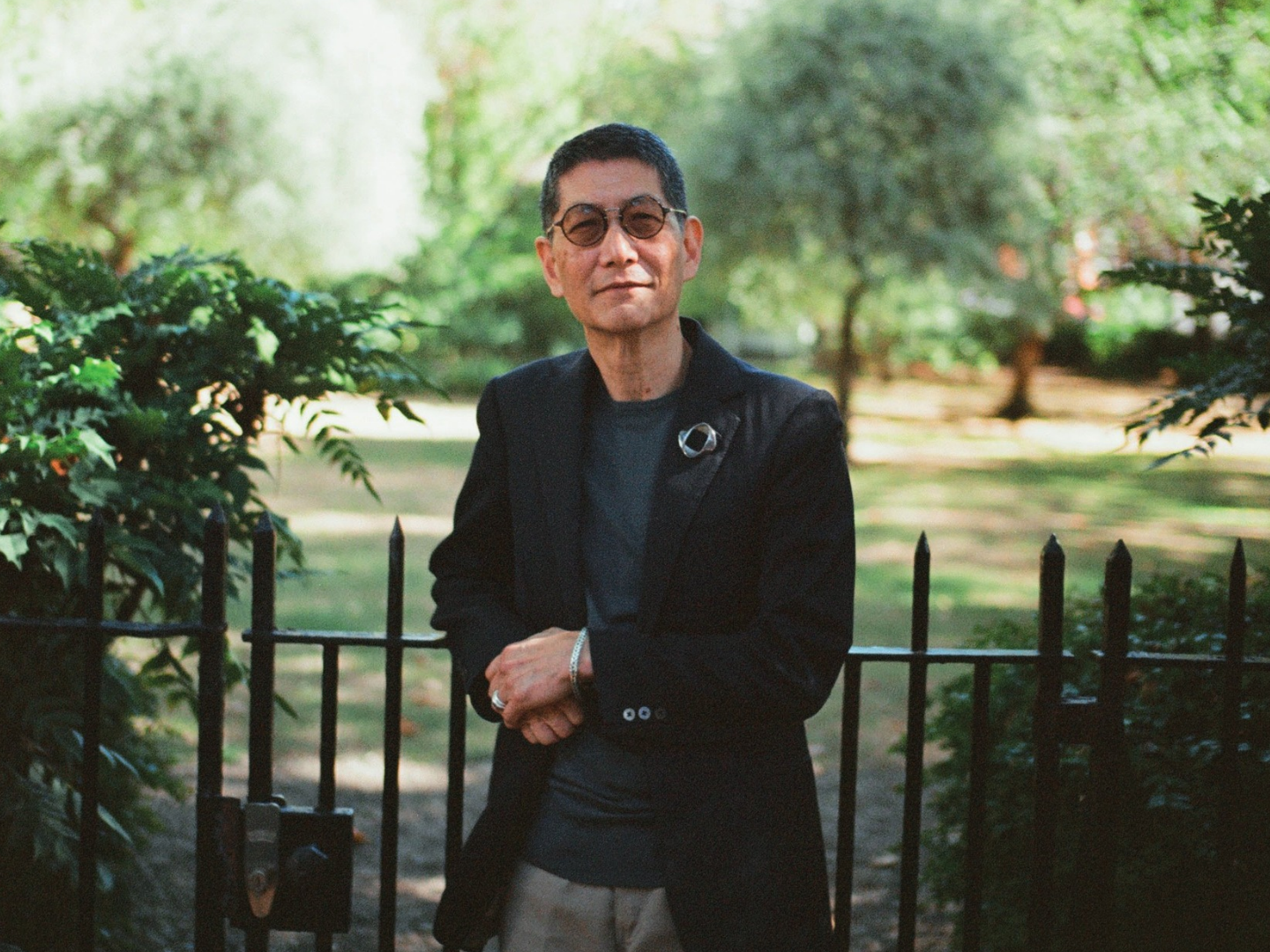
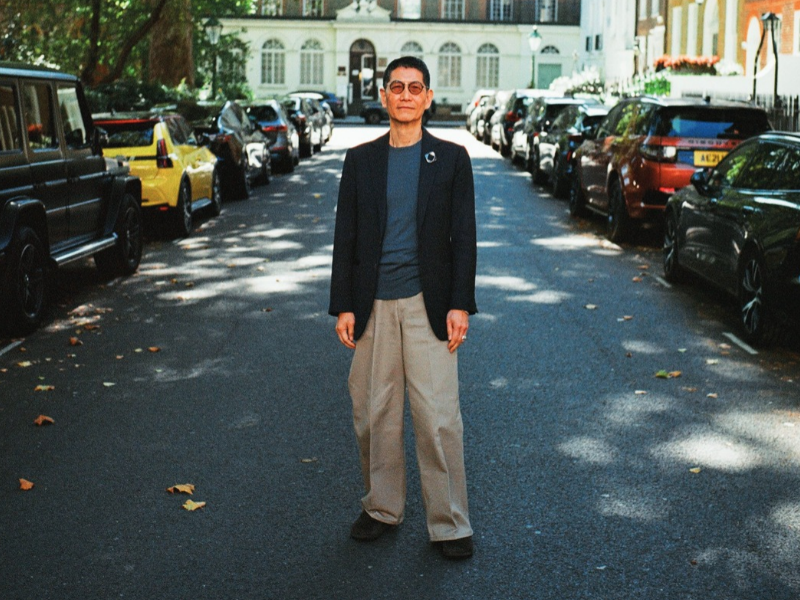
Photographed in London by Datuk Yong Yoon Li using a Leica M7 camera with a 35mm 11873 Light Lens Lab lens (Photo: Datuk Yong Yoon Li)
To those who have counted themselves privileged enough to stay — even if it was for just one night — at the Four Seasons Resort Bali at Sayan, Indonesia, chances are they would never forget the experience. Even as the monumental Ubud resort approaches its 29th birthday next February, its dramatic entrance by suspension bridge above the sacred Ayung River valley, arriving to the sight of an elliptical lotus pond, and overarching blend of heritage and innovation never gets old.
Above the Ordinary
For a resort that has captured the imagination of the world, attracting A-List guests such as former US president Barack Obama and family, and Hollywood star Julia Roberts, who famously lived on-site for three months while filming Eat, Pray, Love in 2009, it might surprise many to learn it was a Malaysian architect by the name of John Heah who revolutionised the perception of what a luxury tropical resort was meant to be.
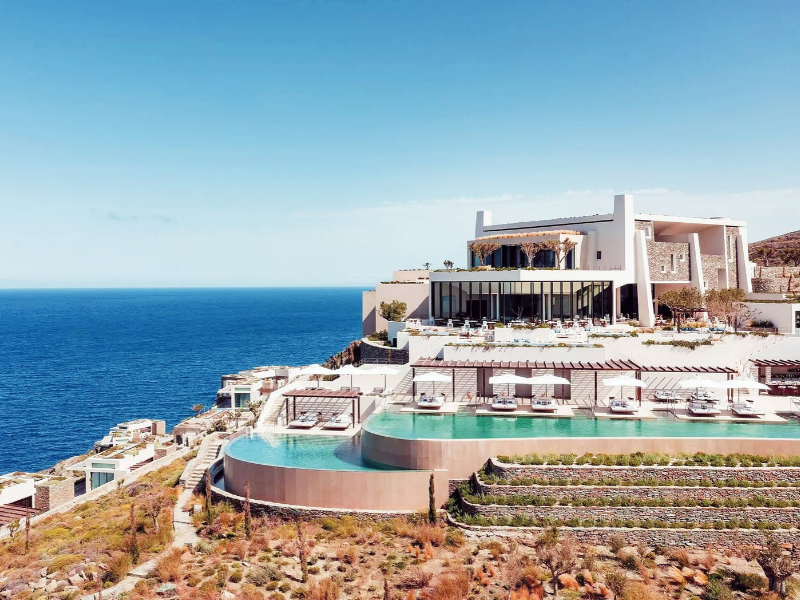
Fast forward to 2024, Heah repeated the feat (not counting several other notable occasions in between, as evinced by Amanera in the Dominican Republic, London’s The Berkeley Hotel’s terrace suites and The Connaught Grill, and the Clinique La Prairie Resort in Amaala, Saudi Arabia) yet another time with the luxurious One&Only Kéa Island in the Greek Cyclades, a cluster of islands that includes Santorini, Mykonos, Naxos and Paros.
Kea, or Tzia to locals, is one of the smallest in the archipelago. Formed in the shape of a teardrop, it barely has 2,500 inhabitants to its name, all of whom stay in modest, sleepy hamlets. However, come the summer holiday season, the number can swell dramatically, with visitors ranging from affluent Athenians who regularly decamp to their weekend home to the world’s high-net-worth individuals checking into the One&Only Kéa Island.
Comprising just 63 villas and 40 private homes, the cliffside resort is a paean to Heah’s elegant, dramatic style that never fails to evoke a sense of place, all the while infusing it with little accents that will leave you open-mouthed with wonder. Using local stone and Greek marble, the Penang-born Heah practically dreamed up his own interpretation of a modern, minimalist temple — complete with a towering atrium that opens up to the sky — that is certain to make all of Olympus’ deities nod with approval. As dramatic as his groundbreaking Sayan but with a coolness and restraint that echoes iconic Greek white-washed walls, Heah brings a level of sophistication to the Cyclades as never before.
It is perhaps fitting that our choice for a coffee and catch-up was at the Hideaway Coffee House, a small set-up discreetly hidden along Farrier’s Passage in London’s Soho district. Just like the sublimely intimate luxury hideouts he creates, it would seem that Heah strives to constantly maintain this sense of refuge and isolation; never mind that the matinée crowds are all milling about the Piccadilly Theatre where Moulin Rouge! The Musical is playing, or the Devonshire’s snaking queues (it is London’s pub du jour after all, consistently drawing celebs such as Margot Robbie and Bono) just a stone’s throw from the passageway’s discreet entrance.
body_photo_83.png
Walking With Giants
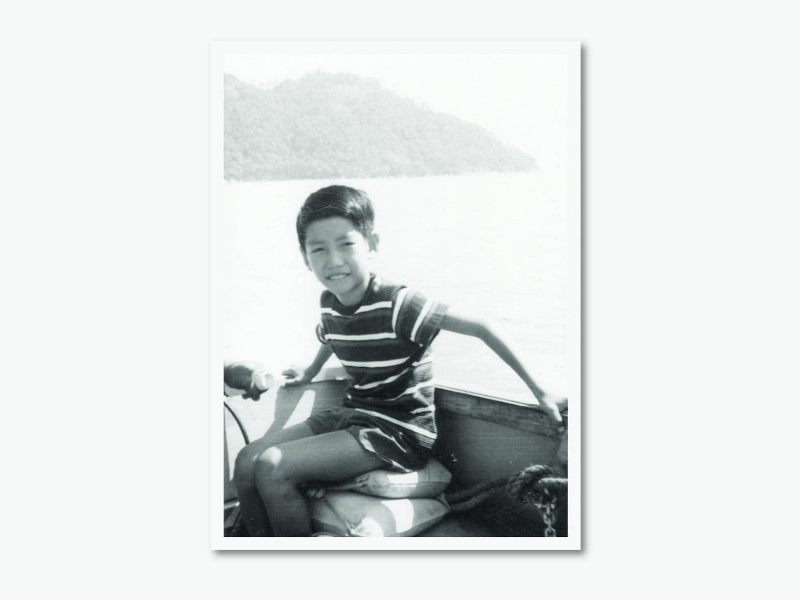
Born in George Town, where he studied at Wellesley Primary for a few years before being shipped to “some unknown Methodist prep school in Cambridgeshire”, Heah graduated from University College London with a BSc in Architecture, followed by a diploma in architecture from the University of Cambridge. First arriving in London in 1970 as a fresh-faced 10-year-old, Heah, who had wanted to be a pilot, somehow found himself walking in his father’s footsteps.
Hailing from two renowned Penang families — the Heahs, who made their fortune in rubber, and the Choongs, who excelled in commerce, law and public service — his parents Johnny and Amy were national badminton stars (other famous shuttlers in the family included Datuk Eddy, Datuk David and Freddie Choong) who later went on to carve distinguished paths in architecture and heritage conservation respectively.
Tall, thin and pale — no surprise seeing that he gave up the island’s tropical sunshine for London over five decades ago — Heah, in person, is exceedingly friendly and chatty, despite his aversion to publicity and the media. “A British journalist once told me, ‘John, you are the most famous unknown architect in hospitality’,” he laughs.
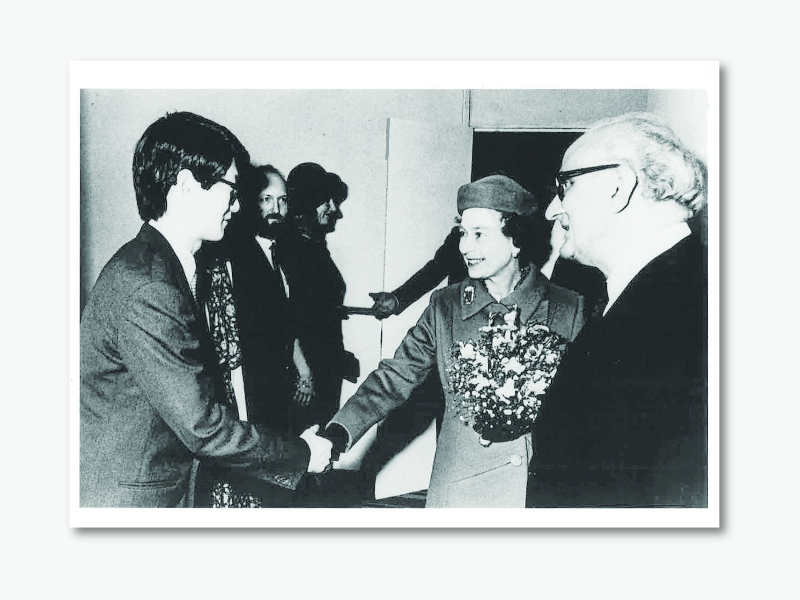
Sharing memories of tailing his father to the office on weekends (“People worked half-days on Saturdays then”) and seeing one of the male secretaries create actual blueprints using tracing and ammonia papers and dyeline machines, Heah attributes his biggest break to meeting Sir Richard Rogers. “He gave me my first independent studio space on his mezzanine level,” says Heah of the late Pritzker Prize winner. Together, he and Rogers’ firm, RSHP, have collaborated on several high-profile luxury hospitality projects, including The Berkeley Hotel.
But then, Heah has always been blessed with meeting guiren — a Chinese term that denotes “honourable people” who serve as benefactors or helpful individuals, bringing good fortune and crucial support — throughout his life. Besides Rogers, this would include Ron Herron, a founding member of Archigram, the radical 1960s British architectural group known for its pop-culture and graphics-driven approach to design (“Ron was my mentor and it was he who introduced me to Richard”); Singapore-based tycoon Ong Beng Seng, who appointed him to create the Four Seasons Sayan; and, of course, hotelier extraordinaire Adrian Zecha, with whom Heah collaborated closely for Amanera and the initial concept for Amanvari on the East Cape of Baja California Sur, an hour from Los Cabos, Mexico.
“I was blessed to have worked in the era that I did because talent is not enough. Talent also needs collaborators. Adrian created so many Amans, each one amazing,” says Heah, referring to the unrivalled resort brand that practically pioneered private, Zen-like luxury. “In fact, after I did Sayan, Adrian was the first to congratulate me — by fax!”
body_photo_82.png
The Push Factor
It is this mindset that keeps Heah & Co consciously small (the headcount veers between eight and 11 pax at any one time) — comfortable enough to work with the biggest names in the industry yet nimble and independent enough to say “yes” only if and when the founder wants to. “Personally, I have been very disappointed by many brands out there,” sighs Heah. “Too many are run by people who only care about money, and not the experience. What should be the driving factor is giving guests what they never even realised they wanted or needed.”
Heah, however, is candid enough to admit that despite Sayan’s runaway success and critical acclaim, job offers did not come knocking hard on his door. “We didn’t get much work after. Why? Too radical, I suppose,” he shrugs. “People even commented how a spaceship had landed in Ubud. But now, almost 30 years on, I dare say it has transformed Ubud!”
A purist, Heah still cites the importance of site visits and model-making — which, he laments, is a dying art. “There is a term these days called ‘value engineering’. What it really means is cost-cutting,” he sighs, yet again. “When I worked on Sayan, I lived on-site for two whole years. That was what was expected of architects then. Now, I think hospitality is at a crossroads. So many hotel brands are geared towards trends and owners just desperate to have their properties designed by a starchitect, never mind that they have never done a hotel their whole lives!”
Still, there are shafts of light which Heah calls “green shoots”, singling out the visionary Irish businessman and property investor Paddy McKillen, original founder of the Maybourne Hotel Group, which owns Claridge’s, The Connaught and The Berkeley hotels, chief among them. “Paddy is a good pal of Adrian’s and you should see some of the newer things he has done,” says Heah animatedly. “Look up The Shinmonzen, a ryokan in Kyoto that has just nine suites designed by Tadao Ando and a restaurant by Jean-Georges [Vongerichten].” Art enthusiasts and vino lovers might also have heard of McKillen’s Château La Coste, a wine estate and hotel filled with structures designed by Renzo Piano, Frank Gehry, Richard Serra and even Oscar Niemeyer’s last project, alongside artworks and installations by Louise Bourgeois, Damien Hirst and even Bob Dylan.
Another name Heah lavishes praise on is the Oberoi family of India, for whom he is working on a hotel in Goa right now. “The family has owned the land for 30 years. They came to me because they wanted something contemporary,” he shares. After successfully doing away with an earlier ‘block hotel’ idea, Heah adds, with an air of relief, that the current plan is for 70 bungalows with Portuguese accents to tie the design in with Goenkar history and heritage. “The mock-up rooms should be ready by this month, in fact.”
For those dreaming of an illustrious career in architecture, Heah says one of the most important qualities to possess is perseverance. “I had tried to work with Adrian Zecha for 10 years. Each time he would tell me ‘no’. But somehow, on the tenth try, he finally said, ‘Good news. I got a job for you.’ And that was Amanera,” smiles Heah. “And compared to the Sayan project where Isadore [Sharp, the famously detail-oriented founder and chairman of Four Seasons Hotels and Resorts] made me knock things down at least twice, Amanera passed the first time, with the only change being a request for a larger walk-in wardrobe.”
body_photo_81.png
Between Two Worlds
Coming from a small family, extended clan notwithstanding, Heah’s only sibling is a sister — “she is very sensible, unlike me” — who lives in Singapore. Life in London is very much just him, his California-born wife Valerie (the couple had met in New York — where she was working for Travel + Leisure magazine — when Heah had been sent to its offices to promote the Four Seasons Sayan) and Finn, their 13-year-old son. His social circle, however, is much more extensive, although equally close-knit. One such pal includes the über restaurateur Alan Yau, who founded cult dining rooms as diverse as Wagamama, Busaba Eathai, Yauatcha, Hakkasan and Park Chinois.
Between juggling all his on-going projects, Heah makes it a point to fly back regularly to Penang to visit his mother, Amy. “She is a very young 95-year-old who still wears shorts and flip-flops and drives herself everywhere to look for char koay teow,” he says affectionately. “Most of our family is actually in Singapore — it was the days before the two countries split — but mum lives in Penang still because she believes in it. She was a member of the Board of the Penang Museum before and a key founding figure of the Penang Heritage Trust.”
On typical Malaysian resilience, Heah observes how “we are chameleons, able to make the best of things wherever we go. I remember when mum dropped me off in the UK to go to school. We travelled by plane, stopping at cities like Bombay, as it was called then, Bahrain and then Rome before finally arriving in London. Everyone was still smoking on board too. She took me the first time and, after that, I went back to school on my own. I vaguely remember being given something like £50 and told to settle myself. In those days, you just did it. It is quite extraordinary, don’t you think? I was not encouraged to ring home either as it was expensive, and instead told to write letters. It is amazing to think how my mother would only find out in a week’s time if I actually arrived safely or not,” he laughs.
body_photo_84.png
When he speaks about the island of his birth, however, a sense of wistfulness can be detected. “London is home, to be sure, but it is always nice to be in Penang. I find everyone and everything to be easy and genuine. The same old joints and the lovely, humble kopitiam are still there. And when people fight to pay your bill, you know it comes from a sincere place, a good place. You can’t get that anywhere else.”
When the family has the opportunity to go on vacation, the ideal plan is to take a long drive — sometimes all the way to Spain, even — to enjoy simple pleasures, such as fresh air, sunshine and indulging in good, honest cooking. “Although I do high-end work, I can slip back easily into real life! I like the idea that a delicious meal for three won’t cost you more than €50. Hey, you can take the boy out of Penang and all that,” he laughs, referring to famous Penangite parsimony. Besides cars, Heah is also partial to motorcycles, particularly old ones, and owns a 1954 Vincent — widely regarded as the world’s first superbike — and another with a Godet engine. “It was an uncle who introduced me to bikes. After he once loaned me his old Golden Triumph Jubilee, I was hooked.”
One item on his future “to-do” list includes entertaining the idea of buying a heritage shophouse in George Town. “Mum lives in Jesselton Road, so it would be kind of nice to have a place of my own, where I can just walk out and get breakfast or lunch,” he grins. During past few visits, Heah has put up at the grand dame Eastern & Oriental Hotel: “There are no complaints as the morning buffet spread is extensive and delicious. For lunch, I go to a coffee shop off Sri Bahari Road where there is very good chicken rice, which my wife loves, tok-tok mee and kopi ais. In fact, you can find so many goodies there. Further down is Campbell Street where I know of a famous kaya toast.”
Home, for now and the future, however, is unequivocally London, where the family lived in Notting Hill Gate for many years before moving slightly west. “Our new place — well, we have lived here for five years already — is closer to the Design Museum in Holland Park. It is definitely more ‘grown up’ but I can’t say we are used to it yet.”
With all the gleaming, gorgeous resorts under his belt, many might wonder what the private home of John Heah the architect looks like. “It is really simple. But it is home,” he muses, before cheekily adding, “There is a famous saying that goes something along the lines of how the cobbler’s children always have the worst shoes. That, I think, should tell you all that you need to know.”
This article first appeared on Sept 28, 2026 in The Edge Malaysia.