
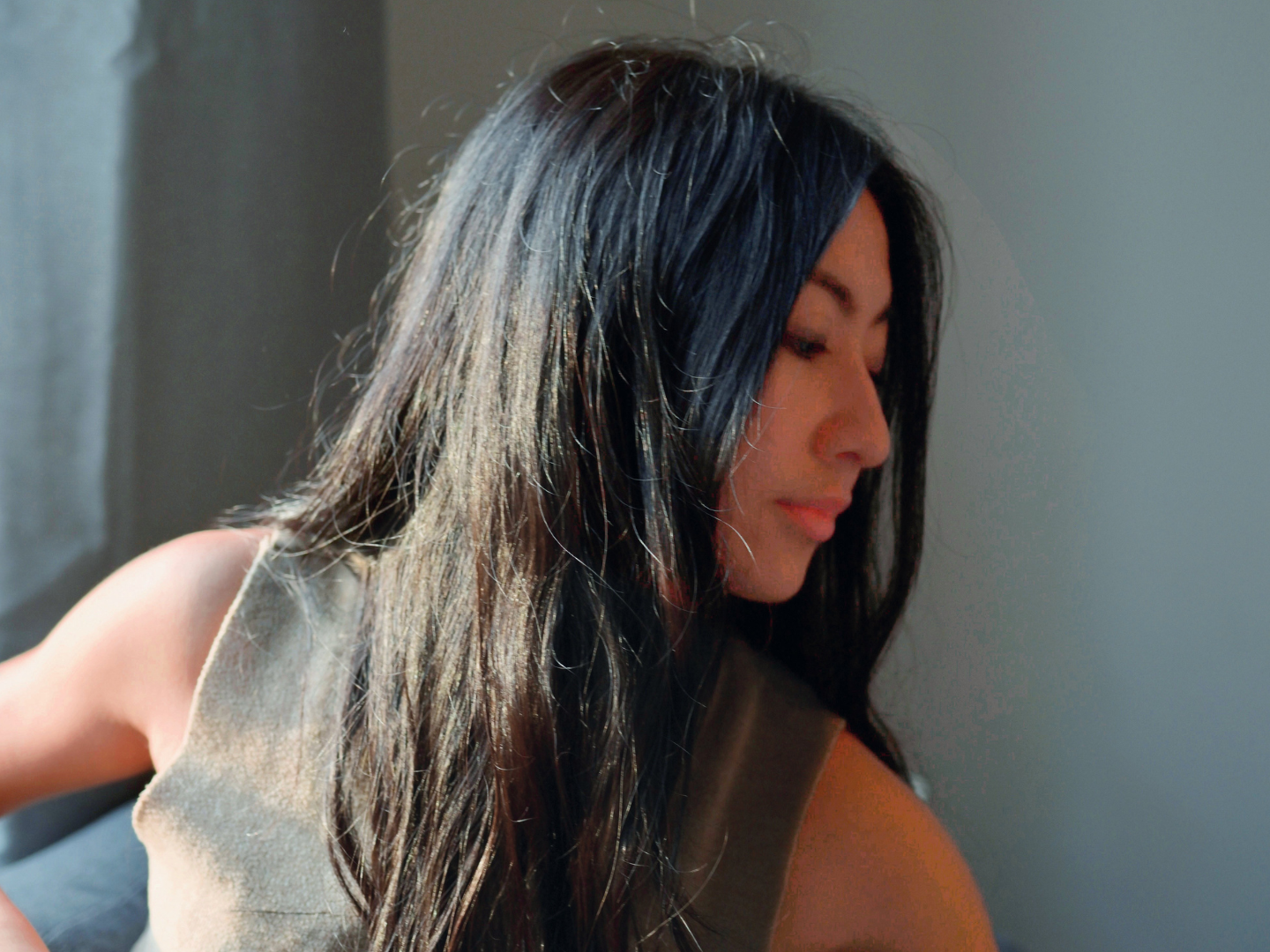
After publishing her first novella, the London-based writer is working on her first non-fiction book (Photo: Emily Macrander)
Options: Congratulations on your first novella, which was launched on Aug 22. What can you tell us about it, particularly its evocative title?
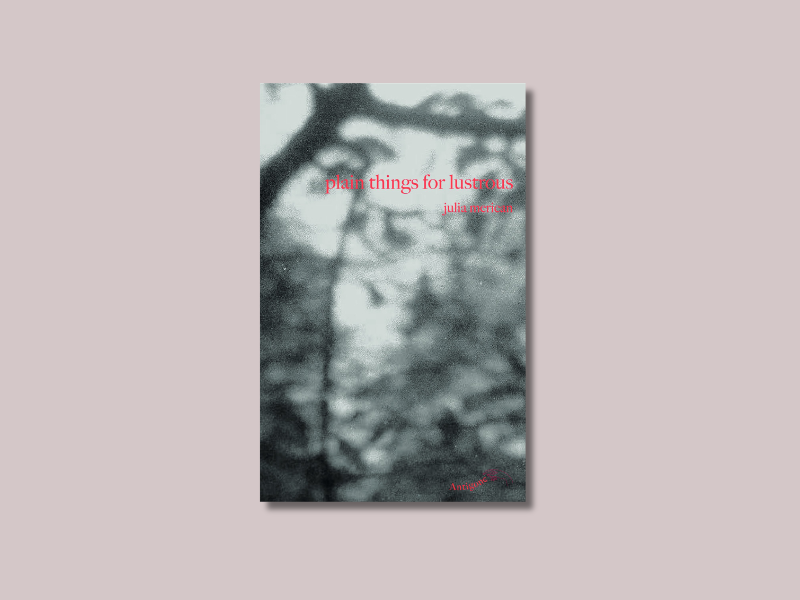
Julia Merican: Plain Things for Lustrous (published by Antigone Editions) is about a young woman and her father getting to know each other on a road trip, and what they reveal and conceal from one another in their conversations. They’re meeting for the first time and, as the story unravels, we learn more about why that is.
I stole my title from a poem called Maybe; maybe not by Denise Riley. It plays with those well-known lines from Corinthians (Paul’s First Epistle to the Corinthians in the New Testament) that I’ve always been very drawn to: ‘When I was a child, I spoke as a child, I understood as a child, I thought as a child: but when I became a man, I put away childish things.’ Stumbling upon Riley’s poem felt like a sort of reunion with those words. I love how she brings this elemental force to the scripture, bringing in the thrush, the clod, the stone. ‘But when I became a man,’ she writes, ‘I put away plain things for lustrous.’ To me, this feels like it’s all about grace, which is so much of what I wanted to explore in writing this book: a lot of it is about two people working through complex feelings and trying — whether successfully or not — to act with forgiveness, with compassion and, ultimately, I suppose, with love.
How did the writing bug first bite?
At the risk of sounding unoriginal or like I’m writing a cover letter, the honest answer is that I’ve always wanted to write. It’s the only way I’ve been able to make meaning from my experiences, from the little things I’ve noticed or the stories I’ve heard from others. It’s the only time I feel genuinely free, letting an idea take hold of me and just following it with the only weapons at my disposal: a keyboard, a pen, or — back when I was first starting out as a precocious eight-year-old with a diary that had a padlock — a mechanical pencil. It’s the only way I’ve been able to express myself most sincerely, even when it’s under the guise of fiction.
I love that you called it ‘the writing bug’ because it’s true: there’s a bite to it. Writing is both the disease and the cure for me. It’s my tormentor and my saviour, my jailer and my therapist, my toxic ex and the love of my life. It’s the thing that makes me feel most alive and the thing that makes me want to sleep for a thousand years. I blame my parents for teaching me how to read, and for feeding my addiction with bedtime stories and my mum’s old Enid Blyton books. If people really don’t like this book I’ve written, I want you to know it is entirely their fault.
body_photo_20.png
What were the main sources of inspiration for Plain Things?
I was really interested about what it might be like to meet your parent, or your child, for the first time when you’re both adults. The idea sort of grabbed me by the heart and didn’t let go; so, I thought I’d exorcise it on the page. What kind of relationship could you have with a father who never raised you? Could you become friends with the daughter who didn’t hold you back from living the life you might otherwise have longed for? What about the guilt and the resentment and the simmering anger that might stand in the way of all that?
I also wanted to have a conversation with my inner masculine — or my animus, as Carl Jung would have called it. In the book, each chapter shifts between the daughter’s perspective and the father’s perspective, and it was interesting to try living in the mind of a middle-aged man. I don’t know how successful my attempt was, but the process of writing from these two perspectives was intense and humbling. On a personal level, it gave me some longed-for peace.
What are you reading right now?
Han Kang’s Greek Lessons, which I’ve been meaning to start since it was translated into English in 2023 by Deborah Smith and Emily Yae Won. In all honesty, I was just waiting for the paperback edition, and then life and my precarious pile of unread books got in the way.
What are you listening to right now?
I’m listening to Imagined Light by the Kolkata-based singer and songwriter Topshe. It’s in the credits of this beautiful film by Payal Kapadia called All We Imagine As Light.
You studied at Oxford, famous for birthing generations of literary women, from Iris Murdoch and Monica Ali to the bluestockings. Did your time there shape or influence you in any way?
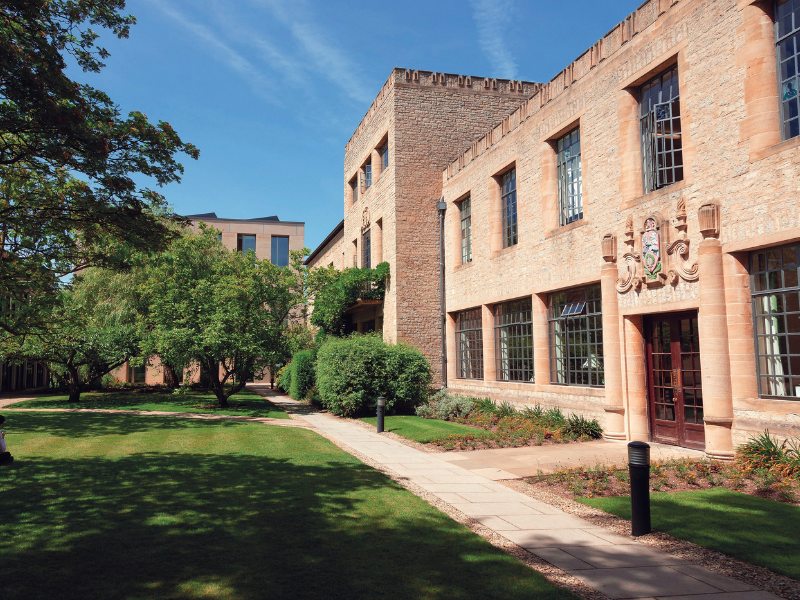
I read English at St Anne’s College, which is lesser known than the Oxford big dogs and therefore also much more my style. It started out as a society for women and officially became a college only in 1952. I like that it started admitting men only in 1979. I was there only briefly as a Master’s student, but it was a formative time that left me with some profound memories.
Because of the pandemic, Oxford was very quiet and I spent most of my time in the older of the college’s two libraries, Hartland House. I was introduced to some of my favourite writers on those bookshelves — Fleur Jaeggy, Anne Carson, Andrés Barba — and wrote almost all of my essays, including my dissertation, at the same desk. I still have photos on my phone of the stained glass windows and sheaves of sign-in sheets at the same spot with just my name on the page.
body_photo_21.png
What has your creative process been like so far? Do you stick to a discipline of achieving a daily word count or is it more fluid?
I sometimes wish I was the kind of person who could stick to a writing schedule, but it’s very fluid for me. I have intense bursts of creativity where I can write all day long, but some weeks the words won’t come and I have to make my peace with it and focus on editing and research.
What are you working on next?
I’m currently working on my first non-fiction book, a blend of art criticism and personal memoir. It’s about longing and enchantment, analysing things like Seamus Heaney’s final text message to his wife; Paul Klee’s sketches of angels; Japanese waka poetry; Love, Death and Robots episodes; and personal experiences of heartbreak, love and daily living. So, only fun stuff! I’m calling it The Inconsolable Secrets, and am working through some early drafts in my Substack newsletter Glimmers and Inklings.
Describe your idea of a perfect weekend. Where would it be and what would you do?
I’d be somewhere quiet with someone I love, where I could fulfil the promised fantasy of nine hours of sleep, go for long walks at any time of the day, see a lot of green and maybe some sparkles of blue, and have the option to be completely alone for a while if I wanted to.
This article first appeared on Aug 24, 2026 in The Edge Malaysia.