

The 26-year-old hopes that the designs can introduce his culture to people who might not otherwise encounter it (Photo: Zahid Izzani/The Edge)
Be it clicking a ballpoint pen or doodling on a notepad, tactile habits are known to keep restless hands busy. For centuries, repetitive motion devices have existed in various forms such as the traditional Chinese Baoding metal balls or the string of worry beads used by ancient Greeks called kompoloi. However, only when toy makers stepped into the picture did modern and commercial fidget gadgets properly emerge.
The click itself is compelling — it requires little thought, yet the simple action can be oddly satisfying — which perhaps explains why the trinkets have grown in popularity, especially in recent times.
Part stress reliever, part desk toy and increasingly, a collectible, the clicker has evolved far beyond its functional origins. Designs have become more elaborate as creators experiment with different shapes, mechanisms and themes to make the experience all the more addictive.
For See Iu Hang, the appeal lies in both the action and art. Under the moniker RaidenArt, the 26-year-old has spent the past 10 months developing his own range of locally inspired clickers. “Some are from memory, others from experience. Sometimes, people suggest ideas to me too,” he shares.
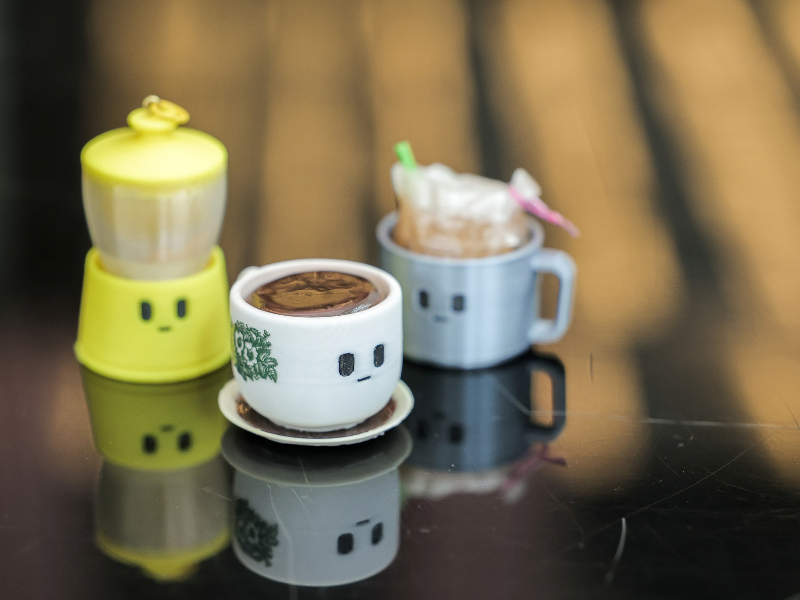
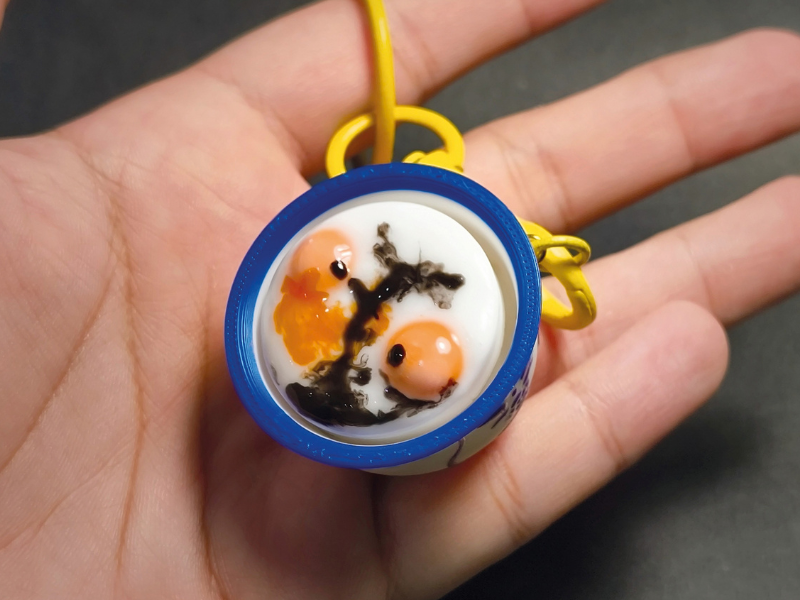
Attached to key rings are miniature versions of beloved Malaysian items such as kopitiam coffee, kuih lapis and half-boiled egg cooker. There are also cheese tarts, nasi lemak and ais kacang, as well as a whole catalogue of petite characters. Adding to its personality, each one is etched with a trademark expression of an adorable, deadpan poker face the artist says was chosen for its ability to represent
any emotion.
body_photo_34.png
Growing up in a house full of art, See knew the creative industry was his calling. His parents were traditional Chinese instrumentalists, while his sisters pursued three-dimensional (3D) animation and illustration. As a child, he would combine different Lego sets without instructions and transform them into bigger figurines.
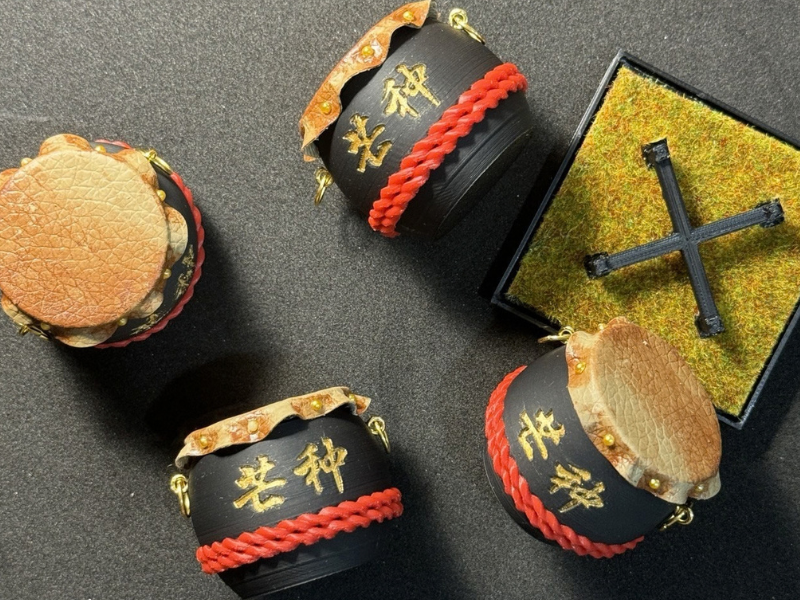
See’s first clicker creation was the Guangdong lion drum. In his school days, he began drumming for Hoops Percussion Academy. The organisation specialises in the 24 Festive Drums, a Malaysian Chinese performance art that involves dynamic movements and thunderous beats. The idea to experiment and print his first clicker came while he was making merchandise for the association.
But he only started making clickers properly in October last year, after returning from a working holiday in New Zealand where he picked small plants at a nursery. Prior to leaving for the one-year endeavour, he made custom-made car rims.
Fundamentally, See has always stayed true to his interests. “I believe you can turn something fun and unique into meaningful and functional objects.”
body_photo_32.png
While the creations are small enough to fit in a palm, designing them requires considerably more thought. See’s background in product and industrial design helped him consider everything, from identifying an item’s purpose and features to how it will eventually be produced.
3D printing has become the outlet to bring these ideas to life, allowing See to prototype and experiment with forms without having to immediately commit to mass production.
The ideas are first visualised on a tablet or computer. Each component has to be done separately as different methods are required to achieve specific textures and shapes, and then the pieces can be attached together.
For instance, the popular ikat tepi design was especially complex. See had to find a way for the white plastic to look translucent enough for the beverage to show. By making the top portion hollow, he was able to utilise resin and mimic the watery effect. Besides that, the gasing — or wooden top — can also spin and features meticulously wrapped rope.
The parts also need to be large enough to encase the actual clicker, which is a keyboard switch. At the same time, they need to be compact enough for hand ergonomics and convenience.
body_photo_35.png
“Lots of people buy the clicker because they think it is cute,” See says. Certain ones are drawn to the tactile element and calming effect (though some may beg to differ), while others just want to own something that is in fashion. The last group is particularly interesting to the designer because he recognises that fidget clickers are, in part, a product of the moment.
Acknowledging that the novelty may fade, there is no attempt to disguise the trend-driven nature of the knick-knack. Instead, the motivated entrepreneur views this as an opportunity.
“This is just one of the paths I am going through,” he expresses. The clickers’ popularity has provided a useful playground to test ideas and develop his own design language while engaging with his growing audience.
See also hopes the designs can introduce aspects of local culture to people who might not otherwise encounter them. “Malaysia is so special because even small things that may not be deemed significant are actually rooted in our heritage. We might find them common, but people from different countries would not know.”
There is still plenty to explore for See. He has set his sights on elevating his projects by making larger items that are more on the decorative end. As of now, he strives to meet his personal target of one creation a week, which he documents, uploads and talks about on his online platform.
RaidenArt products can be purchased online, but those who prefer a physical experience can find the clickers at xOrdinary, a creative hub located in GMBB, Kuala Lumpur. See can also be occasionally found at pop-ups and bazaars.
This article first appeared on Aug 31, 2026 in The Edge Malaysia.