
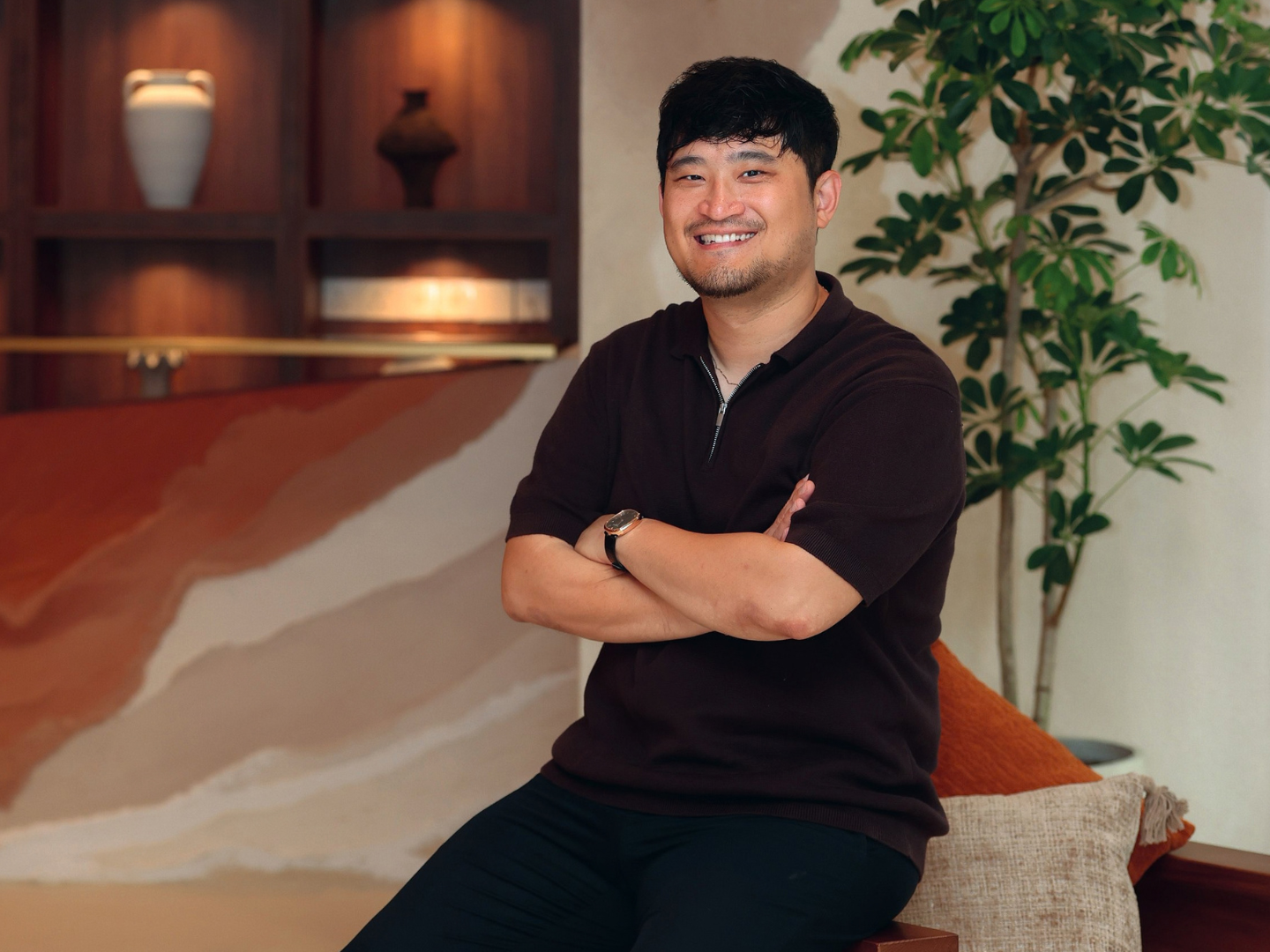
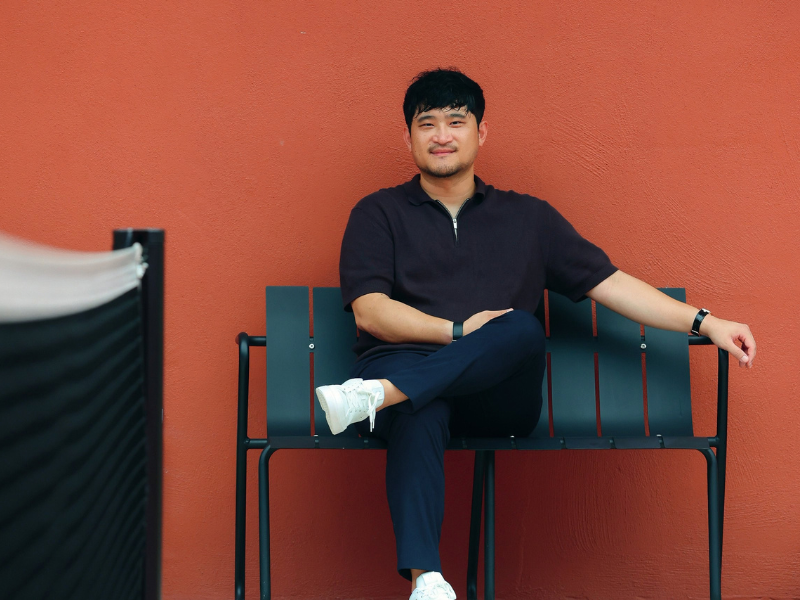
Before Takun Retreat Club, Joewel Lee founded Villa Takun, a boutique glamping retreat also located in Templer Park (Photo: Low Yen Yeing/The Edge)
Rawang has never had much trouble being remembered, albeit not always for the reasons one might expect. Positioned on the northern fringe of Selangor’s industrial belt, its impression in the collective mind has been defined by a blur of concrete pillars, sun-baked gravel, factory lines and lunch-hour detours. “You must be wondering why people come here, and I know what you’re thinking,” Joewel Lee teases with a smile, already anticipating one of the locale’s most persistent clichés. “It’s steamed fei zau yee, right?” To be fair, it is not an entirely undeserved reputation — a piping-hot platter of tilapia smothered in soy sauce, minced ginger and lashings of spring onion makes a persuasive case.
Established in 1825 as a tin-mining settlement, Rawang’s fortunes were shaped in successive waves: Tin gave way to rubber estates during the British colonial era, followed by privately run oil palm plantations in the 1970s. That trajectory of cultivation and development still colours how the place — historically notable as the first town in Malaysia to receive electricity, and for the early electrification of its railway station — is perceived today.
To most, it has occupied a curious footnote in the imagination: familiar enough to name, yet rarely considered somewhere to seek out. Push beyond the busier stretches, though, and the scenery begins to soften: Limestone outcrops rise behind old neighbourhoods, dense foliage gathers around Templer Park — a 1,214ha forest reserve named after Sir Gerald Templer, then British High Commissioner in Malaya — and the looming face of Bukit Takun interrupts the otherwise workaday geography.
7.png
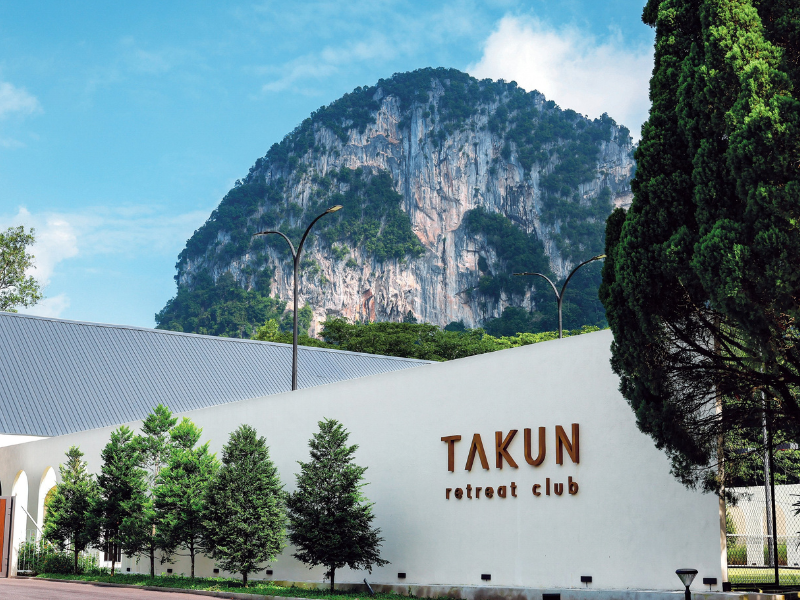
The perimeters of gridlocked commutes and suburban sprawl, of course, were not the whole story — particularly for those who grew up in more secluded reaches, where a verdant serenity still held sway. “As a teen, my friends were always talking about which pasar malam to go to in Kuala Lumpur, and I was like, ‘Oh, I’m actually 40 minutes away.’” Having spent his childhood around this green lung, Lee hardly considered the trade-off enviable. It was only after years of living in bustling metropolises that the abundance he had taken for granted began to register differently: cleaner air, trees at the doorstep and a slice of tranquillity people now willingly go out of their way for.
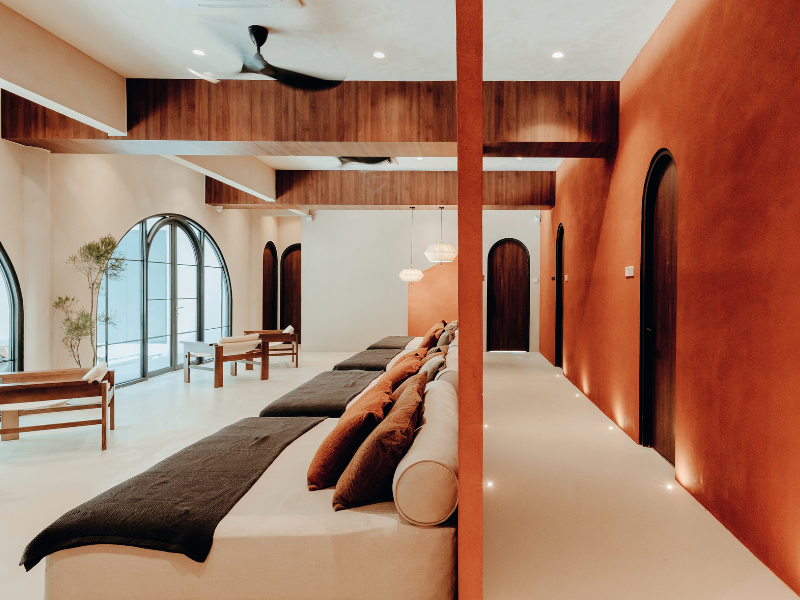
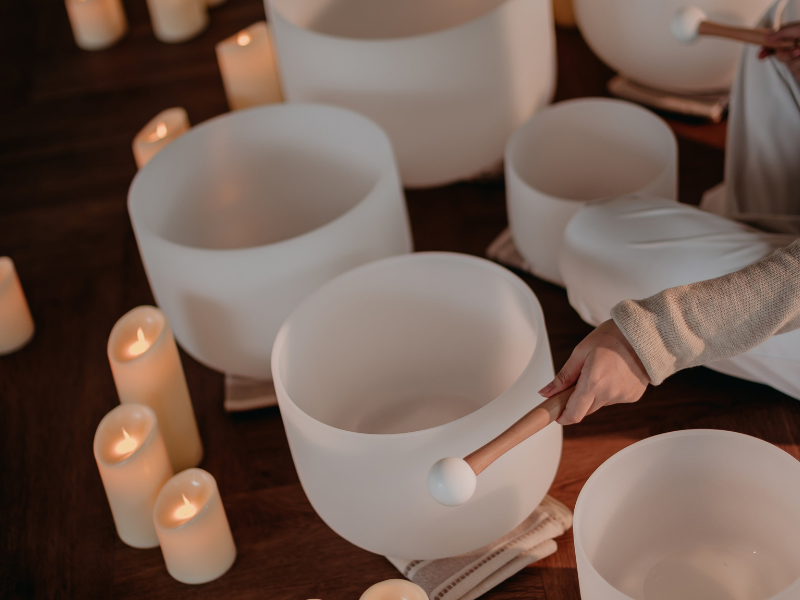
Takun Retreat Club (TRC) is, in many ways, his response to that belated realisation. Conceived as a getaway that would renew interest in the area’s overlooked charms, the private wellness club brings together tennis and pickleball courts with an unusually broad recovery suite spanning sauna, cold plunge, Thunder Spa, red-light sessions, hydrogen therapy, compression boots, guided meditation and sound healing. Dining and event halls round out the layout, allowing the day to move easily between exertion and repose.
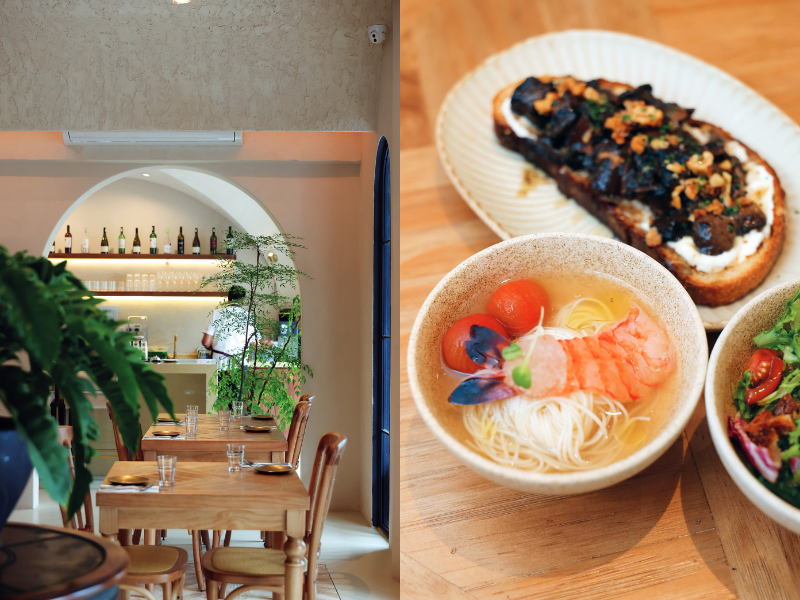
Its Experience Pass, from RM380, is structured around that freedom, giving each guest four credits to spend on activities, treatments or nourishing fare at Pepe Restaurant, including ginseng chicken collagen broth, turmeric shots and cold somen with tomato dashi. Freshly harvested pegaga is served as a welcome drink, while lounge access, showers and lockers, along with post-recovery hydrogen milk, complete the package. Pepe, meanwhile, functions as the lively social fulcrum, inviting casual diners to linger over a meal regardless of their itinerary.
Strikingly contemporary as this concept may appear, its origins did not emerge from a vacuum. The blueprints were drawn long ago in the subconscious of a restless aesthete, who spent years developing hospitality projects and crafting unique environments that compel even the most hurried urbanites to dwell. Rawang, as it turns out, just needed someone discerning to look twice.
4.png
Courts of appeal
If TRC suggests the distillation of a hotelier’s burning pursuit, Lee’s foray into the industry was actually an accretion of disparate influences. Born in 1988, he was raised against the backdrop of CAO Industries Sdn Bhd, the walling materials business founded by his father, Lee Chee Kok, whose roots lay in minerals and limestone. Even then, joining the family enterprise never felt preordained. Australia became a prolonged exercise in trying on possible futures: accounting and finance at Swinburne University of Technology; a marketing diploma at RMIT; then ACCA (Association of Chartered Certified Accountants) studies at the University of Melbourne. A full-time position in corporate auditing ensued almost by default, providing a degree of stability that deterred a radical pivot or creative departure.
“I was like a school of fish, just following everybody’s footsteps,” he recalls. His parents never explicitly forced his hand, but the expectation to pursue something suitably respectable overseas was understood. Picking a degree, as Lee puts it, was partly a gesture “to impress them” — a dutiful compromise that proved comfortable enough to keep him there for close to a decade.
Priorities back home eventually reasserted themselves in 2019, when CAO needed additional management muscle to steer a widening portfolio. Rather than being parachuted into the fold at the top or inheriting the same formula, he took on the task of diversification, exploring adjacent categories and ventures that could carry the company beyond what he describes as a “possibly sunsetting” sector. By his count, those efforts have since led to more than 30 brands under the group, among them Vasari, the California-based maker of natural lime plasters, paints, powdered marble and fine limestone aggregates. Instead of developing a competing line from scratch, Lee saw the logic in partnering with a reputable international label whose material language already dovetailed with CAO’s expertise, using that relationship as a springboard into decorative finishes and textured surfaces.
6.png
The more consequential shift in scope, however, came through the family’s property holdings under IO Group, which had previously operated IO Hotels before their strategic conversion into confinement centres. That transition left the group with an in-house team versed in managing guests, properties and day-to-day operations — know-how Lee could redirect towards a very different proposition. His father had been acquiring parcels of land and standalone vacation houses in out-of-the-way pockets such as Kuala Kubu Bharu and Janda Baik, many of which sat abandoned. Recognising the latent value in these locations, Lee began transforming them into short-stay destinations. It was an empirical crash course in retreat management, proving that proximity to nature, paired with an intentional human touch, could hold far greater appeal than standard lodging.
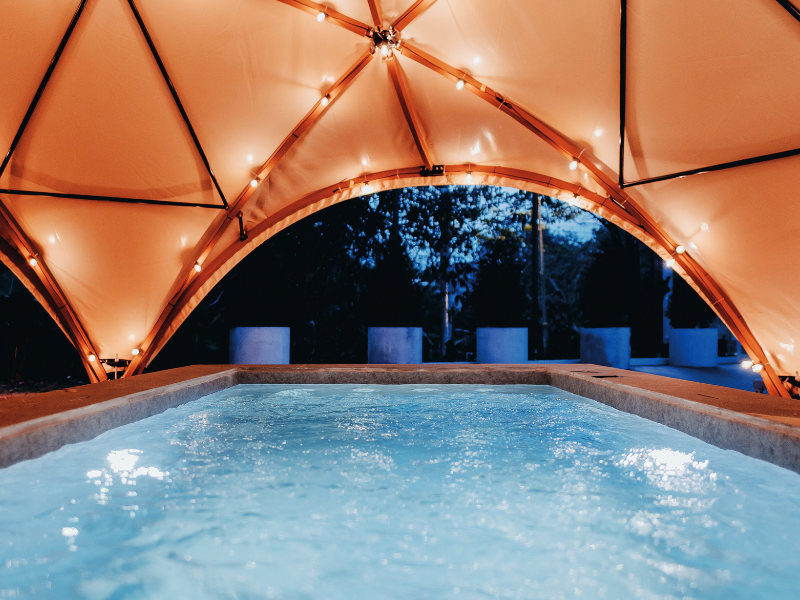
That operational experiment quickly yielded a clutch of boutique escapes in various formats and fittings. For example, Dolomite Templer, decked out in a modern Nordic palette with a conservatory dome gazebo for stargazing, became an early breakthrough when Lee listed it on Airbnb at a time when most temporary rentals were still concentrated in downtown high-rises. The undertaking took a more ambitious turn in 2021 with the launch of Villa Takun, where an elevated iteration of glamping formed only one part of an accommodation spectrum encompassing retro caravans equipped with outdoor rain showers, minimalist A-frames and indoor studio rooms. At the upper end nestles a Moroccan-inspired enclave, where the artisanal warmth of Marrakech is echoed through intimate lounging nooks and a signature dipping pool overlooking the hills.
Naturally, the runaway success of Villa Takun opened up a more introspective line of inquiry: If guests were already coming in search of respite, what might a fuller expression of that experience look like? The pressures of managing the properties, compounded by the arrival of his daughter and a newly personal awareness of mental health, pushed Lee to reconsider what meaningful sanctuary might entail. A desire to offer reprieve gradually crystallised into the more holistic framework that became the impetus for TRC.
“Aiming for perfection is never easy. I realised even young adults are getting depressed, and it’s a struggle many face without addressing it. I thought my next move [after the homestays] should be to help others decompress, while understanding what kinds of methods we need to sleep better and boost our mood. My best stress relief has always been sports. Every time I play basketball, there’s no anxiety, and nothing else matters. Kobe Bryant is my forever idol, and I still keep a copy of his book, The Mamba Mentality: How I Play.”
5.png
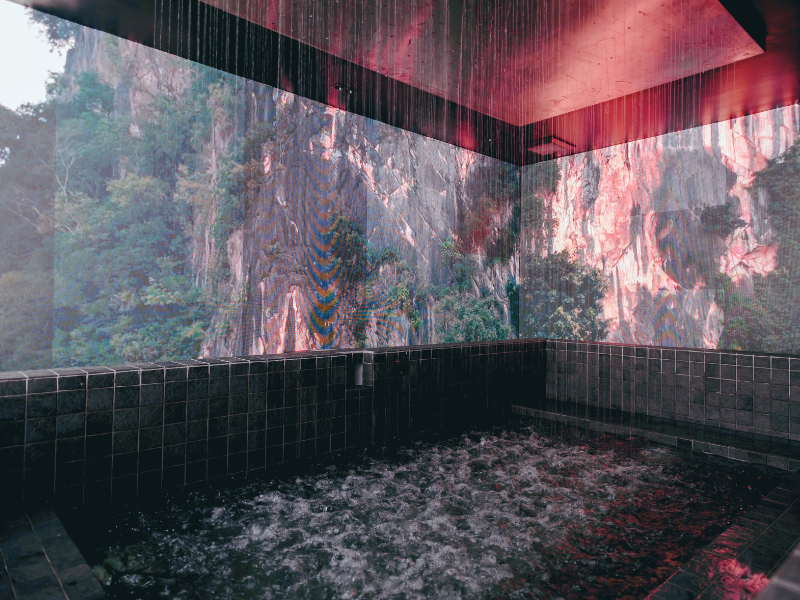
Before TRC could promise any form of rejuvenation, however, its future home needed some of its own first. The land he was eyeing was, as Lee jokingly calls it, little more than a “dumping ground” — a neglected patch he stumbled upon after Google Maps misdirected him en route to a meeting at the nearby Setia Eco Templer ballroom.
“When I brought my first investor here, he looked around and said, ‘What the hell?’ I told him, ‘We’re going to do pickleball, tennis, all of it.’ And he just went, ‘What? Here? How?’ The funny thing is, I had passed this place so many times because Villa Takun is just next door. It was always hidden behind the trees; so, I never knew what was inside. Once I finally saw it and looked at the map, I thought, I need to get this. My PA asked why, because we already had residential plots we could expand into, but this had a commercial title and the infrastructure was already there. I could immediately imagine a modular setup that could be configured for multiple uses,” explains Lee.
Construction began before Chinese New Year, with the first order of business being to clear the debris that had accumulated across the grounds. Whatever could be salvaged was put back to use: Sections of pavement and asphalt were retained, while broken tiles were repurposed elsewhere. It was a pragmatic way to ensure costs in check, while allowing traces of the former edifice to survive within its new incarnation.
body_photo_39.png
The next hurdle was ownership. A search revealed it belonged to S P Setia, prompting Lee to approach the developer with a proposal to convert the dormant “graveyard” into a high-end lifestyle hotspot. After securing the lease, he took full charge of the development, pushing through a tight schedule that saw the basic amenities completed in three months and the entire renovations finished in eight. Much of the delay was due to the duration needed to acquire equipment from overseas, given the scarcity of local precedents for the kind of hybrid leisure hub he had in mind. Executing that vision across the 83,000 sq ft site ultimately called for an investment of RM6 million, double the initial estimation.
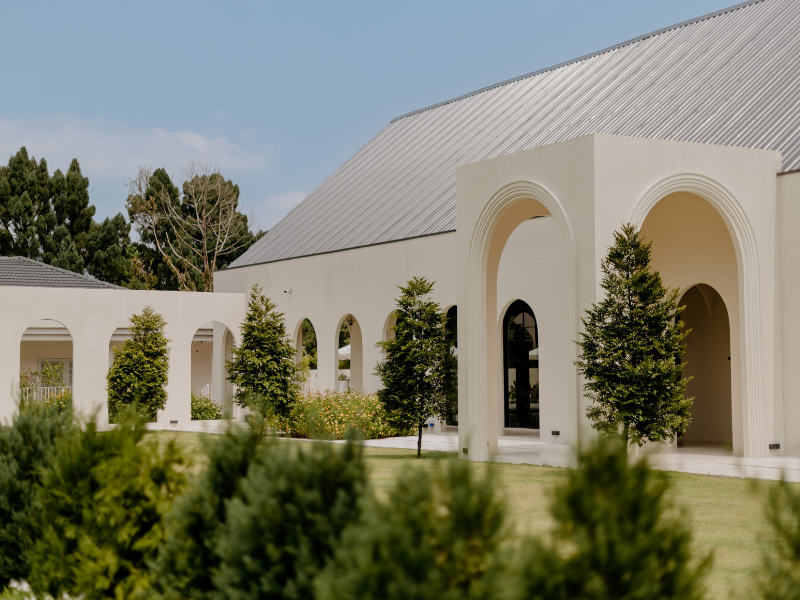
Remarkably, despite the substantial financial outlay, the master plan was never entrusted wholesale to a lead architect. Technical drawings and detailing were handled professionally, but the visual ethos remained unmistakably Lee’s. Mood boards, material selections and even the way shadows moved across the terrain were subjected to his exacting review, with cues often derived from his vacations through Italy’s Lake Como and the wider Mediterranean. The club’s arches and loggia likewise pulled from an eclectic bank of sources — old-world resort vernacular on the one hand, Stanford University’s Romanesque arcades on the other, with the occasional Pinterest rabbit hole entering the equation.
“I wanted every surface to have depth, so they wouldn’t just read as flat, painted exteriors. Because I already knew Vasari and understood how its lime-based coating behaved, I could use those textures more deliberately — to create warmth, variation and tactility. We wanted the overall effect to feel transportive, perhaps reminiscent of Tuscany, while still being our own. Even the colour palette went through about 250 options, tested wall by wall. Sometimes the sunlight would hit a shade differently and we would start again. The pickleball court featured an acrylic system that met PPA standards but the hues themselves were customised specifically for us.”
That same fastidiousness sent Lee and his team constantly across the region in search of stylish havens with enough character to warrant the journey, absorbing inspiration in Indonesia, Thailand, Vietnam and Singapore. Their reconnaissance eventually brought them to Menteng Tennis Club, a popular venue in Jakarta with a vibrant café atmosphere. The trip also solidified a key material choice: Partial to the rich, earthy tones prevalent across the archipelago’s design sensibilities, Lee adopted terracotta as a defining thread in TRC’s identity.
“I want people to walk into our club and feel they’re no longer in the country. It’s absolutely possible to cross an ocean in your mind without ever boarding a flight.”
1.png
Ready, set, slow
Much of Malaysia’s wellness landscape, including its hotels, still tends to compartmentalise restorative offerings, reducing them to a familiar checklist — a spa, gym or yoga studio — that rarely coheres into an integrated whole. Lee, nonetheless, believes healing should never translate into passive isolation behind closed doors.
“It should feel like you’re opening up — to the community, yourself and even to the idea that it’s fine to be vulnerable,” he urges. “It’s also about trying things you wouldn’t normally do. We’ve had gym guys come in who are very confident lifting weights. Then, suddenly, they’re nervous in a Pilates class because they realise there are parts of their body they haven’t really challenged before. You may run all the time, but have you tried moving differently? You may be good at tennis, but does that mean you’ll be automatically good at pickleball?
“We invited professional player Roman Estareja — one of the strongest DUPR-rated players from the US, at 5.8 — to play here, but I told him it should never be about humbling the participants or proving who is better. The game is also about exercising together, meeting someone new and striking up conversations with a stranger. That, to me, is part of what we are trying to foster here. It’s about stepping outside what you are already accustomed to and seeing what else you can discover.”
For Lee, that sense of connection is inseparable from his definition of refinement. “It’s the emotional feeling we give people,” he says. “That, to us, is what luxury represents.” Such a standard cannot be installed overnight, and with the business concept still relatively novel, much of the service culture has to be nurtured from the ground up. He reiterates there is plenty to learn from established names such as Mandarin Oriental, Aman and Banyan Tree, yet has little interest in mimicking their scale or competing on identical terms. Just as instructive are the smaller independents he encounters in hidden gems around Bali, where distinction often rests on scouting the right individuals rather than sheer organisational heft.
That breadth also helps set TRC apart from the larger hospitality giants Lee openly admires. The club has recently assumed a custodial role over the Templer Park forest reserve through an exclusive permit arrangement involving Tourism Selangor and Tourism Malaysia, allowing regulated access to Bukit Takun for its guests.
3.png
True to Lee’s collaborative philosophy, this stewardship leans on specialist partners rather than corporate lip service or vague sustainability claims. TRC has sought guidance from The Habitat Penang Hill to institute strict zero-waste conservation protocols, ensuring the reserve’s pristine caves, private rivers and waterfalls remain untouched. Guided excursions are led by Orang Asli artisans through social enterprise The Asli Co — an initiative commemorated by handmade bracelets included with every day pass, funnelling direct support back to the indigenous community. For more adrenaline-fuelled pursuits, Lee tapped the crew at Camp5 to oversee rock climbing and extreme sports, balancing high-impact adventure with cave meditations.
This spirit of mutual exchange informs how Lee views leadership and market competition. As he moves deeper into destination tourism, there is little reason to be protective of his secret sauce. Having borrowed the wisdom of Epic Homes co-founder John-Son Oei, who works closely with the Orang Asli communities, and the conservationists at The Habitat, he is equally willing to guide first-time operators through their early setups. To him, raising the tide of regional hospitality is far more compelling than building a moat around his own brand.
Not one to bask in the spotlight, Lee is also reluctant to cast himself as a commanding presence, preferring to hang back and study. “I’m a corner kind of guy. Even in a lift, I’ll find a corner,” he says. “Over the years, though, I’ve learnt a lot about being assertive when needed and knowing when to step back. If those working with you are happy, you create avenues for all sorts of innovations. I don’t think there’s ever just one captain sailing the ship.”
2.png
These days, whenever he thinks about resilience — how people recover from setbacks, regain perspective and redirect their energies — his mind inescapably returns to Wollongong, a coastal city in New South Wales, where he travelled in 2022 with his family when international borders began reopening after Movement Control Order restrictions were eased.
“At the time, I felt like I had nothing left to lose. Our hotels’ operations halted and the homestay arm stalled. We went to this old house in Wollongong and had a week of emptiness. That was where I first saw my daughter running across the lawn, playing near kangaroos and, for once, I wasn’t anxious about what might happen. I wasn’t thinking about my job either. Usually, as Asian parents, we’re so protective, but there, we just let her be. Sometimes I wonder why I’m so hard on my child or expect her to be perfect. Then one day, she told me, ‘I only know the world through you. You’re my right and wrong.’”
The words stayed with him, as did the memory of that rare interlude when nothing demanded fixing, optimising or proving. To some extent, TRC feels like his attempt to preserve a fragment of that ease for someone else: A hideaway built so that others, too, can unburden themselves of expectation, reclaim a sense of equilibrium and embrace a softer, freer way of seeing the universe.
This article first appeared on Sept 7, 2026 in The Edge Malaysia.