
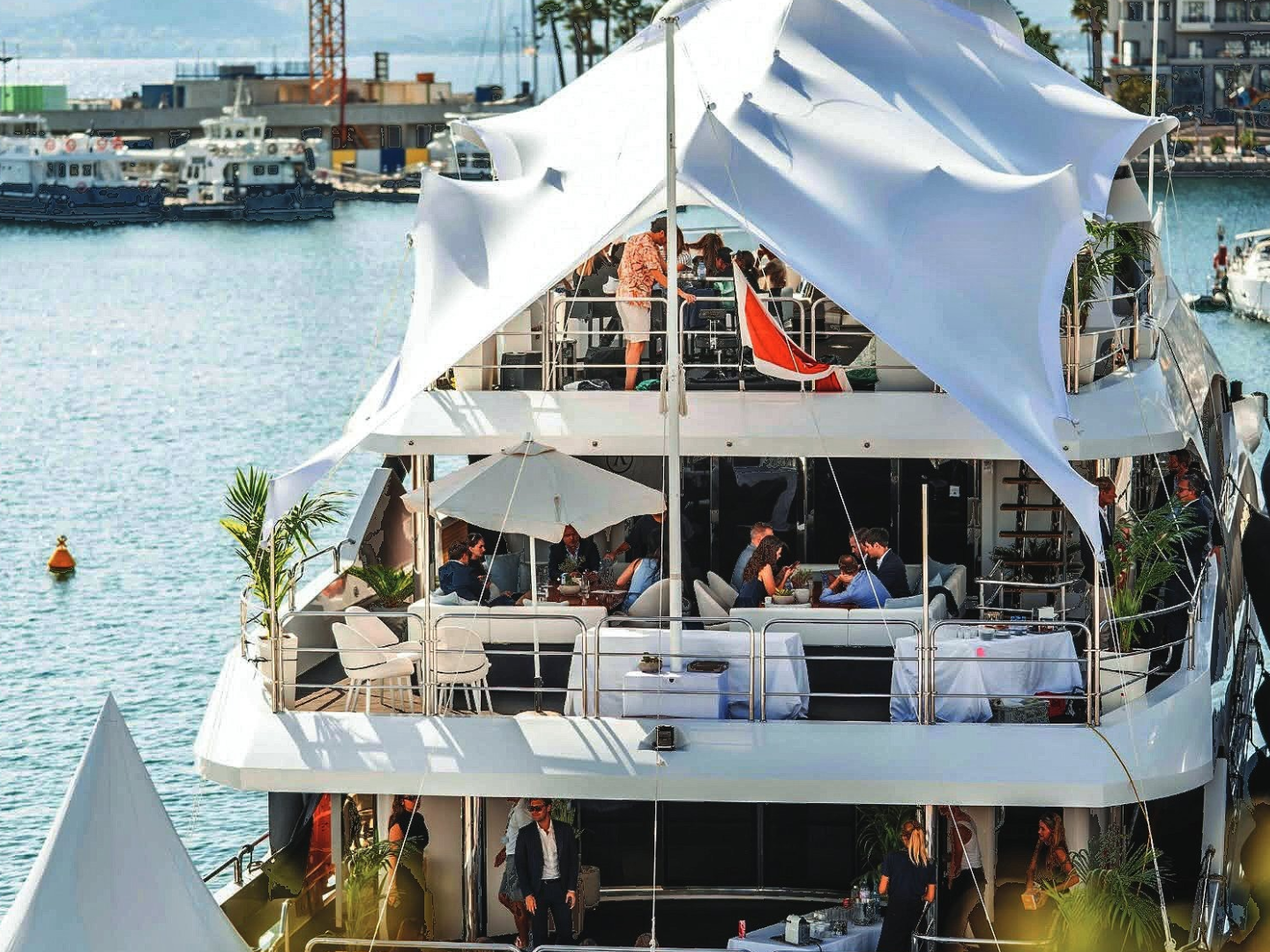
Some brands chose to exhibit onboard luxury yachts (Photo: Anne-Emmanuelle Thion)
Despite the pervading economic uncertainty and geopolitical challenges, opportunities abound for the visionary and nimble in duty-free and travel retail. After all, according to market research firm and data leader Generation Research, global travel sales hit US$76 billion in 2025, an increase of 2.4% from 2024.
The maths certainly adds up. It is an industry that is skyrocketing. It is said that even though only 1.4 billion of the global population of 8.3 billion hold a passport, the potential for growth and expansion is gargantuan. And just as more travellers might not necessarily translate into more sales, the onus is on everyone in the supply chain to consistently inform, engage and create the right products and environment where purchasing embodies both pleasure and purpose.
“Travel retail is indeed going through a massive transformation,” says Beste Ermaner in agreement. As vice-president of Philip Morris International’s (PMI) global travel retail, she leads one of the company’s fastest-growing and strongest-performing segments and is responsible for travel retail operations across a staggering 166 (and counting) markets, making her the perfect candidate to comment on the importance of being part of TFWA, as well as on market insights and changes in the industry.
body_photo_-_2026-11-04t172339.170.png

“Travel retail has also played such a critical role in our smoke-free transformation,” Ermaner points out. “Why? Because this is where adult smokers are particularly open to explore and discover.” Statistics have long shown how duty-free retail is outperforming traditional shopping avenues. However, that should not come as a surprise. After all, duty-free and travel retail enjoy the key benefit of what is termed as the “captive audience effect”. The high dwell time before catching a flight and increasingly sophisticated and beguiling outlets at airports and other transport hubs, coupled with tax and duty exemptions, increases purchasing prospects exponentially.
“The mindset of consumers is very different when they travel,” she continues. “They are more open to listen, explore and try new things. Also, the trend is showing that travel retail is no longer just driven by price. Experience is now key. And we need to double-click on that word!” That observation mirrors retail in totality, where price importance as a primary purchase driver has dropped while impressive, well-designed stores, limited editions, global first-launches, destination-specific premiums and engaging activations continue to be a significant pull factor. “Experience is about ensuring we give something different, offering something new and relevant for adult nicotine users. Just look around at all the travel exclusives, limited editions and new innovations. You will see them coming into travel retail first, and this is where brands will introduce the latest things. This [arena] is where you will see it being picked up — and fast.”
body_photo_-_2026-11-04t172331.459.png
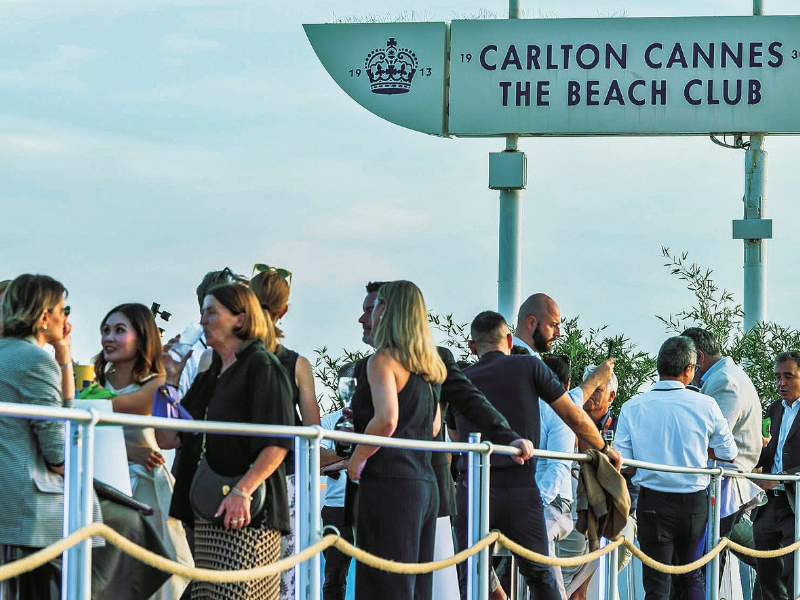
Another key factor Ermaner is focusing on is the evolution of the consumers themselves. “You can definitely see the shifts in them pre- and post-pandemic. Besides price advantage and convenience, you can see how important experience, relevance and personalisation have become. The consumers of today, and indeed tomorrow, are so much better informed,” she explains. “Covid-19 actually played a key role in this as everyone became more connected as a result of digitisation.”
She also highlights how the decision to make a duty-free purchase can be made even before the journey begins as omni-channel pre-ordering, a service provided by retailers and airlines, allows travellers to virtually browse and buy from a wide range of goods before even physically stepping foot inside an airport. “You don’t have to be in the duty-free shops to make purchasing decisions,” she asserts. “We find many adult nicotine consumers already know what they are looking to buy even before leaving their homes. And while the duty-free store itself is still fundamental for us, we want to see how we can go further… go beyond.”
But before this can happen, Ermaner acknowledges a cocktail of ingredients needs to be put in place: perfect execution, the right assortment of products, a good portfolio and the correct messages to adult nicotine consumers so that they are better-informed. “If we can do all this — seamlessly connect the consumer at every stage of his or her journey, from pre-travel to during and post-travel all the way to the destination markets upon arrival, I think it is going to make a key difference. But to do so requires a lot of collaboration between the key industry players. This is not something that can be done in silos.”
Ermaner is also bullish about Asia, saying the continent “is our most important region” and where PMI first launched IQOS (in Nagoya, Japan), a special device that uses a heated, non-combustible tobacco that is smoke-free and presently one of its key contributors to group revenue. The Land of the Rising Sun was also where PMI chose to debut its IQOS SKYLENS — the first-ever airport-exclusive premium device inspired by aviation. “This gives a ‘spark of curiosity’ as it cannot be found anywhere else. This very much aligns with the mindset of travelling consumers. These are people who go somewhere to explore and discover, and exclusives and new technology products catch them in the right mindset and at the right moment, with the sole objective of educating them on better alternatives and making positive changes. It also reflects what makes this platform distinctive perfectly as airports are a place where discovery and, increasingly, exclusivity go hand in hand.”
body_photo_-_2026-11-04t172346.259.png
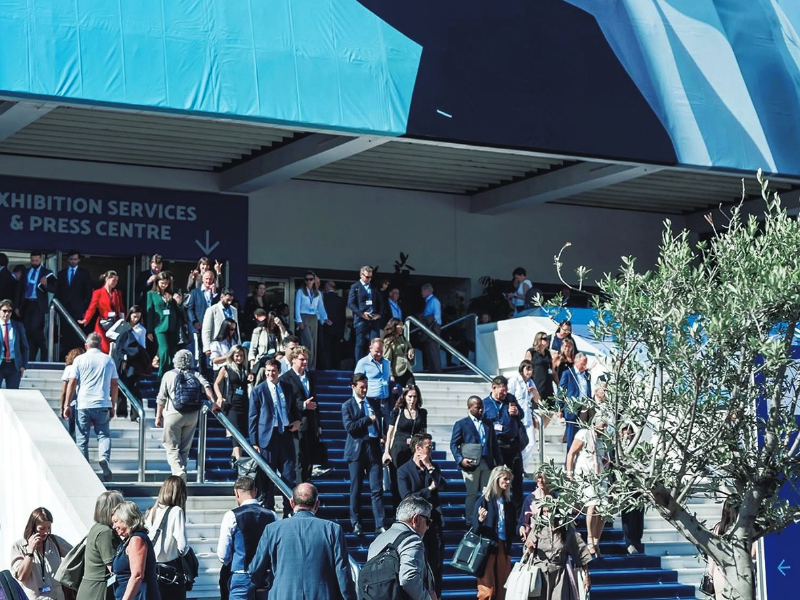
Industry watchers would know how PMI has demonstrated for many years a major shift, choosing to focus on and showcase its multi-category smoke-free portfolio instead. The latter, after all, has emerged as one of the company’s fastest-growing and strongest-performing segments, operating across all manner of channels, from standard airport terminals to ferries and cruises, border stores and beyond. “In Asia, especially, we see passenger numbers increasing year on year,” notes Ermaner. “Airlines, airports and travel infrastructure are also developing very fast. I would go so far as to say Asia has the most premium airports in terms of space and where the presence of brands is best represented. And this is why it will continue to play an extremely important role for our travel retail business.”
Happily enough, the growth is not limited just to air travel, with TFWA research showing that more than half of cruise passengers make it a point to visit duty-free shops on board, with most leaving with a purchase. And considering that cruise passenger numbers have risen from 21 million a decade ago to 37 million today, adding to that some 10 billion passengers who will pass through the world’s airports this year, the future looks bright indeed.
This article first appeared on Oct 19, 2026 in The Edge Malaysia.