
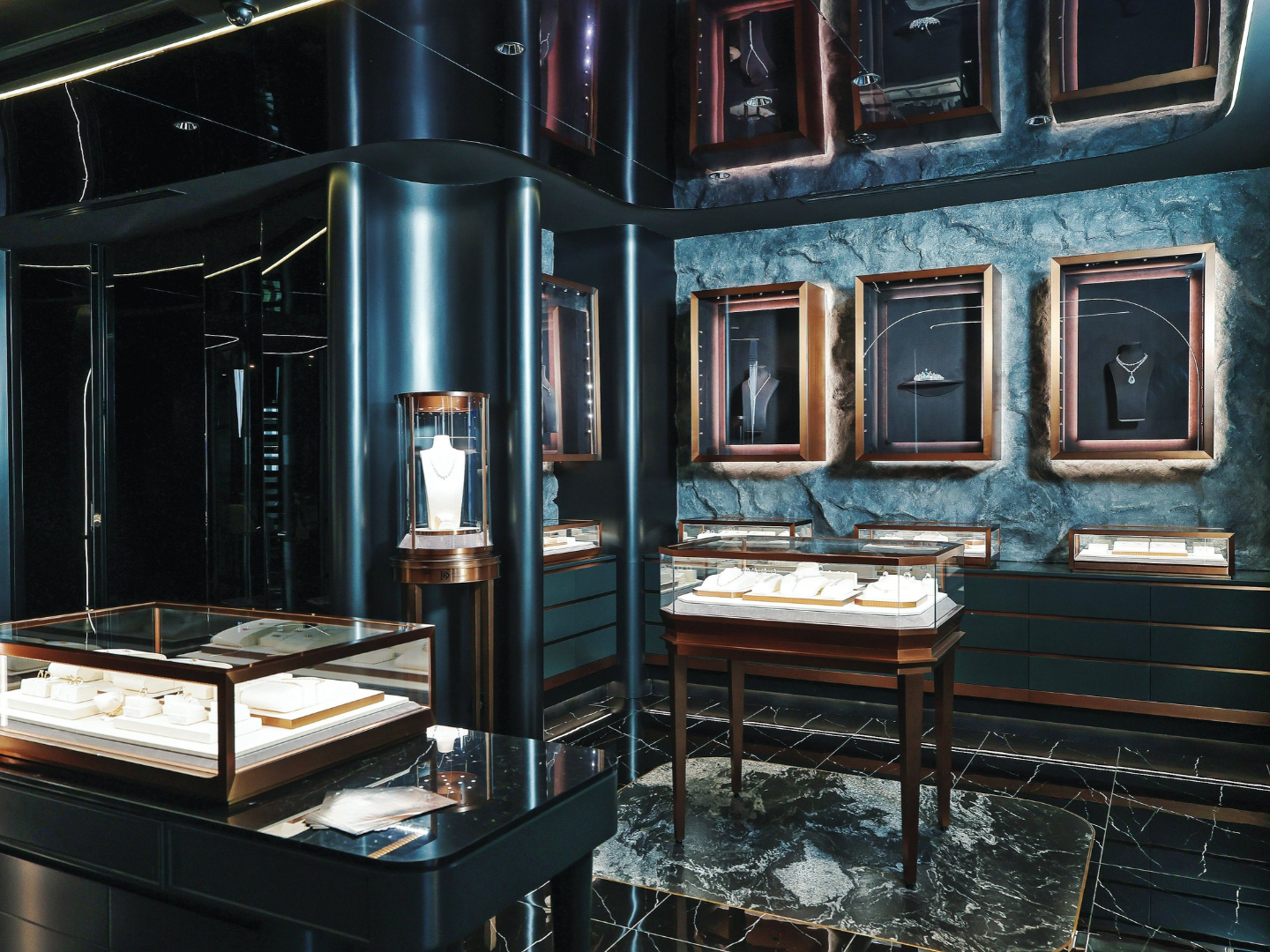
Beon Diamond’s Bangsar showroom (Photo: Zahid Izzani/The Edge)
“Diamonds are a girl’s best friend,” sang pop culture icon Marilyn Monroe in the 1953 film Gentlemen Prefer Blondes. The phrase altered the jewellery industry — diamond engagement rings became the standard for marriage proposals, the precious stone now immortalised as a symbol of romance, glamour and desire.
Decades later, the diamond dream is beginning to take on a different form. As lab-grown stones become more accessible, consumers are gaining greater freedom to explore larger carat sizes, unconventional cuts and designs that might once have remained out of reach. It is here that Beon Diamond carves its space.
“Not many people know about lab-grown diamonds,” says co-founder Gary Ng. “First they will ask, ‘Is it fake? Why is it so cheap?’ and after we explain, they say, ‘Are you sure there is such a thing?’” In response, Ng has a whole boutique to show.
The store occupies an entire floor of a vine-covered standalone building that sits along the main stretch of Bangsar’s Jalan Maarof in Kuala Lumpur. Upon entering, charcoal interiors accented with gold, stone wall backdrops and marble flooring make the perfect home for shiny things, arranged in neat displays behind glass.
body_photo_3.png
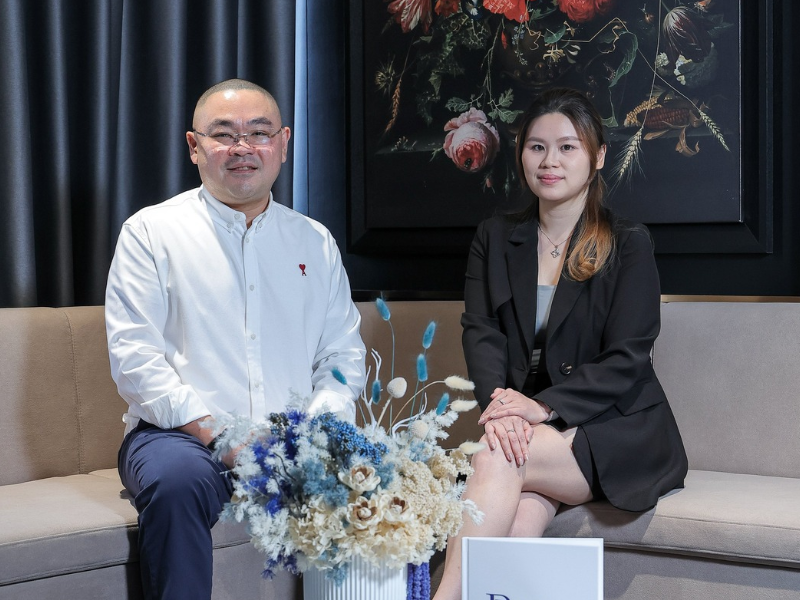
The venture began three years ago. With a background in the natural diamond industry as private jewellers, Ng, together with partner and founder Datuk Ng Chee Keong, had been attending annual fairs in Hong Kong. There, the pair was exposed to the market of synthetic stones and witnessed how results continued to get more impressive.
At the time, the option was already gaining traction in the US. Recent data from The Knot Real Wedding Study (2026) showed that 61% of engagement rings sold in the US last year were made with lab-grown centre stones. “We saw the opportunity and wanted to be the first in Malaysia to fill that gap. We also wanted to be a brand that people can trust, which is why we focus on lab-grown diamonds only,” explains Ng.
Chemically, physically and optically, there is no difference between mined and man-made stones aside from their origins. Ng compares it to the concept of babies born through in vitro fertilisation or vegetables grown hydroponically. “The only way to tell the difference is if you analysed it using proper tests,” he notes.
body_photo.png
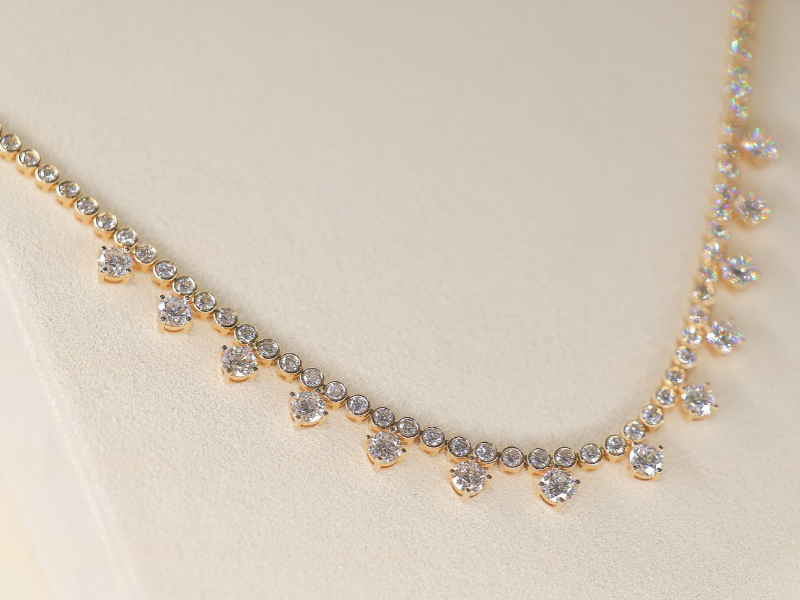
So what makes the lab-grown variant increasingly more affordable? Technology plays a huge part. Tiny crystal seeds are planted and cultivated in conditions that replicate natural environments required to crystallise pure carbon. Besides geological scarcity, natural diamonds are costly due to the equipment and manpower required during the exploration and extraction process — all of which are removed when the gems are cultured from scratch.
This approach inherently creates a more sustainable industry, minimising the environmental impacts that come with mining. Beon Diamond also collaborates with like-minded partners such as Greenlab Diamonds, a pioneer for synthetic stones in India. The facility in Surat utilises a dedicated renewable energy farm, implements water and material recycling programmes in its operations and has initiatives to plant a tree for every diamond produced, among many others.
As science advances and more manufacturers emerge, it now takes about three weeks to produce a carat compared with up to four months before, hence the lower prices. For example, Ng says rare-coloured stones that cost around RM 3 million could be priced at RM20,000 or less if synthetic.
“You do not have to sell a kidney for a jewel — and you can even customise it,” Ng jokes. He says that luxury is transforming; it is no longer about the price tag but instead, personalisation. “Some wish to have beautiful pieces for a special occasion. This way, it feels like we can craft dreams into reality.”
Head of design and operations Trix Choong adds, “We are like translators. We help turn a customer’s imagination into wearable things.”
A veteran in the industry and certified gemologist, Choong guides clients through the decision-making process, ensuring they end up with an ideal match. The ready-made accessories are plenty but, if not suitable, they can also be used as a reference or “base” for clients.
body_photo_1.png
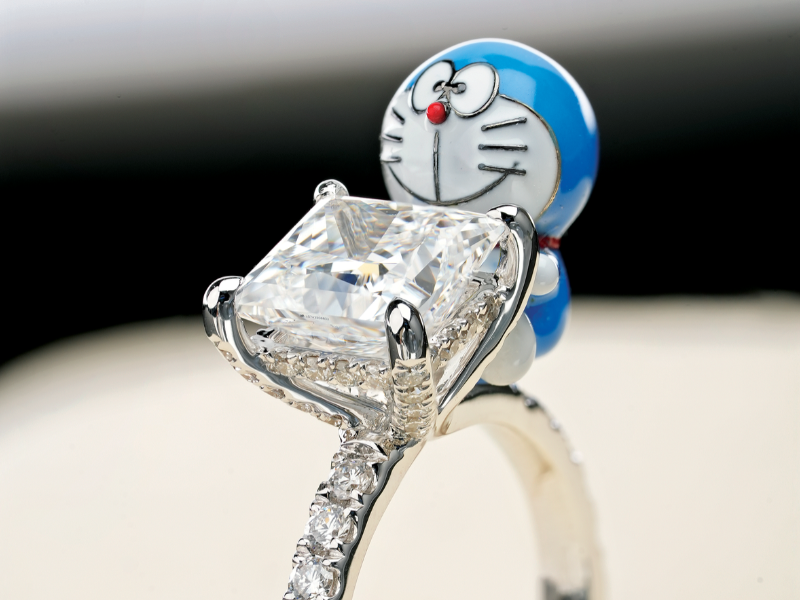
The possibilities are endless, from designs that resemble elaborate tiaras to intricate animals, symbols and even cartoon characters like Doraemon. The outcome of the pieces can be predetermined before being cut, unlike those of natural diamonds that depend on their existing shapes. Choong explains that she sketches the idea and produces a CAD (computer-aided design) drawing to showcase the accessory’s dimensions. Try-ons can also be 3D printed upon request. Once the gems are faceted, Choong meticulously assembles each creation.
Sometimes, the final choice can differ from what was initially intended. Apart from aesthetics, other important elements Beon Diamond prioritises are feel and functionality — for instance, the zipper necklace, though lined with jewels, can actually zip up and down. Taking into account each customer’s preferences, jewellers use their expertise to help determine what is most suitable in terms of look and longevity.
“Some designs are nice to look at, but uncomfortable to wear,” Choong mentions. She references the popular eternity ring style, made with an unbroken circle of gems to represent everlasting love. Beon Diamond’s Half Eternity ring is partially pavéd, allowing for greater comfort and size alteration. Emphasising these particularities ensures every customer get the best out of their purchase. “Transparency is important for us to build trust,” she says.
body_photo_2.png
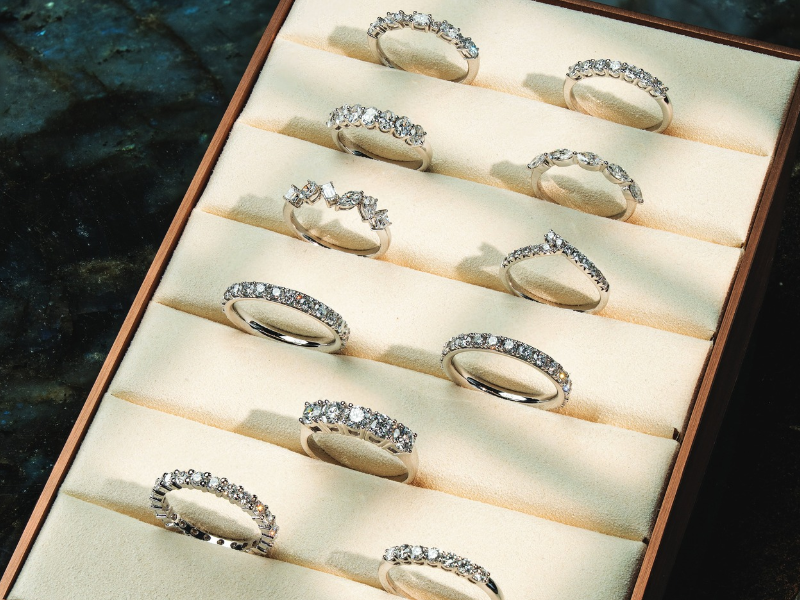
Ng and Choong observe that since opening, the boutique has attracted more of a younger crowd, especially those aged 20 to 30. Those in their 40s to 60s are a tad harder to convince, says Ng. The older generation, on the other hand, walk in with their children. “And, they start complaining, ‘Ah, last time you know how much I bought this kind!’” They cannot see themselves paying less for something more beautiful, he exclaims. “But, they are quite supportive,” Choong adds.
Whether lab-grown diamonds will eventually displace their natural counterparts is a question the industry has yet to settle. The team behind Beon Diamond sees room for both to coexist. What matters most is customers can make informed choices, and decide what they want their jewellery to look like, what it means to them and how it should be worn.
This article first appeared on Oct 19, 2026 in The Edge Malaysia.