
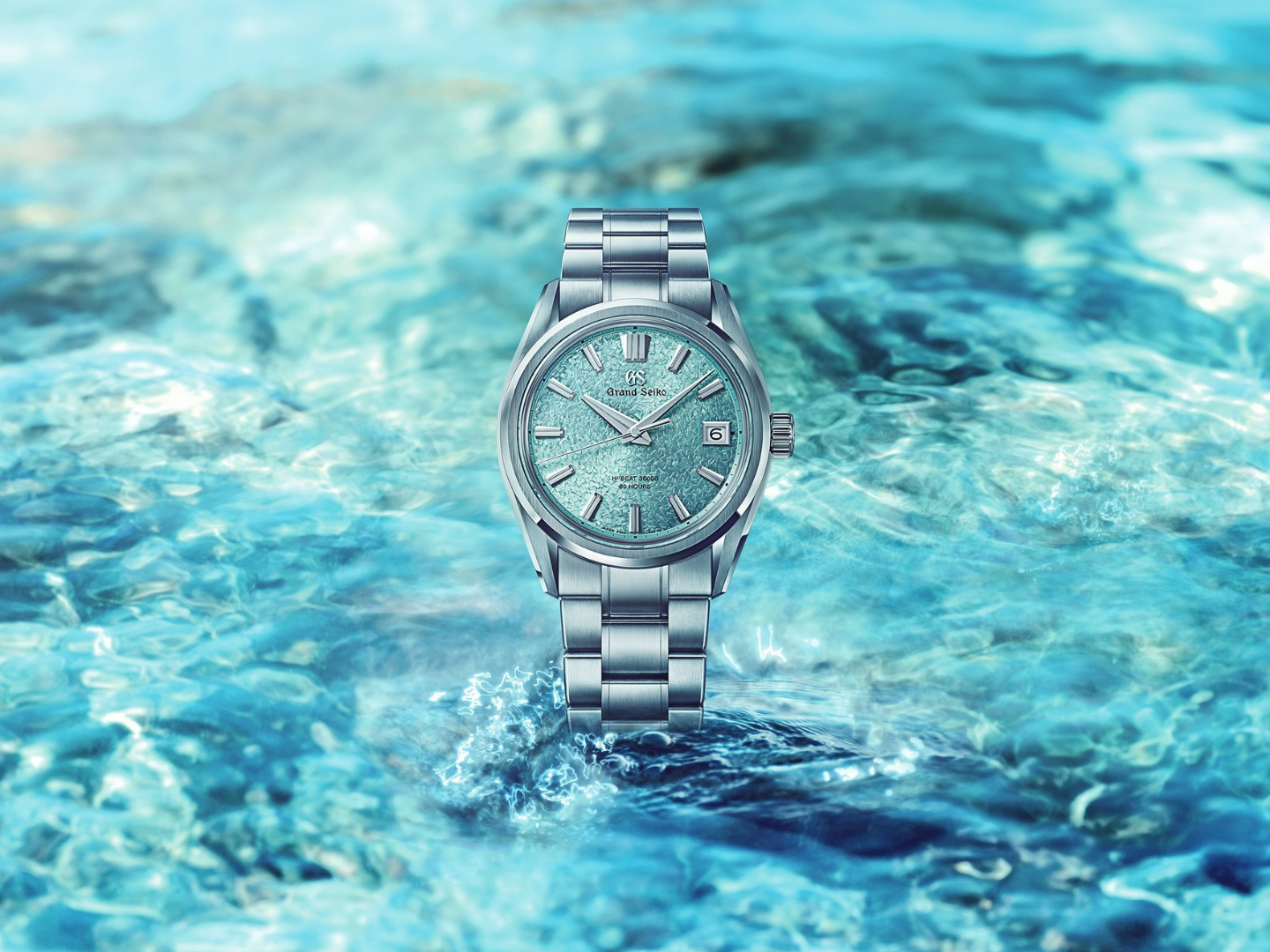
The SLGH035 draws inspiration from the waters of Genbi Valley (All photos: Grand Seiko)
Few traditions have summoned as much poetry and philosophy as Japanese craft, yet some of its storied masterpieces began with nothing more exalted than a covetous glance through a boutique window. The romantic might wince, but such was the unlikely starting point for Taro Tanaka, then a young designer with a particularly unforgiving eye.
Fresh from the Chiba Institute of Technology, he joined Seiko in 1959 as its first university-trained industrial specialist, making him effectively an anomaly among artisans schooled at the watchmaker’s bench. Every so often, he would saunter over to Ginza’s famed Wako department store during his break and linger before displays of watches from the great European maisons to study why they radiated such geometric clarity. In the glare of the vitrines, the Geneva-made pieces always gleamed with sharp, sculptural confidence. Their Japanese peers, however, appeared softer, rounder and altogether more reticent — resembling, in Tanaka’s less-than-flattering estimation, “melted bars of soap”. The Swiss were not merely winning on heritage; they were stealing the light.
body_photo_6.png
Tanaka’s countermove arrived in 1967, when he translated those observations into what became known as the “Grammar of Design” — a set of uncompromising rules intended to give Grand Seiko, then Seiko’s luxury flag-bearer, the aesthetic muscle to compete on equal terms. The principles favoured flat planes, two-dimensional curves and distortion-free mirror finishing, while generally rejecting the three-dimensional contours then common in watch cases. Joined at crisp angles and polished to an immaculate sheen, these surfaces were constructed to magnify and redirect even the faintest of illumination.
The result gave the brand its signature “sparkle of quality”, establishing a blueprint that would endure for decades. But a language conceived around the slim silhouettes of hand-wound tickers could not simply be transplanted wholesale onto larger modern automatics. When Evolution 9 (E9) debuted in 2020, the geometry ran straight into the laws of physics. Although the broad-shouldered architecture looked spectacular under museum spotlights, earlier iterations proved far less graceful on the human wrist, as relatively weighty bracelets and the absence of micro-adjustment dulled some of the finesse.
That left E9 with a straightforward task for its second act: preserve its distinctive proportions, but resolve the compromises around them. The newly refreshed core collection answers that brief, refining the framework laid down by Kiyotaka Sakai, who inherited the mandate of carrying Tanaka’s ethos, first immortalised in the hallmark 44GS, into the 21st century. Where popular shorthand tends to reduce that legacy to just zaratsu mirror-finishing, Sakai delved deeper into its foundational tenets to strike a balance between visual authority and real-world wearability. That same pursuit of improvement is already embedded in its very name. Nine, the highest single-digit number, which recurs throughout Grand Seiko’s modern calibres 9S mechanical, 9R Spring Drive and 9F quartz, mirrors the Japanese homophone kyū, meaning the ultimate, to represent top-notch craftsmanship.
body_photo_5.png
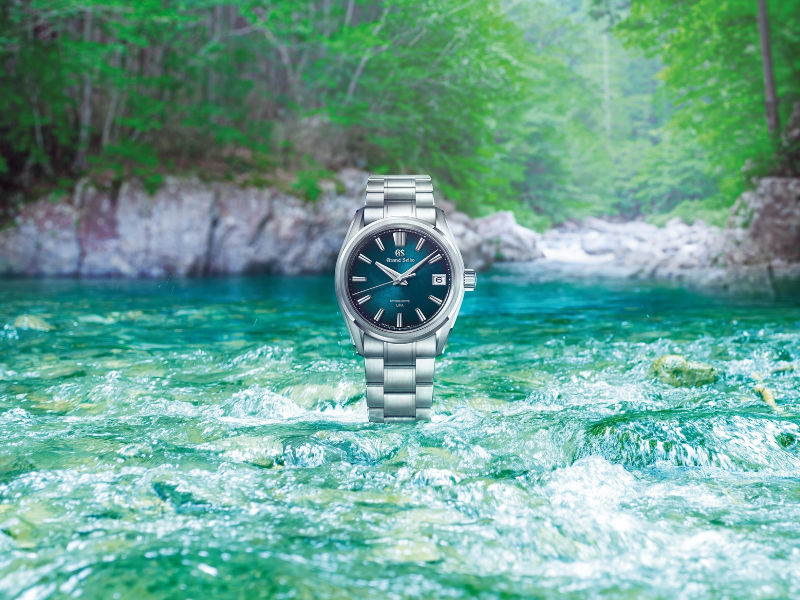
As if to make sure no one missed the hint, the brand doubled down on the numerology for its 2026 revision with a nonet of references: five Spring Drive models — White Birch SLGB009, Atera Valley SLGB011, Lake Suwa SLGB013, 37mm Lake Suwa SLGB015 and Moonlit Lake Suwa SLGB007; and four Hi-Beat pieces — White Birch SLGH031, Night Birch SLGH029, Green Birch SLGH033 and Genbi Valley SLGH035. Each revisits familiar E9 trademark styles through a mix of material and technical updates.
The most immediate change is the most prosaic: the bracelet. On the 40mm option, it now tapers from 22mm to 18mm, while the new 37mm Lake Suwa narrows from 20mm to 16mm, trimming some of the physical bulk that characterised previous generations. More importantly, every model gains a three-step, tool-free micro-adjustment clasp in 2mm increments across a total 6mm range — a modest intervention on paper, but one that directly addresses a persistent ergonomic shortcoming.
Material choices have been reconsidered too, with the Ever-Brilliant Steel underpinning seven of the full line-up and wrapping both case as well as bracelet in a proprietary alloy prized by Grand Seiko for its brighter lustre and heightened corrosion resistance. The Night Birch and Moonlit Lake Suwa are the only exceptions, retaining High-Intensity Titanium for a lighter feel that shaves nearly a third of the heft of their steel counterparts.
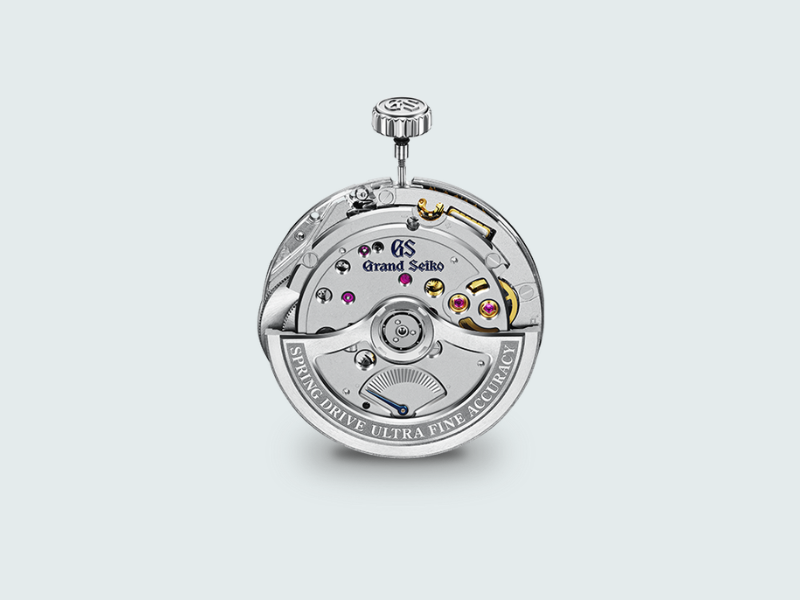
Structural fixes make for a better daily companion, but the renewal saves its most decisive overhaul for under the hood, tightening the technical screws where they matter most. Among the Spring Drive contingent, the five-day Calibre 9RA2 gives way to the Ultra Fine Accuracy Calibre 9RB2, which caused an immediate stir when it broke cover at Watches and Wonders in 2025. Rather than settle for incremental advancements, it shrinks the permissible margin of error to near-zero, quoting accuracy not by the day but the year: a staggering ±20 seconds across 12 full months. Elsewhere, the quartet of Hi-Beat references keep faith with Calibre 9SA5, whose Dual Impulse Escapement helps sustain a rapid 36,000vph cadence while twin barrels provide an unusually generous 80-hour power reserve.
body_photo_4.png
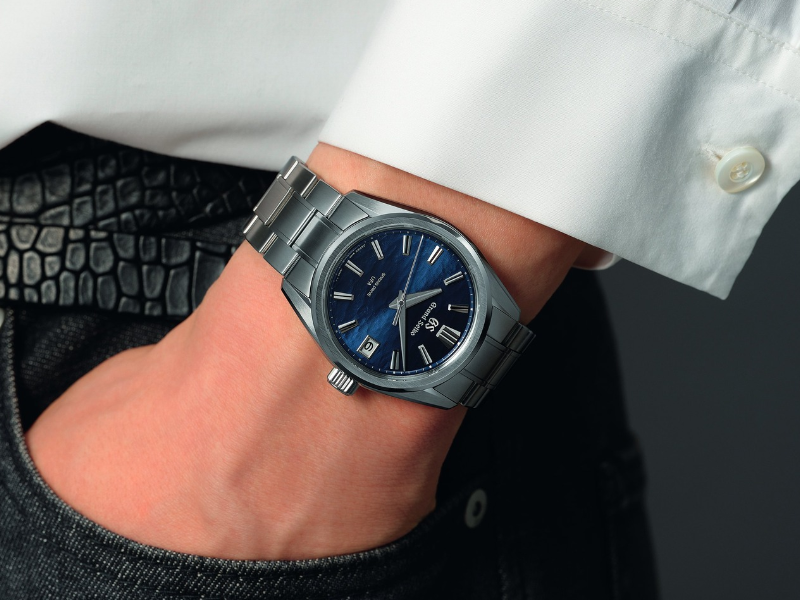
As ever with Grand Seiko, the face remains the emotional bait, and fans will invariably gravitate towards the scaled-down Lake Suwa — an exercise in proportion that delivers the compact wrist footprint collectors have been pleading for. Its softened sunray treatment swaps the almost topographical ripples of its predecessor for something more fluid, transitioning from deep navy to a luminous, vivid blue with every turn of the light. Equally deserving of attention is the revamped Genbi Valley — finally available worldwide this month after turning more than a few heads during its maiden outing in April — which plays an entirely different game of tactile drama. Its irregular pressed motif, first introduced on the green SLGH021 in 2024, takes its cue from the rugged rock formations of the valley in Iwate Prefecture, carved over time by the Iwai River. Here, the pattern is rejuvenated in an ethereal pale turquoise to evoke the gorge’s clear waters, proving that the skilled dial makers can do jagged erosion just as convincingly as smooth waveforms.
Ultimately, the sacred ateliers, from Shizukuishi to Shinshu, have not exactly torn up the E9 playbook, and enthusiasts will still find seams to tug at, whether it is the complete absence of lume despite its positioning as an “everyday elegant sport watch” or the creeping price premium. But six years in, Grand Seiko demonstrates a welcome willingness to reexamine what no longer works and correct its own blind spots. Tanaka once desired the brand to outshine every competitor at a boutique shopfront; this new generation makes a compelling case for belonging anywhere but on a shelf.
This article first appeared on Oct 12, 2026 in The Edge Malaysia.