
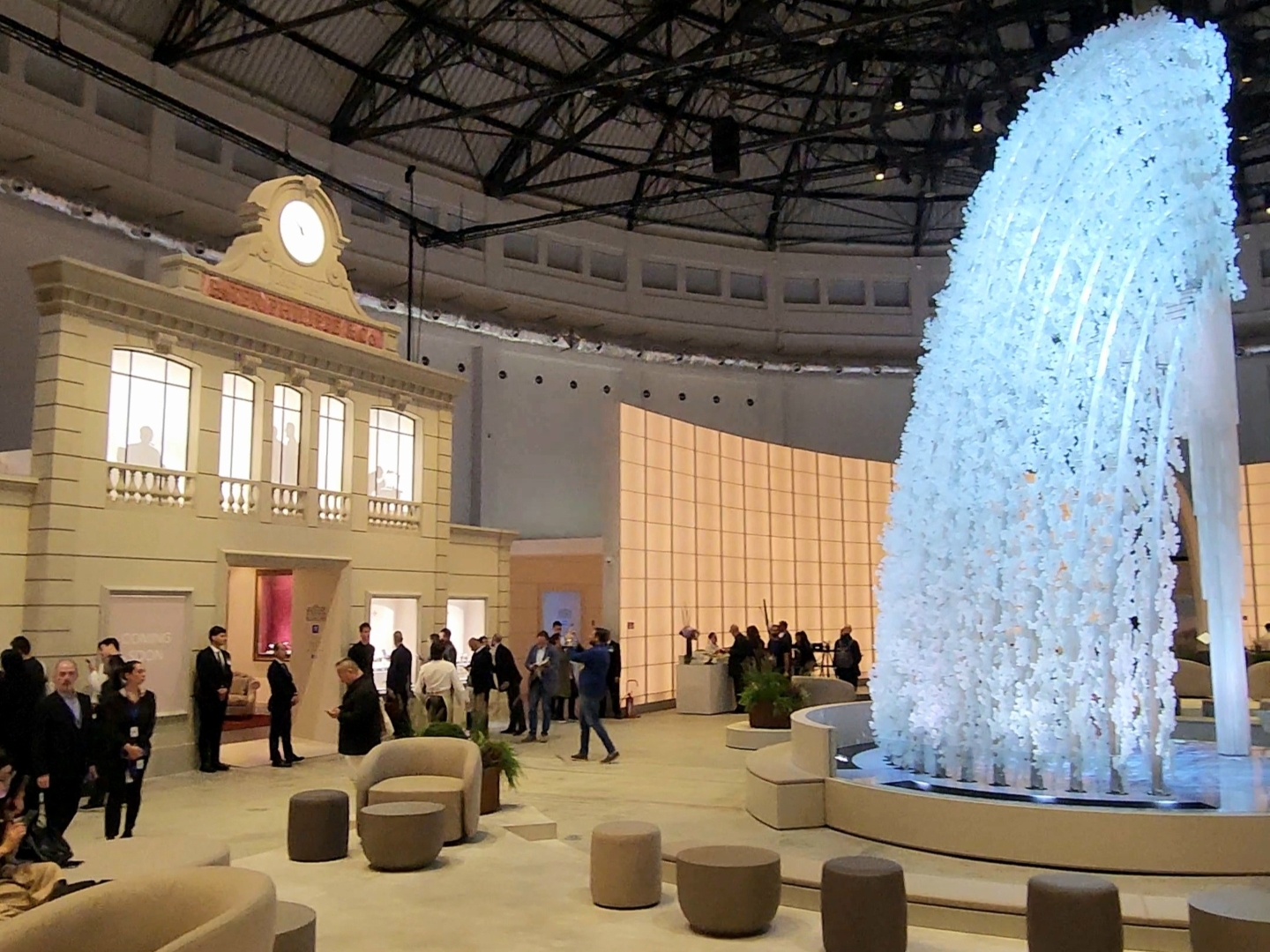
A recreation of the iconic Jet d’Eau stands grandly in the main atrium (Photo: Emily Yap/ The Edge)
The Madonnina glints high above the Duomo of Milan. Rising from a forest of 134 spires, the Virgin Mary stands between heaven and earth at 108.5m, imploring God to bless the city. Sculpted in copper and overlaid with gold leaf, the statue was last regilded in 2012, a milestone year that also saw horological royalty Patek Philippe launch its Watch Art Grand Exhibition nearly 3,000 miles away in Dubai. The showcase went on to leave an indelible mark across the globe, bringing the watchmaker’s heritage, archival treasures and contemporary timepieces to Munich, London, New York, Singapore and Tokyo. Fourteen years after its debut, Milan proved to be its seventh heaven — hosting the maison’s largest spectacle to date under the gaze of the city’s gleaming guardian.
From Oct 2 to 18, the event was held at CityOval, formerly known as Palazzo delle Scintille, or Sparks Palace, which dates back to 1923. Designed by Italian architect Paolo Vietti Violi (who was, serendipitously, also born in Switzerland), the Art Nouveau landmark has long been a gathering place for shared passion — first as an indoor velodrome, then as a hub for trade fairs and even as a safe haven for La Scala’s opera performances when WWII air raids struck the original theatre. Following its public reopening, for a little over two weeks, the venue offered visitors a portal straight into the heart of Geneva, evoking the city’s historic streets and serene lakeside.
As first impressions go, the impact was immediate. Entering the main atrium, guests tilted their heads back in wonder towards a towering 9m recreation of the iconic Jet d’Eau. Constructed with 2,026 translucent glass droplets — a nod to Italian glass savoir-faire — it preserved the luminous motion of rushing water frozen in time. Plush seating fanned out around the lofty centrepiece while a well-stocked bar was stationed nearby — a welcome oasis, as we later realised, after exploring all 15 rooms across 2,900 sq m.
wage_milan.jpg
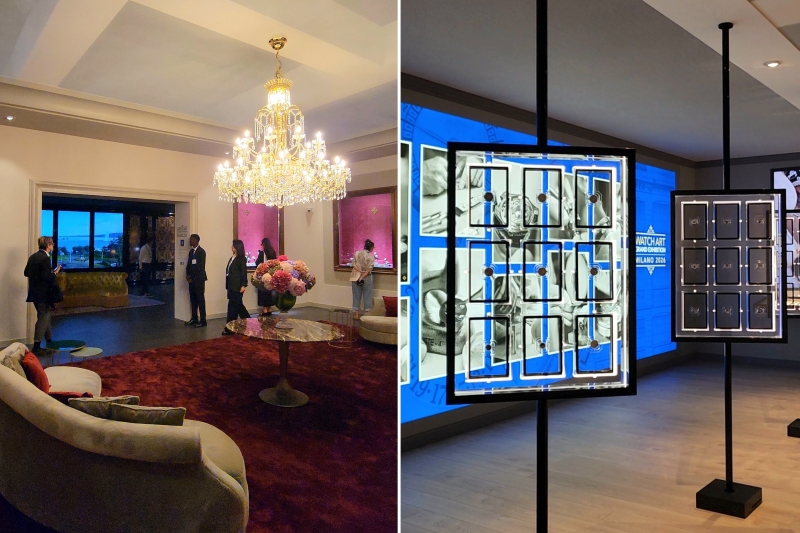
A sweep of the space revealed how impressively Patek Philippe had brought its most hallowed horological sites under one roof. There stood the stately façade of the historic Rue du Rhône salon, the silhouette of the venerated Patek Philippe Museum as well as a faithful replica of Le Spiral — the monumental balance-spring sculpture guarding the manufacture at Plan-les-Ouates. They led to galleries displaying more than 500 timekeepers and objects, including 152 pieces from the current collection encompassing every segment.
Among the handful of new sections that debuted in Milan, the Historical Archives room proved an irresistible draw for Patek Philippe purists. Here, a collection of documents, ledgers and sketches laid bare the brand’s heritage, anchoring a grand retrospective that traced the maison’s defining achievements from 1839 to 2014. Over in the Research and Development space, guests engaged directly with its engineers and technical masterminds. Interactive laboratory demonstrations brought the manufacture’s pioneering innovations to life, offering an insider’s look at the groundbreaking patents that have shaped modern watchmaking.
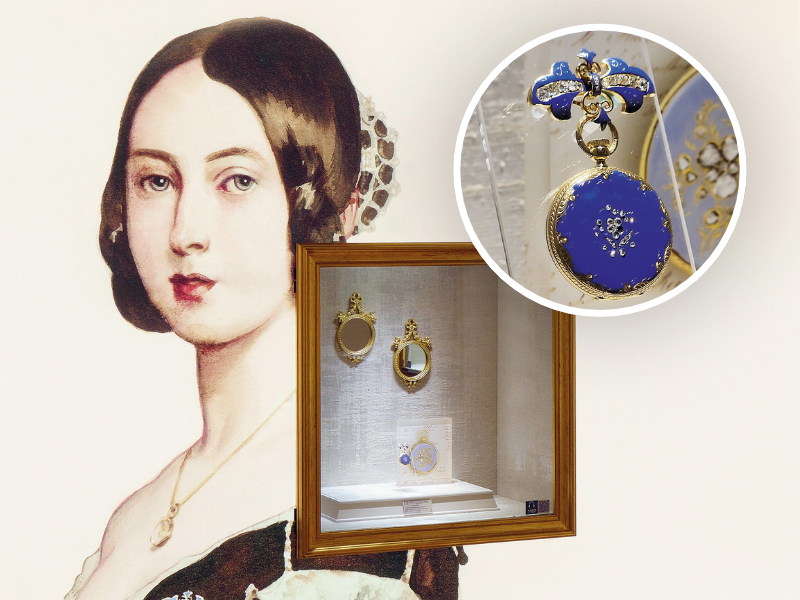
The exhibition also showcased a curated selection of some 80 jewels from the Patek Philippe Museum. Spanning the 16th through 19th centuries, the Antique Collection presented a number of horology’s surviving relics alongside technical masterpieces. From the maison’s own trove came the first Patek Philippe wristwatch — made for a lady, if you must know — featuring a hunter case as well as the earliest known perpetual calendar wristwatch from 1925. In the Historical Owners gallery, visitors marvelled at a pendant timepiece gifted to Queen Victoria during the 1851 Great Exhibition in London and a 1901 pocket watch with an enamel portrait of Pope Leo XIII.
5.png
The sweet life
Heritage and tradition serve as guiding lodestars for Patek Philippe’s Rare Handcrafts division. Here, extraordinary timepieces preserve vanishing techniques, entrusted to an elite cadre of master artisans whose specialised skills safeguard centuries of horological savoir-faire. To the delight of Italian connoisseurs, the manufacture unveiled a collection of 25 Rare Handcrafts dedicated to the local market. Comprising six dome clocks, a table clock, four pocket watches and 14 wristwatches, these bespoke creations revolve around four thematic pillars: the country’s beloved regions and cities; its traditional craftsmanship; fine Italian painting; and its broader spectrum of decorative arts.
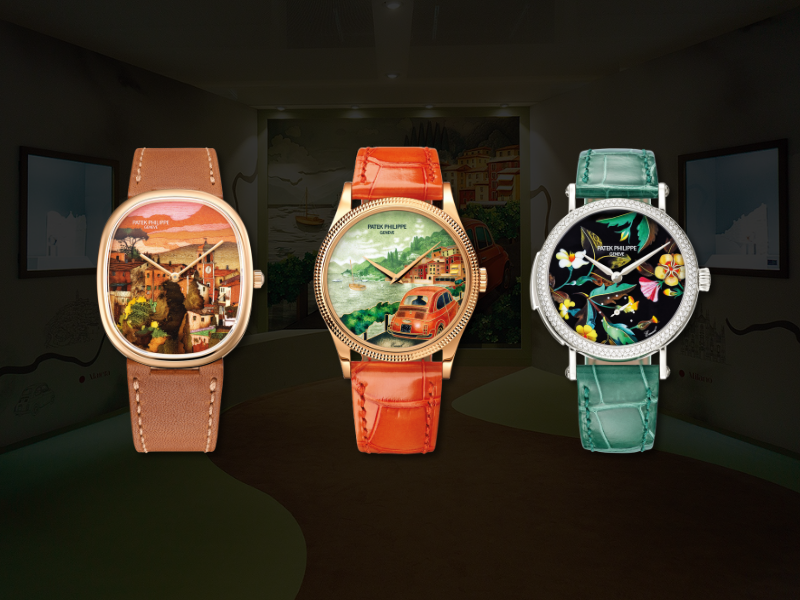
A quartet of Calatravas quickly became a crowd favourite, their enamelled dials depicting an iconic Fiat Cinquecento on a scenic road trip — winding along the cliffside roads of the Amalfi Coast, passing through a Pugliese hamlet of conical trulli, cruising through romantic Chianti vineyards and soaking in the alluring shores of Lake Como. Our personal highlight, however, was a Golden Ellipse capturing twilight in Tuscany. On the dial of Ref 5738/50R-017, the burning colours of a setting sun ignite the sky above an idyllic countryside village — a captivating scene crafted entirely in fine wood marquetry.
Turning to the dome clocks, a nocturnal chiaroscuro view of Rome mirrors the city’s monuments across the Tiber, rendered in delicate grisaille enamel au blanc de Limoges, a historic monochrome technique. Equally striking is a Longwy enamel and faience piece that celebrates Sicilian majolica artistry. It is adorned with vivid citrus fruits set against Mount Etna and the Mediterranean horizon.
Italian craftsmanship, such as stonework and Millefiori glass, was honoured across two other dome clocks, but attention must be paid to Ref 7040/250G-011, a white gold Calatrava minute repeater embracing commesso di pietre dure, the famed Florentine technique, which renders intricate, naturalistic motifs in hardstone. Drawing on a 17th-century table conserved in Florence, its floral composition was meticulously assembled through micro-stone marquetry. A bezel set with 168 diamonds adds glamour around the dial, while a shiny turquoise-green alligator strap perfectly mirrors its vibrant lapidary palette.
Paying homage to Dante Alighieri, Ref 995/151G-001 takes inspiration from a 1495 painting of the Italian poet and philosopher by Sandro Botticelli. The portrait is produced in realistic detail using transparent and opaque enamel combined with miniature painting techniques. Against a deep blue backdrop studded with gold-dust stars, Dante’s silhouette rises within an architectural frame, a nod to The Divine Comedy. The pocket watch rests on a custom white gold stand accented with rutilated quartz on a lapis pyrite base.
Meanwhile, Ref 5077/100R-069 and Ref 5077/100G-080 highlight the technical virtuosity of Burano’s famed lacemakers. A floral lacework motif is first hammered into the petals by an engraver before the décor is coated with translucent champlevé enamel. A silver leaf is then embedded underneath a layer of paillonné enamel to illuminate the petals before it is layered with several final coats and refined with hand-engraving. The result resembles an intricate embroidery framed in rose or white gold.
4.png
Tricolore code
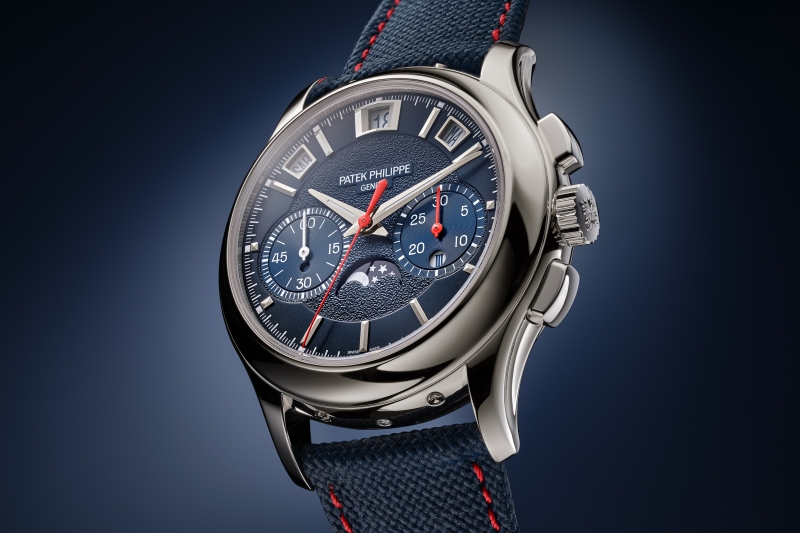
Ever since its inaugural Watch Art Grand Exhibition, Patek Philippe has consistently honoured each host destination with exclusive timepieces dedicated to its local collectors. Headlining a suite of seven novelties — each subtly accented with the colours of the Italian flag on its strap — is the Ref 5978P-010 Instantaneous Perpetual Calendar Chronograph, which merges two of horology’s most coveted complications for the first time in the manufacture’s history.
Framed in a 42mm platinum Calatrava case, the sporty navy blue number features three apertures at the top that display the day, date and month (in Italian, of course). Meanwhile, a moonphase at 6 o’clock rests neatly between two subdials at 3 and 9 o’clock, which house round apertures for the day/night indicator and leap year cycle respectively. Powered by the new manually wound Calibre CH 29-535 PS QI, this grand complication executes its instantaneous calendar display in an astonishing 30 milliseconds — an achievement all the more impressive during the midnight transition of a leap year. Patek Philippe is producing only 120 units, so prospective Italian collectors will need to act swiftly.
Adopting a similar colourway, the steel Ref 5167A-014 Aquanaut Date and Center Seconds, restricted to just 250 pieces, spotlights a blue sunburst dial with a black gradient rim, injecting a flash of energy via a vivid red minute scale and seconds hand. Beating inside is the automatic Calibre 26-330 S C, revealed through a sapphire caseback bearing the commemorative inscription “Patek Philippe Milano 2026”.
On the other hand, capped to five watches each, a pair of World Time Minute Repeaters are especially notable for their dials with a cartographic decoration depicting the centre of Milan by day (Ref 5531G-012) and by night (Ref 5531G-013) in Grand Feu cloisonné enamel. On the outer city ring, every location is rendered in Italian, with Milano rightfully emblazoned in a crimson hue.
Rounding out the assemblage, three 38mm Calatrava models pay tribute to il Tricolore. Green lacquer adorns the Ref 7147G-010 Perpetual Calendar; the Ref 7007G-010 Calatrava Date and Center Seconds provides a crisp white palette and the Ref 7047G-010 Minute Repeater — a standout earlier this year at Watches and Wonders — claims the spotlight in rakish red. Naturally, the most striking colour is the most desirable: availability is set at 100, 200 and a fiercely contested five units respectively.
pp_5978p-010_press.jpg
All iced out
What also made this year’s Watch Art Grand Exhibition particularly memorable was the launch of a new collection. On the eve of the public opening, a soirée was held to celebrate the global debut of the
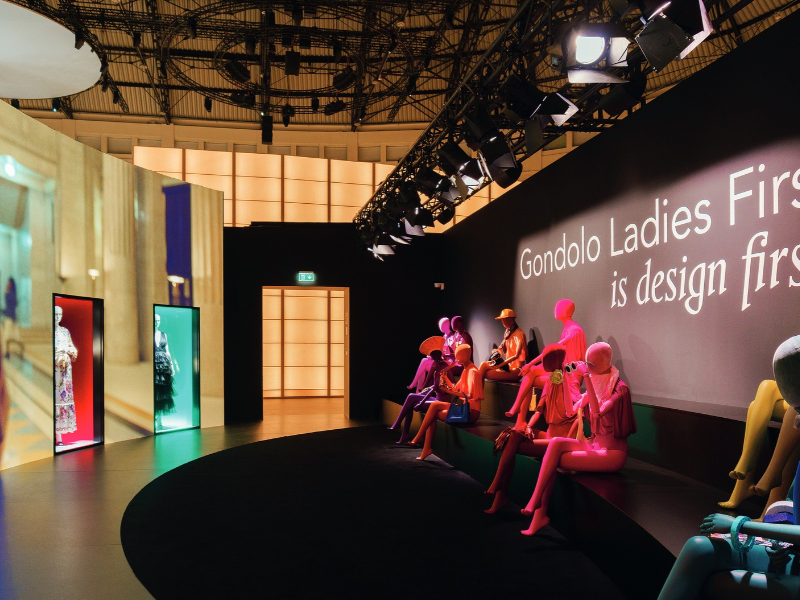
Gondolo Ladies First jewellery timepieces. The setting could not have been more fitting. In the heart of fashion and design’s undisputed capital, the novelties were unveiled haute-couture style, worn by models weaving gracefully through the crowd.
If the silhouette looks familiar, it is because the Gondolo — conceived in the Art Deco era for the Brazilian market — has long embodied Patek Philippe’s penchant for form, taking shape across cushion, square, rectangular and tonneau profiles. Its influence on the maison’s aesthetic remains indelible. In fact, the 1990s classic ladies’ Gondolo directly inspired the iconic Twenty~4. This new collection also draws from the Ladies First Chronograph (Ref 7071), which famously debuted the manufacture’s first in-house, hand-wound chronograph movement in 2009.
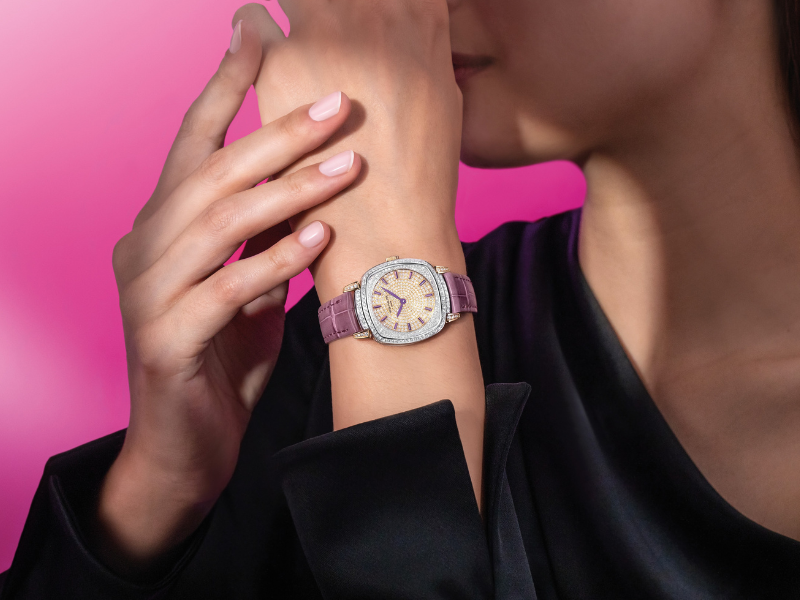
Expressing a striking geometry, each of the six iterations pairs a polished gold cushion case with a classic round dial — a visual nod that feels simultaneously retro and modern. Their shared hallmark? A lavish expanse of meticulous gem-setting.
Three models offer just enough sparkle to make every day feel special. At the centre lies an opaline dial adorned with an embossed rippling motif, where trapeze hour indices, polished gold cabochon minute markers and leaf-shaped hands ride the luminous waves. Encircling the display, 108 diamonds form a radiant halo along the flange. This glittering perimeter is achieved through a subtle gradation of gem sizes anchored in near-invisible grain settings for added visual depth. Articulated lugs enhance wearing comfort, allowing the watch to sit flush on the wrist with a matching calfskin strap.
There are two white gold executions: one with a serene blue-grey opaline dial and the other in shimmering silver, enhanced by a contrasting rose gold crown and lugs. The third wraps a rose gold case around a rich chestnut face, imbuing the design with inviting warmth.
For moments that demand sheer grandeur, the other three pieces make a dramatic statement. Unapologetically indulgent, this trio of bejewelled showstoppers is ignited by 687 fiery brilliant-cut diamonds cascading across the dial, case and lugs. Injecting a flash of contrast, vibrant gemstones are held in delicate gold claw settings above the dial, maximising light transmission to intensify their rich saturation. Patek Philippe creates harmony by treating the hands with atomic layer deposition to match the gemstones and pairs the timepiece with tone-on-tone alligator straps.
A white gold variant is accented with vivid blue topazes while its rose gold counterpart gleams with lush green tsavorites. Completing the triptych is a two-tone white-and-rose-gold model crowned with deep purple amethysts.
body_photo_-_2026-11-11t164251.031.png
Proportioned for effortless wear, the case measures 15mm x 13mm with a svelte profile of just 1.8 mm. Driving the entire line is Patek Philippe’s E15 quartz movement, chosen for its “ease of use”, though the announcement prompted a subtle wave of raised eyebrows among traditionalists in the room.
While quartz certainly has its place in modern luxury, the choice feels paradoxical here. The Gondolo Ladies First explicitly traces its lineage to the landmark Ladies First Chronograph — the very model Patek Philippe used to champion the importance of mechanical watchmaking for women. To debut this new Gondolo with electronic components under the hood invites genuine curiosity, even if a mechanical calibre may soon join the fray. One cannot help but wonder whether the discerning woman whom the maison courted in 2009 differs from the one it seeks to captivate today.
That said, the presence of quartz hardly signals an entry point. These gold-hewn, gem-encrusted novelties command prices between RM167,800 and RM307,700. Should a mechanical heart remain non-negotiable, two haute joaillerie variants offer solutions for those with deep pockets. Driven by the hand-wound Calibre 215, these showpieces dramatically up the ante, blanketed in 552 diamonds across brilliant, baguette, trapeze and princess cuts. Strung on a bracelet woven with 79 lustrous Akoya pearls, this ultimate expression of luxury demands RM1,179,200.
Asked about the key considerations Patek Philippe has prioritised when designing for the female gaze, president Thierry Stern is resolute. “Quality, quality, quality. It has never changed,” he insists. “The requirement for a ladies’ watch is the same as a men’s — to have the best quality, finishing, design and to surprise you. That’s what I’m aiming for.”
“There is no variation between men’s and ladies’ watches,” he maintains, though christening the collection Gondolo Ladies First speaks deliberately to a distinct audience. In an era when most maisons have abandoned gendered labelling altogether, such nomenclature feels out of step.
2.png
Future focused
For collectors and enthusiasts alike, the Watch Art Grand Exhibition in Milan proved a pilgrimage well worth undertaking. In an era increasingly governed by artificial intelligence (AI), gatherings that demand human engagement and genuine presence feel more vital than ever. “People think what they see on screen is real. By doing events like this, you can really show the reality,” says Stern.
“It’s very hard for the younger generation to know and understand what is real or not, what is handmade, hand-finished and done with passion. Here, you can see the watches, the museum, the artisans, the archives. And this is something you do not see on your couch with your iPad or your phone. You see the image, but you don’t feel it, you don’t talk to people. Here, ask any question and I will answer.
“It’s my responsibility to teach people what we’re doing, how we’re doing it and at what quality. So, once you go out of here, you will be happy because you will have learnt something about the brand and product and become more knowledgeable. It will give you more confidence to invest in a fine watch, even if it’s not a Patek Philippe.”
While Stern acknowledges the benefits of AI for sorting through paperwork and emails, he is adamant that it will not replace humans in terms of creation. “We were trying to play with it and [the result] was beautiful. You see many things. But it’s not us. It’s not our soul, not our DNA. Even if it’s beautiful, I will not be able to look at you and say we did it. I’m not ready to give half my shares to a computer,” he quips.
Today, he is actively mentoring his sons to navigate this ever precarious landscape. Looking at his eldest, who shadowed him throughout the event, Stern says the challenge for Adrien and his brother Tristan is to maintain the same strategy and awareness for the brand. “I do not see why mechanical watches will go away, especially in this world where we increasingly talk about sustainability. We are certainly at the top of it because, believe me, you don’t throw away a Patek when it doesn’t work. You fix it.
“I’m 56. At one point, I will have to let go. I’m not going to wait as long as my dad. He stopped at 75 or older. I want to leave space for the next generation. I will be there to help them, no doubt, but I would also like to enjoy a little bit,” he laughs. “Maybe I’ll go off with my shares!”
Circling back to the fair, Stern emphasised its purpose for education rather than making sales. “I really hope what you saw [reflects] the vision that my father had in his mind. We have tried to improve it, exhibition after exhibition. I hope that through this, the world will know a little bit more about Patek Philippe and fine watchmaking. It helps not only us but also the whole Swiss watch industry, and that is very important to me.”
This article first appeared on Oct 26, 2026 in The Edge Malaysia.