
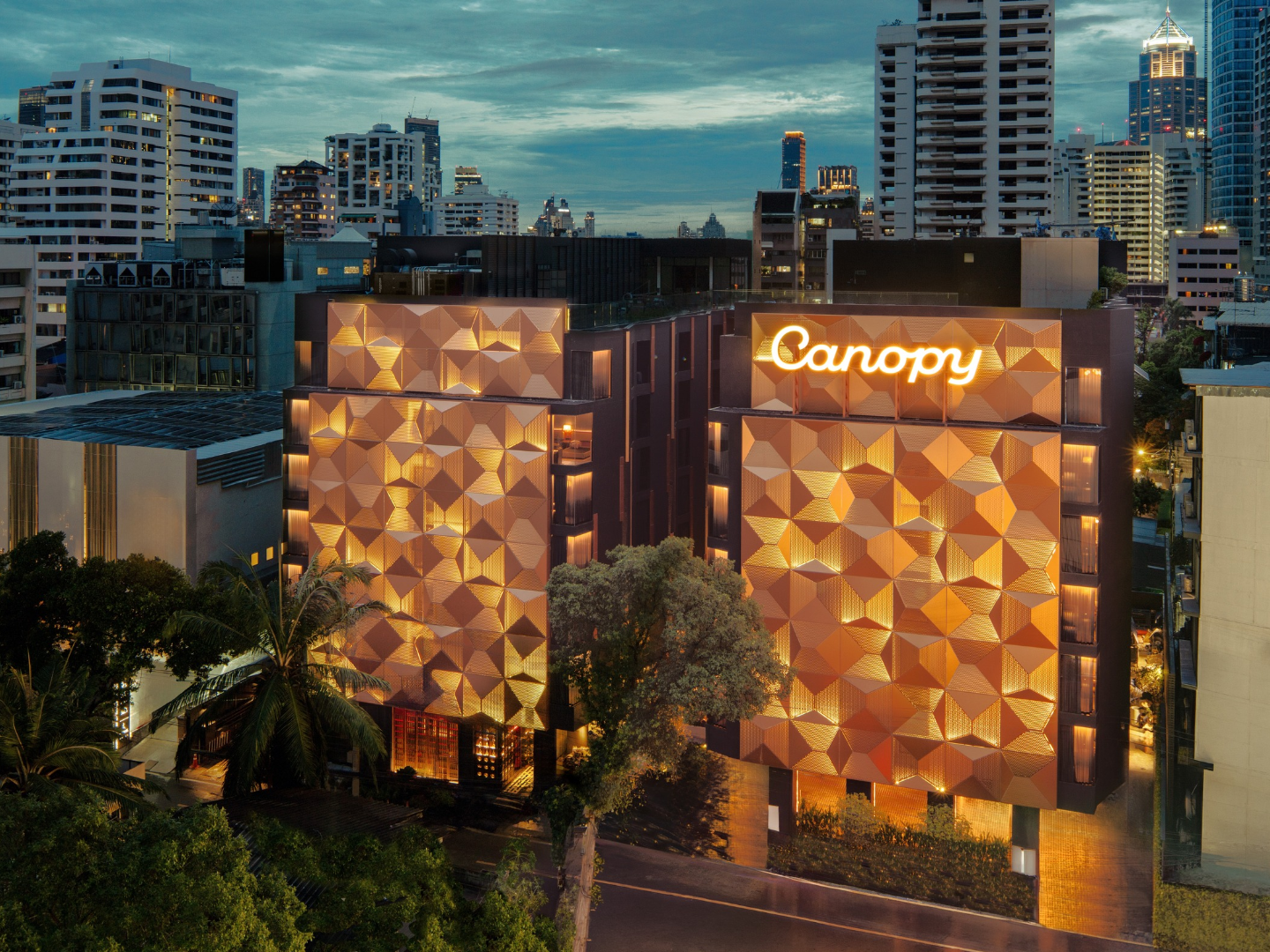
The hotel boasts a bronze geometric exterior inspired by the insides of vintage film cameras (All photos: Canopy by Hilton Bangkok Sukhumvit)
In a place as vibrant as Asoke, it is easy to get carried away by the fast rhythm. A major transportation and business hub in Bangkok, the neighbourhood is anchored by one of Southeast Asia’s busiest intersections — between Sukhumvit Road and Asok Montri Road — which also serves as a meeting point for the BTS Skytrain and MRT Underground.
Gridlock is routine in this area where towering offices, hotels, shopping malls and restaurants jostle for space along the skyline. Streets and tunnels constantly flow as more than 200,000 people make their daily commutes, whether on foot, by wheel, or by water.
Asoke is a district defined by movement, yet tucked along Sukhumvit 12 Soi, a new arrival takes an interesting approach. Despite sitting in the crosshairs of the commercial rush, Canopy by Hilton Bangkok Sukhumvit offers welcome respite, keeping guests at the heart of the excitement while still feeling at home. Its official opening this August also marked Canopy Hotels’ debut in Southeast Asia.
1.png
A sense of place
Location is naturally one of Canopy Bangkok Sukhumvit’s greatest assets. Both the Asok BTS Skytrain and Sukhumvit MRT stations are a six-minute walk away, putting the city’s retail, dining and nightlife within easy reach. Shopping spots including the popular airport-themed Terminal 21, Swu Market and EM District are also nearby.
Rather than simply capitalising on its address, the property makes a conscious effort to bring Asoke through its doors. Its design story draws from the neighbourhood’s many layers, translated through contemporary forms and materials. Both new and old Bangkok are immortalised in features that reference everything from the city’s historic industrial port to the old Hollywood glamour of Sri Krung Sound Film Studio — one of Thailand’s earliest movie studios and a pioneer in local film production and distribution established in the late 1920s.
The tone is set from when a guest arrives and glances up at a bronze façade, mimicking the inner workings of vintage film cameras. The hotel’s two towers are linked by a sunken central courtyard evoking a large conversation pit ornamented with greenery. The intentional use of the otherwise small space also creates a visual and physical transition from the street into the property.
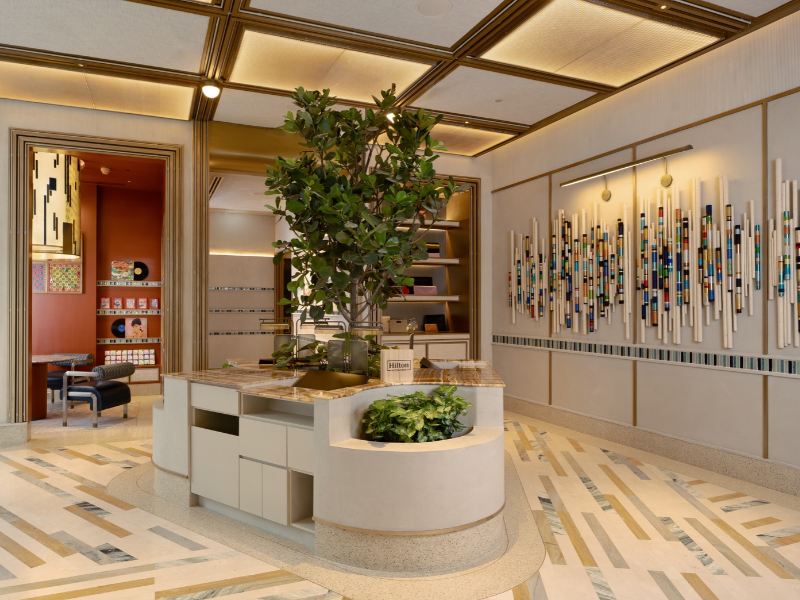
This narrative extends inside, elevated by award-winning interior design studio Avro, which conceptualised some notable public spaces within the hotel. One is the lobby, lined with marble terrazzo tiles and textured walls, illuminated by warm overhead lighting. A collection of colourful spools named Threads of Journey by artist Dong Sculpture, and multicoloured mosaic flooring represent Asoke’s melting pot of cultures. Cheeky local touches are placed tastefully around the space, like a traffic mirror or geometric grid patterns inspired by sights that make up the hub. There is also an entertainment corner filled with games and paraphernalia dedicated to one of the neighbourhood’s old toy shops that has since closed down.
body_photo_-_2026-11-11t190108.171.png
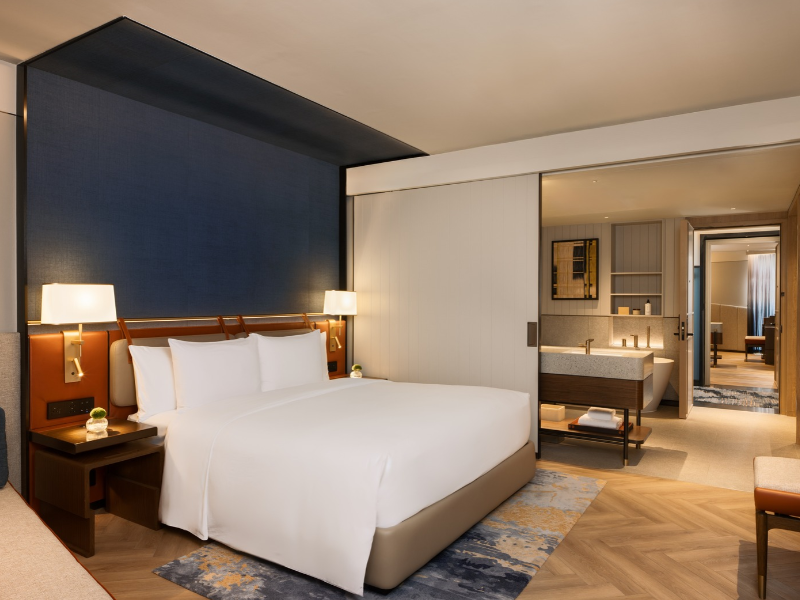
Canopy’s 174 guest rooms are available in several configurations. Urban View, Courtyard and Corner offer different scenes, while connecting and interconnecting options can accommodate those travelling in groups.
Inspired by the family homes that once lined the Soi, the rooms are laid out to feel cosy with a residential atmosphere, exhibiting features with curved forms, softened edges and made using neutral-toned materials. On closer look, the surrounding neighbourhood begins to reappear.
Nods to the Khong Toey port and Asoke’s ever-transforming landscape are obvious in the deep tones of blue and orange that merge with steel. Each detail has been carefully considered, down to the style of hooks used, inspired by the way workers hang their drinks; the bathrobe illustrated with abstract depictions of stacked cargo containers; and the Paa Lhram fabric canopy above each bed, an ode to one of the country’s oldest handwoven textiles.
body_photo_-_2026-11-11t190126.049.png
Full-spectrum
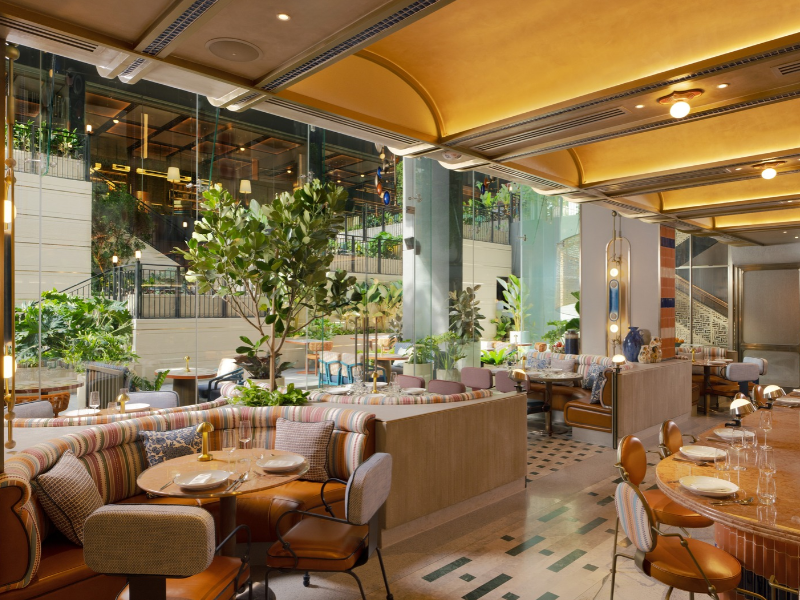
Food and drink are central to any experience. Here, four concepts cater for various moods and times of day.
First, there is Cante, the hotel’s signature Spanish fire grill and taberna. Southern Spain — much like Asoke — has an incredibly layered cultural heritage rich in diversity. This is echoed through the restaurant’s layout, and in its food. Fire-led cooking combines seasonal Thai ingredients and international flavours, resulting in bold wood-fired dishes and sharing plates influenced by Barcelona, Valencia and Andalusia. Aside from caramelised grills, tapas and conservas, it also specialises in paellas (available in seafood, chicken and vegetarian variations) and fideuà, made with a pasta base.
Meanwhile, Luso operates as an all-day café, championing the best of homegrown produce. Coffee is sourced from local roaster Sarnie, while tea is from Monsoon Tea, a Chiang Mai-based company that specialises in fermented, rainforest-friendly tea selections.
Come evening, SoolHaus adds nocturnal energy to the stay for guests who do not wish to leave the hotel grounds. The Korean-inspired cocktail bar is known for its creative infusions that mix ingredients such as yuja, omija, roasted barley, perilla, toasted rice and gochugaru. Beverages and tidbits are curated to evoke varied settings from casual, street drinking under tents to late-night karaoke sessions. A menu standout is definitely the Citrus Broadcast, served bingsu-style. Clad in black and red with leather and linen accents, the enclave comes to life with collaborative pop-ups and weekly sessions featuring a rotation of resident DJs.
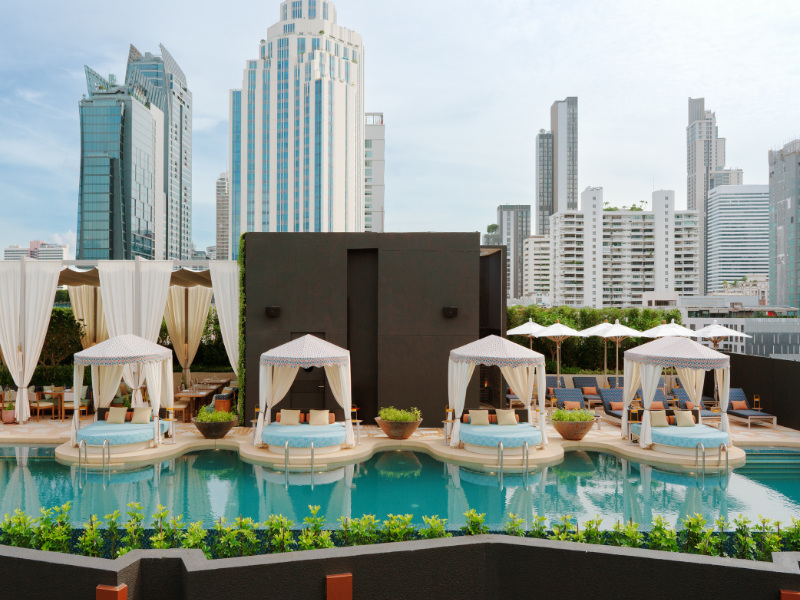
Then there is Glint, the rooftop pool bar that lives up to its name, serving specialty spritzes. The assortment of refreshments is best enjoyed under a shady cabana, with panoramic skyline views overlooking the district. It is an ideal reward, especially after a daytime swim or a workout session at the 24-hour fitness centre, also conveniently located on the upper floor.
body_photo_-_2026-11-11t190152.972.png
Bringing it in
A distinct aspect of Canopy Bangkok Sukhumvit is how it connects visitors with the city, beyond the usual tourist circuit. Rooted in the belief that every destination has its own character, the hotel brings that to life through collaborations with independent brands and artisans, with some products showcased in a retail space at the lobby. The line-up begins with intricate purses from contemporary fashion label LalaLove, known for its sustainable, eco-conscious practices, including incorporating traditional hand-dyeing techniques and working with women prisoner communities. LalaLove tote bags are also available in each guest room.
On the opposite wall are perfumes from Saisalang, specialising in multi-layered fragrances that depict photorealistic and story-driven compositions. Elegant transparent bottles are labelled after places — Sukhumvit, Krungdhep by the Rain, Vieng Ping, Chiang Khan — with scents that capture those locations and their surroundings. The shelves extend to hold a neat arrangement of books and guides by local authors.
Once the appetite for exploration kicks in, guests can immerse themselves in a more authentic side of Bangkok through the hotel’s dedicated experiences led by a city curator. Ride along the Saen Saep Canal by boat to beat traffic while taking in the district from a riverside perspective. It runs parallel to Sukhumvit Road, passing through historical sites such as Golden Mount as well as other business and shopping zones.
Canopy’s Morning Neighbourhood Walks offers a slower taste of Asoke just before its cafés, eateries and smaller stores come to life. To tie it all together, participating in Postcards from Asoke gives visitors a personal keepsake to take home by inviting them to document their impressions and reflections while in the area. They can then send it to themselves as a memento from the trip. Though a small gesture, it reinforces the hotel’s larger idea that a stay can be truly meaningful.
Together, the details in its design, dining options and collaborations craft a journey grounded in both comfort and story, all the more so when complemented by a welcoming, attentive crew. The approach to hospitality feels particularly fitting, especially for a property built around the ethos of being “At Home, in the World”.
This article first appeared on Oct 12, 2026 in The Edge Malaysia.