
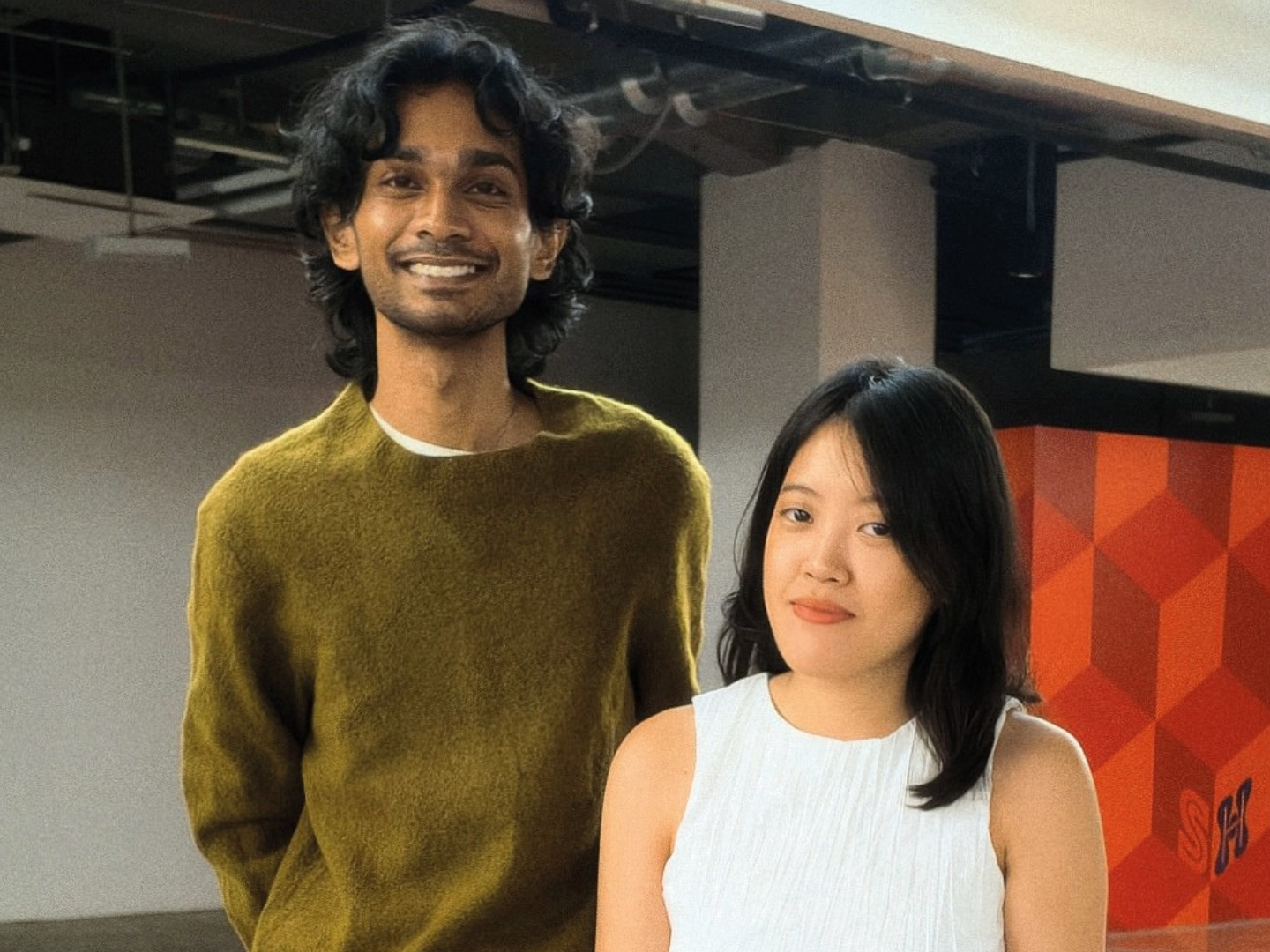
Pravin Nair (left) and Seah Shao Fen (All Photos: KFI)
The image of a creative talent hunched over a workbench, caught in the flickering light of a dying candle, body taut with concentration, is etched into our collective consciousness. For many, burning the midnight oil to keep the wellspring of creativity flowing is a willing trade-off, despite the solitude of those late-night hours and the inevitable exhaustion that follows. The more bitter sacrifice would be to box away that brilliance, only to be left with the regret of never having given it form.
The pursuit of beauty and glory, especially without actual promise of either, is a struggle that has long been linked to the arts. We hear and retell stories of extraordinary success born of suffering, alongside tragedies of those who succumbed to internal and external pressures in a world that too often ostracises the unconventional and eccentric. To the detriment of artists, however, the romanticisation of creative struggle, both within and beyond the arts, is largely responsible for its persistence. The prevailing notion is that one must toil for their craft, as though the labour poured into a project determines its worth.
In more recent times, though, more individuals (usually creatives who have fought tooth and nail to produce and keep producing art) have warned against the dangers of perpetuating this trope. Without sufficient and well-developed support, many artists have little chance of making their craft their sole, or even primary, source of income, let alone attaining the renown afforded to the classical masters. When the prospects of such a path remain bleak, even the most gifted prodigies can be discouraged from pursuing it, regardless of their ability.
The need to aid creators and artisans is urgent in Malaysia, which, for all its vibrancy and cultural abundance, is no stranger to creative brain drain. Within the local fashion niche, Kain Fashion Incubator (KFI) is the latest light at the end of the tunnel.
Supported by the Ministry of Finance, Yayasan Hasanah, Kuala Lumpur City Hall (DBKL) and Think City, the pilot edition of the programme aims to give emerging and established designers and businesses a launch pad for their careers.
The initiative was the brainchild of Malaysian designer and KFI project manager Seah Shao Fen, who drew on by her experience pursuing the craft, establishing her eponymous label and teaching at Raffles College of Higher Education.
“My brand was self-organised and all started by me,” she says. “I have always had to try and address that gap [in support] for myself as a designer. The kind of aid we are offering is what I wished I had when I was starting out. If I wasn’t running it myself, I’d be applying!”
Working closely with Seah to bring the vision to life is writer and photographer Pravin Nair, whose own teaching experience informs his role as the programme’s community manager.
“The conclusion we came to was that you need to be the change you want to see in the world. Even if you are making efforts to uplift yourself, it has a trickle-down effect for those around you,” he notes.
4.png
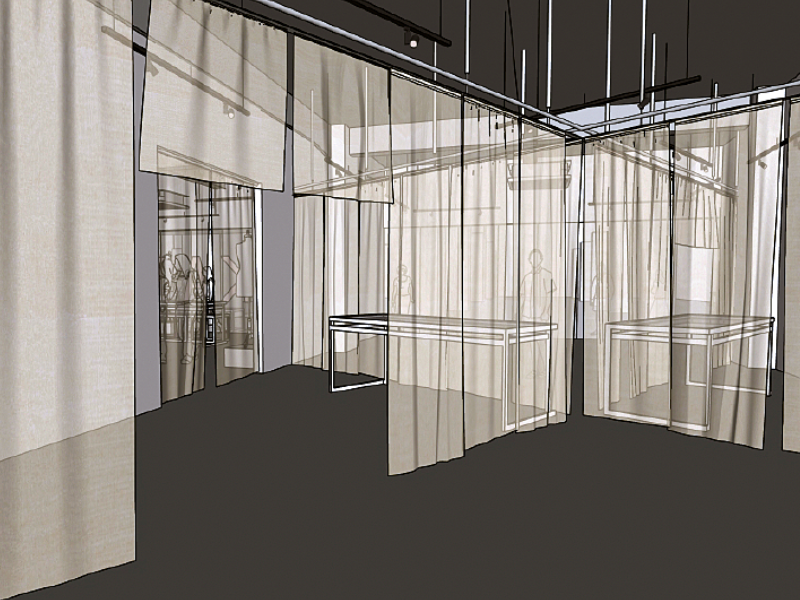
So, how does it work? It begins with the intake of 10 selected applicants. Open exclusively to Malaysian citizens aged 18 to 40, the programme welcomes recent graduates with emerging labels, practising designers with annual revenue of no more than RM200,000, and collectives with a clearly defined creative direction. In addition to an existing portfolio and a thorough design brief, participants are expected to have a Companies Commission of Malaysia (SSM)-registered brand, as the programme focuses on helping them develop commercially viable products and business models.
The chosen cohort will then embark on a six-month incubator period, where they will be offered mentorship, business tools and networking opportunities. Perhaps the programme’s greatest benefit to participants is access to the shared workshop and learning environment at Semua House, ideally situated along Jalan Tuanku Abdul Rahman in the heart of the city’s historic fashion district.
The shopping hub-cum-community space offers easy access to the area’s fabric, sewing supply and clothing vendors, as well as related establishments and happenings that take place in and around the building such as pop-up markets.
“It is the perfect place for everything to come together,” says Seah. “Everything the participants would need is nearby — materials, tools, a community of artists, food, too.”
A fruitful incubation programme needs a tangible outcome to work towards. For KFI, this will take the form of capsule collections comprising at least four looks per participant, to be presented at Semua House in conjunction with KL Festival 2027. To guide participants towards this goal, nine modules have been developed to structure the programme’s workshops, discussions and panel sessions. Each participant will also receive a RM5,000 grant to help offset production costs.
By providing a fully equipped workspace, KFI addresses arguably the biggest obstacle facing young, working-class artists: inconsistent access to resources. Students who cannot afford their own equipment or set up dedicated workspaces at home must rely on school facilities, which are often limited and accessible only during designated hours. Meanwhile, those who can afford machines and materials may still struggle to grow their labels without adequate space or additional hands to support production.
Through a programme such as KFI, participants will have one less hurdle to overcome in bringing their ideas to life. Freed from having to dip into their own pockets for the basic necessities of their craft, they can devote more time and resources to developing their work and charting a sustainable path forward. This is particularly important for fresh graduates, who have yet to make a name for themselves and are often less able to fund their creative pursuits.
3.png
Another issue KFI seeks to address is the prejudice against locally made products, despite the nation’s long-standing traditions of craftsmanship and artisanal production. While a handful of Malaysian designers have made significant strides in recent years, a strong preference for international labels persists, particularly for the celebrated couture houses of the West, whose prestige is especially evident in the second-hand and vintage markets. The continued dominance of foreign labels often eclipses home-grown talent and artistry, leaving consumers either unaware of our wealth of accomplished designers or inclined to overlook them in favour of international names, under the misguided assumption that foreign is synonymous with better.
Pravin, a fashion and cultural commentator, elaborates: “A big part of this issue is the global xenophobia and stigmatisation of Asian-made goods. In the West, we are viewed through such a narrow lens. To them, we make batik, and that’s it. What we’re doing is redefining the framework and creating a contemporary conversion of what it means to be Malaysian through design practices.
“The question is, ‘How do you platform fashion designers?’ because we have such a rich cultural tapestry and it’s in our DNA to make clothes — we literally used to fold and tie fabrics onto our bodies, no sewing required.”
While KFI is not the first local programme of its kind, it is arguably the most ambitious. Beyond bringing together an impressive roster of mentors and panellists from across the fashion landscape, its strength lies in the people behind it: individuals who have experienced the odds stacked against them and carved their own paths through the industry. Rather than pull up the ladder behind them, they are drawing on their knowledge, influence and connections to bring the field together and make the journey a little easier for those with similar aspirations. There is still a long way to go before creatives can enjoy greater financial and professional security, but with post-programme monitoring frameworks in place, KFI is setting out to make a lasting impact.
“It’s a small step in a much bigger picture, but I think this is a good start,” says Seah. “Everyone who shows up for this — from panellists and designers to the media — is playing a part to reach our goal.”
Kain Fashion Incubator is accepting applications until Nov 20. For details, visit kainfashionincubator.com.
This article first appeared on Nov 9, 2026 in The Edge Malaysia.