
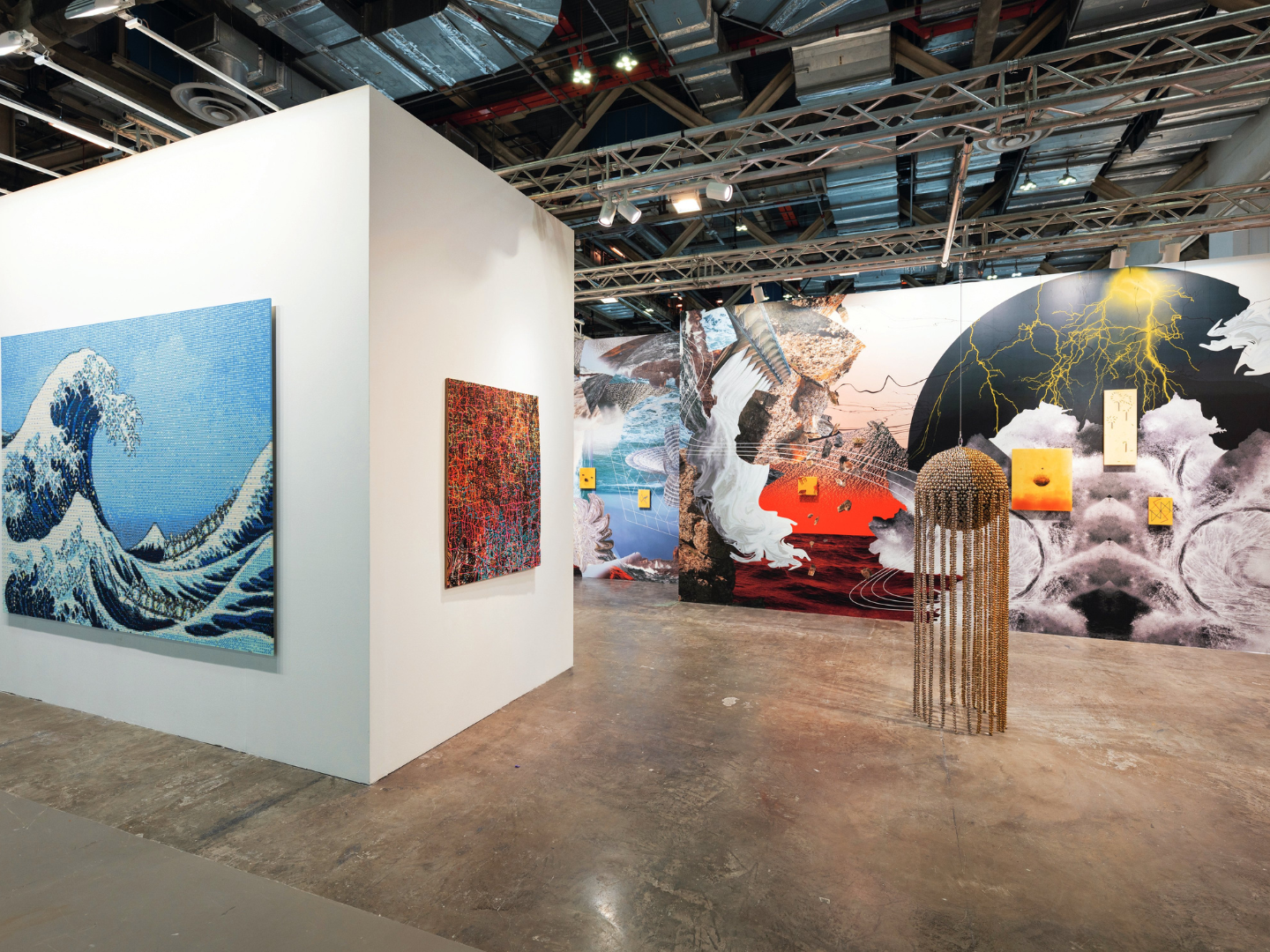
Berlin’s neugerriemschneider showcased several renowned artists, including South Korea’s Haegue Yang (All photos: Art SG)
It is said that a picture is worth a thousand words. When we hear of people weeping before paintings in galleries or have our breath taken away by an exceptionally lifelike sculpture, the power of the unspoken word makes itself known. Art has the ability to move the soul and set the mind alight, bridge divides and spark discord without so much as one written or engraved phrase. In current times, when social media has become a slurry of misinformation and a distributor for the most heinous ideologies and sentiments, the need for art — the ultimate medium for the disenfranchised and neglected to express themselves and leave their mark — has never been more pronounced.
The new year season is usually a sluggish period, with most still at the tail end of holiday hibernation. If you have kept a finger on the pulse of global news, though, you would know this year had anything but a quiet start. Already frantic from recent months spent with all cylinders firing, key players of the art world descended upon the Lion City for the 14th edition of Singapore Art Week. Some came looking for an intermission from the never-ending chaos, while others saw it as just the right occasion to podium-pressing issues. At the Art SG, the week’s flagship fair, it seemed the latter was louder.
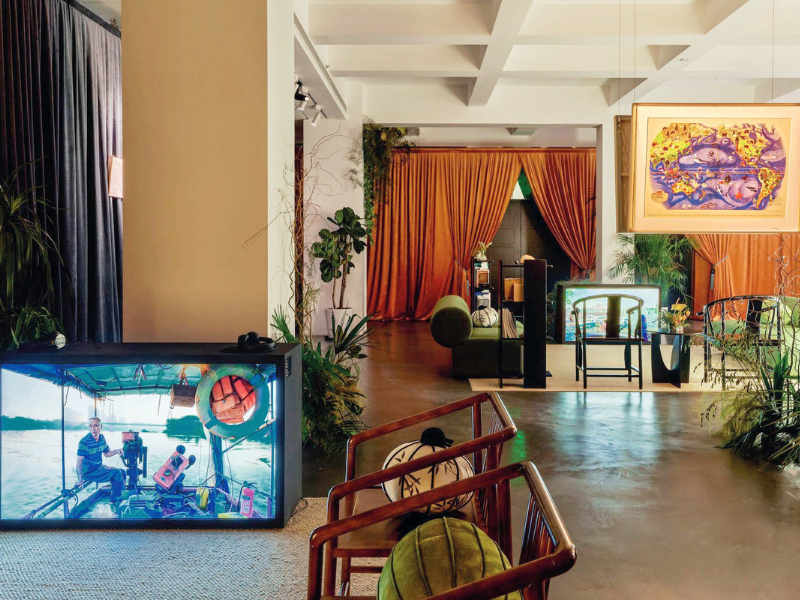
Taking over Sands Expo and Convention Centre at Marina Bay Sands from Jan 23 to 25, the fourth instalment of the fair welcomed more than 43,000 visitors over thr ee days, reaffirming the event as a major cultural driver for Singapore and the wider Southeast Asia. This year’s agenda saw the fête expand beyond the staple Galleries, Focus and Futures sections to introduce a dedicated Performance Art sector; the inaugural South Asia Insights that highlights contemporary works from the Indian subcontinent; the Film programme done in collaboration with ArtScience Museum; Perspectives, a series of engaging talks with artists and curators; and Wan Hai Hotel: Singapore Strait, a special off-site project at The Warehouse Hotel co-presented with Shanghai’s famed Rockbund Art Museum.
2.png
It is no secret that events of this nature are primarily outlets for galleries to connect with foreign collectors and develop their international impact. Asked how the 2026 presentation stacks up against previous editions, co-founder Magnus Renfrew notes “a shift”, beginning with the event’s growth into more than just a place to buy and sell.
“The energy and excitement surrounding this year’s fair is a step up from previous editions. Even prior to the opening reception at the National Gallery, there were several related events happening earlier in the week that were very well attended, which was very encouraging to see. We are all in this because we are passionate about art and culture, and the fact that we can build a wider engagement for Southeast Asia and Singapore is very gratifying. We’re really starting to show the potential of what the fair could be and do for the region,” he says.
For a younger initiative, evolving into a force with the ability to galvanise top galleries, collectors, media and enthusiasts while being a sufficient representation of what the region has to offer required the fair to differentiate itself from other activations of a similar scale.
To achieve this, the artwork selection had to be robust. The number of exhibitors had been gradually trimmed since the maiden Art SG in 2023, which had more than 150 galleries. While sizing down to just over 100 was partially due to a slowdown in the collectors’ market, it also allowed for a more focused approach. “I’ve been hearing from curators and collectors that the fair is maturing,” Renfrew remarks. “In the past, galleries were trying to pander to people’s tastes and, now, there’s a greater confidence in the material they’re bringing in.”
3.png
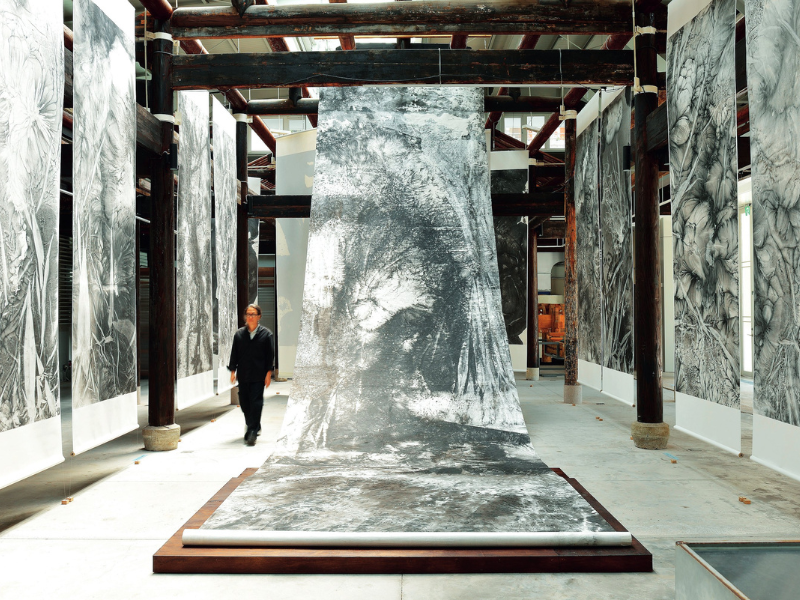
That conviction resulted in the appearance of some truly exceptional works — Annely Juda Fine Art from London unveiled David Hockney’s rare floral iPad paintings (which went to auction at Sotheby’s), alongside a line-up of works dating back to the 1910s and 1920s by Kazimir Malevich, the father of abstract art. Zurich’s Galerie Gmurzynska exhibited Chilean legend Roberto Matta alongside Wifredo Lam, who is currently the subject of a grand retrospective at New York’s Modern Museum of Art. INKstudio highlighted Beijing-based painter Bingyi, whose ink-on-paper installation inspired by China’s Longhu Mountains was suspended in a way that evoked the towering grandeur of mystical hilltops looming overhead. South Korean artist Haegue Yang’s ensemble offered a sphere of metallic bells that, when spun, emits a gentle chime — an allegory for the flutter of a butterfly’s wings — imagined to set off a monstrous apocalypse.
These artworks and the associated names signify not only galleries’ and artists’ deepened trust in Art SG but also the event’s growing global impact among industry outsiders. It was a win-win for all — exhibitors (especially those from outside Asia) stood to gain greater traction while the local art crowd welcomed displays they would otherwise have had little chance to see.
“Art SG is an opportunity for people from Singapore and Southeast Asia to see works that stack up against that of any other international fair, things that are worthy of being displayed at some of the world’s leading museums. These galleries bringing in this calibre of art and treating Art SG as a priority is a testament to their belief in Singapore as a gateway to a broader audience,” says Renfrew.
body_pics_1.png
To position the fair and country as an entryway to the more overlooked parts of the hemisphere naturally meant boosting Southeast Asian presence. The uninitiated often need a little taste prior to taking the plunge. The chance to co-organise and present SEA Focus, a homegrown Singaporean platform championing local creativity since 2019, was an opportunity the Art SG team could not pass on.
Most recognise Southeast Asia for its rich cultures and mythology, lush topography, culinary excellence and warm personalities. Those who know anything about world history understand that most of these winning elements were forged through great resilience and courage. Despite all it has to offer, the region is often glossed over and seen as an “other” from the Global North and occidental sphere. SEA Focus’ 2026 theme “The Humane Agency”, was not only a reply to conflicts and suffering around the world but also a chance for local creatives to finally have their say on the international stage.
SEA Focus curator John Tung brings up the concept of empathy and how art can revive that sensation among an increasingly desensitised and digitised society. Most critically, he emphasises the significance of regional artists and works in international discourse. “What is different is the way Southeast Asians approach these issues,” Tung says. “They’re shaped by lived experiences that come with a unique socio-cultural background shaped by colonialism, imperialism and even the separation between them and the international scene. The responses and proposals made through their creations contribute to the broader conversation while offering specific perspectives. Usually, these voices are also from the shorter end of a power spectrum and they’re necessary inputs that should be heard in the international context.”
Taking up its own 800 sq m section on the first floor, SEA Focus presented 16 galleries, with more than half operating spaces in Singapore. Prominent participants included ShanghART Gallery, neugerriemschneider, ISA Art Gallery, Silverlens, Mr Lim’s Shop of Visual Treasures and Richard Koh Fine Art.
From the other side of the fairgrounds, a series of 20 hoisted flags beckoned curious visitors. Indonesian matriarch Arahmaiani adorned each colourful banner with a word describing the human experience. Naturally, “Love” and “Justice” had to be at the very front for all to see. Elsewhere around the space, Amanda Heng’s Singirl Revisits series captured locations around Singapore that had been abandoned or are slowly being forgotten. Ines Katamso’s ethereal Latent Biology paintings created an intersection for ecology, culture and myth to flourish.
4.png
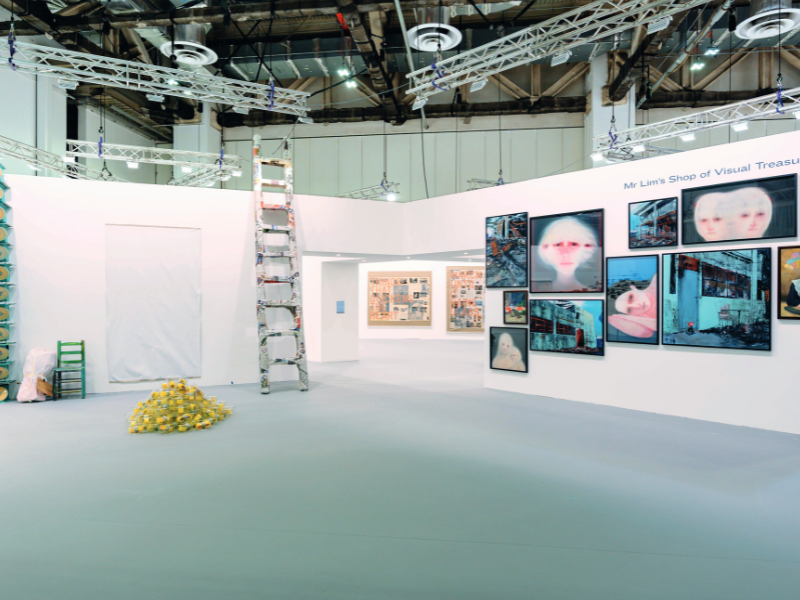
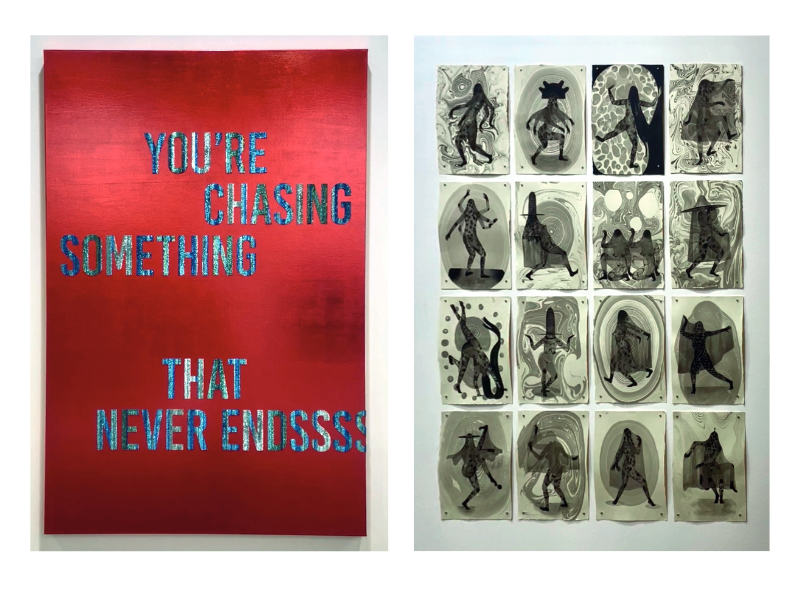
Imelda Cajipe Endaya’s vibrant mixed media works tackled issues of globalisation and cultural belonging. A few paces away, Ho Tzu Nyen’s Night March of Hundred Monsters enticed visitors into a dark room, where a small luminous projection depicted a parade of fearsome yōkai (ghosts, demons and fantastical creatures). A ladder, built by Tang Da Wu, sat propped by the section entrance, plastered over in sheets of newspaper with glaring headlines. Samuel Xun’s Decorative Disobedience comprised a wall of canvases painted in the artist’s favoured jewel and candy tones, each featuring a word or phrase — some political and others just pure fun.
This theme of the human experience — its pains, struggles, dreams and triumphs — rang throughout all of Art SG. Malaysian-born and New York-based artist Anne Samat, represented by Marc Straus Gallery, created multiple totemic self-portraits out of everyday objects, from kitchen and garden utensils to rattan sticks and beads. Each vaguely humanoid sculpture reflected a grapple for liberation, observed through the lens of her unique background and family history. At Richard Koh’s individual booth, tour groups gathered around Htien Lin’s painting that echoed the severe violence and distress that Myanmar’s people have been subjected to since the military coup in 2021, juxtaposed by the cosiness of the chosen canvas — a warm blanket.
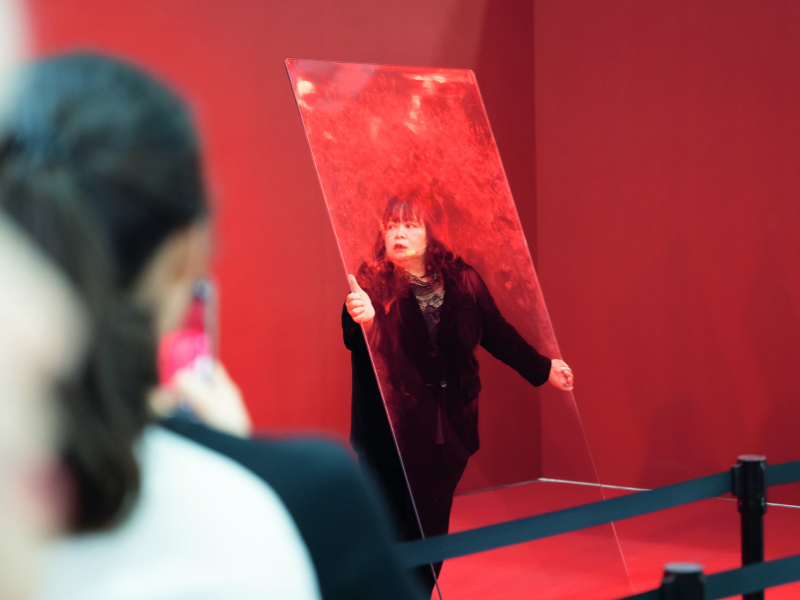
Meanwhile, Citra Sasmita’s visceral portrayals of the female body merging with the earth and cosmos challenged patriarchal and colonial realities by uplifting the feminine persona as an otherworldly protagonist. Indonesian performance artist Melati Suryodarmo staged her 2007 piece I Love You at the UBS Art Studio, evoking the titular emotion’s vulnerability, self-sacrificing, desire and danger as she carried a 40kg pane of glass while chanting the three words over three hours (in high heels, no less).
1.png
The intensified need for art to come with substance and messaging reflects shifts in both audience demographics and preferences. Art SG founding partner and Swiss investment bank UBS noted this change in its 2025 global insights — the collectors’ market is increasingly young and female-dominated, with a deepened passion for cultural philanthropy and family heritage. These people tend to have heightened interest in activism and conservation. Though the purchasing rate may have lulled over the past couple of years, active buyers are becoming more selective. What is newly acquired must speak for both the owners’ artistic tastes as well as the social causes they support.
In moments of uncertainty, Singapore’s reputation as a relatively secure urban haven fortified Art SG’s role as a safe nucleus for meaningful discourse. Artists have always been vocal about worldly disputes and inequalities — it is at the core of what they do. Now, it is up to the individual to distil these sentiments from their chosen media and ponder over them. Renfrew remarks: “In the decade leading up to the pandemic, things were exuberant and even a little frothy. Now is the moment when people are refocusing and getting back to the fundamentals. And that is no bad thing.
“One thing art and culture does, because these are such personal engagements with our respective cultures, is help foster conversations between different countries and communities. It brings us back to the basics of what it is to be a human being. When you have all this noise around you, it’s very grounding to have something so fundamental as art that can help get us back to the common experience of being alive on this earth. That’s something really called for now.”
This article first appeared on Feb 9, 2026 in The Edge Malaysia.