
He talks about his sources of creative inspiration, including his favourite artist and cultural destination.
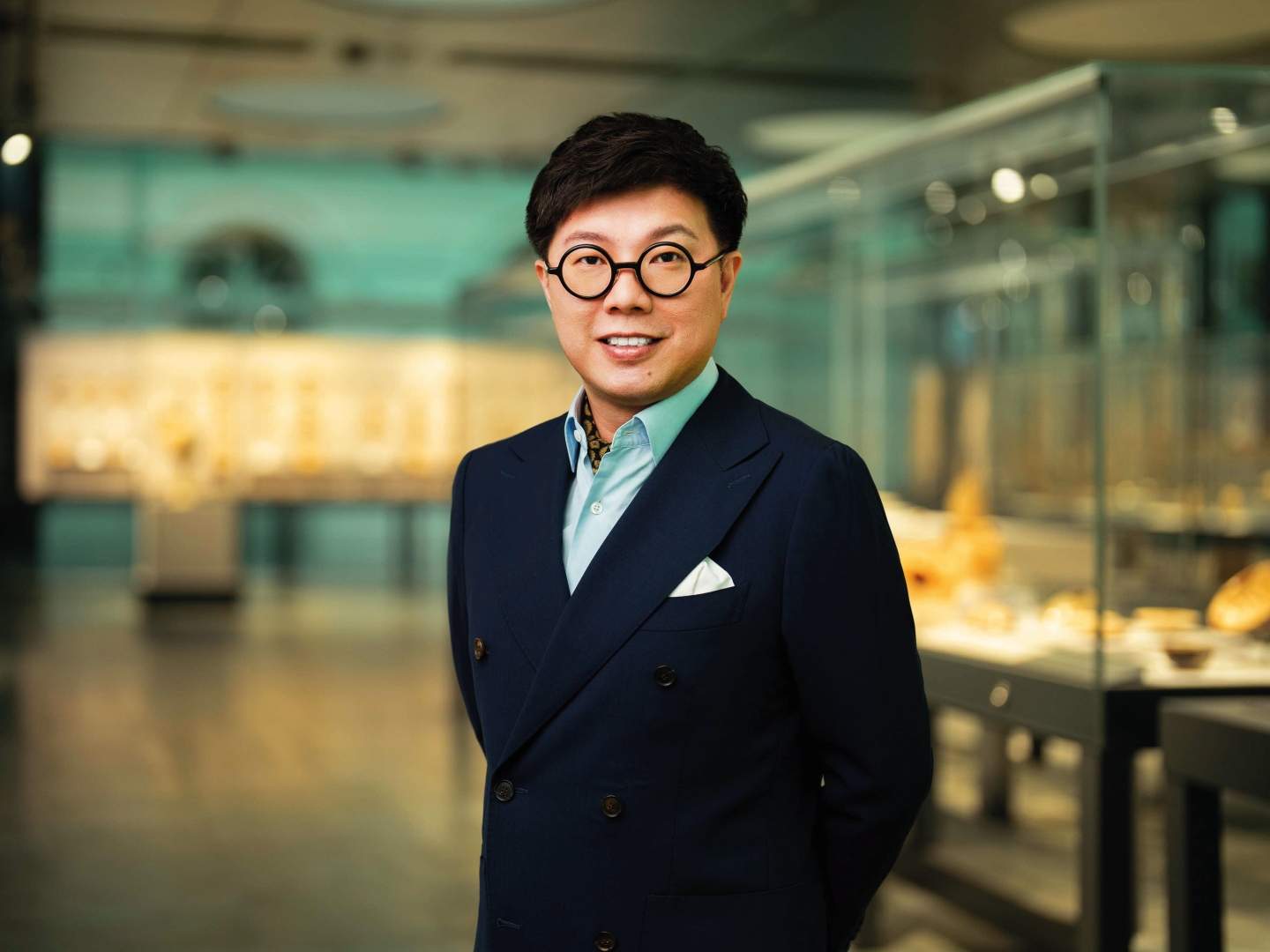
Clement Onn, director of Asian Civilisations Museum and the Peranakan Museum (Photo: Asian Civilisations Museum)
Options: What initially sparked your interest in art?
Clement Onn: No one has asked me this in a very long time. I guess I have always been curious about objects across various media, from paintings and ceramics to textiles and furniture, or even those designed for rituals. I’m particularly captivated by the process of creating because art is not just about beauty — in fact, they don’t have to be beautiful all the time — but also storytelling. It tells us how people, past and present, see the world.
As a child, playing with toys or games was always exciting. When you think about a game, you wonder about who first came up with the idea — there must be an architect designing the chess pieces or whatever — and why the item is presented in a certain way. Then you look at the materials and ask why they are made from wood, metals, plastics or polyresin. I am drawn to the whole process of conceptualising to realising the final product, then admiring, holding and talking about it.
Tell us about your professional journey and how it began.
I was an engineering student. After completing national service, I went to Brisbane, Australia, to pursue my first degree in foreign languages and applied linguistics. I did a double major in Japanese and Italian. Of course, when picking a foreign language, you have to study cultural modules as well. So for Japanese, we learnt about the Edo period, and for Italian, there was Renaissance history.
I was exposed to knowledge of woodblock prints, Buddhist scroll paintings, sculptures, oil paintings and many more. That’s where I became more interested in the deeper stories behind them, like the people producing these artworks. Then I pursued my master’s in art history and museum studies. When I came back, I joined Asian Civilisations Museum (ACM) as a research assistant. The formative training was very much on the job through the mentorship of my predecessors and former curators, as well as colleagues I had worked with.
1.jpg
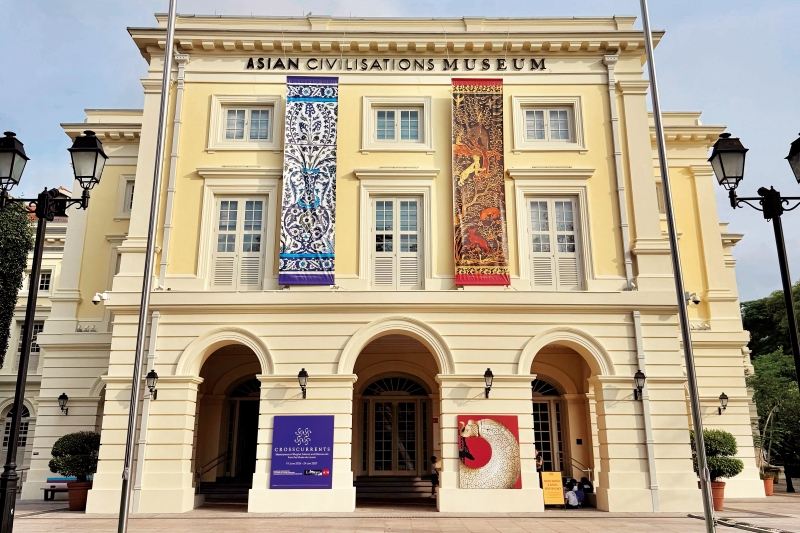
The Asian Civilisations Museum features an array of masterpieces that can be viewed at their specially curated exhibitions (Photo: Aireena Azni/The Edge)
You have had a long history with ACM and the Peranakan Museum, from researcher to curator and now director. What has the transition been like for you?
The purpose remains the same through all this. As a director, I’m still working with curators and a diverse team to shape the galleries, exhibitions and different kinds of projects. I suppose the difference is in the scale of responsibility. Because in my current role, I also need to create the conditions that allow people to interact with the collections while enabling the institution to thrive. Because you want the place to be successful. With this in mind, you then need to define what success looks like. It is a shift from leading projects to stewarding a larger vision for the museum.
What are some of the most memorable projects you have worked on?
I would say all projects I worked on as a curator were memorable because they were unique in their own way. With each exhibition, you learn new things as you engage with different stakeholders such as the scholarly community or the people from where the objects originate.
If I must choose, in 2016, I did Christianity in Asia: Sacred Art and Visual Splendour. It was fascinating because we did a survey among the locals and found out most people thought Christianity is a European religion and hence, Christian art equals European art — despite the faith itself having originated from West Asia. So we had a gallery filled with objects made by Asian artists, some of whom may not even be Christians. It’s a very interesting cross-cultural dialogue.
Then, as a director, I led a show that just finished last month called Let’s Play: The Art and Design of Asian Games. It explored tabletop games in Asia and how they connect us across the region. We tried to create an interactive set-up where visitors got to play popular games such as Chinese or Japanese chess as well as congkak in different sections of the facility.
2.jpg
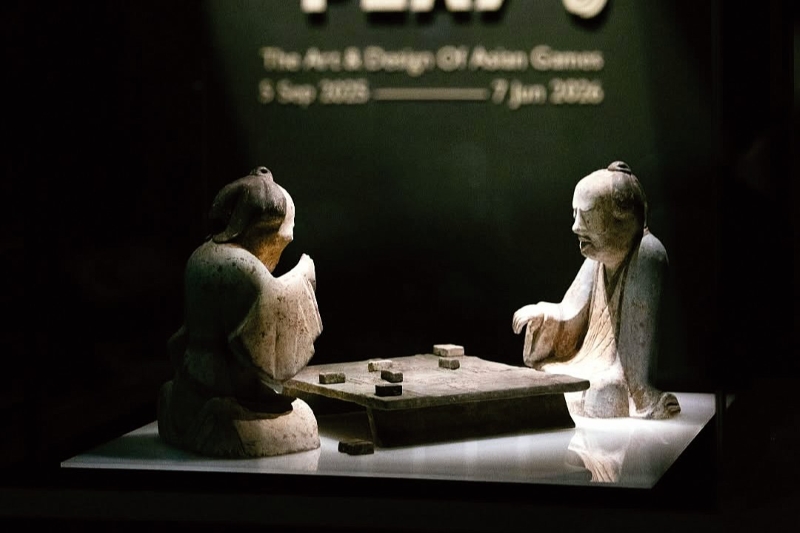
'Let’s Play' exhibition (Photo: Asian Civilisations Museum)
How has the museum’s audience changed over the last 15 years?
Well, when I first started 18 years ago, there was no such thing as social media, or it was not easily accessible. But today, the kind of information you can get in a matter of seconds is almost way too much. You can just browse or ask AI for a five-sentence summary of the Safavid dynasty, and it will produce a passable answer. Hence, audiences want to know why visiting an exhibition is relevant and how it can add to their experience and knowledge.
Taking into account a wide range of expectations, the museum needs to offer both intellectual rigour as well as intelligible entry points for people who are learning about a subject for the first time. You don’t want an exhibition filled with jargon that might steer someone away.
The Singapore government has invested in initiatives such as the Singapore Culture Pass to encourage its citizen to engage with the local arts and heritage scene. Why is art such an integral part of a nation and nation building?
A nation does not only thrive on its infrastructure and economy. Those are important, but it is also built on the memory, imagination and a shared understanding of ourselves as a country as well as between our neighbours.
As a museum of Asian art, we continue to ask ourselves: Who are we? Where did we come from? How can we relate to other people? At the heart of what we do is looking at art through the lens of cultural traditions and interactions between Asian countries and the rest of the world. This is our guiding principle, and we hope we can be relatable and become an important institution in the region.
3.jpg
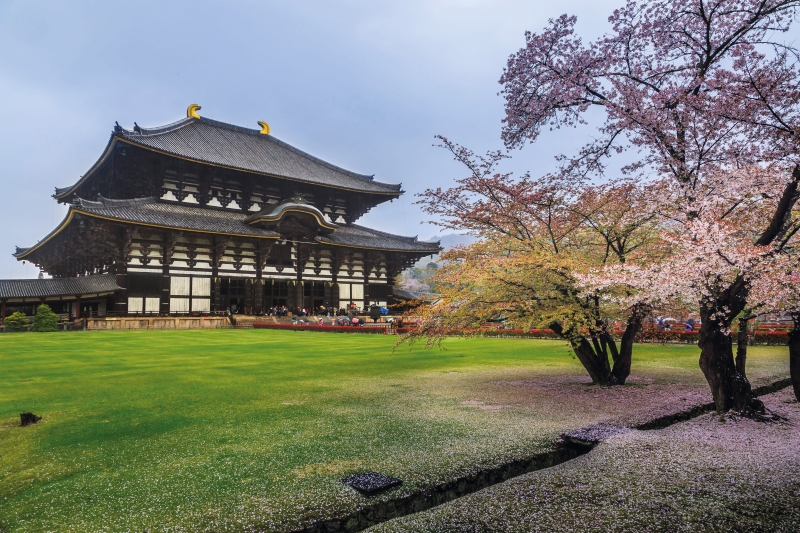
Tōdai-ji is a Buddhist temple in Nara, Japan (Photo: 123RF)
Who are your favourite artists?
They change depending on the time and place. But the person I want to highlight today is Japanese industrial designer Naoto Fukasawa. He has written some books and is famed for his “Super Normal” philosophy, which champions designs not driven by ego. Instead, he believes in intentional aesthetics that fit [so] naturally into their environment that they become almost invisible.
What are your favourite destinations for arts and culture?
I am naturally drawn to a city where its museums, architecture and everyday life kind of speak to one another. A lot of Southeast Asians love Japan; I am one of them. For me, Nara is very charming, being the old capital of Japan. I also like Rome and Mexico City. Every time I revisit these places, even if I am looking at the same monument like a church or temple, I tend to discover something I didn’t notice previously. There is always new element that kind of shifts my perspective.
This article first appeared on July 20, 2026 in The Edge Malaysia.