
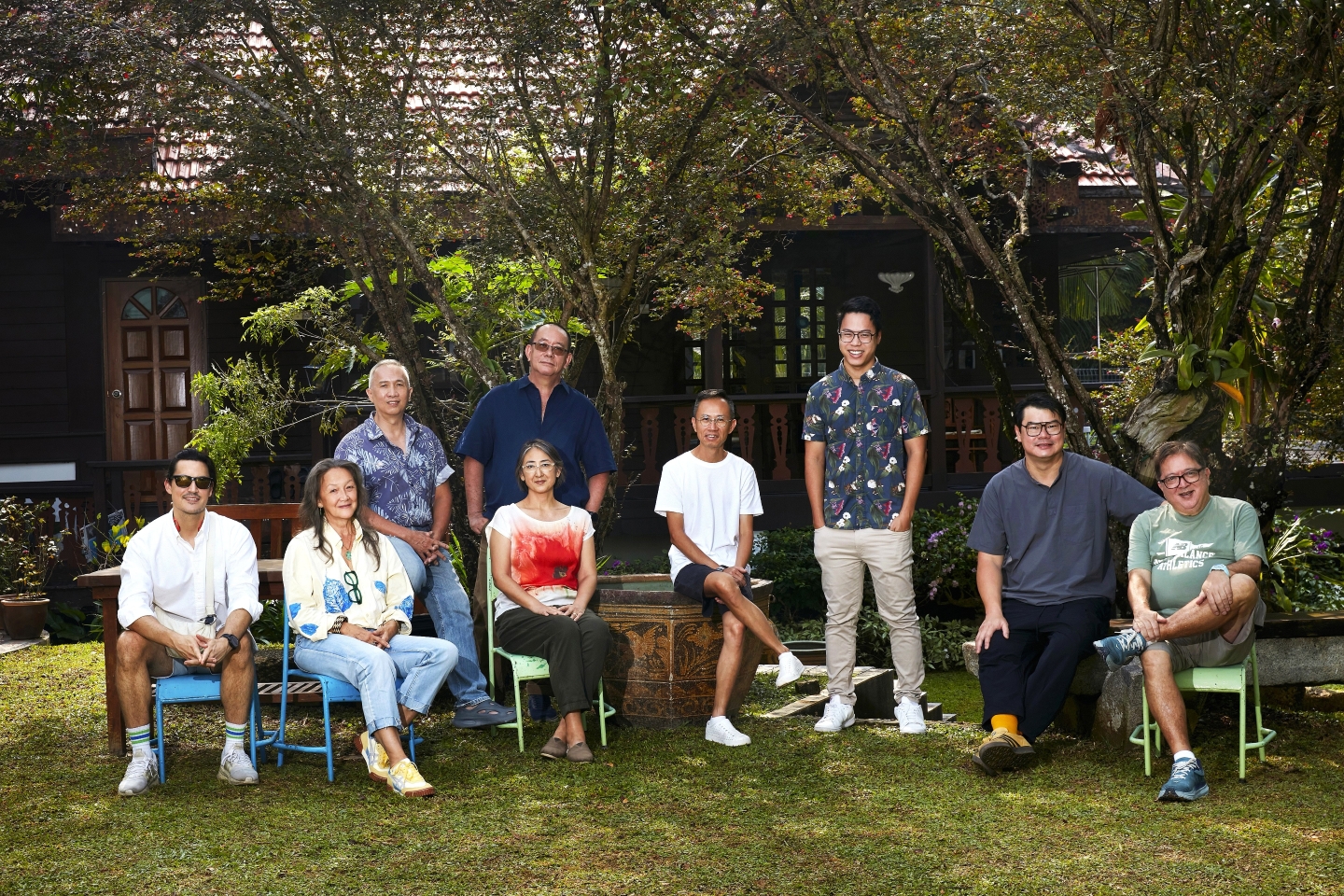
Men with Plants IV gathers 12 creatives to interpret nature and botany (Photo: SooPhye)
Four might not be an auspicious number in Chinese culture but the current iteration of Men with Plants, the fourth since its inception and its biggest to date, does not seem to be fazed by superstition. First established in 2023, the key impresario behind this annual botanical-themed group exhibition is Wong Keng Fuan, better known as Fuan Wong.
One of Malaysia’s most renowned glass artists, and often described as the country’s answer to Dale Chihuly, Fuan lives and works on the island of Penang. He divides his time between his George Town studio and the stunning hillside Art & Garden, a two-acre sanctuary lovingly created from seven acres of land that remains part of his family’s durian orchard in Teluk Bahang, and where his vibrant fused- and kiln-worked glass sculptures alongside his collection of flora, whose species number in the thousands, are showcased.
Horticultural enthusiasts and aesthetes have long flocked to Art & Garden — a highly rated eco-tourism destination open to the public — to admire Fuan’s works as well as those by his artistic friends, interspersed through the ardent botanist’s incredible garden studded with all manner of growing things, from bromeliads and cycads to air plants, aloes, agaves and towering trees. Perhaps an easier way to describe it would be to compare it to landscape architect Roberto Burle Marx’s Sitio, a famous living museum and botanical estate in Barra de Guaratiba, Brazil, designated as a Unesco World Heritage Site since 2021.
But lest we digress, it cannot be highlighted enough how talented impresarios (and fiercely proud Penangites) like Fuan are keeping the island’s creative heartbeat pumping. Growing from strength to strength, Men with Plants began with a line-up of just two names: Fuan himself, naturally, and landscape architect Tan Wei Ming, who owns multidisciplinary studio SputnikForest and cult java joint Lunabar Coffee. “It was a botanical dance,” Fuan chuckles.
5.png
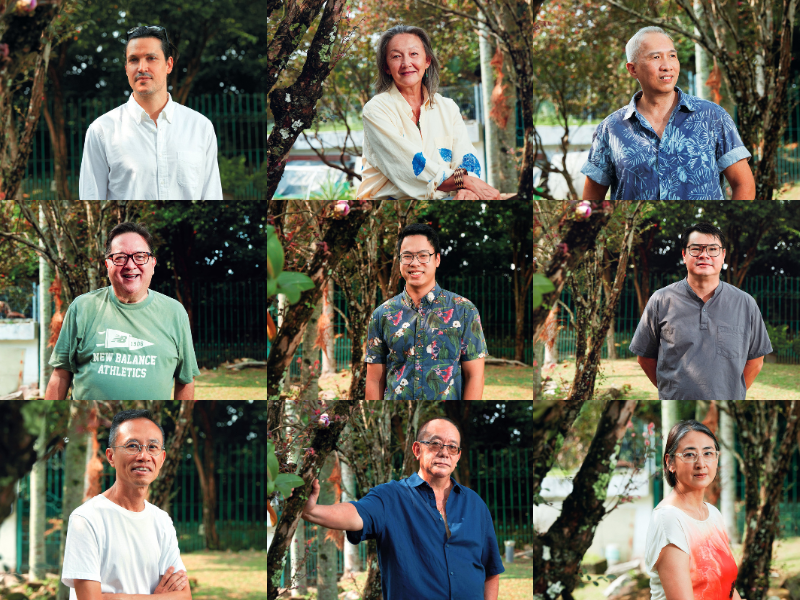
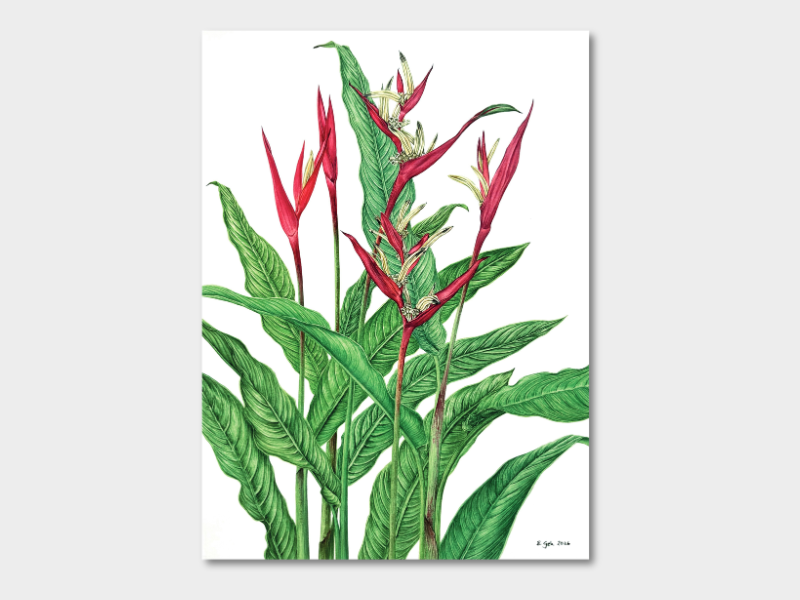
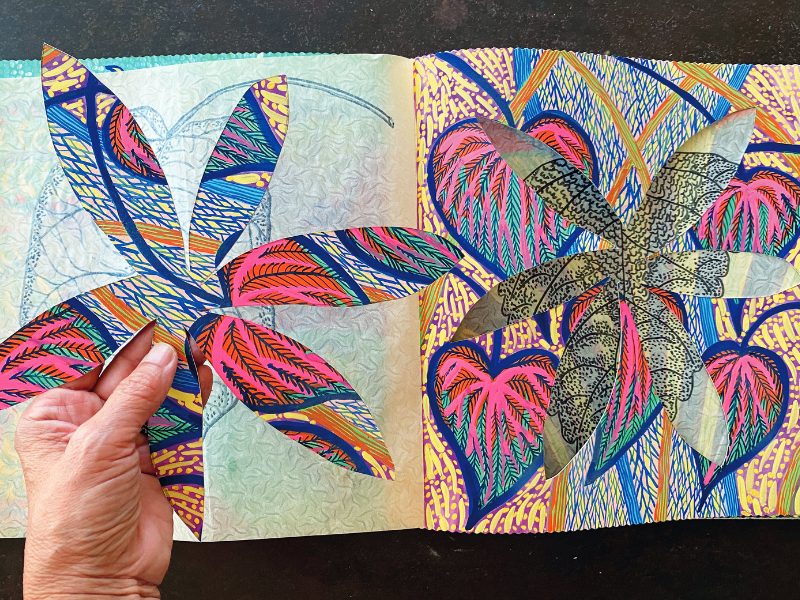
For Act Two, they were joined by photographer Howard Tan, artist Hoo Fan Chon, jeweller Jonathan Yun and Esther Geh, making the exhibition no longer the exclusive domain of men. Geh, who Fuan proudly acknowledges as “the most remarkable botanical artist in Malaysia today” has been a steady presence since then. This year, however, the feminine energy is extra palpable, with Geh joined by Rebecca Duckett-Wilkinson and Sheena Liam who, apart from art, are also renowned for their work in textile design and hand embroidery respectively, while others in the roster include returnees Ch’ng Kiah Kiean, M K Cheah and Thomas Powell as well as newcomers Philip Hemnell and Teebai.
“I have always loved the concept of art and plants — what’s not to love? And I thought it was amusing they kept the Men with Plants name despite Esther joining them by year two. So when I was invited to join this year, of course I said yes,” says Duckett-Wilkinson. “Besides, none of the gals would ever feel threatened joining this growing group of men. We know that we totally ‘enhance’ them,” she adds, laughing. “I am delighted to be showing under the title Men with Plants IV!”
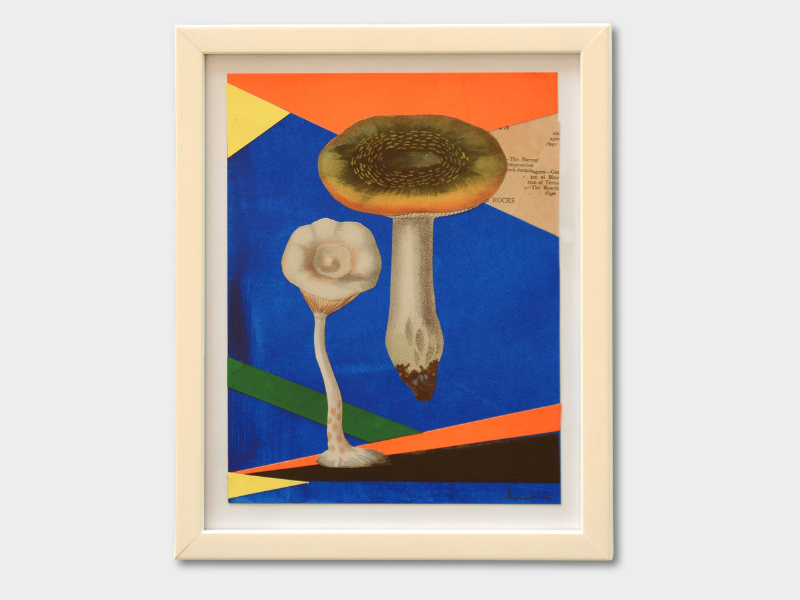
“We have a lot of new work this year — upwards of 50 pieces — and I can’t play favourites, so I love them all,” says Fuan. “I am always on the lookout for something new and the artists were available at the right moment, from Philip and his marvelous cyanotypes to Sheena and Teebai’s embroidery works. And then, of course, you have Rebecca’s bold graphics — such a joy — and Ch’ng is always a great crowd favourite. You will also find Howard’s collages to be quite moving.
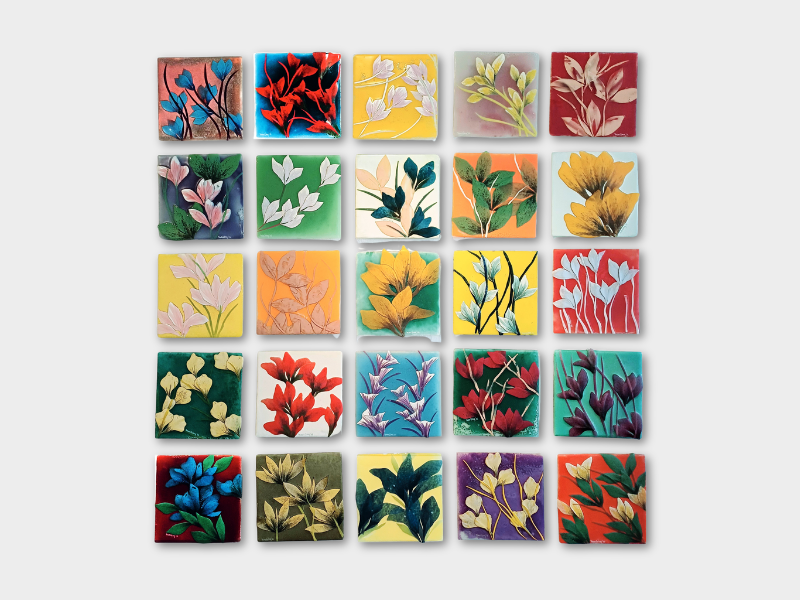
“I myself am showcasing things that have never been displayed before. One of the series is derived from the colours and designs of the Peranakan kebaya, while another comprises my new glass blossoms, inspired by a chance sketch from Inch Lim (Lim In Chong).”
For those unfamiliar with Lim’s name, he is without a doubt Malaysia’s most renowned landscape architect (he is also a familiar face at the world’s top competitions and garden festivals, both as participant and judge, including the Chelsea Flower Show, Singapore Garden Festival and Gardening World Cup Flower Show of Japan) and founder of the design firm, Inchscape. Lim officiated the exhibition opening on Oct 10, a fitting choice as he is also the squire of Langkah Suka (Malay for “happy steps” and a play on the name of the ancient kingdom on the northeast of the Malay Peninsula), a 10-acre estate in his hometown of Batu Pahat, Johor, that is habitat for thousands of species of plant life as well as wild boar, giant squirrel, slow loris, porcupine and mousedeer. “He was just the best person for the job, given his success in the field, not to mention his great knowledge of and passion for plants,” Fuan adds.
1.png
Beach street, please
Men with Plants IV is being shown until Nov 30 at ChinaHouse, one of Penang’s most art-forward venues comprising three heritage buildings linked by an open-air courtyard. Founder Narelle McMurtrie says fresh new ways of exhibiting art are always welcome. “ChinaHouse is a space that encourages people to be different, to have fun with art. We even encourage guests to doodle on our café tables. We are always looking for new ideas, [something] out of the box and not just paintings displayed on walls. And Fuan’s idea was exactly that — mixed media, installations, sculpture, jewellery mixed with real plants… who could say no? Besides, we have room — lots of it — so it is easy to host large-scale exhibitions, such as the ones Fuan dreams up. We have the space to make it a reality.”
The exhibition has always, traditionally, been held at ChinaHouse save for last year, when it was organised outside of Penang for the first time, at Habib Jewels’ Harta Space in Kuala Lumpur.
“ChinaHouse has always been at the forefront in promoting the arts in Penang and Narelle has been a staunch supporter from day one,” acknowledges Fuan. “She understands how artists can be completely mad and yet allows them latitude other gallery owners would find hard to accommodate. In fact, when I first mooted the idea, she encouraged me literally from what was just the germ of an idea to a full-blown plan.”
“I love ChinaHouse as a venue,” adds Duckett-Wilkinson.“It is always buzzing with all sorts of people from everywhere and was once the venue for my very successful Forbidden Fruit — Sex, Women & Botany show around the end of 2019. It was so special for me to have so many people come from all over the world to view, discuss and purchase the pieces, from local and overseas collectors to regular folk who wanted my art in their homes. As an artist, this is priceless as I have always enjoyed interacting with my buyers. Even from the time of my Owen Rebecca Designs clothing brand, we sold direct to customers through our own outlets. I always like to spend time at exhibitions where I can talk to people and the space at ChinaHouse affords that, taking away the perceived barriers that big galleries sometimes unknowingly create.”
4.png
Bullish on Penang
With a cultural heartbeat that can be likened to that of an active marathon runner’s, Penang has always been a hub of creativity — something Fuan credits, in all seriousness, to the island air. “I think we also have a mild sense of, for want of a better word, entitlement. We always think we are that bit cleverer or better off, especially to those from the mainland, and this helps breed eccentricity, which can be a good thing — sometimes. I mean, just look at the wealth of art and heritage champions we have. There is Narelle, of course. Then there is K Y Leong and Alfred Cheong, the brains behind [experiential contemporary art platform] Blank Canvas; Tan Shih Thoe whose dogged perseverance turned Hin Bus Depot into what it is today; and people like Chris Ong for his forays into Peranakan art and culture, among many others. In fact, Chris and I were classmates at St Xavier’s [Institution]. Now, look at us… both pushing the wrong end of 60.”
Duckett-Wilkinson offers a lengthier and more eloquent explanation. “There are a lot of us here — self-supporting independent artists and related creatives — and the biggest thing about the ‘whole lot’ is that we are willing to work together and support the community as a whole. Artists supporting artists is a very important practice which benefits everyone. We may not see each other all the time but you will find that the support of and sharing between artists is very good in Penang.
“It is not a big place, but there are a few key ‘magnets’ that pull everyone in, such as Hin Bus Depot and, of course, ChinaHouse, which pioneered this way before everyone else. There is also Open Studios Penang, a vibrant non-profit event created by a group of art-loving private individuals, plus the fact that we have the George Town Festival, the George Town Literary Festival among other such ‘star’ happenings.
“Built up over time, these bring a whole range of local and international people together, which is key. And it all happens within one small place, the George Town heritage zone, essentially one square mile and very walkable. I also love how the location itself is the centre of all activity, keeping the energy and vibrancy compact and in your face!”
3.png
The secret life of a plant lover
Despite openly professing how his life’s ambition was “to be a complete wastrel”, Fuan stumbled onto glass as an art medium and got hooked, working from as early as 4am in his studio before calling it a day often 15 hours later.
The love of plants found him much earlier. He inherited his passion from his father Wong Leong Fatt, a very successful orchid hybridist and the only man to have won the Orchid Society of South East Asia’s Eric Holttum Gold Medal for best hybrid twice consecutively. His maternal side was equally creative, albeit confined to the culinary and homemaking realms given the constraints of that era.
“I remember the women were always making stuff,” Fuan recalls. “They were also cooking and baking or doing beadwork and embroidery. My grandmother could even make her own simple pieces of furniture and replace the cane on the rattan chairs as well as weave her own baskets for steaming thnee kuih (sweet glutinous rice cake).”
It would then come as no surprise that Fuan is completely self-taught, despite protesting how he had to struggle his way through the métier before achieving recognition. Today, his works can be found in the resort-like homes of moneyed collectors all over the world as well as in public spaces — the Penang Hill funicular railway station and the public walk along Jalan Masjid Kapitan Keling — and the interiors of tony resorts, such as the Mandarin Oriental Desaru Coast and the Shangri-La Hotel Kuala Lumpur. Apart from creating art and tending to his Teluk Bahang garden, Fuan says the reason he loves what he does is simple: to educate people about the importance of plants.
“It’s a basic fact of life — without plants and photosynthesis, we could not exist. There would be no food on earth. After all, the sun is the source of all life and photosynthesis its mechanism — to produce the oxygen for the air we breathe, the creation of food that powers us all and even absorbing carbon dioxide from the atmosphere. But look at us, tearing up our green spaces like it is not important.”
2.png
Penang, though, must be recognised for an altogether more proactive mindset when it comes to environmental consciousness. It was the first state in Malaysia to enforce a comprehensive ban on single-use plastics and has also outperformed the national average in recycling rates. There is also the state government-led Penang Green Agenda 2030 and the Penang Green Council’s aggressive pursuance of policies that will help it transition from mere environmental awareness to informed eco-enforcement.
“Penangites are naturally very vocal,” Fuan nods. “Just chop down one tree and see the brouhaha that will arise. Even the idea of new roads can be met with vehement opposition. But, first, come see the exhibition. It will definitely help you look beyond the obvious, and realise how life is only actually possible because of photosynthesis. Maybe, in its small way, seeing how the artists interpret plant life will sow the seeds of why we must stop destroying our jungles and green spaces. Where the plants go, everything — and I mean everything — else follows.”
'Men with Plants IV' runs until Nov 30 at the Art Space, ChinaHouse, George Town. Admission is free.
This article first appeared on Oct 12, 2026 in The Edge Malaysia.