
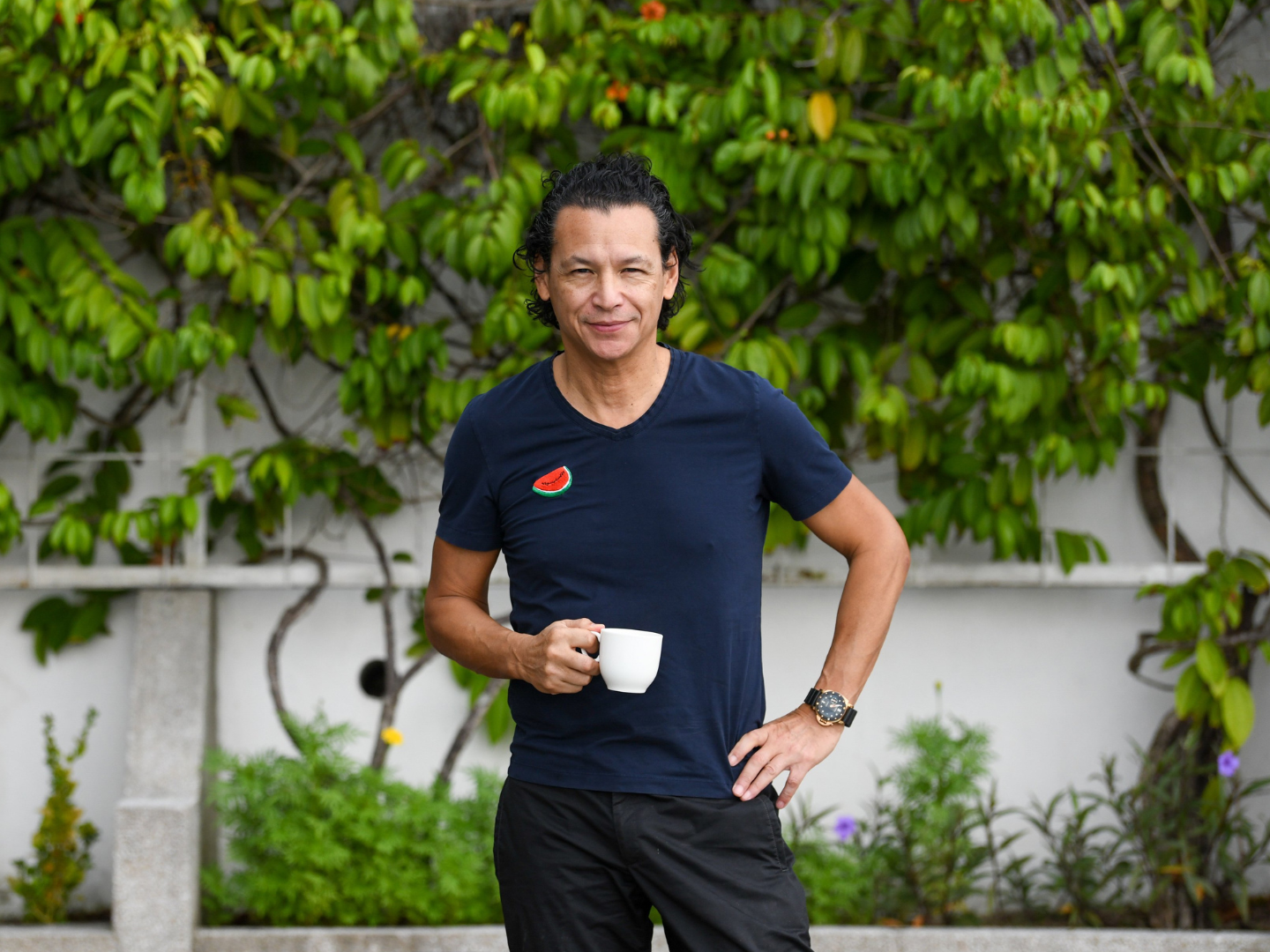
Bobby Chinn's multicultural upbringing influenced his appreciation for global cuisines (Photo: Low Yen Yeing/The Edge)
Long-time fans may recall Bobby Chinn from his cult-classic Discovery TLC series World Café aired nearly two decades ago, for which he traversed Asia and the Middle East to unearth their culinary secrets. Today, he is better known as the sharp-tongued, quick-witted judge presiding over Top Chef Middle East, now entering its 10th season. Yet, despite a career defined by global travel and prime-time prestige, ask the charismatic chef about his colourful career, and he will tell you he is the same man he was yesterday.
Born to Egyptian and Chinese parents in New Zealand with a multi-continental upbringing in Egypt, the US and the UK, Chinn’s story as a global citizen was practically written from the start, but it was never an easy ride. “I’ve always been an outsider. I’m a chameleon. I can fit in anywhere because part of me still feels like I don’t belong,” he says candidly.
Growing up an “ethnic mutt” (as he would call it) in the 1960s, there were seasons of isolation when he was branded as “the other” and shunned for looking different. Those early encounters with exclusion ignited a fierce wrestling match with his own identity.
Chinn sought sanctuary in music, memorising lyrics that mirrored his own inner world. “I can go to a song and find my feelings,” he says, adding that the Rolling Stones was his go-to for break-ups back in the day. He also found solace at the dining table, devouring homemade food that not only filled his belly, but also his heart.
“I was lucky I had two grandmothers who cooked. My Chinese grandmother used to make zhai — vegetarian dishes that had a lot of weird ingredients in it, I thought, but I didn’t care because it tasted so good. My Egyptian grandmother was remarkable as well.
“I always say men cook out of ego, women cook out of love. And the love, patience and understanding I received from them allowed me to continue in this tough business. The attitude back then was that you worked in the kitchen because you were an idiot or stupid. Otherwise, you’d have a real job somewhere else. But their compassion and empathy inspired me. That was what food was to me. That was how I softened.”
1.png

Still, the journey was far from linear, paved with the unglamorous grit of a true journeyman. Chinn worked many jobs, from operating lifts to selling seafood and waiting tables. After getting a bachelor’s degree in finance and economics, he cut his teeth on the floor of the New York Stock Exchange on Wall Street, followed by a detour into stand-up comedy before he ultimately decided to become a chef. It was the connections forged during those relentless side hustles that eventually swung open the kitchen doors of San Francisco’s culinary elite, landing him alongside icons like Hubert Keller, Elka Gilmore and Traci Des Jardins. But a serious back injury put that life on hold.
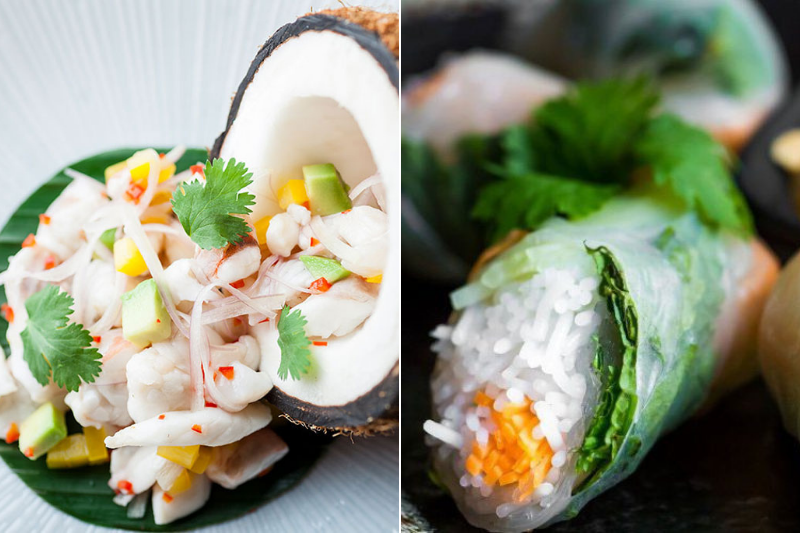
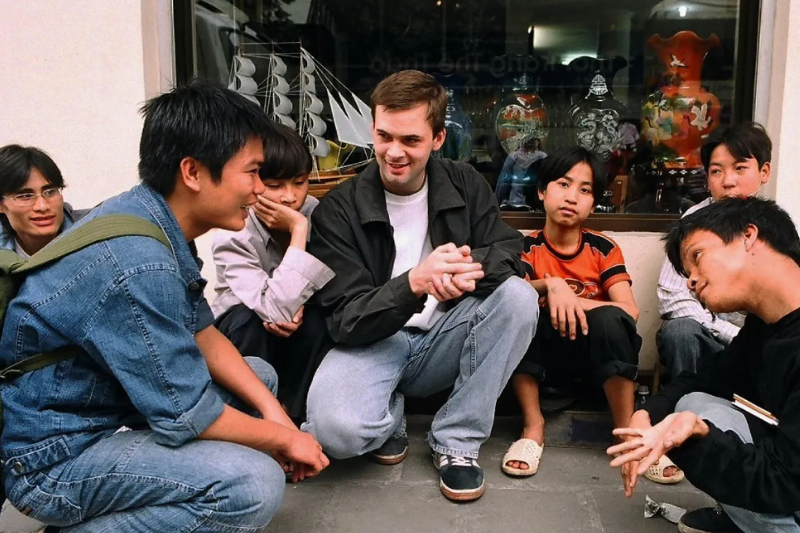
Chinn found himself at a crossroads and ended up moving to Vietnam. In the Land of the Ascending Dragon, he was exposed to the honest simplicity of the local food culture built on the abundance of herbs and a vibrant palate. He spent over two decades learning from vendors on the streets who had spent generations perfecting a single dish. This deep immersion, paired with his French training, culminated in two award-winning restaurants, in Hanoi and Ho Chi Minh, featuring a myriad of influences from a life lived across borders.
“It was my appreciation for difference that kept me open to what could be done and what I wanted to do. For example, I was learning French cuisine from a master and that required a lot of technique. Then I went to Vietnam and this woman is achieving what we were trying to, doing one dish incredibly well, in her pyjamas!” he exclaims.
Travelling extensively allowed Chinn to pick up skills from the source. “At one point, everybody wanted ceviche. I was filming in Peru and cooked with the guy who taught Nobu Matsuhisa. I asked him to explain the dish to me and ate it everywhere I went. When you visit the core and place of origin, it will give you an education you won’t be able to get from a cookbook. What made their ceviche so unique for me was the ingredients. It was the type of salt and lemons and limes they used. It made a colossal difference.”
2.png
The transfer of knowledge happened in his own kitchen as well. He remembers teaching his crew about the temperamental nature of caramel. “So, as I’m explaining it, I take it a notch too far and burn it! It was so embarrassing. I was about to throw it away but my chef grabbed my wrist and told me to put it back on the fire. He burns it even further, adds water and makes nuoc hang. It was mind-boggling to me. They sell the caramel in little bottles. So when you grill something and spray this on, you’ll caramelise the exterior without burning it.”
Chinn was eventually lured to London to launch his concept in the heart of Soho. The venture was soon acquired by hospitality tycoon Richard Caring, who recently made headlines for the £1.4 billion sale of his iconic portfolio, including The Ivy, Annabel’s and Scott’s.
Now, the global nomad is on the move again and has set his sights on Kuala Lumpur for his newest venture. “I never gave up on that dream of opening a Vietnamese restaurant. I see chefs using foam, gel and tweezers, focusing too much on whether the dish reflects the story that it takes away from the actual food. I think what’s missing in this world is authenticity. We see the flower, but don’t see the roots.
“With the evolution of chefs, you need to feed your ego and I get that. I’m just as guilty. But then what? Now when I look at chefs, I ask: Are you a responsible cook? Are there ethics in your cuisine, your management? Are you helping your local community?
“Restaurants don’t just feed souls, they build bridges and communities. It’s a socioeconomic responsibility. We want recognition in our profession, but what we do in the background is far more important than a star or rating.”
During his days in Vietnam, Chinn would hire disadvantaged kids from the Blue Dragon Children’s Foundation, provide training and turn them into managers. Knowing one of them ended up opening his own eatery in his village, Chinn says, “Those are the greatest dividends one can ever achieve in life.”
3.png
For his KL establishment, slated to open mid-year at the new Met Galleria mall, he plans to keep prices accessible. “This property may require travelling for some because it’s not exactly in the city centre, but it should be a destination. We want to provide an experience that is memorable for all the right reasons,” he expresses, adding that he plans to work with sustainable farms such as A Little Farm on the Hill and BoomGrow to source fresh ingredients.
He also wants to put a conscious focus on inclusivity, making it a priority to recruit more women into his next brigade. “I can tell you that having predominantly more women in the kitchen makes it a kinder and gentler environment. The business can be booming, the dining room can be busy, but there’s calmness in the kitchen that could never be created without women in it,” he says.
A permanent base here also means more time for a personal mission: trips to Penang in search of the life-changing oh chien (oyster omelette) he first tasted two decades ago. Recalling the elusive stall from his World Café days, Chinn describes it as “unbelievable” and “an absolute art”. “Again, it was one guy making one dish extremely well. The cornstarch was crispy and gooey, the eggs were not overcooked and the oysters retained their plumpness. I could never find that place again,” he says. Now, he has all the time in the world.
This article first appeared on May 11, 2026 in The Edge Malaysia.