
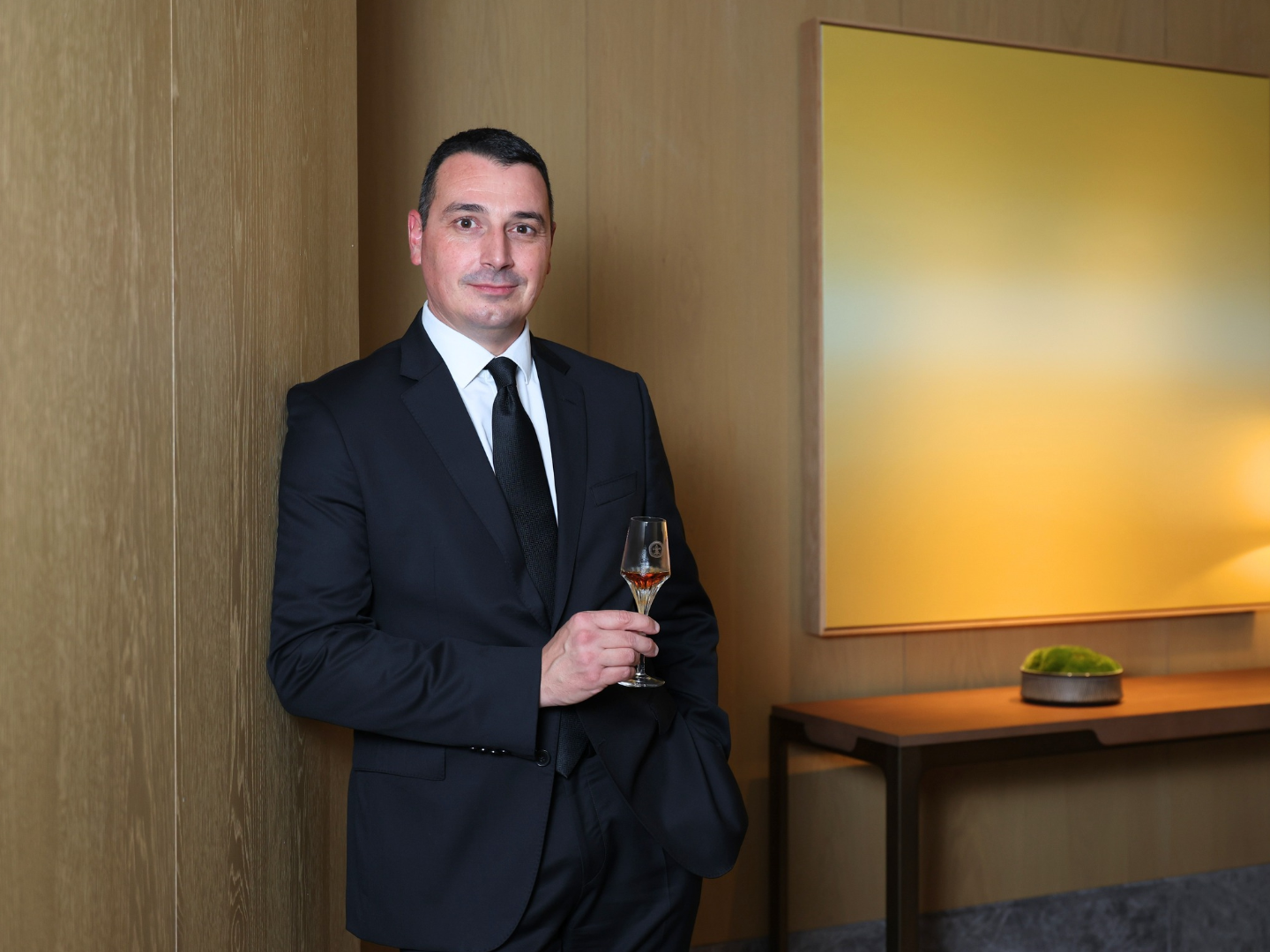
Loiseau has held the position of cellar master for 12 years (Photo: Low Yen Yeing/The Edge)
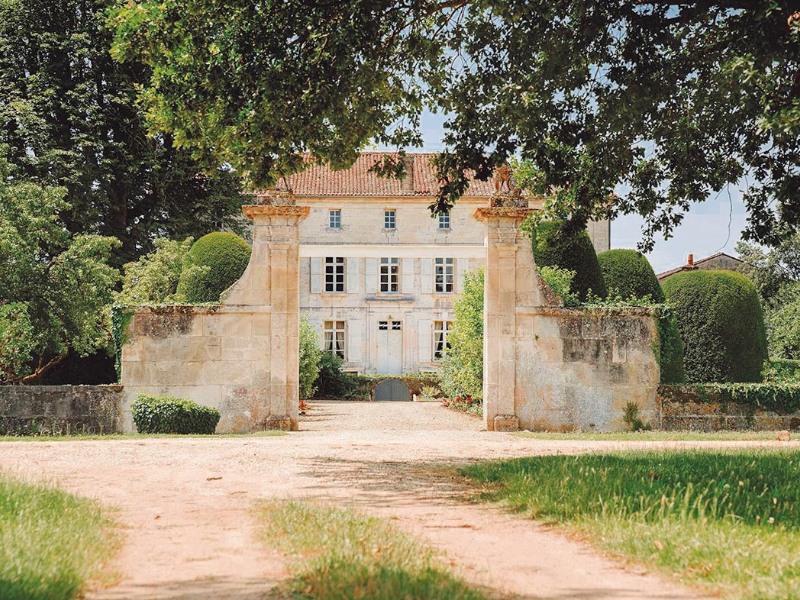
The cellar beneath Domaine du Grollet — the estate in Saint-Même-les-Carrières, France, where legendary cognac house Louis XIII was born — is at its most special in winter.
Crisp, cool air settles around a slumbering floor of tierçons, seeping through the Limousin wood and mingling with the ancient eaux-de-vie under the watchful supervision of cellar master Baptiste Loiseau. In the cold season, the precious drops he draws from the casks reveal a rich, raw earthiness that cannot be detected when the walls are any warmer, as though the slowness of time itself has trickled into the amber ichor.
This snapshot is what Loiseau and his team have spent three years trying to bottle. “That atmosphere and temperature give a whole other sensation during tasting. The question was, ‘How can we encapsulate something those very few who visit Cognac have managed to experience, and replicate it anywhere in the world?’” he explains.
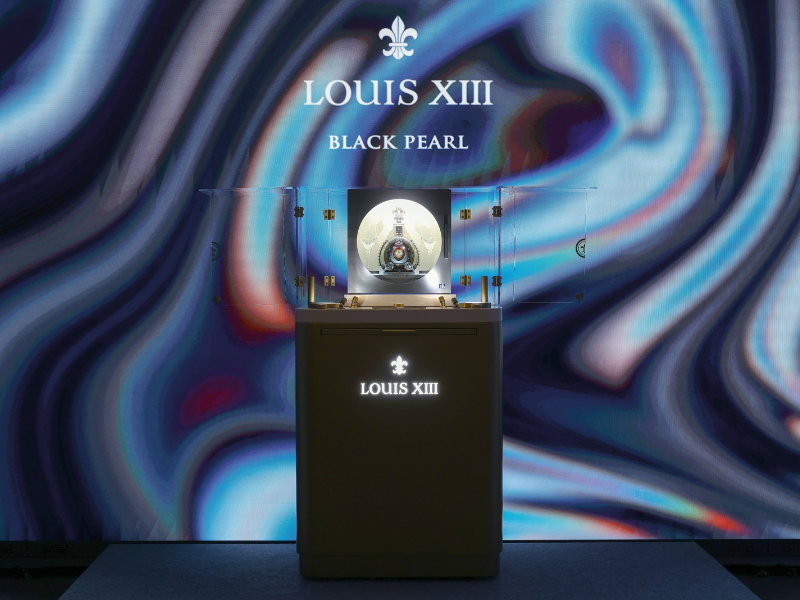
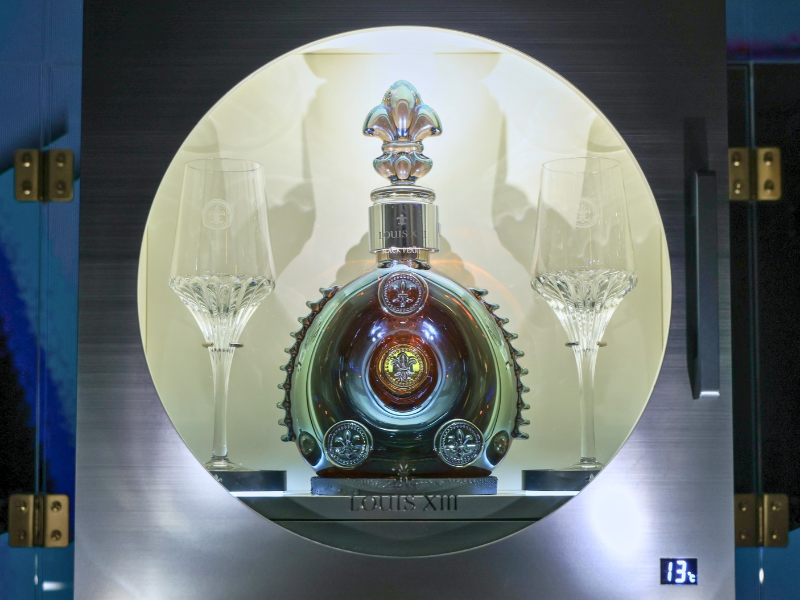
Titled Louis XIII Black Pearl: Tribute to the Birthplace of Louis XIII, the latest expression to join the Black Pearl collection is designed to capture not only the distinct subterranean je ne sais quoi of the liquid tasted within Le Grollet, but also the full experiential ritual associated with being inside the space. Originally released in 2007 by former cellar master Pierrette Trichet, Black Pearl was conceived as a means of honouring the maison’s roots, from historic casks to milestone celebrations. The newest instalment, a limited edition of 398 decanters, is accompanied by a cooling cellar — a first for the brand — that brings the spirit down to an optimal temperature of 13°C, mimicking the chilly conditions in Cognac.
body_photo_-_2026-11-27t173706.094.png
“My task was to add a twist to the classical blend that could give it the ‘footprint’ of Le Grollet,” says Loiseau. “I returned to all the notes I had taken alongside Trichet while I was learning from her, on the oldest eaux-de-vie we have. I was searching for one that would best show these features — earthiness, nuttiness, something like patchouli — that represent the concentration of time, and that you cannot find at higher temperatures.”
The fateful fluid ended up being an eau-de-vie he first tasted in 2012 during his mentorship phase. “I experimented with adjustments to the proportions, testing changes to the temperature in tandem. Simultaneously, I advised the team that developed the cooling cellar to recreate the actual temperature of the location in winter. Starting at a lower point and letting it warm up creates a progression, like waves of aromas that come one after another, from denser, earthier and leathery notes to the most volatile and elegant. This allows clients to take their time and approach the complexity of [Louis XIII] petit à petit, step by step. It’s a long experience that lingers even once you have finished your drink.”
The sleek grey, almost industrial chamber offers an intriguing aesthetic counterpoint to the elaborate decanter and glasses — both produced by Cristallerie Saint-Louis — housed within. A drawer contains the spear used to extract the cognac from the bottle’s lowest point, where a vent blows chilled air to cool the liquid to the target 13°C, just as Loiseau himself uses a pipette to take drops from a cask. Unlike previous Black Pearl decanters, which have a metallic finish, this latest edition bears an iridescent, midnight-blue hue in line with its cold theming.
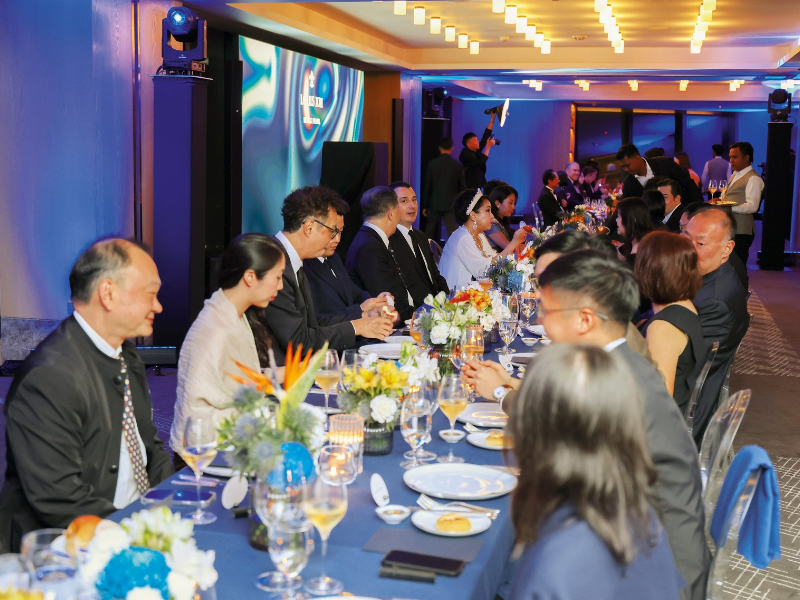
At the Malaysian launch hosted at Park Hyatt Kuala Lumpur last month, select clients were invited to an immersive evening of fine dining and musical performances, the climax of which was a tasting of Black Pearl.
After a sonorous round of clinking, we take a long pause to interpret the intricate bouquet: an earthy collage of dried roses, warm spice and orange peel with an undertone of nutty umami. Subsequent sniffs reveal dessert-like nuances of vanilla, nutmeg and coffee, unfurling into caramel and toffee as the liquid warms. Sipping carefully, we find a pronounced bitterness and salinity on the palate — think cacao, black truffle and incense — with notes of ripe banana, plum and baked pear reminding one of the classical blend’s influence. What stuns us most, though, is how each facet clings to the tongue with truly great length.
Our table quickly begins to toss out the flavours they find, glancing at Loiseau for his approval. Instead, he insists as long as one appreciates and embraces the cognac’s heritage, they are free to interpret it on their own terms. “Sometimes people defer their opinion to me, and though I can start to suggest some aromas, ultimately it is up to how you feel. Louis XIII is so complex — it can bring up hidden memories and personal associations, and that leads to sharing and emotion. That’s what I love about these sessions.”
body_photo_-_2026-11-27t122147.017.png
Esprit de corps
Discussing the process behind an expression meant to honour the brand’s origins also affords a moment of reflection on the cellar master’s own early days. You might recall the buzz that surrounded Loiseau’s appointment 12 years ago — at just 34, he became the youngest to ever take a role that those in the cognac world would classify as the epitome of one’s career.
Despite his own shock at the time regarding Trichet’s decision, Loiseau has made good on the trust placed in him. In 2023, he uncovered the Louis XIII Rare Cask 42.1, a once-in-a-lifetime revelation of unparalleled pedigree. He has also conceptualised several unique editions, including the subversively light and tropical Rémy Martin Tercet.
“It has actually gone by super fast!” he remarks with a snap of the fingers. “I haven’t felt the time pass at all. What I’m quite proud of is that we are now highlighting the makers, the people who are growing the grapes, producing wine and distilling it, much more. They are individuals who dedicate themselves to highlighting the superiority of raw ingredients that eventually become part of Louis XIII.”
Modern life is becoming fundamentally hurried, Loiseau observes, and the luxury realm is especially guilty. “There is this fixation on what comes next. For Louis XIII, our main purpose is consistency in the creation of our classical blend. Trichet taught me not to rush — take your time to ensure it is the right moment before you release something,” he says.
body_photo_-_2026-11-27t122809.211.png
It is well known that those who taste and select the eaux-de-vie of today will never see the final blends it will become. “It is not a question we ever have. We are pieces in a wider history because the individuals who previously held these roles did the same,” Loiseau shrugs. “Trichet used to say, ‘There is no Louis XIII by Pierrette Trichet, or by André Giraud or Georges Clot, and there won’t be a Louis XIII by Baptiste Loiseau. What we create is with respect to the house that began in 1874’.
“You are only part of this human chain, and you must transmit. Your predecessors prepared so much for you to produce a final blend using eaux-de-vie you did not get to see. So, you must be rigorous in the way you select now, to give the next generation the same opportunities to play, innovate and create new things.”
The cellar master is as much a steward of the cognac, casks and brand as he is of savoir-faire. “I see two sides to my duty. The first is about being a leader to my team. They need to keep in mind they are part of the Louis XIII story and the decisions we make in our tasting sessions are crucial. Rejecting a sample could be catastrophic for a grower. Likewise, we must be fair and only select eaux-de-vie with the potential to become Louis XIII in 100 years. In these situations, speaking and oral transmission are key to mentorship.
“The second part involves recreating the full product range for Rémy Martin and Louis XIII every year, and it is very much a solitary task. Yes, it is an honour, but also a massive responsibility to, and for [Louis XIII], you feel the weight on your shoulders. I can be confident in my judgement because I was trained by Trichet for seven years,” says Loiseau. When the time comes to choose the next in line — and it will be a while, he assures — it will be someone not just with the technical skill, but who can balance their service to the team, house and self.
body_photo_-_2026-11-27t122131.783.png
Beating the heat
Euro summer might have been romanticised into sun-soaked beach days, but for vineyards across France, the impact of the droughts and wildfires on grapes was far from dreamy. Due to a particularly small and early harvest, the region’s production output is set to be among the lowest in 30 years, and experts remain cautious about how the 2026 vintages will actually taste.
While blending practices shield cognac from the same devastating effects rising temperatures might have on something like a single-vineyard wine, Louis XIII still depends heavily on the region’s terroir for its defining characteristics. “We are based 98% on Ugni Blanc, so we are at risk because we are a monocultivar. Our first wake-up call was in 2003 because it was very hot in summer with not much rain,” says Loiseau. These conditions meant the fruit were high in sugars and low in acidity — the complete opposite of what is required for quality fermentation and preservation. “We have faced this issue much more frequently since then, and this year it is especially extreme.”
Distillation started in mid-October on the estate, and initial tastings of the unaged eaux-de-vie are in progress. However, it has been a rough period for winemaking and distillation, so he suspects the vintages may not be up to par in terms of aromas and ageability. Nevertheless, he is unshaken — whether a liquid will eventually become part of a VSOP, XO or Louis XIII is simply a matter of destiny. When an exceptional sample does come along, the team shares a knowing glance and sets it aside for that highest honour.
Still, Loiseau is not waiting until environmental factors catch up to the casks. The house is already modifying its agroecological practices: harvesting earlier, covering crops and monitoring micro-ecosystems, as well as collaborating with growers to improve overall soil quality. “The projections are getting worse and worse. We will have more heatwaves and less water, so we have some doubts that our current cultivar will be the right one in the next 30 or 50 years,” he acknowledges.
Currently, they are exploring cross-breeding white grape varieties that can ripen and adapt to impending conditions. “The first results are really interesting, because they are showing resilience to the conditions we had this year. The balance between sugar and acidity is better, and the resulting wines and eaux-de-vie have good aromas. What is left is to see how it will evolve during ageing, as we have to wait at least four to six years before we can make any calls.”
With over 30 cellars and 160,000 casks in stock, Loiseau is confident the house will be able to retain the style and quality for which it has been so long admired. “I’m focused on these techniques and experiments now so we can be ready for the next decades.
“Part of my job is to explain why we are singular, to educate existing and new consumers. At the same time, Black Pearl is the best example of a fresh experience, presenting eaux-de-vie from our predecessors in a contemporary way. This is the best means of considering our clients’ needs while honouring what we have always done.”
This article first appeared on Nov 2, 2026 in The Edge Malaysia.