
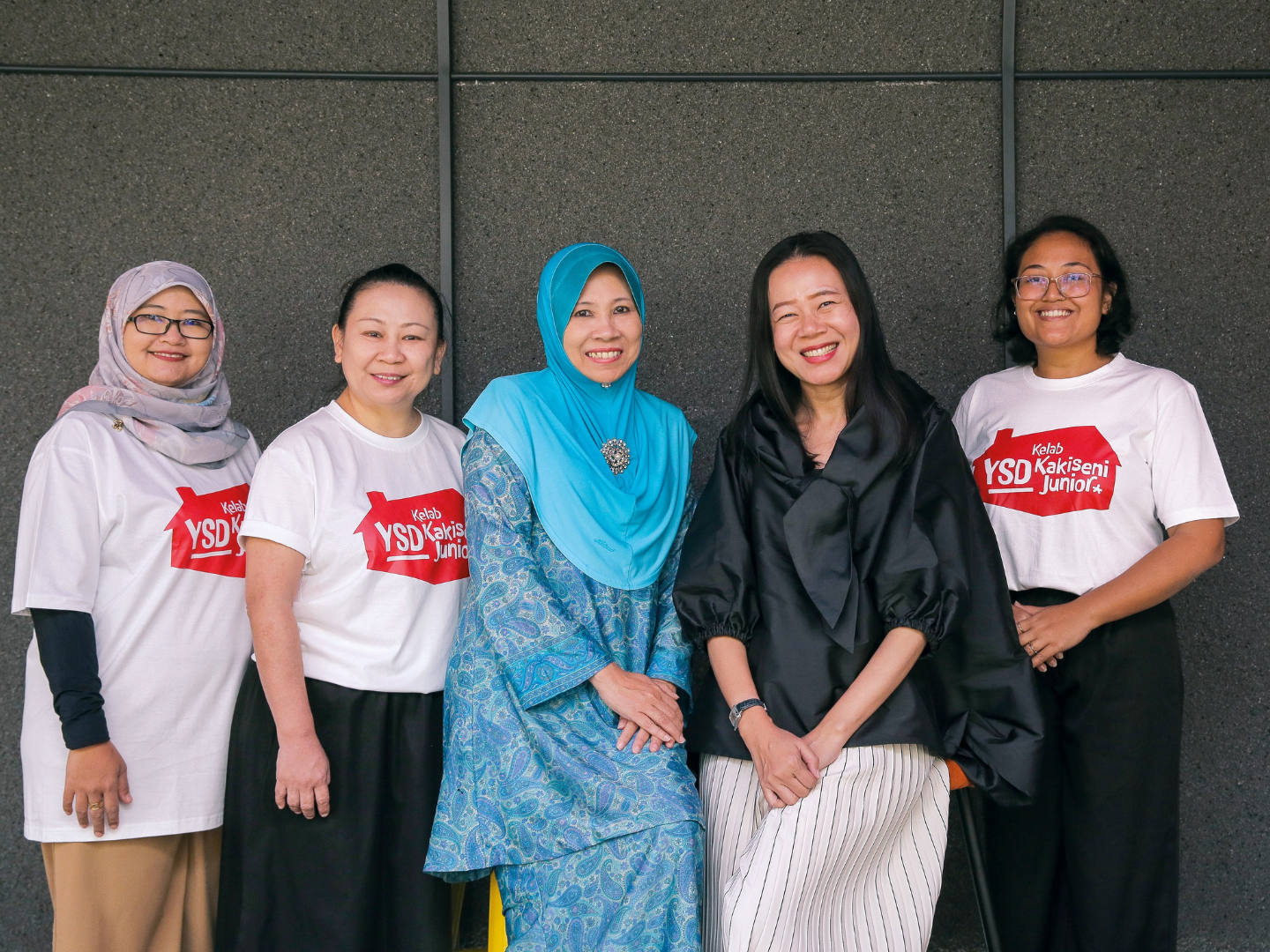
From left: Dr Mislina Atan, Amelia Tan, Dr Yatela Zainal Abidin, Low Ngai Yuen and Dee Al-Hadi (Photo: Zahid Izzani/The Edge)
Hark back to our school days and the general remembrance of art class — be it in primary or secondary — is probably unimpressive. One might recall art as an easy subject, where you could expend minimal effort or sleep straight through classes. Yayasan Sime Darby (YSD) CEO Dr Yatela Zainal Abidin recounts similar memories. As she reminisces for us, her lessons consisted simply of stamping cut-up vegetables on paper to make floral shapes.
Apart from refining students’ motor skills and bumping up their overall grade, art sits at the bottom rung of the syllabi. A common sentiment echoed by parents is how STEM subjects — science, technology, engineering and maths — pave the way for a successful career.
“The government is focused on STEM,” says Yatela. “But that doesn’t mean we must look at art and science as competing subjects in school. They complement each other, and you cannot have one without the other if you want your child to be an all-rounder and excel academically.”
She shares how, through art, one can evoke creativity, which in turn fuels the wheel of innovation. Inventors and painters such as Leonardo da Vinci and Samuel Morse spring to mind as examples of people who marry art and science. Without da Vinci’s intense study of animal wings and other parts of their anatomy, there would be no push for man’s desire to touch the skies. Though Morse is famed for his contribution to the development of the Morse Code, he also left behind a legacy in art as a portrait painter. Yet these connections are forgotten, relegated to the wings of the stage of education.
This sentiment that art is sorely missing in our local curriculum, its benefits lost in a hurried world, is one that Yatela shares deeply with non-profit Kakiseni founder and CEO Low Ngai Yuen.
The result is Kelab YSD-Kakiseni Junior (KYK), a programme where local artists and teachers from schools around Malaysia join forces to form art clubs in educational institutes. Now in its third year, the initiative was built on Kakiseni Junior, an online portal parents and instructors use to find creative classes for their kids.
Despite the website’s success, not all parents had the time or means to ferry their children to and from classes. Online lessons, though viable especially during Covid-19, lacked personal interaction. To solve the problem, Low decided it was time to bring art to the little ones, instead of waiting for them to come to it.
With funding from YSD and approval from the Ministry of Education, KYK has reached 45 schools in both rural and urban areas, and involved 90 teachers, 48 visual and performing artists and over 1,300 students across the nation since its inception in 2023.
Behind each club is a host of dedicated professionals from various industries. KYK brings them together before each session in an incubation programme, where ideas are shared and given space to flourish. This year’s agenda took place in June, where educators and creatives were equipped with the tools, modules and mentorship methods to guide schoolchildren.
“KYK is not just a project, but also a community and a way to create real exchanges,” shares Low. “We curated it for our teachers to be exposed to the many ways a lesson can be made more interesting. Some of them didn’t think the arts would be relevant to education or applied in it, until they experienced it for themselves.”
Shaping syllabi
1.png
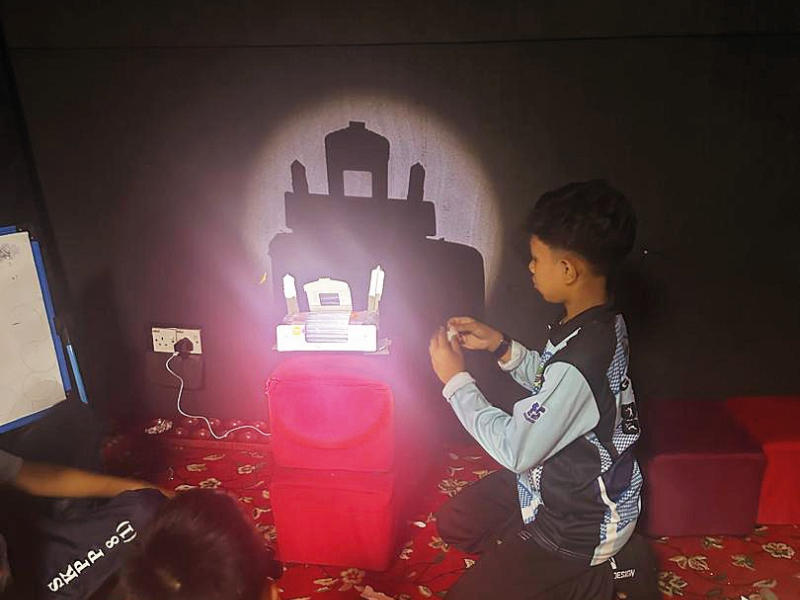
To this day, there is still a distinct gap between art and science. Government secondary schools offer arts, science or economics courses as majors to senior students. The obvious path in the eyes of many is the science stream, with promises of fulfilling, high-paying and respectable jobs down the road.
Regardless of the curriculum, teaching methods remain lacklustre: tutors rush through textbooks to cover points highlighted in high-priority exams. Classes have become more about memorising and regurgitating banal facts to answer specific questions that pop up in tests rather than learning.
“Pupils are being told to remember when Merdeka Day was, rather than what it was about,” Low says. “It’s important to ask, ‘How did people respond to this event?’, or ‘If this didn’t happen, how would the world or our Tanah Melayu be different?’ We want to pressure our teachers: Where is the arts in all this?”
If the desire for a more art-focused curriculum is present, what happens if educators lack the tools or facilities to execute their syllabi? Low reassures that Kakiseni is just a phone call away, ready to assist with sourcing spaces and teaching materials.
Among its specially curated assets are the KYK programme syllabus, teaching manuals and a student workbook, available for free on its website. These tools have been developed for other NGOs, community educators and government agencies too, reaching children who cannot enter schools. Educators are encouraged to wield Kakiseni’s resources as a guideline to fit their environment, moulding and restructuring it to their students’ interests and capacity to understand.
Having tools curated by passionate people can be more effective and meaningful in the child’s and teacher’s journey. “It’s a big difference, receiving government support and aid from a community that came together to provide for our pupils,” says Low.
With big dreams to implement more clubs nationwide, KYK faces funding issues still, even with YSD’s assistance. “It’s great that they’ve seen what we are doing and found it effective,” Yatela says in reference to the government, but for a wider reach across the country, there is much to be done. “We were able to get a matching grant from the Ministry of Finance under Belanjawan 2025, but we hope others will come in and support not just Kakiseni, but other organisations that focus on arts education.”
What she is pushing for is Hari Seni: an entire day dedicated to the arts, starting with the institutions under the existing scheme. One can imagine a day full of festivities, from student-led productions to in school galleries where unrealised young talent can take the spotlight.
body_pics.png
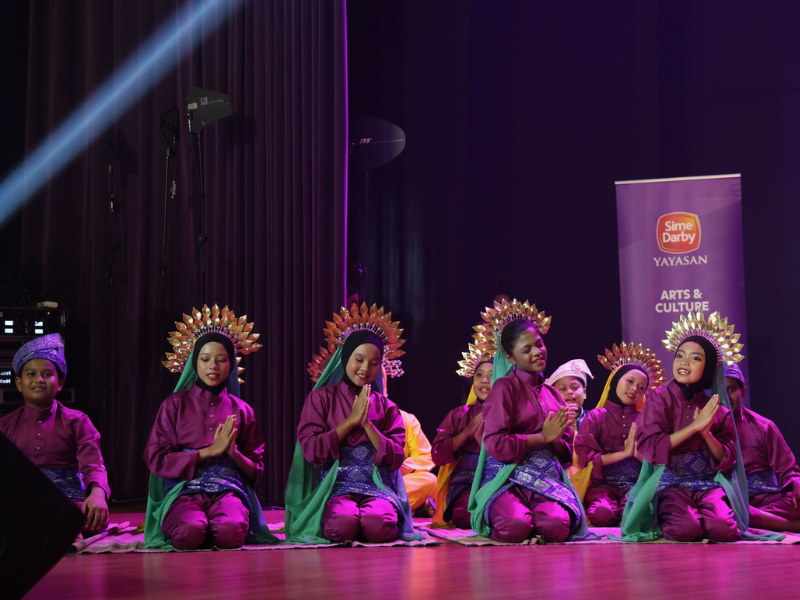
Few see the benefits of a fleshed-out art syllabus, but Yatela believes that starting small is the way to go. Through KYK, some parents note how their children are becoming more confident, with new interests in various arts and are winning awards for their work.
Arts practitioners gain a platform through the programme to showcase their skills and inspire a younger generation who may not have believed their path was a viable one. “Just imagine if students didn’t have exposure to truly meaningful art education. These thoughts would not click in their minds,” notes Yatela.
Low mentions how teachers are rediscovering their enthusiasm for their work. “A lot of them really do love what they do, but in the day-to-day [work life]and the sea of paperwork, sometimes you miss out on what you originally cared about.”
KYK currently takes place only in schools and there lies another issue: its reach does not extend to the young who do not or are unable to attend educational institutions. Stateless children or impoverished individuals might not get to see the inside of a classroom, or hold a pencil, much less consider writing or acting in plays.
YSD and Kakiseni circumvent the problem by exploring partnerships with community centres and NGOs. One notable tie-up is with tiger conservation group Rimau, which works with Orang Asli communities living within their region of operations. The kids are taught with colourful pictures and diagrams that do the work of letters and books just as well. “Art transcends language. You can use something visual to connect with children instead,” Yatela explains enthusiastically.
To the drawing board
KYK’s current focus is on ensuring the clubs continue while making the biggest impact possible on children. “It is still very young, but seeing how kids are making waves outside of schools, and the institutions’ avid response to these successes, is an indication of our influence,” says Yatela.
“Our main challenge is to integrate the arts as a staple in Malaysia, the same way it is in other countries. Our local troupes are struggling, whereas there are whole universities dedicated to performing arts overseas. That’s where programmes like ours come in to support and make changes.”
Even after the teachers and designers involved depart from their cohorts, they remain in contact with both organisations, which reward their participation with platforms to share their work. Many are invited to join showcases, festivals and community projects, such as YSD’s Arts Festival, where their efforts can be seen, celebrated and respected.
Low believes they are only scratching the surface of what KYK is capable of. “As long as there are children with curiosity and artists with courage, there will always be room for it to grow. Think of this as the opening act, not the finale.”
Give + take
2.png
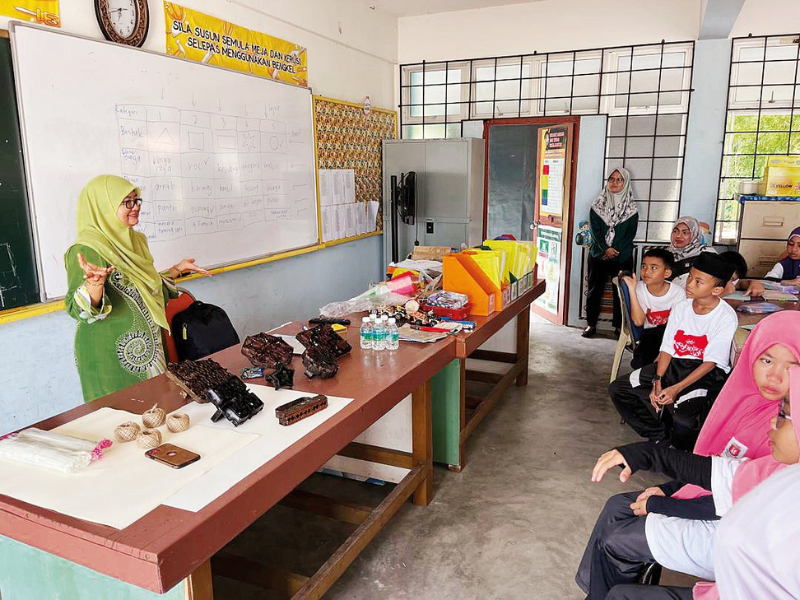
In its three years, KYK has gathered a fair number of educators and creatives from across the country, including Dr Mislina Atan, a statistics lecturer at Universiti Teknikal Malaysia in Melaka. She joined the programme not as a teacher but as a batik artist.
After completing her PhD in 2022, she sought something new to learn. Spotting an opportunity to bring batik to Melaka and tap into her heritage, she decided to try her hand at making the patterned cloth and selling it.
Mislina began from scratch at home before her business Alina Batik flourished and she moved into a small shop and studio. Now, she hosts classes for children and adults who want to learn the craft, and sells lovingly handcrafted uniforms and corporate gifts.
Through her classes and time with the initiative, she not only imparted knowledge of printing techniques, but also batik’s rich history and importance in the country. From using canting to dyeing designs, she ensures her pupils go home with pride and joy from a day well spent.
Regarding the state of the local syllabus, “there is still room for improvement”, Mislina muses. “It’s not as highlighted as other academic subjects, but we should not ignore the arts’ potential for the economy either.” Dubbed the Orange Economy, Malaysia’s creative sector grows each year, with Prime Minister Datuk Seri Anwar Ibrahim sharing that local digital creative companies generated RM6.3 billion in revenue while tabling the 13th Malaysia Plan in Dewan Rakyat in August this year.
3.png
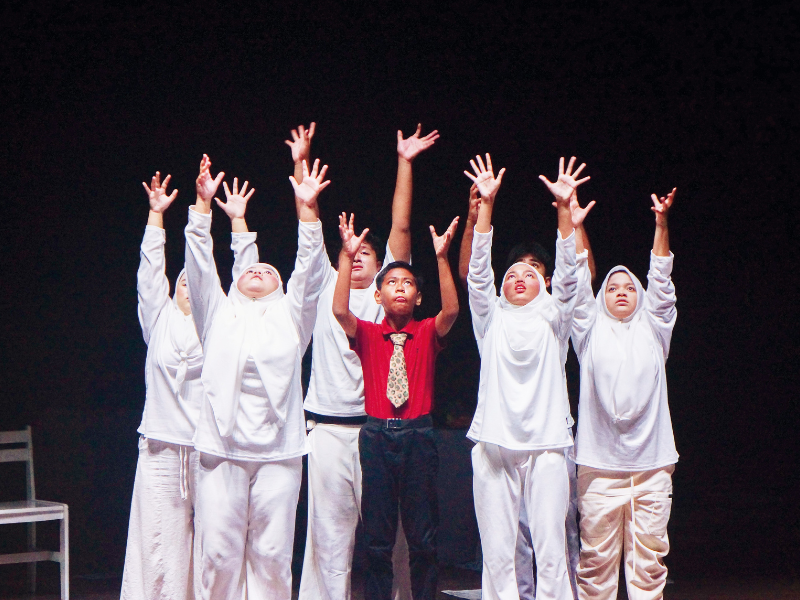
Akademi Seni Budaya dan Warisan Kebangsaan graduate and acting instructor Dee Al-Hadi had been hosting small-scale theatrical classes for kids and adults alike when an open call for the then-growing programme caught her eye.
Having taught teens aged 13 to 17, the Pahang-based artist shares that it was overwhelming at times, but was more than happy to give back to the highschoolers. “They had tried out other classes and didn’t feel like they belonged, but here, they were able to feel like they were in their own world.”
Though the goal for her students was to hold a successful performance at the end of her term, Dee guided them not only in theatre but also through games. “I wanted to show how acting is sometimes just using your imagination and pushing it to its limits. I throw them into situations where they have to create things. Playing is a way for them to warm up their body and expressions too.”
But will important lessons get lost in the fun? Dee does not think so. “With this generation of kids, it’s all about finding balance between serious and playful.”
Amelia Tan, artistic director of puppet show company ACX Productions, shares that sentiment: one should not push the arts as something to learn like a typical subject. Fun is paramount, especially when it comes to children. As Tan says, “We are not here to train professional dancers, actors or artists, but to teach self-expression. It’s more about having kids use their imagination to the fullest than telling them they need to do something correctly.”
Teaching the arts or incorporating it into a syllabus still not adjusted to its presence is no easy journey, but a thorough combination of care, attention and passion is paving the way for its acceptance. Though gradual, the growing presence of KYK’s burgeoning art clubs is a welcome addition to the monotony of local courses still too lost in the throes of STEM.
This article first appeared on Dec 22, 2025 in The Edge Malaysia.