
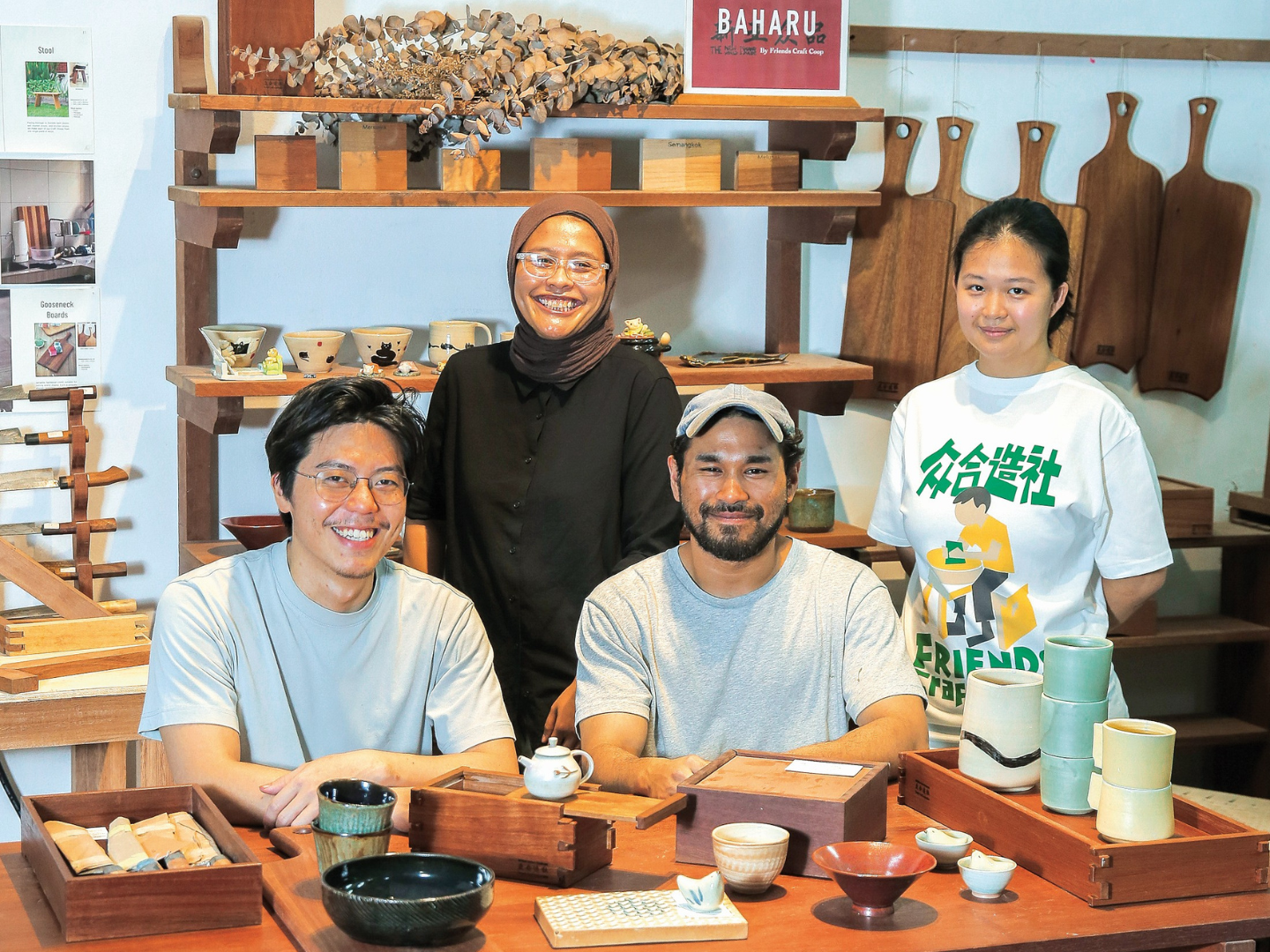
From left: Teoh Jia Chern, Amirah Bachik, Dev A/L Naresh and Jamie Chin of Friends Craft Cooperative (All photos: Zahid Izzani/The Edge)
Venturing into the industrial side of Petaling Jaya, the roads get wider and surrounding structures begin to resemble large blocks. Rows of factories and warehouses exude an atmosphere that hums with mechanical energy.
Tucked away in the corner of a multi-storey complex in Seksyen 13 is a juxtaposition to all that concrete and steel. A vintage sign hints at what the space holds — clay, planks and a myriad of artworks.
Specialising in solid wood furniture and handmade pottery, Friends Craft Cooperative is a reflection of its name in every essence, even though the founder recoils with laughter at this revelation. Teoh Jia Chern thinks the name sounds dinky but the collective’s motive is far from that.
With a background in social anthropology, the eccentric maker previously worked in policy and poverty programmes for local and foreign governments. However, long-standing issues left him discontented.
“I felt that we were doing projects for the sake of reporting rather than for actual effectiveness. I realised starting from a grassroots angle and being self-funded was the best way to have autonomy over how funds are distributed,” says Teoh.
Involvement with a homeless shelter in PJ allowed him to witness self-survival first-hand — the constant attempts to persist through setbacks and eventually land on a solution that brings people together. There, instead of the usual cycle of donating food, the concept was for the unhoused to cook dishes and clean the place up after. Inspired, he began to ponder:
What would the next move be to facilitate change?
body_pics_4.png
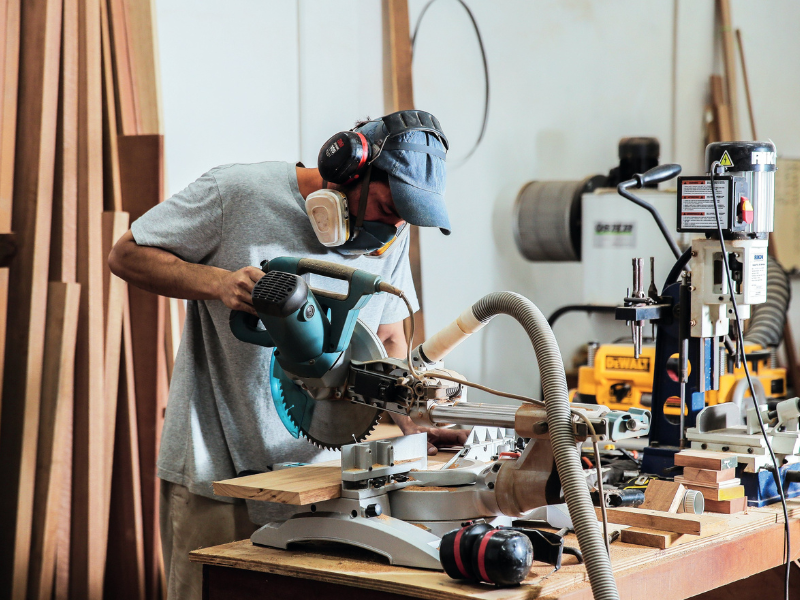
Teoh got into carpentry six years ago as a way to cope with the pressures of studying. Although frequently pigeonholed as a woodworker, he actually works with an array of materials. “Rather than having one primary method, I think I have six secondary ones — I just do a lot of things,” he jests. Despite this, he emphasises that making something cannot be done alone and requires a combination of knowledge and abilities.
Like building a piece of furniture, Teoh formed Friends Craft Cooperative, an intersection between a social enterprise and an art centre. The co-op began in a little studio, where he would run free skillshare sessions for the public every week. He then began taking in volunteers to hold lessons on other hands-on abilities like sewing. Soon after that, it became a collaborative-learning community.
The idea led him to like-minded individuals, particularly co-founder Jamie Chin, who currently helms the pottery domain of the co-op.
“Jamie and I were left looking at this vacuum. We had so much interest in people who wanted to pursue these skills as a hobby,” says Teoh. It has since expanded and currently sees about 104 members coming to the workshop at least once a month.
After the pandemic, there was renewed interest in such pastimes, especially among the younger generation. Be it knitting, baking or ceramics, the heightened enthusiasm represents a wider cultural shift as people search for something physical — a form of connection and purpose — to counteract digital fatigue.
As the demand for these activities grows, Friends Craft Cooperative prevails as a provider of affordable recreational access at a time when classes for hands-on hobbies are costly. “One month of access here is the same price as three hours at a lot of places, and that is only feasible because we are not maximising our margins and profits,” explains Teoh.
2.png
Describing itself as a “worker-owned craft cooperative”, the nonprofit makes sure to price its products fairly in the hope of developing a more democratic system that aligns with the values of the team. This framework also champions sustainability.
Securing materials as a co-op has helped immensely with pricing — for instance, clay is cheaper when bought by the tonne instead of by the kilogramme. It is then sold to the crafters at the wholesale price.
As for wood, the co-op benefits from large export orders, making use of the extra tonnes that are left behind after being processed by its supplier. “Being a scavenger of sorts is more efficient, sustainable and economic overall,” says Teoh. Hence, finished products are local hardwoods which are FSC- and PEFC-certified, meaning the wood has met strict standards and was sourced responsibly.
According to Teoh, much of the furniture industry in Malaysia has struggled to stay afloat in the last 20 years. This, coupled with the already saturated nature of the business, has required the collective to find its niche and advantages elsewhere — the production process.
Vernacular and traditional furniture is a speciality of the co-op. Intricate details and technicalities are attractive, but the artist appreciates proven structures, designs and ways of building just as much. He draws influence from “authentic” pieces of furniture like the classic plastic chair found at food stalls. “For something to be authentic, it needs to resonate with people somewhere culturally and subconsciously,” says Teoh.
1.png
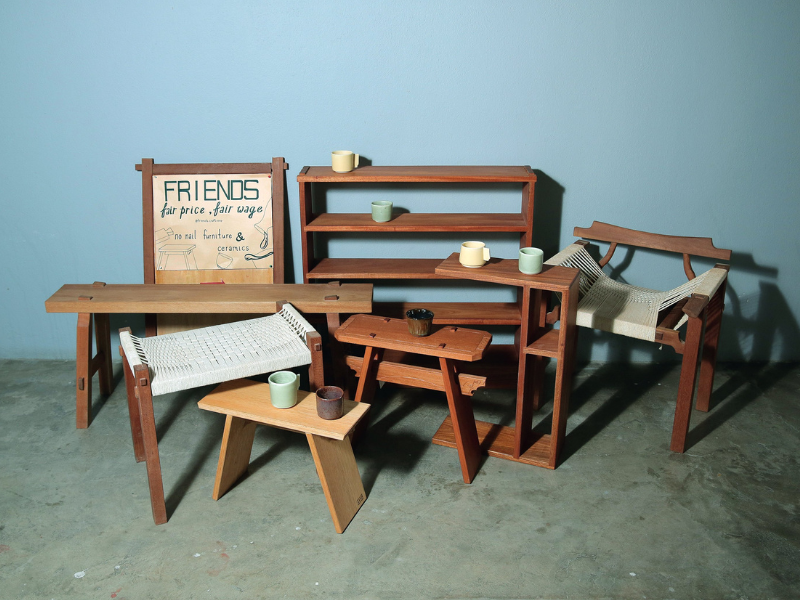
Much of the design is born out of necessity. Starting with zero capital meant innovation — contemporary benches, folding seats and stools are made with no-nail joinery, coincidentally paying homage to older methods of carpentry. Upholding the belief that everything should be fixable, customers are guaranteed a “lifetime warranty” of repair in exchange for feedback on future products.
Not deviating from the mission, almost all products in the woodworking line-up are included in a syllabus crafted by Teoh, which are then taught to apprentices who join the training programme. Signing up for the pottery studio gives members access to opportunities to learn from both professionals and hobbyists, a welcoming community, as well as a platform to sell their work.
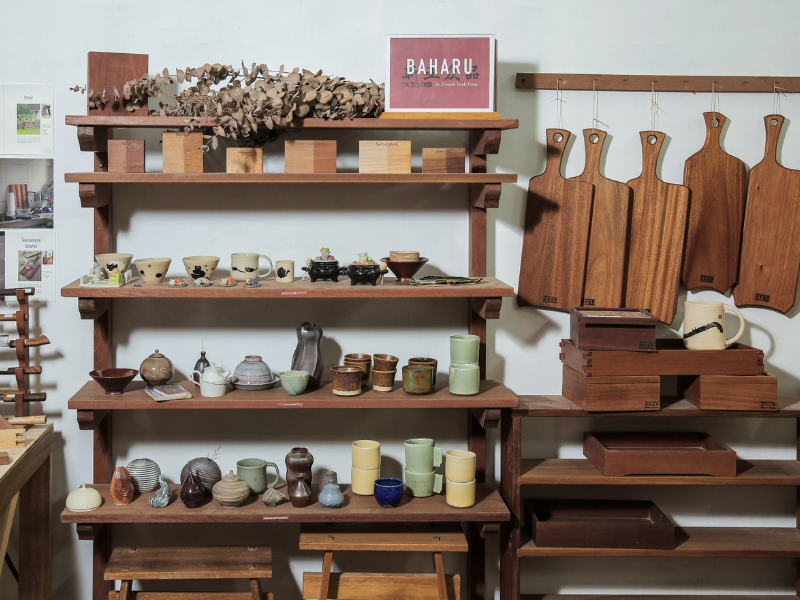
Finished projects are then distributed through the organisation’s retail brand, Baharu. Crafting can be a challenge, but logistical issues remain a significant struggle for creatives. Having this outlet also allows the organisation to dole out other creations from internal and external makers.
As Friends Craft Cooperative continues to guide creators through each step of the process, from crafting to advising and circulating, it ultimately aims to become an infrastructure for those who want to make a living in this sphere. “Manufacturing this way brings out all these social good — people live better, work better, have better products and a medium to express themselves,” says Teoh.
“The co-op is the place I wish I had when I started out,” he adds, asserting that crafting, although traditional in the artistic sense, is not necessarily a process of the past but rather one that is hopeful and presents more possibilities.
Mirroring reality, modern industrial methods are efficient producers, but Teoh believes that the little gaps of excess is where the future of crafting lies. Just like how each piece of wood has various grains, and each glaze shows up differently on clay, imperfections are where people can start to create better outcomes. “Through craft, we can discover ways to innovate, not just design, but also different kinds of social futures,” he says.
For those wanting to gain a new skill, contribute to a cause or just surround themselves with a warm community, Friends Craft Cooperative is a good place to begin as it continues to empower individuals and create fair systemic structures.
Shop for Baharu products online here or in-store at Unplug, Justlife Workers Co-op, Tsutaya Books and Kantan Kollektiv.
This article first appeared on Jan 19, 2026 in The Edge Malaysia.