
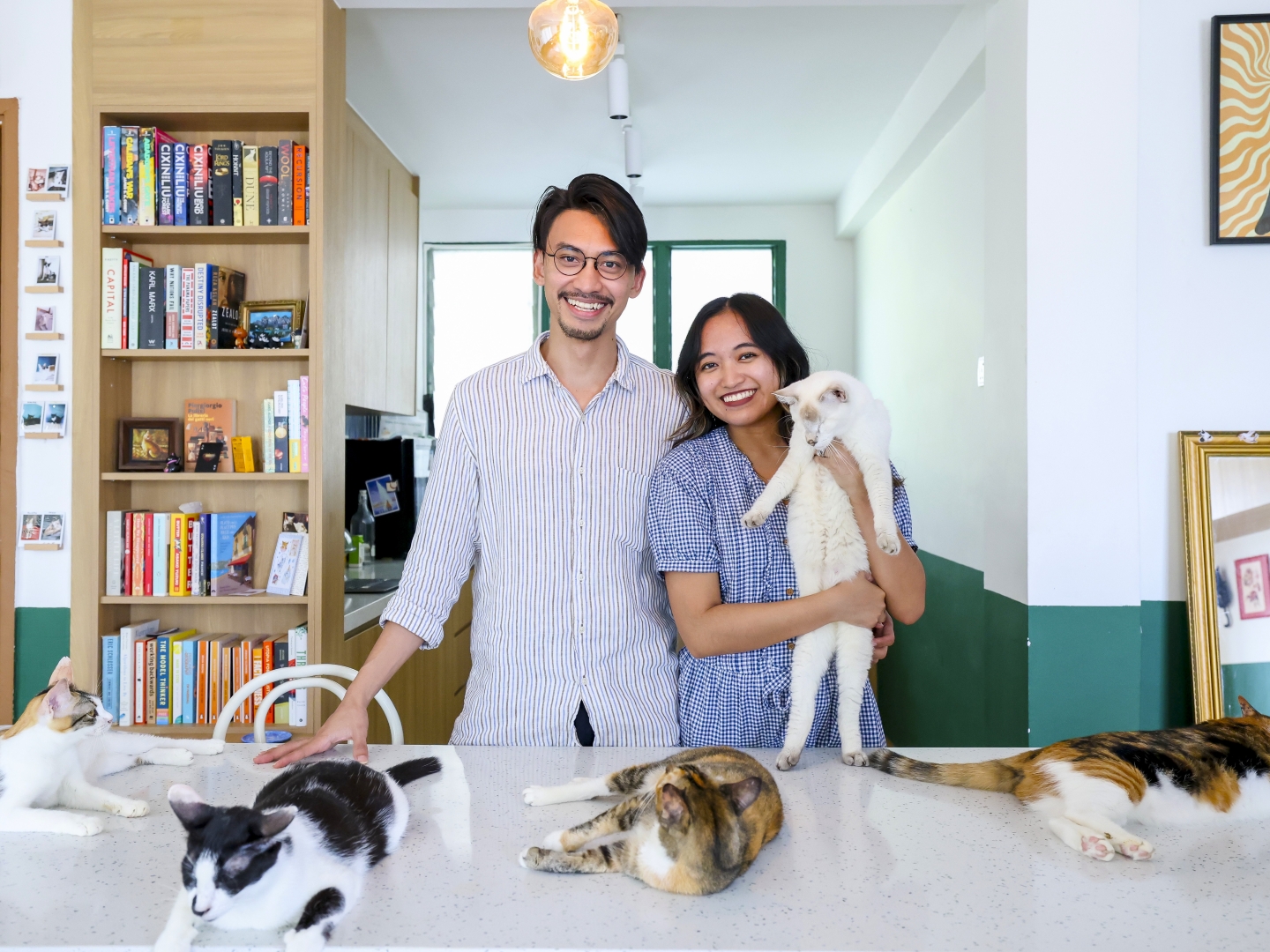
Co-founders Wan Hidayat and Khairina Ibrahim (Photo: Shahrill Basri/The Edge)
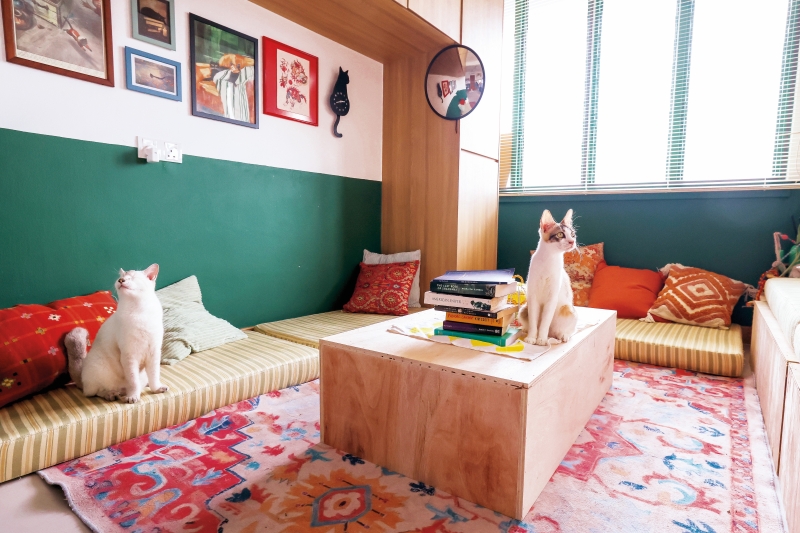
They weave effortlessly between the furniture. One, a ginger tabby, perches atop a stereo cabinet that matches its fur. Four others have taken over the kitchen island, focusing attentively as the rhythmic clatter of fingers tap on a keyboard. “Clover likes to sit on your laptop and Buttercup will climb and hug you,” Khairina Ibrahim says with a laugh. Meanwhile, another two casually pace towards the living room and stretch across a low coffee table, clearly unbothered by the conversation taking place.
Tucked in the Kuala Lumpur neighbourhood of Kampung Attap, Kolektif Kucing discreetly blends in with the other local businesses and creative ventures that occupy the vintage buildings, built as early as the 1950s. At first glance, it feels like the sort of space any ailurophile would dream of — cosy and warm with cats roaming free.
“For starters, we are not a shelter or a cat café,” says Khairina. “It’s totally understandable why someone would assume so,” adds Wan Hidayat. The co-founders say those are the primary establishments that can be found in the city.
Instead, Kolektif Kucing is a social enterprise that operates as a foster home and third space. “We’re like a hotel for homeless cats,” she explains.
1.jpg
Prior to embarking on this journey in May last year, the husband-and-wife team have a storied history with the furry creatures. Having grown up surrounded by cats, the couple has always been feeding strays. “Hidayat was actually the one who got me into it,” Khairina recalls. She had also performed rescues on her own, but stopped due to burnout.
When the management of their apartment building put up a notice that unclaimed cats would be handed over to the authorities, they decided to recommence rescue operations in the area. Foster homes were an unfamiliar concept and, unfortunately, piling veterinary and hotel bills became too much of a strain.
The turning point came when they encountered Professor, a black snaggle-toothed feline, old and in bad condition. “We had learnt our lessons and what our capacity was. We decided that taking Professor in on our own would just be a short-term solution as her welfare wouldn’t be taken care of,” says Khairina. One year later, she became a resident cat at the other outlet in Wangsa Maju.
Kolektif Kucing currently caters to 21 rescuers. It is able to house 15 to 17 cats at a time, 11 in Kampung Attap and 6 in Wangsa Maju. Rescued animals are put on a waiting list. Once a spot becomes available, foundlings will have to go through a thorough list of health check-ups to ensure they have been neutered or spayed and are free from transmittable diseases.
The charges are borne by the rescuers, who pay a monthly fee of about RM500, while any profits are reinvested into the business. This system has been effective so far — the temporary home has fostered a total of 43 cats, with 23 having been successfully adopted.
2.jpg
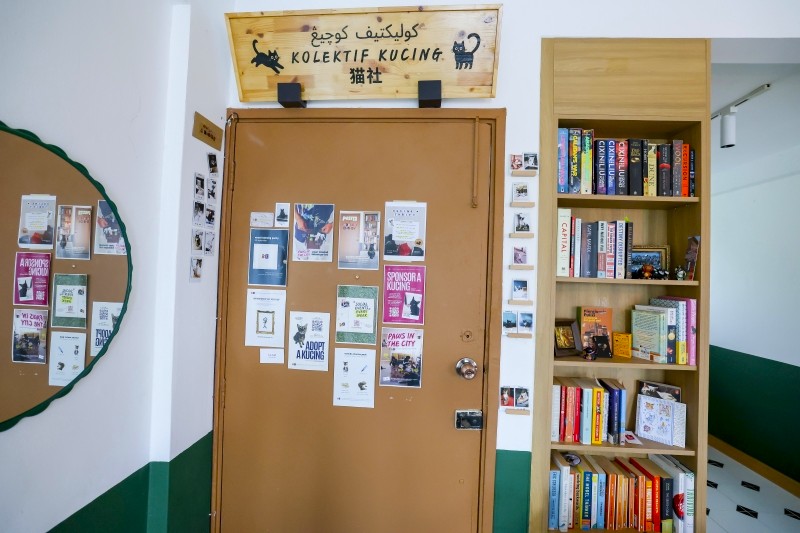
The collective continuously explores creative outlets that help with crowdfunding and growing the Kolektif Kucing community — regular yoga sessions, support groups, pop-ups and movie nights being some of the few. Events like these also benefit the animals, providing them with exposure to people, hence boosting their social skills. Typically, adopting a pet involves going to a shelter or browsing online, which is not necessarily an ideal condition for either party. “Since the cats here are cage-free, it creates an environment as if you are living together at home, and you get to see their true personalities because they are comfortable,” Hidayat explains.
On some occasions, home-grown brands and platforms have reached out to collaborate, with many choosing to run campaigns for specific cats. Khairina points out that increased sociability helps secure unique opportunities that may even support the cat’s boarding for certain periods. Furry talents are definitely in demand, she says. “They reach out to us because they know the cats are familiar with interaction.”
Opportunities to volunteer and co-work at the space are also available for enthusiasts eager to contribute or just simply want to spend time with the animals. “It’s a really great way to work and immediately de-stress,” Khairina smiles.
A membership option provides a less demanding means of donation, especially for those who want to commit for the short term. For RM50 per month, members get full access to the space on Fridays and Sundays plus extra perks for events, all while contributing to kitty welfare. Otherwise, separate rates ranging from RM15 to RM25 are offered to non-members.
Coming from different backgrounds and being able to bridge the gap between science, engagement, sustainability and consulting, Khairina and Hidayat are now looking into the technical and formal aspect of this venture as they attempt to raise awareness on cat care. They hope for it to eventually be officially certified and recognised as a source of income.
3.jpg
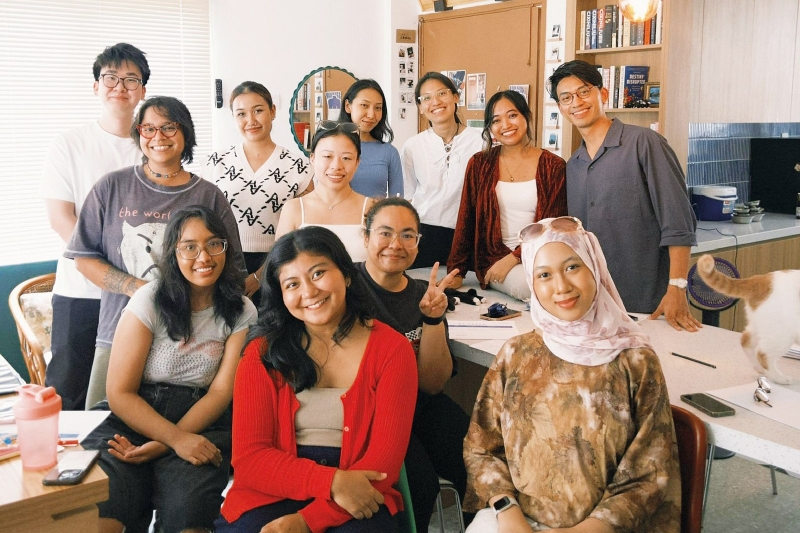
Their very own Kucing Professional Program saw its first cohort of cat sitters graduate recently. Over a period of a month, 11 participants learnt what it would take to be a caregiver of a high standard. The module is self-designed and the first of its kind in the country, curated based on input from community members, rescuers and industry practitioners. “There are many choices for cat sitters now, but inexperienced carers bring the risk of negligence,” Khairina observes.
During the workshops, participants are educated on all aspects, from how to handle the cats properly to feeding and cleaning them, as well as what should be done during health emergencies. The programme also includes peer reviews and a simulation run by Khairina and Hidayat, who roleplay being owners and craft scenes to test each sitter.
The process is every bit as interpersonal as it is intellectual. Respectful handling requires patience and the ability to read certain moods. On the human side, participants forge their bonds, strengthening the camaraderie even more. “Now, if someone has a job they cannot take, they pass it over to others in the cohort,” says Khairina. The team is looking to hold the next edition of this programme soon.
Apart from their day-to-day jobs, Khairina and Hidayat are constantly looking for ways to apply their professional skills to the cat cause. Research is something that the former is passionate about. She is currently studying what influences people to abandon their pets or buy a pet versus adopting.
“We have a very progressive view of the future in Malaysia. Kolektif Kucing is just a starting point and, hopefully, we can move towards actual systemic change,” Hidayat asserts. For the couple, success is measured not by profit or spatial dimensions. Rather, it is seen in every cat that has found refuge, rescuer who discovers they no longer have to shoulder the burden alone and community member who leaves with a little bit more empathy or knowledge — and not forgetting, every cool cat person they have met through Kolektif Kucing.
This article first appeared on July 13, 2026 in The Edge Malaysia.