
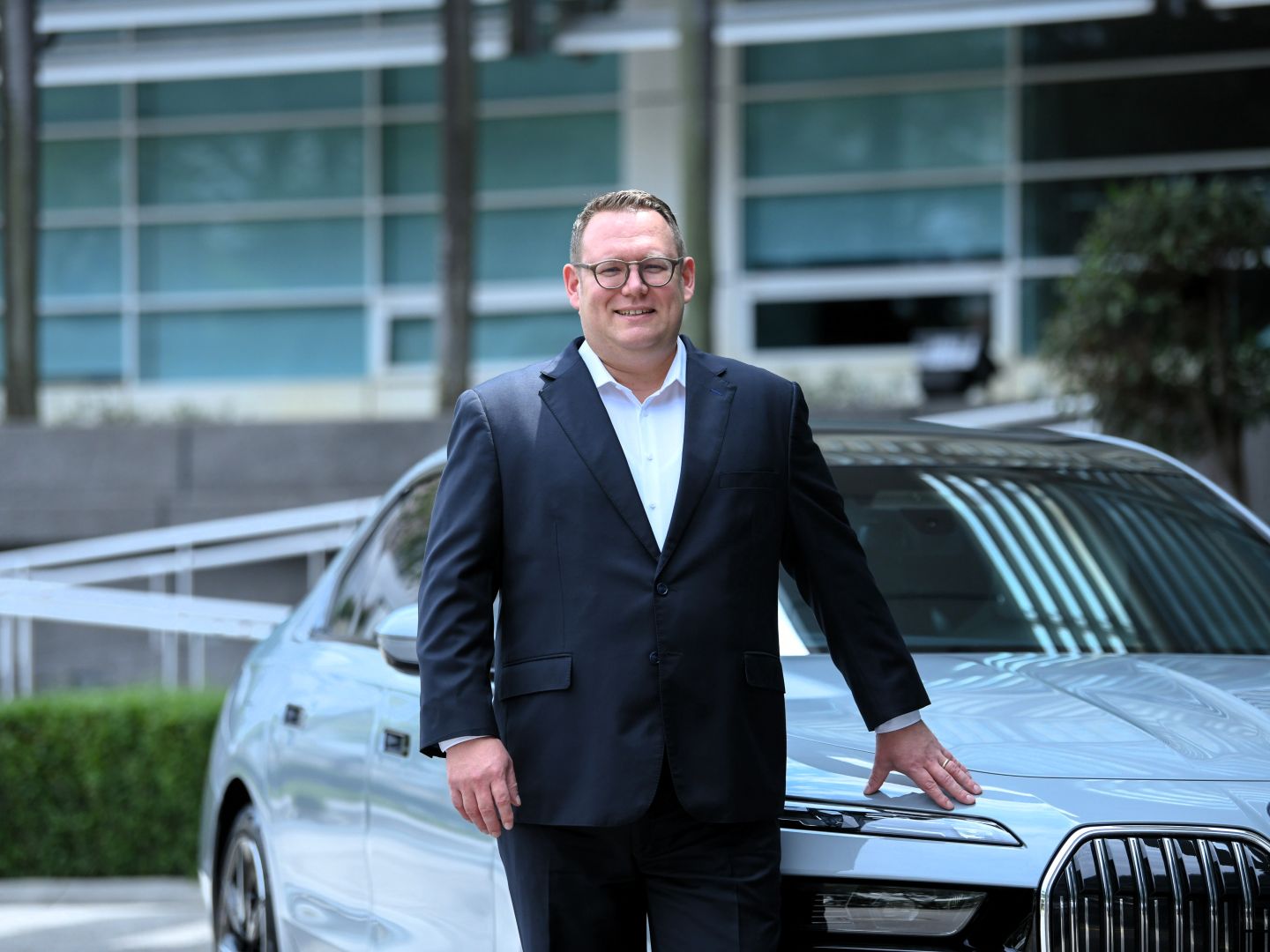
Nagel gained an appreciation of how deeply culture influences the way people behave behind the wheel — a lesson that stayed with him through roles spanning Africa, Berlin, South Africa and, since January last year, Malaysia. (Photo: Low Yen Yeing/The Edge)
In Hockenheim, a modest German town about 80km from Frankfurt, the roar of engines was as constant as the seasons. For Benjamin Nagel, managing director of BMW Group Malaysia, it became inseparable from his recollections of childhood. The hum of racing machines sputtered to life and drifted through the air like church bells, summoning residents to its legendary circuit. Swooping silhouettes flashed by like streaks of metal lightning, their growls rising as they wrestled with corners and clawed down straightaways. The Hockenheimring was a landmark alive with motion and noise, shaping his earliest memories.
He remembers the smell of it: warm asphalt, oil and the faint sweetness of burning rubber mingling with the bracing chill that permeated the motorsport mecca. For a boy growing up in the shadow of the grandstand, it was impossible not to fall in love. And fall he did — not for the glamour of Formula One exactly, but the touring cars of the Deutsche Tourenwagen Meisterschaft (DTM), vehicles imbued with the spirit of the saloons that quietly drifted along the streets beyond the arena, the very kind you might one day find waiting in your own driveway.
That spark of fascination took hold early, beginning at home. Like many children of his era in Germany, Nagel started with Matchbox collectibles — “not the fancy Hot Wheels,” he notes — that were die cast replicas of the icons that filled his dreams. As he grew older, play became more intricate: first remote-controlled racers, then build-it-yourself kits powered by electric or combustion engines, assembled with his own hands at 12 or 13. His favouring of the technical over the flashy was an early hint of the curiosity and respect for mechanical artistry that would mould his future.
Nagel attended Otto-Friedrich-Universität in Bamberg, a Unesco World Heritage city in northern Bavaria, and later Lund University in Sweden, where he studied business economics. But the trackside echoes of his youth remained close, guiding him to intern with BMW at the turn of the millennium — the beginning of what would become a lifelong journey with the marque.
The spell cast inside the Munich headquarters proved decisive. “I was attracted to its blend of youthful energy and boldness, to be ‘a little cheeky’ when it comes to surprising and disrupting the market,” says Nagel about the organisation, which balances commercial acumen with a sense of playful charm. Few could forget many a Bimmer advert tingling with zest — from the “Checkmate” billboard that outwitted its rival, to the 7 Series gracefully alluding to the idea of a mature gentleman seeking his gold-watch reward without the whiff of impending retirement.
bmw_hq.jpg
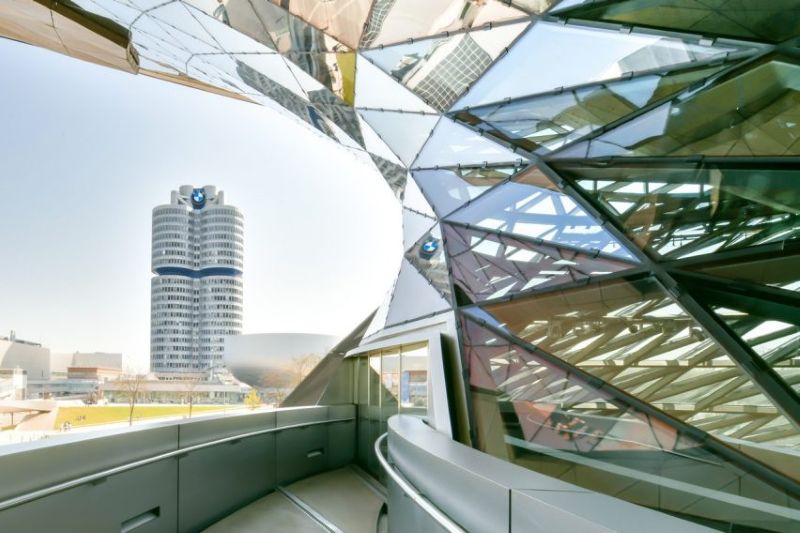
Nagel’s formal entry into BMW came through a central department overseeing international exhibitions, fairs and global events — the grand stages where the company presented its vision to the world.
“These shows held enormous importance for the automotive industry. Back then, Frankfurt and Detroit were the big ones, followed by Geneva, Tokyo and the emerging players in Beijing and Shanghai,” he recalls.
Among the highlights of this period was BMW’s debut at the New Delhi Auto Show in 2006/07, where he worked closely with the fledgling Indian team to establish the brand in a vast and complex economic climate.
“I had the privilege of guiding them from headquarters. We got along very well and managed to overcome all the obstacles that come with an international project like that. That’s when I got a call: ‘Could you consider coming to India to help us on-site?’ I think I impressed them by not shying away from a challenge.”
After spending two formative years strengthening the brand’s presence there, he was entrusted with one of his proudest assignments: launching the MINI from scratch in the land of the religious and sacred. The more irreverent, compact sibling in BMW’s portfolio had never before been officially introduced in the country, though a handful of units had trickled in through private importers.
Nagel gave MINI a maxi boost by building its identity, dealer network and customer base. “It was a great opportunity, especially working with local partners. Growing a storied brand in a dynamic and vibrant market like India is, in many ways, special when it comes to premium offerings.”
From the hectic heart of South Asia, Nagel carried away more than the pride and satisfaction of introducing a British legend to a new audience. He gained an appreciation of how deeply culture influences the way people behave behind the wheel — a lesson that stayed with him through roles spanning Africa, Berlin, South Africa and, since January last year, Malaysia.
“If this office [BMW Malaysia in Cyberjaya] were in India, I’d say about half of my colleagues would have chauffeurs, and they’d probably prefer to sit in the rear. In South Africa, where there’s a strong legacy of motorsport, you see many cars tuned with M Performance parts. Malaysia, on the other hand, is a very progressive market. With high car density per thousand capita, people value individual mobility. That said, I’m always surprised by how everyone seems to forget how to drive the moment it starts raining. The slightest drizzle and everything comes to a halt. They’re like, ‘Oh, sorry, I can’t make it today.’ It’s quite interesting,” he quips.
Auto biography
Automotive CEOs are often seasoned insiders, echoing familiar themes of incremental design tweaks and the staid, steady march of legacy combustion engines. Nagel, however, chose a different starting point: the people. Upon arriving in Malaysia, he was welcomed by a well-oiled crew and a network of dealer partners — “the backbone” engaging with customers — who had built a solid foundation. Rather than rushing to overhaul products or strategies, he upheld a rare humility many industry captains tend to sidestep: acknowledging that no single person holds all the answers.
“We need to listen more. I don’t think I need to talk all the time; nor should we change anything just for the sake of it. BMW is a successful company. I look into our common goals. Where do we want to go as a team? What is our North Star?” he asserts, while conceding that without truly keeping their ear to the ground, managers risk becoming disconnected from the shifting expectations of customers and the creativity that emerges from unlikely corners.
img_7458.jpg
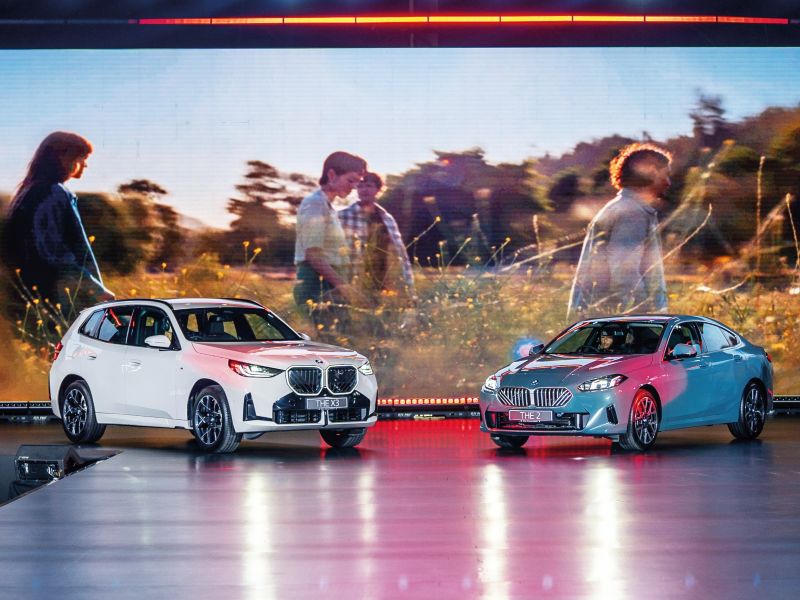
Beyond just adapting to local customs, a modern leader’s toolkit must include cultural awareness.
“Malaysia is such a diverse community that even as a foreigner, you don’t feel like an outsider. One of my principles is to approach every new place as if I’m going to stay forever. If I think I might leave in a year, I will never truly settle in. Home is where my family is,” says Nagel, whose wife and two sons, aged seven and 10, live with him in Sri Hartamas, Kuala Lumpur.
Malaysia may be welcoming, but its automotive landscape stands at a crossroads, torn between a demographic eager to embrace electrification and one still deeply reliant on traditional gas guzzlers. Government policies, such as the National Automotive Policy, have laid the groundwork for electric vehicle adoption through incentives and infrastructure plans. Yet, progress remains uneven. Charging stations are still concentrated in urban centres, leaving vast swathes of the country ill-equipped to meet the demands of zero-emission vehicles. How does BMW tackle these contradictions?
“We don’t believe in pushing the customer in one direction. Flexibility, technology and openness combine to create the power of choice. As we continue to offer every variant and drivetrain, you ultimately decide what suits you best. In fact, now that hydrogen functions independently as an energy source, BMW is already planning to launch its first series-production fuel cell electric vehicle (FCEV) in 2028,” explains Nagel.
The gas is stored in high-pressure tanks and converted into electric power through a fuel cell. This allows the vehicle to be refuelled in just three to four minutes, offering convenience comparable to traditional combustion engines and enabling drivers to maintain familiar refuelling habits.
For the German marque, choice is a living principle woven into every interaction. Rather than prescribing a single path, it cultivates spaces where exploration and discovery are encouraged. This was vividly embodied in the return of MY BMW World 2025, held last month at The Yard, Sentul Depot. With the overarching theme “Heritage in Motion”, the latest edition — the inaugural showcase was held in 2015 — featured an inspiring line-up of new models, including the 218 Gran Coupé Sport, X3 20 xDrive M Sport, M2, M3 Competition M xDrive and M5.
img_7459.jpg
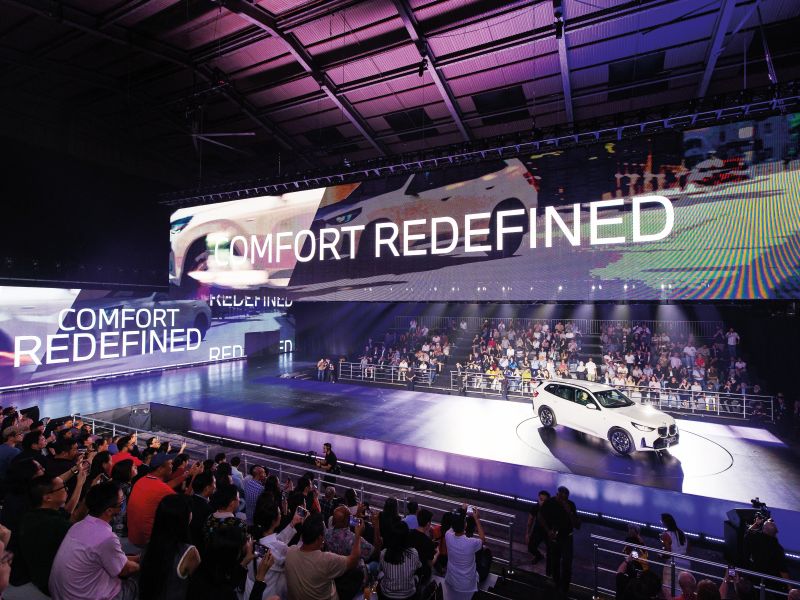
“We wanted to bring BMW closer to the people. If enthusiasts wanted to hear the sound or feel the engine vibration of an M car, they could. Further enhancing the experience was the xDrive Challenge, designed to showcase the capabilities of the all-wheel-drive system in real-world conditions. Families came along too, and it was heartwarming to see them sitting on motorbikes or jumping into the MINIs. We even displayed our protection ‘armoured’ cars, which obviously cater to a very different audience — but there was something for everyone. Kids could snap pictures and enjoy ice cream, while the adults traded insights and impressions over a coffee rave in the morning,” enthuses Nagel, describing the popular trend likened to “café clubbing”, except here, caffeine — not alcohol — fuels the conversation among like-minded gearheads.
Amid the buzz of the full-blown automobile pageant, the 50th anniversary of the 3 Series — the benchmark by which generations of drivers have measured their personal milestones — stood as a powerful reminder of the marque’s ambitions.
Nagel elaborates on this flag-bearer: “For five decades, the 3 Series has been our bestseller, and honestly, you don’t see many products that endure half a century and still maintain that lead. The car speaks for itself and stands as a testament to BMW’s leadership in the sports sedan segment, highlighted by the unveiling of the new 320i Sport and 330i M Sport during My BMW World. It’s not the face of the brand for nothing.”
The wheel deal
As more cars with unfamiliar nameplates, funky headlights and whining electric motors take to the highways, it is no surprise legacy auto companies are paying close attention to their fierce Asian counterparts — competitors who, in regions where owning a car was considered novel just 20 years ago, are staking a claim abroad and building their own Great Wall on the global stage.
“We’ve always competed with established premium players but we now also see newcomers showing innovative features worth noting. I think some traditional players may disappear or be consolidated. Because the world is evolving so rapidly, the competition we had 10 years ago will be different from what we anticipate in the next 10 years. We don’t shy away from competition, and change is good because it means the ecosystem is getting bigger. Some things, however, remain the same, like how we treat our customers, as promised through our ‘Relax. We Care.’ programme.”
The catchphrase is more than just a campaign depicting carefree, cocktail-toting beachgoers sunbathing by the sea with their BMW parked nearby; it is a pledge to provide premium support in every situation, whether it is an error message in the vehicle, an accident or simply scheduling the next service appointment.
img_7453.jpg
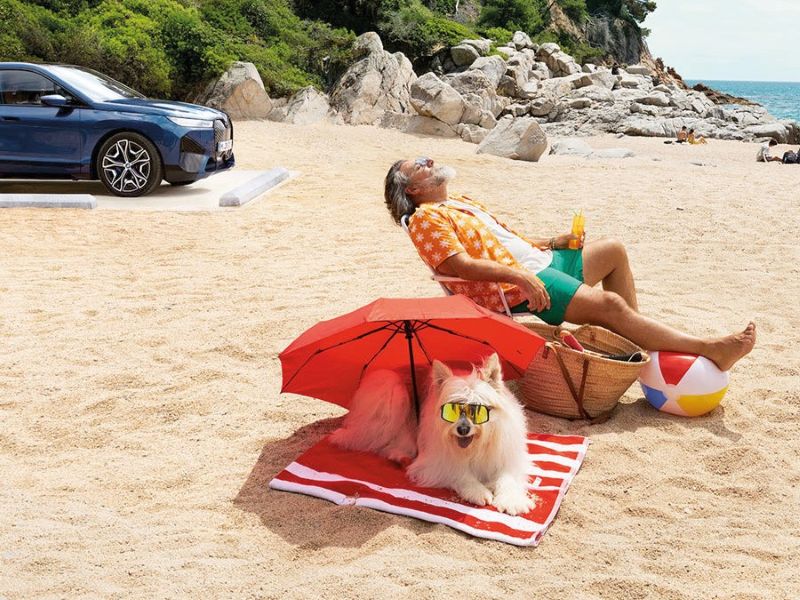
Nagel adds, “How long does it take for someone to reach you? Need a hotel while you wait for the repair? Of course, that can be arranged. The concept of driving now extends to other parts of your life and your lifestyle. We want to be there for you.
“Heritage is valued for a reason, much like why someone invests in a pen or a watch. BMW Group Malaysia has been a dominant force since the 1970s and I’m confident we’ll still be here for years to come. On the flip side, some of our newest competitors may even disappear. I don’t know how you would feel if you bought something that seemed affordable at first, only to realise you have nowhere to service it because in the future, they might not even exist anymore.”
The German automaker is preparing to unveil a fleet of new offerings under the banner of Neue Klasse (New Class) — the umbrella term for its next-gen electric cars — this September at the Munich Motor Show. Word has it that these models could include the next iX3 SUV, poised to set new standards for the brand. Yet, while innovation races forward, the Bavarians face a more immediate speed bump: headwinds from US tariffs, which cast a menacing shadow over trade dynamics. Weathering this will require some deft moves.
“A world without tariffs and barriers would be ideal but, at the end of the day, that is not the case. Although BMW is very well positioned globally with our production plant in the US and as one of the biggest exporters, the extent of the impact on us remains uncertain. We’re very flexible with our production lines, but certain elements, whether raw materials or parts of the supply chain, may still be affected. We will find a way around it.”
Setting the course
At the heart of it all, every decision at an automotive powerhouse begins with the fundamental experience of enjoying the drive. The connection between car and driver can reveal nuances of engineering and the emotional storytelling baked into every detail — things no spreadsheet or focus group can capture.
Watching the speedometer needle climb remains a visceral thrill for Nagel, who sometimes cruises the coastal roads to Terengganu and Desaru, Johor, in his i7 or zips through Penang’s narrow lanes in a MINI Countryman. Music does not always fill the cabin, but he makes it a point to tune in to BFM89.9 for news or to call his mother.
“I just connected through the car’s infotainment system to call her in Germany, which is six hours behind. Actually, I’ve been wanting to climb Mount Kinabalu — though I need to work on my fitness first — and explore parts of Sabah, like Sandakan and Semporna. My mum is coming to visit, so I’d like to show her a bit of where I live.”
02._my_bmw_world_2025_celebrates_the_legacy_of_bmw_group_malaysia_driven_by_legacy_defined_by_progress._1.jpg

Stepping away from the corporate whirlwind gives Nagel a rare chance to recalibrate. But when duty calls him back to the boardroom, he steers his team as confidently as he does his car on the open road.
“There’s this famous saying [attributed to authors Jason Jennings and Laurence Haughton]: ‘It’s not the big that eat the small but the fast that eat the slow.’ It’s crucial to be at the forefront and stay agile when making important decisions. So I told my team, if they want to chat, don’t wait for a free slot in my calendar. I certainly don’t want to slow anyone down, and perhaps this sends a signal that we should always be quick on our feet.”
Asked if he has changed any of the workplace traditions he inherited, he smiles and admits, “The coffee. I didn’t quite like my predecessor’s choice.”
Beyond that, he introduced a few of his own rituals, like nasi lemak breakfast meetings to exchange ideas and celebrate birthdays, as well as regular town halls to collect feedback.
Ever the optimist, Nagel neither regrets setbacks nor dwells on missteps, even when Covid struck just as he assumed the role of general manager of sales and operations in South Africa. Empathy may seem far removed from the rough-and-tumble world of business but the capacity to understand other perspectives shows that true leaders do not merely preach; they stand alongside those they steward.
“We all remember the ‘Can you hear me?’ phase on those video calls. A lot of people were hit very hard during the pandemic — some couldn’t even see their families. As a leader, you want to take the time to understand their circumstances, to see what’s bothering them. If there was a problem in South Africa, we’d sit around the table and think of a plan. Here in Malaysia, it’s ‘Ok, can do lah’. Everything always seems impossible until it’s done.”
For now, Nagel is focused on training his staff to the highest standards and cultivating an attractive work environment to foster positivity. At the same time — with Minister of Investment, Trade and Industry Tengku Datuk Seri Zafrul Abdul Aziz negotiating with the US for a fair tariff solution, following the successful economic partnership agreement with the European Free Trade Association — he is exploring ways to further strengthen the brand’s hold in the country.
“That will be our North Star,” he affirms.
This article first appeared on July 21, 2025 in The Edge Malaysia.