

Seri Negara's restoration is part of the wider Warisan KL initiative to revitalise the city's historically and culturally prominent locations and landmarks (All photos: Low Yen Yeing/ The Edge)
Up the verdant, winding paths of the Perdana Botanical Gardens, Kuala Lumpur, sits a relic where Malaysian history was made. Seri Negara, once the official guesthouse of the highest-ranking British officer in the Federated Malay States, and which went on to accommodate royalty and dignitaries, was the hallowed home where the Federation of Malaya Agreement and Independence Agreement were signed in 1948 and 1957 respectively. Yet for all its status as a site of colonial prestige, few modern Malaysians remember it as more than a name in a textbook, let alone a tangible location within the capital.
Today, the estate once reserved for the uppermost echelons of society can be perused freely by the general public, pulled out of disrepair and appointed back to its past glory under the careful supervision of Khazanah Nasional.
2.png
“In 2023, the government entrusted Khazanah to take up this heritage project. The brief was to restore, refurbish and revitalise these Category 1 heritage facilities, most of which have been left abandoned for quite some time — Seri Negara included. The intention is to enable the rakyat to enjoy these places,” explains Muhmat Hilme Hassan, CEO of Aset Warisan.
Part of the wider Warisan KL initiative to revitalise the city’s historically and culturally prominent locations and landmarks within an urban context, the reconstruction and conservation of Seri Negara is handled by the dedicated Dana Warisan vehicle of Khazanah. Seri Negara and Carcosa — its separate, sister residence — represent phase one, while the second comprises six buildings around the Dataran Merdeka area, including the recently reopened Bangunan Sultan Abdul Samad.
For sites of this high-level classification, strict, exhaustive adherence to Jabatan Warisan Negara’s regulations is required, with the focus on preserving the whole structure. This is where dedicated historians like Mariana Ramli, one of the contributing curators and conservators for the project, come in.
“When doing this kind of work, you need to have a registered conservator and there are not many in the country. Mariana understands the history and has made sure we are in check as far as adhering to the guidelines,” says Hilme.
1.png
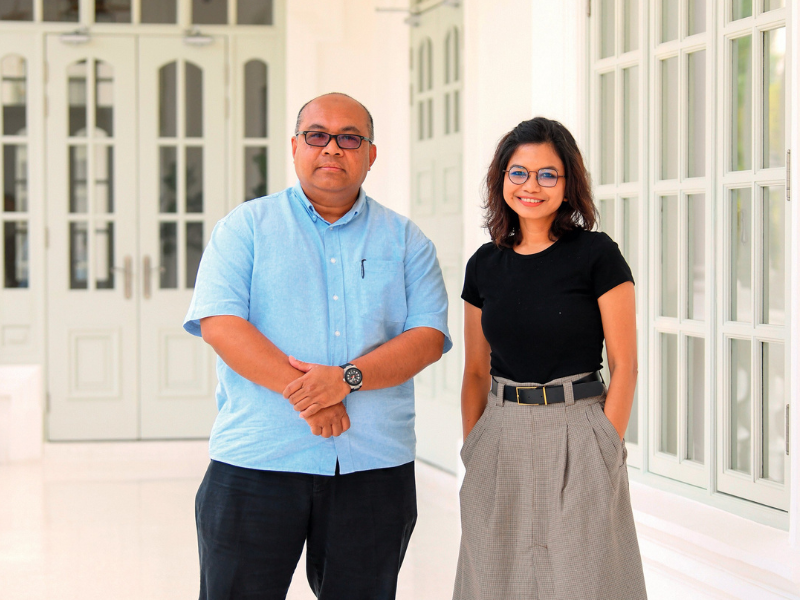
Seri Negara’s last custodians departed in 2019 and by the time Hilme and team came in on Feb 18 last year, it was severely dilapidated: rotted wood, termite infestation, leaking metal roofing.
Time and nature were not the only enemies either. Since the abode had been converted many times, from a residential property to an office and, most recently, a hotel, its former owners had made indiscriminate modifications to suiteach purpose.
“Because there have been several occupancy uses, we have to decide which layer of history it should be restored to,” notes Mariana. Ultimately, the team concurred that the residence should be reverted to its original appearance, as it was when it was built in 1913.
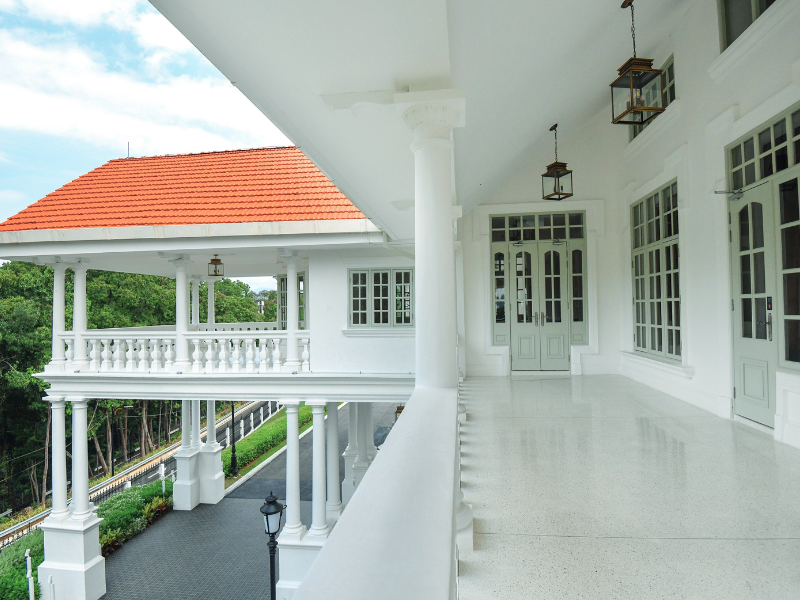
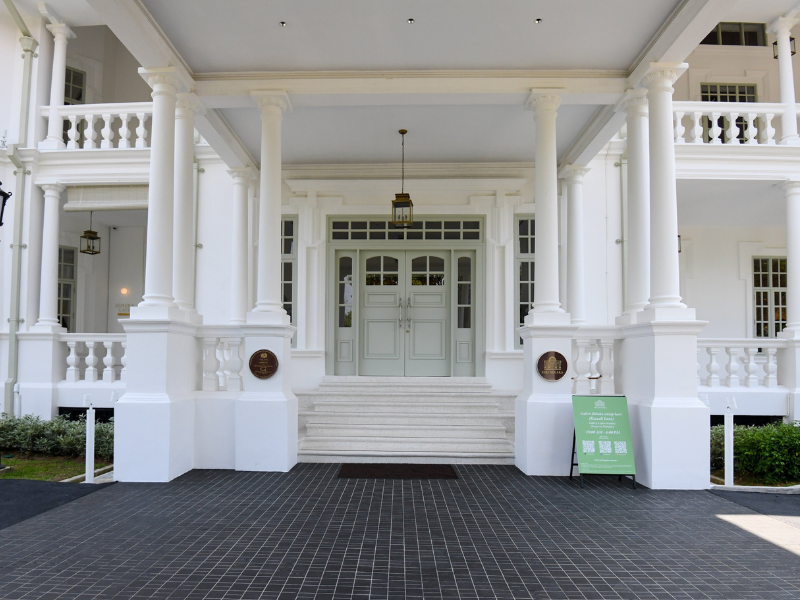
Seri Negara as it stands today is architecturally identical to the day it was first created, 113 years ago, an authoritative estate with Neo-Gothic and Tudor Revival influences rendered in pearly white and accents of duck egg green along its doors and windows. By a fortuitous stroke of luck, the bright red clay roof tiles were able to be sourced from the original Spanish manufacturer.
4.png
Having removed the previous hotel suite walls, visitors can now stroll uninterrupted along the ground and first floors, which house a museum gallery depicting the formation of Malaysia pre- and post-independence, as well as an art space featuring works from Khazanah’s collection. After a guided tour, guests can adjourn to the Semuka Café or Serai House restaurant for refreshments or proper meals.
The stairs leading to the restaurant, rather unassuming at first glance, have their own storied past. “It wasn’t there before; it was further down. But based on the drawings, we realised they were meant to be in a different location,” says Hilme. As it turns out, the feature had been buried when the path was constructed, forcing the team to excavate and reveal the slumbering steps, preserved from over a century ago.
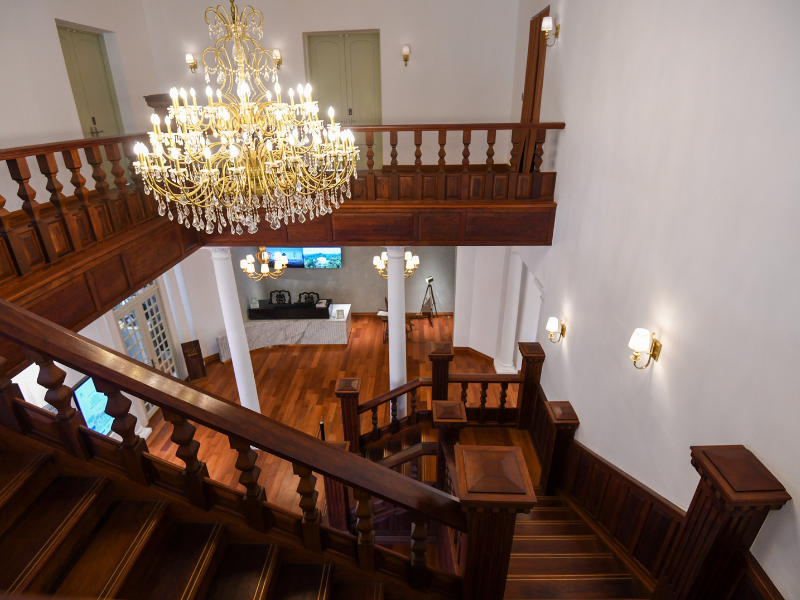
Other elements were not so long-lived and had to be recreated. The down piping running along the external walls had to be custom moulded and fashioned from cast iron, just like in the old days. The pièce de résistance of the lobby, the main staircase, was a particular point of pride. The previous concrete flights, made to accommodate the hotel layout, were demolished in the recent works and fully replicated by local craftsmen in merbau hardwood based on old photos and drawings.
3.png
For Hilme, who had worked on the Petronas Twin Towers and several huge projects in his career, this initiative has proven there is always something new to discover. “This is my first time working on heritage buildings. One thing I’ve learnt is to really value these places. I started work in the 1990s and my office was in Dayabumi. But I never set foot into Bangunan Sultan Abdul Samad even though it was just next door because there was no need! What’s more, Carcosa and Seri Negara, these were just for the who’s who. Now, anybody can walk in.”
He credits the widespread cooperation of not only Khazanah, its consultants and contractors, but also various government agencies and neighbouring properties, who have united in ensuring a major Malaysian landmark could be reconstructed successfully. A meaningful ripple effect has also been the growing impetus for private entities to embark on similar restoration projects, recognising both the cultural and economic viability.
This article first appeared in issue No. 119, Spring 2026 of Haven.