
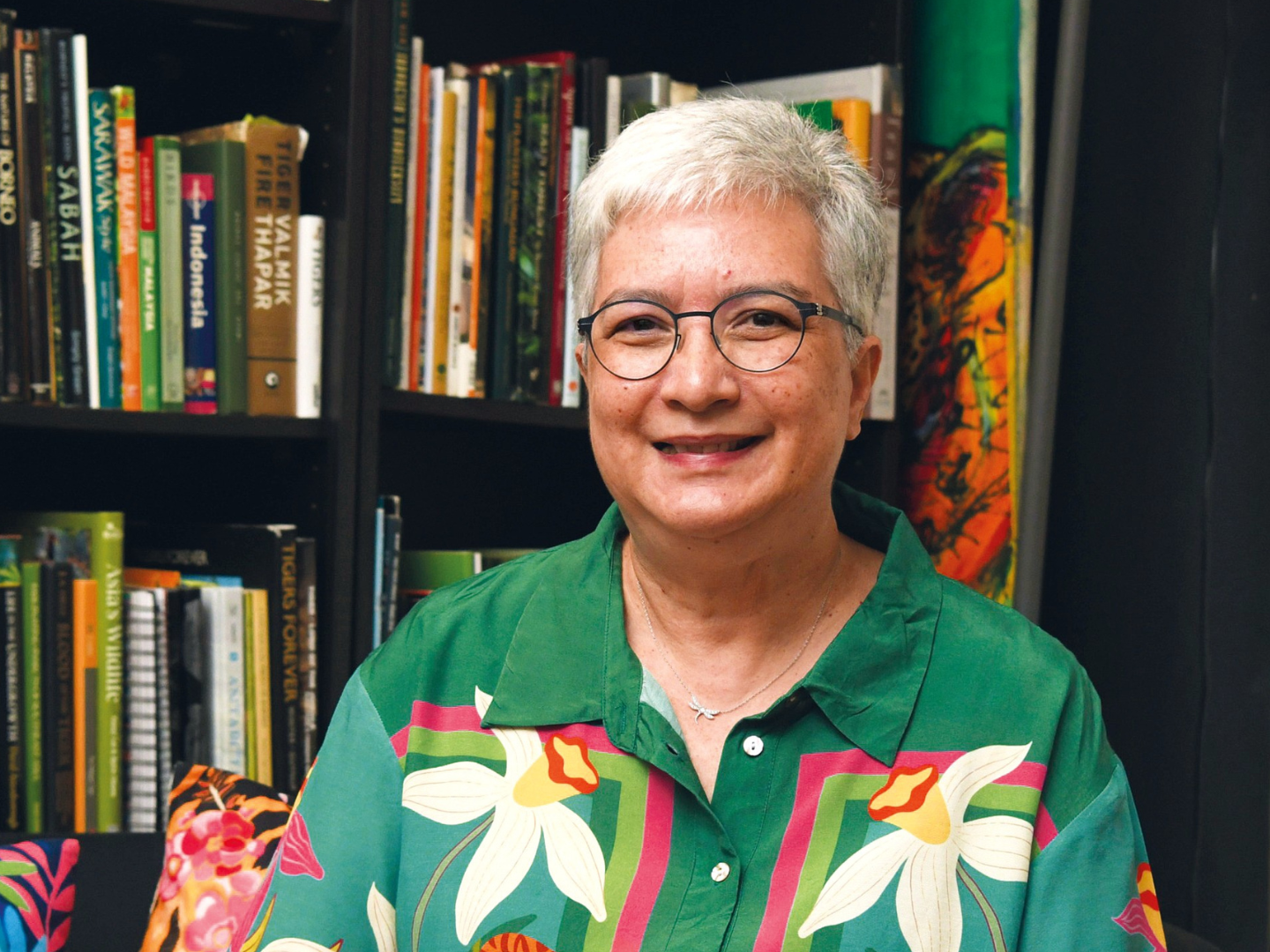
Under Lara's guidance, Rimau engages in ongoing efforts to educate the public and fund the Orang Asli who help them (Photo: Patrick Goh/The Edge Malaysia)
One might assume it is easy for someone deeply connected to the planet to answer the simple question: “What does nature mean to you?” Yet when asked, the chatty and cheerful Lara Ariffin — a documentary producer for more than 30 years and president of the non-profit Rimau, dedicated to preserving the Malayan tiger — pauses thoughtfully for a long moment.
When Lara finally replies, she says: “For me, it means peace and tranquillity. Every time I go into the forest, everything slows down. Especially for someone who lives in the city, nature is essential because Kuala Lumpur is such a busy place. The pace is non-stop; you’re always going, going, going. So, nature gives you a moment to escape and experience that peace and tranquillity.”
Being exposed to the outdoors from a young age helped cultivate a deep love for the environment, and Lara, 58, has her parents to thank for this. “My first experience that I remember was when I was five,” she recalls. “We went to Taman Negara in Pahang and to get there in those days, you had to take the boat all the way from Jerantut because there was no road. Then, we would always go to Pulau Perhentian, too. So, I started snorkelling very early on.”
Besides the frequent excursions to popular holiday destinations, visiting her family house in Janda Baik drew her to the beauty and charm of untouched verdant landscapes. “Fifty years ago, Janda Baik was so quiet. Nobody was around. There was no water, no electricity. We had to fetch our own water and we would play in the river,” she says, referencing Sungai Sum Sum, which runs through the heritage homestead set within a four-acre lush tropical estate and which has now been transformed into an event space with private accommodation.
“I’m fortunate to have parents who really care about nature. We grew to appreciate and love what we have here in Malaysia, whether it’s the forest or the sea, by just going out and experiencing them.”
Twists + turns
1.png

Though she found the flourishing and diverse habitat fascinating, Lara went on to pursue her tertiary education in architecture instead. “Nature is something I’ve always loved. But when we were young, there was no such thing as being a conservationist or doing research on conservation. That was not something anybody did,” she says.
“I think if you’re an architect, you can do anything. You think things through, daripada benda besar kepada benda kecil, because that’s what the course teaches you. If you’re going to design a building, you have to inspect the site first, noting where the rivers and trees are; what the vistas are; and direction of the sun. It’s good training because it encompasses a huge spectrum of thought. So, it didn’t really matter that I went to do filmmaking after that.”
After marrying her childhood best friend Harun Rahman, Lara decided to explore cinematography, joining her spouse’s production house Nuvista Media. “My husband is a filmmaker; he was having way too good a time, travelling and shooting outside,” she jokes. “Initially, we were making documentaries about restoring houses and buildings. So, that’s where I merged my skills in [these two fields].”
Founded in 1991, Nuvista has been actively producing documentaries about wildlife, conservation, history, heritage, travel and archaeology for the National Geographic Channel, Discovery Channel, History Channel and Channel NewsAsia, covering tragic incidents such as the Highland Towers collapse and untold stories from the Malayan Emergency, among others. However, the most enjoyable subject for Lara is, of course, nature.
“It trains you to be patient. Just because you say you want to film something, it doesn’t mean it’s going to turn up.The Malaysian jungle is impenetrable. I’ve been filming in the forest for more than 30 years. I heard a tiger only once! And that was pretty scary. I don’t really want to see a tiger in our jungle because I think if you see them, your life will be in danger.
“People think of a forest as just trees, but we have so many different species, be they orchids, palms or medicinal plants and all sorts of animals. Once you lose them, there’s no going back. We hope our documentaries can bring that message across: we don’t want to lose our biodiversity.”
Bound + determined
6.png
In 2009, the team wanted to produce a documentary about Malayan tigers but had trouble securing funding. At that point, Lara had done a lot of pro bono work for other NGOs. From what she gathered, statistics about the endangered predator were a cause for concern. “We were already ringing the alarm bells then: we’re losing tigers, we’re losing tigers and we’re losing tigers. As we were moving along, I didn’t feel enough was being done. I was so frustrated. But, you know, at the end of the day, what’s the point of complaining and not doing anything about it?”
In 2018, Lara joined hands with a group of friends to establish Rimau. “We said, okay, let’s do this. I think we need to make the effort. Our vice president David Hashim then raised RM50,000, allowing us to put our first team of five rangers on the ground in Royal Belum. We’ve grown since then. We have more than 100 patrollers now in various areas in Perak, including Royal Belum, Amanjaya, Korbu and, most recently, Piah.”
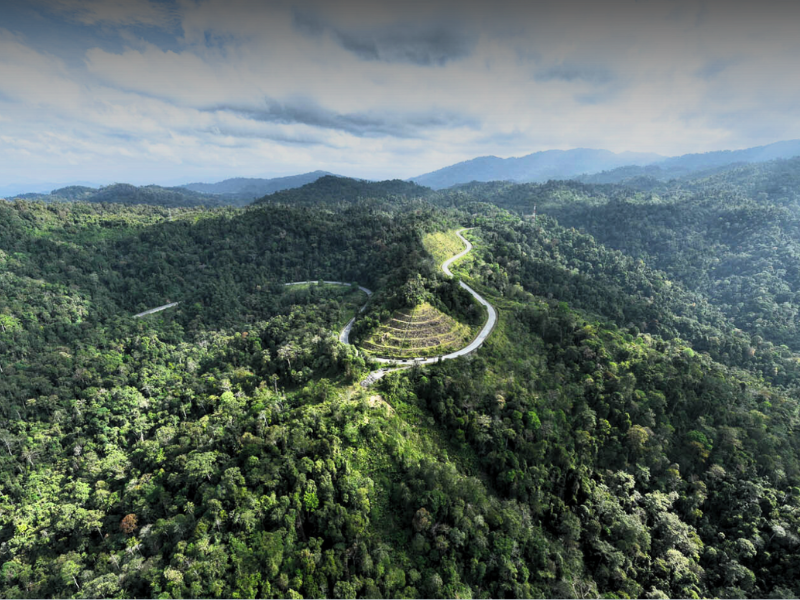
Currently, the organisation’s work is concentrated in the second-largest state in Peninsular Malaysia, home to the Belum-Temenggor forest reserve, the world’s oldest rainforest, where endangered wildlife such as Malayan tigers, sun bears and tapirs live.
“We started off in Royal Belum because of the partnership the State Park offered us. But I realised it’s too small an area. It didn’t matter how good our protection was. Then we extended to Amanjaya. Again, I didn’t think we were going to achieve our goal in Royal Belum and Amanjaya either. We needed a bigger landscape. So, the solution is looking at Perak as a state, not as one forest reserve.”
The team knew from the start that the most important stakeholder in its endeavour was the local community, who understands the land best and can provide reliable information in terms of the priorities and challenges in a specific area.
“We believe strongly that conservation cannot succeed without the buy-in of the local community that lives there. The best people to do this are the Orang Asli.
“Of course, when you work with them, we have to do something called Free, Prior and Informed Consent (or FPIC), where you sit down to discuss the project, our intention and what it is that we are doing.
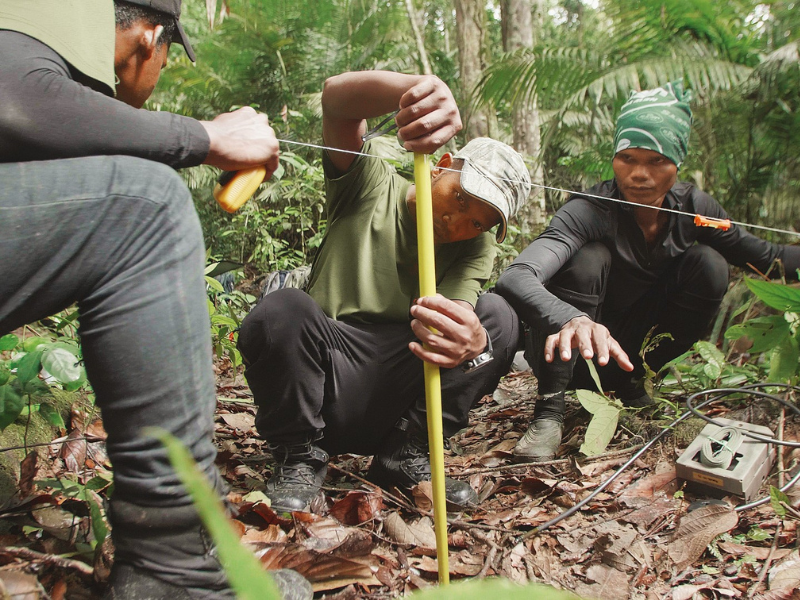
“We first need to teach them how to use the GPS and satellite phone because, although they may be good at navigating the forest without a device, we have to do Smart Patrolling, which requires the boys to indicate any signs of human or wildlife they see while monitoring a particular route. A lot of Orang Asli in Royal Belum are illiterate; so, we’ve had to teach them basic reading and writing to do their job.”
3.png
Over time, the team’s help extended to the workers and their families, and a community fund was set up to further support them. For every day the rangers go on patrol, an additional RM10 is channelled into the fund. The money is then pooled, and through discussions with the Tok Batin (village head) and the patrollers themselves, they collectively decide on what can be done to improve their living conditions.
From this initiative, the organisation has managed to install a plumbing system, build schools and even provide food. “During monsoon months, we find that it’s harder for the Orang Asli to go out and forage, so we end up bringing in the supplies for them. We’ve also brought children to the hospital. The idea is not just the rangers who benefit, but the whole kampung as well.”
The team is currently developing the Perak Tiger Crisis Action Plan — set to be finalised in the first quarter of next year — to establish clear goals and direction. Over the next decade, the focus will be on ensuring a viable tiger population in the state, aiming for at least 80 tigers, including 20 breeding females.
Rimau was founded to help the government recognise and act on the Malayan tiger crisis. Lara stresses that no single agency can tackle the issue alone, warning that if it were left solely to the Department of Wildlife, the species would be lost. The situation is critical, she says, and requires “a whole-of-nation approach”, with all agencies — from the Department of Wildlife and National Parks of Peninsular Malaysia (Perhilitan) and the Forestry Department to Immigration, Customs, the police and the army — playing their part.
While NGOs such as Rimau and WWF-Malaysia are doing their best, she emphasises the need for stronger financial backing. “It cannot come from one source alone. The reality is that all businesses in Malaysia need to say: Time is running out — we all need to invest in this.”
The big move
2.png

Eight years after its founding, Rimau is taking a major step by organising its first fundraising gala to support its conservation work. “We’ve come to realise over time that we cannot depend only on one source of funding. We cannot assume the partners who are supporting us right now — like Yayasan Hasanah and Yayasan Sime Darby — will be there for us forever. They’ve already done quite a lot,” says Rimau secretary Renee Aziz.
She explains that the event aims to help the organisation sustain its long-term efforts. “What we do can’t be tied to a deadline. We can’t say by a certain year, we can dismantle the whole operation and everything will be taken care of. It doesn’t work that way. So funding has to go on indefinitely.”
It is hoped that the funds raised from the gala will cover costs between grants, many of which are expiring next year. Lara says they do not know whether the grants will be renewed, so a buffer is needed to pay staff and rangers. “I don’t want gaps or a point where we suddenly have no patrollers in the forest. When we don’t have rangers, poachers return. We can’t apply for more grants until next year, so this is a sustainability plan to a certain extent.”
She adds that running an NGO requires financial security. “Growing up, my mum always said, save for a rainy day. Even now, I tell my children to have at least a three-month buffer in case they lose their jobs.”
Apart from ensuring the stability of the organisation, job security for its employees and continuity of its environmental mission, the funds will also provide flexibility. Lara says that many grants are tied to specific goals and have slow approval processes, making it hard to address urgent issues. “We need resources that allow us to pivot and do critical things exactly when they need to be done.”
The gala, set for Nov 6 at the Kuala Lumpur Golf & Country Club, will see an attendance of about 300 guests. Individual tickets cost RM1,000, with tables of 10 starting at RM12,500. Sponsorship levels range from RM12,500 (Bronze) to RM100,000 (Platinum). Rimau aims to raise RM700,000 through contributions, donations and auction sales.
Beyond financial aid, the organisation urges more Malaysians to volunteer and contribute in any way they can. “You can support us with your skills and time. Indirectly, that’s helping the tigers because Rimau is helping the animal. Whatever you can give matters, you know?” she adds.
Renee highlights the importance of cultivating selflessness and volunteering as a way for people to give back. She notes that too many ask, “What’s in it for me?” and wants to challenge that mindset: “Can we not do something without expecting a reward? Can’t we just do it because it’s the right thing to do and we enjoy giving back to our community or nation?”
She is proud of the committee’s spirit, saying: “Whatever we contribute to the cause, whether it’s money or time or ideas, there’s nothing we expect back in return. And this is the spirit Rimau wants to try and inculcate in more people. We’ve got to stop making it about ourselves. Because as long as everybody only wants to do things to make money out of it, I think the world is going to be quite doomed lah.”
Chain reaction
4.png

Many do not realise how much the presence of this majestic creature affects our well-being and often dismiss the vital role tigers play in the wild. Lara explains that as apex predators, these big cats keep the ecosystem balanced by controlling herbivore populations such as boars and deer. “If you have too many of them, they will end up eating all your plants, trees and saplings. What happens in the future is the forest itself will be under threat.”
She emphasises its importance for clean air and water, pointing out that Royal Belum alone supplies water to four dams in Perak. “If you lose your forest, you lose your water. That connection isn’t always obvious because it’s not straightforward. But it’s part of our web of life. When you pull out one thread, the system collapses.”
Lara stresses the need for everyone with a platform and audience to raise awareness about wildlife and the jungle.
She proudly says, “Rimau may be small, but we are fierce. I always say we are the voice for the tiger. They have no voice and cannot fight for themselves. We need people to understand that saving tigers means saving forests and, ultimately, saving humanity.”
As part of its ongoing efforts to educate the public, the organisation has partnered with Nuvista and Yayasan Sime Darby to produce Layar Liar. Presented in Bahasa Malaysia with English subtitles, the two-season series highlights the nation’s rich natural heritage and the local heroes whose work in protecting the habitat is often overlooked. Alongside the series, a workbook titled Hidupan Liar Malaysia has been distributed to more than 70 rural schools in Perak. Available online for free, the engaging manual combines fun activities with informative content to make learning about animals such as the binturong, tapir and kijang enjoyable.
At the gala, guests can expect to listen to heart-wrenching stories about the Malayan tiger, such as this: “We had been tracking a tigress near Amanjaya for two years. She was a supermum with four cubs, all of whom survived. We watched her teach them how to hunt and even swim in the river. Tragically, she was hit on the East-West Highway, and her teeth and nails were stolen. I was devastated.”
She explains that sharing firsthand accounts like this helps people connect with the forest and its inhabitants. “We need to build love for what we have. If you don’t love something, you’re not going to protect it. As the Layar Liar tagline succinctly says: ‘Bila kenal, kita cinta; bila cinta, kita lindungi’ — to know is to love, to love is to protect.”
This article first appeared on Oct 27, 2025 in The Edge Malaysia.