
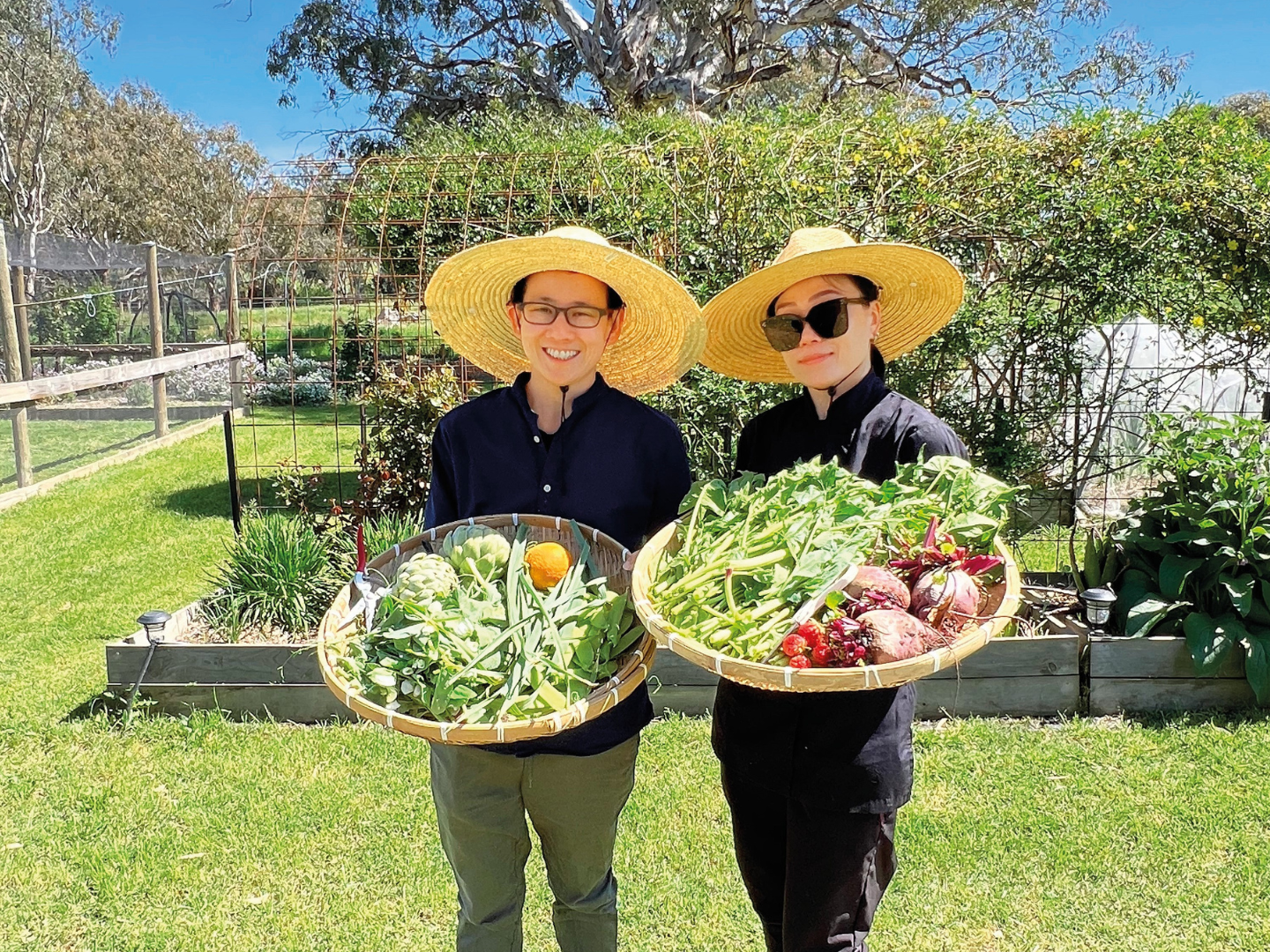
Tan (left) and Wong (All photos: Diana Khoo/The Edge)
The metaphor “rat race” has a sad banality to it: a seemingly endless, self-defeating and futile pursuit of nothing. And, yet, most of us still do not know what we are running from or towards; we simply follow along, like lemmings, to avoid being left behind.
And, yes, while financial and competitive gain is rewarding, the pseudonymous political street artist Banksy summed it up perfectly: “If you win the rat race, you’re still a rat.”
How did we go so far wrong as to define success only by the barometers of wealth and privilege? By right, it should simply be the accomplishment of an aim or purpose, solely according to the individual’s own and unique criteria. To some, it could be a billion dollars — and, no, there is absolutely nothing wrong with that. To others, it could be raising a happy family or enjoying the simple joys of work-life balance. As such, we need to be honest with what and how we — and not social media — define success.
Definition of success
A decade or so ago, it seemed that Sherin Wong, 47, and Ming-Ne Tan, 44, were the poster girls of success.
As founders of RedRibbon Days, a company that specialised in experiential gifting, and producers at RK Screen, a film company they co-founded with Datuk Rosyam Nor (their debut production Balistik was 2014’s second-highest-grossing Malay film), not a month would go by without Wong or Tan being featured in a glossy magazine or photographed attending a red carpet event or glitzy party with their well-heeled coterie.
For the two, best buds since their student days at the University of Melbourne (Wong graduated with a degree in information systems; Tan, a bachelor of commerce in finance, followed by a master’s in applied finance from Monash University), it appeared that life was as good as it could possibly get. And yet, it wasn’t.
Wong acknowledged the emptiness.
“We had just completed a drama production for NTV7 and found ourselves totally drained,” she recalls. “It wasn’t just physical but we felt it in our souls.”
This pushed the two to face the inevitable sociological conundrum and ask the larger questions: Why are we here? What are we contributing? What is the purpose of life?
“We had been running RedRibbon Days for almost a decade and the spark that once drove us was starting to fade. The routine became predictable. The daily grind — waking up, going to work, attending society events, constantly being ‘on show’ — looked glamorous from the outside but, inside, it was becoming exhausting. We were being seen everywhere but we didn’t feel seen as ‘people’.”
In their late 30s then, the two decided to sit down and have a very honest conversation about the kind of life they envisioned for themselves — and the people they wanted to become. The answer was clear.
In pursuit of purpose
1.png
“We wanted something that felt more purposeful. Something that enriched us. Something that made us feel alive, motivated and connected to the world in a real way — not just from a career standpoint but as human beings,” Wong states.
In a quest to find answers, the two somehow wound back up at the place where they first became friends — Melbourne, Australia. “We had toyed with the idea of settling in the Yarra Valley at first,” says Tan. “We knew we didn’t want to be in the city, so we spent a lot of time driving about — Australia is huge! After recce-ing several sites, I recalled a small town called Yea where we had stopped as students en route to [the popular ski resort town of] Mount Buller and remembered how friendly the people were here.”
Call it fate or serendipity, the two had stopped by towards the day’s end when “we were blessed to witness the most stunning sunset”, says Wong. “I knew then that Yea was it.”
There is a saying that nature is the best teacher and respecting it is how we learn life’s lessons. Visitors fortunate enough to visit this patch of land about 100km from Melbourne, in the shire of Murrindindi and on the ancestral lands of the Taungurung people, will immediately discern a palpable peace and stillness. After all, Murrindindi refers to “living in the mountains” in the Woiwurrung language, an apt acknowledgement of the area’s beautiful landscape and surrounding nature. “Every sunrise reminded us that the land leads. We follow.”
Having purchased the 51-acre plot of grazing land, the two were initially unsure about what the future would hold. They toyed with the idea of opening a Bhutanese-inspired meditation centre, having fallen in love with the tiny Himalayan kingdom on several past trips, but decided to take things very slowly. “The transition, if we may be honest, was messy, overwhelming and unbelievably humbling,” says Wong. “We knew nothing about country life, let alone farming. But we took it day by day.”
Giving up their old life of fancy cars, designer clothes and vintage champagne (a luxury Wong still occasionally indulges in), they stunned many friends in Kuala Lumpur and Singapore, who struggled to believe the drastic transition and worried for them. “What got us through was simple. The Japanese have a word for it: ikigai, or ‘life’s purpose’. We knew why we were doing this,” says Wong firmly. “We started exploring what truly brought us joy: growing our own food, cooking, caring for the land and creating experiences that had meaning.” And so it was that, little by little, the seeds of what would be the House of Mi-Rin were sown and slowly grew — not as a business concept but as a way of life.
2.png
Steadfast in their decision to leave urban predictability, the two began to shed their city skins. They admit that the transition was far from glamorous and stepping away from everything they knew had been terrifying — yet liberating. They agree that the hardest part about country life was how much it demanded of you daily. “Daily routines don’t change on a farm. The animals need tending to, as does the vegetable patch. And then you pretty much have to cook your own meals — food delivery (or taking a sick day off) is not an option. And, yet, even if things felt chaotic, the rhythm kept us grounded,” says Tan. But learn from it they did, and growing stronger, more patient and more resilient was the result.
“Things can also go very wrong on a farm,” says Wong with mock weariness. “Even after working this land for seven straight years, we are amazed by how something new could pop up like a curveball. There were days when I questioned whether I was strong enough for this. But we learnt to let go and start again. We also grew to realise we were in it together — when one broke down, the other carried.”
Tan adds: “You can’t ‘wing it’ on a farm. You have to show up fully. Every. Single. Day. I also wondered whether we had made the right decision sometimes but what helped us through wasn’t the pursuit of perfection or sheer confidence. It was commitment. If we chose this path, then we had to rise up to meet it. And, somehow, with each new life born on the farm, each day working the land, something in us shifted and we found a steadiness we didn’t know we possessed. Of course, the challenges are still there. But now they feel meaningful because they are tied to a life we chose with intention and a purpose that runs deeper than anything we ever had before.”
House + haven
5.png
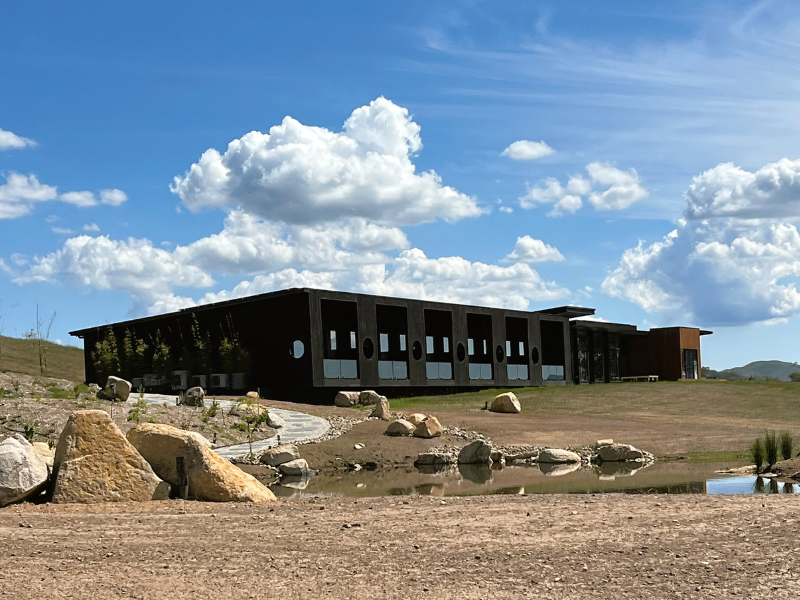
So, what began as a search for purpose somehow transformed into a life rooted in intention, nature and community. The journey — uncomfortable, challenging and even painful at times as they questioned, unlearned and rebuilt — has since evolved to become something beautiful and part of a bigger picture. On Dec 1, Wong and Tan officially open the House of Mi-Rin, a labour of love that is, in fact, a truncated form of their first names. “The date marks the beginning of summer — a symbolic ‘opening of the land’. The gardens are vibrant, the farm is abundant, the ferments are alive and the energy at the farm is full of movement and renewal. It felt like the right season to welcome guests into something we’ve been nurturing for years,” says Wong. “Also, Dec 1 sits right at the beginning of the festive season — the lead-up to Christmas, a time when people naturally slow down, gather and reflect. It’s also the close of the year, a symbolic moment of gratitude and renewal. Opening at this time feels meaningful to us: As the year comes to a close, our doors begin to open.”
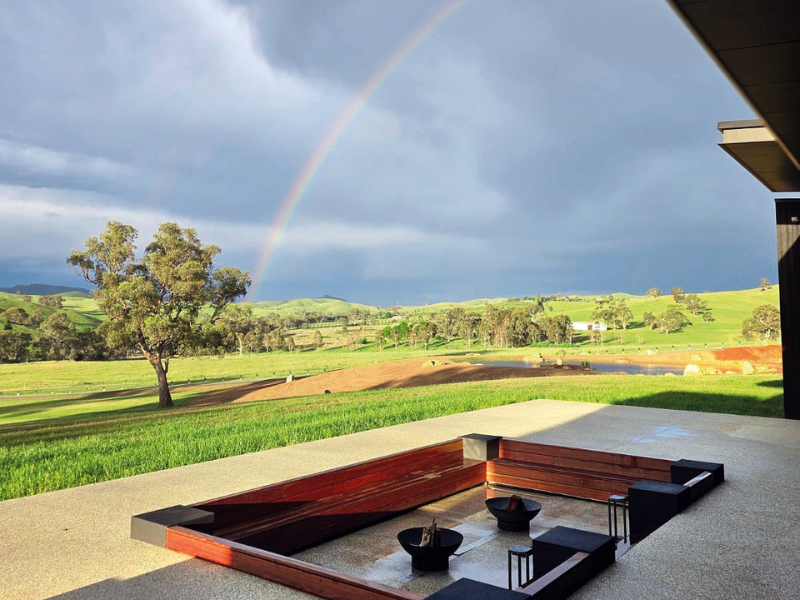
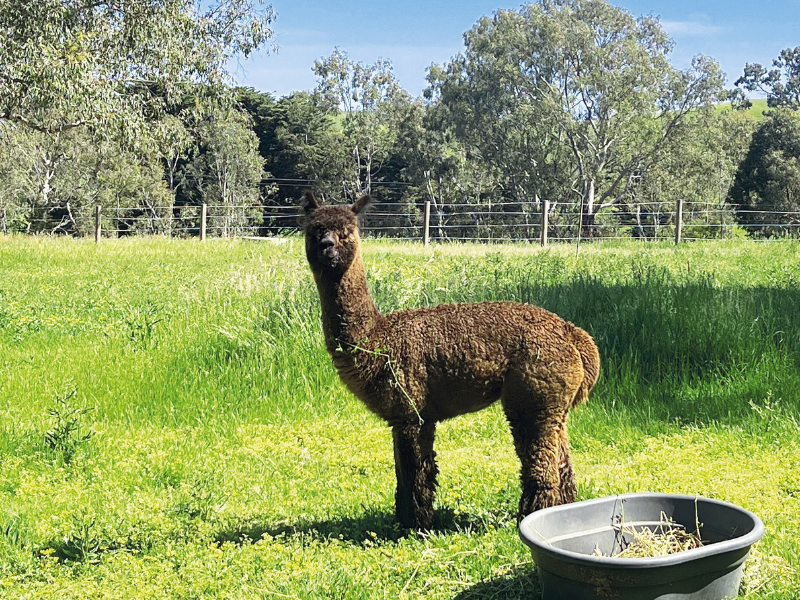
It has been described as a space of calmness, nourishment and celebration; one cannot help but concur after just a few minutes of being here. Mornings at the House of Mi-Rin are crisp, with the surrounding hills covered in cotton-like mist. Rainbows are a common sight and, during the recent winter, Aurora Australis, or the Southern Lights, danced most nights, streaking the land with colour. Hares can be seen darting about and flocks of white cockatoos often noisily move from tree to tree. Wong and Tan also have their own little menagerie to delight guests, rearing cows, goats, Shetland ponies, alpacas, ducks, peacocks and exotic breeds (to Malaysians, anyway) of chicken, such as Ameraucana, Wyandotte and Hamburg.
3.png
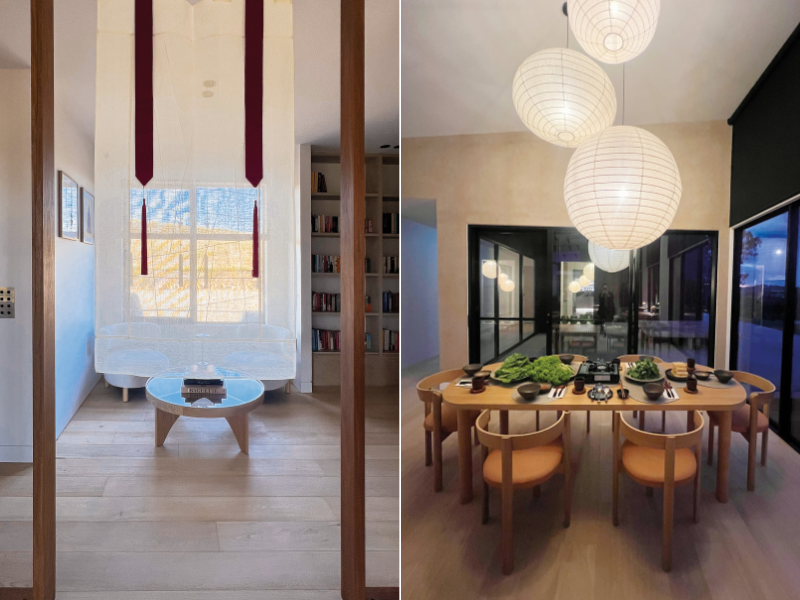
There are five Zen-like rooms to choose from and, although designed for adults, the house will welcome children if booked out in its entirety. Meals, driven by the on-site farm’s produce, will bear a distinct Korean or Bhutanese accent. As the owners are Malaysian, certain mornings might also feature freshly baked bread with homemade kaya and the freshest half-boiled eggs with a dribble of soy sauce. “If you are lucky, Sherin might make pan mee for you, too,” volunteers Tan with a hopeful smile. Guests can also request a steamboat, with the option of picking their own garden-fresh vegetables just minutes before they go into the pot.
“We want people to walk away from the House of Mi-Rin feeling softened — as if they have finally exhaled,” says Wong. “We also want them to have a sense of grounding, like their feet touched and connected with the earth again after a long time; to feel the same quiet joy, as we did, that comes from simplicity: from tasting real food grown just metres away, reconnecting with nature, savouring the calm of being held by land that has its own spirit and story and, somehow, feeling more themselves than when they first arrived. We want to nourish our guests so they leave feeling, not just fed, but restored.”
Enriching body + soul
6.png
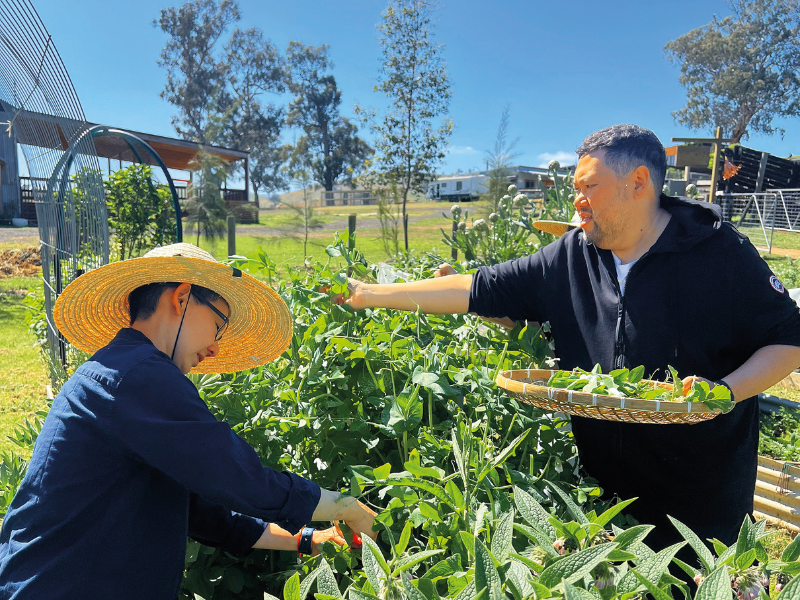
One of the greatest things about holidays is the opportunity to do different things, enjoy new experiences and, oftentimes best of all, commune with nature. And although they are hands-on business owners, both Wong and Tan derive as much pleasure as they expect guests will. For Tan, unforgettable moments include witnessing life begin. “Seeing eggs hatch, watching a newborn calf take its first breath or hearing the tiny cries of baby goats … it is raw, unfiltered, completely unscripted and stays with you,” she says. “Every time it happens, I feel like I am witnessing a small miracle. Seeing the first seconds of a new existence is incredible yet grounding and makes you realise how fragile and precious life truly is. It also impresses on me the responsibility that comes from caring for the land and the animals that depend on us. It shifts your perspective profoundly. Suddenly, the farm isn’t just a place of work. It is a living ecosystem of which we are a part.”
For Wong, transforming barren land into an oasis of vegetables, fruit and flowers has been her epiphany. “When we first arrived, it was just earth, wind and sky — nothing else. To imagine what it could become and then slowly build it with our own hands has changed me in ways I never expected. There’s a quiet magic in sowing seeds. You place something so tiny into the soil, not knowing whether it will survive the weather, the birds or the frost — but you trust. And then one day, a little green shoot appears. Before you know it, it becomes a seedling, then a plant and eventually something you can harvest and serve as nourishment.”
Another stark truth that guests will be forced to confront is just how disconnected society has become from the food they eat. At the House of Mi-Rin, the land and the life it sustains are unstintingly honoured. “Here, every leaf, every root, every flower carries a story — of weather, care, time, effort,” Wong points out. “And just like the plants, we also need to be rooted to something real and allow ourselves to be nurtured so that we can then grow at our own pace. What we do isn’t just farming; it is healing. To be able to share this with our guests will be one of the House of Mi-Rin’s greatest joys.”
The only constant is change
4.png
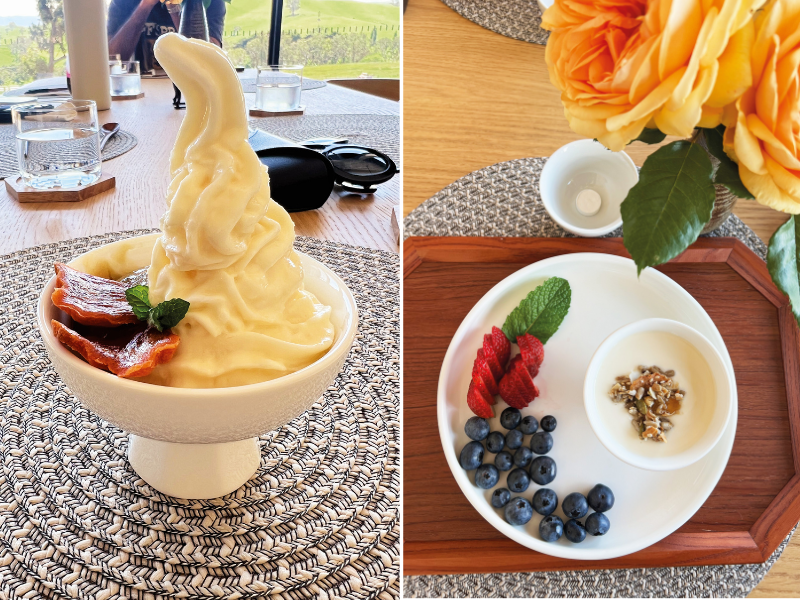
Designed to appeal to those seeking quiet luxury and authenticity, who appreciate food made with heart, products crafted with culture and intention, and a place to breathe and simply be, the House of Mi-Rin was established for the traveller who values meaning over trends or swanky branding. “They could be urban creatives, soul searchers, foodies or even those who are just exhausted,” says Wong. “But all are welcome. Heed the call of the land and come for the most important thing — the remembrance of what it feels like to slow down.”
Watching the two pick the sweetest sugar snap peas for salad, cut roses that instantly fill the room with their unadulterated perfume and hand-churn butter with milk gifted from their fat, glossy cow Iza, one is reminded of a powerful quote about how everybody wants to change the world but not themselves. It is, however, a phrase that does not apply here in Yea. Wong laughs, saying, “The old me would never have believed this would be my life now. I used to live in high heels, rush from meetings to events and was constantly surrounded by noise and people. If someone said I would one day wake up to the sound of goats bleating and spend my day collecting eggs and harvesting vegetables, I would have said ‘impossible’. And, yet, here I am … and completely at peace.”
The idea of farm life — getting muddy, working in all weather conditions and animal husbandry — was also once anathema in Tan’s eyes. “If I could tell my old self something, it would be that you have no idea how good this was going to be and you will find a version of yourself you didn’t know existed,” she says beaming. “Exactly,” adds Wong. “The soil, the animals, the seasons … each teaches you more about life and yourself than any job title ever could. Trust the detours. Life has a way of guiding you to exactly where you need to be, even if the journey looks nothing like what you imagined. And, soon, you will realise the life you fear could actually be the life that heals you!”
To book your stay or plan a celebration at the House of Mi-Rin, visit houseofmirin.com.au.
This article first appeared on Dec 1, 2025 in The Edge Malaysia.