

From left: Shu Qi, Tuba Büyüküstün, Zoe Saldaña, Tilda Swinton and Virginie Efira (All photos: Pierre Mouton and Cartier)
Helen Keller published a collection of poems called The Song of the Stone Wall in the early 20th century. Exploring themes of nature and the human experience, the verses were about stones being “tumbled about by frost and storm, shaped and polished by ice and rain and sun; some flattened, grooved, and chiseled by the inscrutable sculpture of the weather”.
Although the great American author and disability rights advocate was referring to humble field stones that went on to be used in walls, serving as silent witnesses to both the trials and beautiful resilience of the human spirit, her evocative words could also apply to gemstones. After all, these rare rock or mineral crystals, whose inner beauty only emerges after sufficient cutting, faceting and polishing, are objects of splendour that endure almost an eternity.
And indeed, as Cartier unveiled its latest high jewellery collection in the glamorous, jet-set destination of Saint-Tropez in the South of France, one might have felt compelled to compose poetry in its honour.
Rocks of ages
But first, a clarification. There is jewellery, and then there is high jewellery. You would not dream of putting even fine jewellery in the same category. After all, only the most exclusive, artistically designed and crafted pieces, adorned with gemstones of the most exceptional quality and rarity, may be considered high jewellery. An exceptional parure, for example, may require thousands upon thousands of hours to create, its design pushing technical and artistic limits to the hilt. The stones themselves often carry special provenance, historically or geographically — in the case of the latter, perhaps coming from mines of great renown, such as Muzo, Colombia, or Mogok in modern-day Myanmar, which have been yielding unmatched emeralds and rubies for centuries.
“Everything starts with the stone,” Arnaud Carrez, Cartier’s senior vice-president and chief marketing officer, affirms. “Like a muse, the stone, with its unique and fascinating character, guides the creation. It is the starting point from which the maison’s designers and artisans draw inspiration, working together to create the perfect harmony. And Le Chœur des Pierres is an ode to the savoir faire that reflects Cartier’s distinctive approach.”
2.png
The name Le Chœur des Pierres may be translated from French as “a chorus of stones”, and is also a play on the homonyms chœur (chorus) and cœur (heart).
“It is indeed a very playful name,” says Pierre Rainero, Cartier’s image, style and heritage director. “There is always the question, an idea, of playfulness when you work with many very interesting stones in so many colours. At the same time, we are talking about exceptional stones that lie at the very centre of what we do. So, yes, the notion of playfulness is there, but etymologically, when you use the word ‘jewellery’, you cannot but admit that the jewel is [also] its heart.”
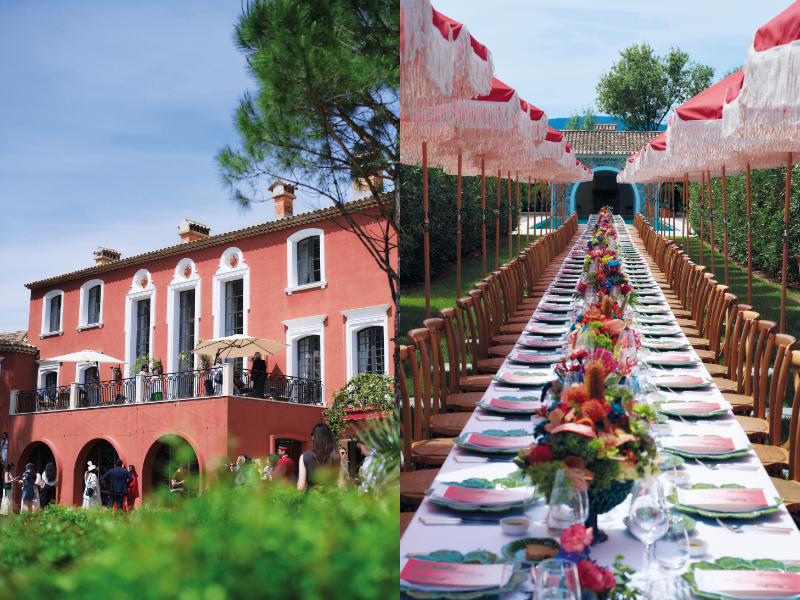
Unveiled last month to a select gathering of media and clients over two sun-soaked weeks at a historic château in the Côte d’Azur, Le Chœur des Pierres marked another chapter in the maison’s 179-year-old journey. That story started when Louis-François Cartier took over his master’s jewellery workshop and began to operate on exclusivity, versus mere price. This bold move quickly caught the notice of the nobility and the ultra-wealthy, establishing Cartier’s reputation as the “jeweller of kings”. From the iconic jewels created for Wallis Simpson, the Duchess of Windsor, to those commissioned by many of India’s notable potentates, including legendary maharajahs, nizams and rajahs, that same streak of creative alchemy and attention-grabbing brilliance runs strongly in Le Chœur des Pierres.
For this year’s high jewellery collection, the maison has amassed some of the world’s most remarkable stones. White diamonds, rubies, sapphires and emeralds feature, of course, but there are also coloured diamonds of every shade: pink, blue and green, to even hues that blend grey and violet, cognac brown and orange-yellow.
The bestiary + beyond
body_pics_4.png
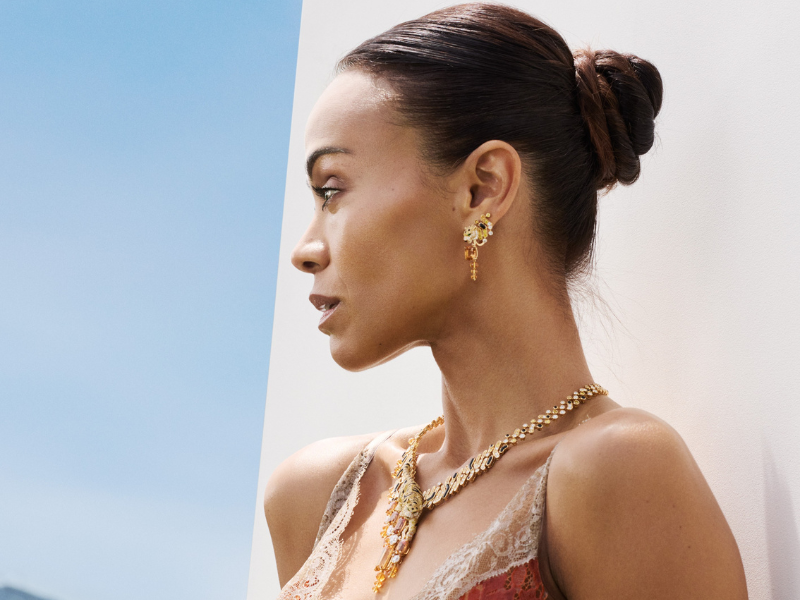
For Malaysians, the Haryma suite is particularly evocative. Worn during the event by award-winning Hollywood star Zoe Saldaña, the piece is inspired by Panthera tigris, which inhabits both Peninsular Malaysia and the Indonesian island of Sumatra. While the set boasts a necklace, earrings, ring and bracelet-watch, it is the necklace that truly glows as its five magnificent cushion-shaped imperial topazes (27.14 carats) and four cushion-shaped diamonds (4.82 carats) catch and reflect the surrounding light. If the gentlemen feel in need of a big cat boost, there is the Tigre Bangla pin to consider. It is another masterpiece from Cartier’s bestiary and features two oval-shaped cabochon-cut tiger’s eyes (10.74 carats), among a host of other jewels, and can be separated into two unique brooches.
Still exploring the tropical jungle, Cartier’s artisans also dreamt up Tōkan, a bright and beautiful necklace and earring set made with lashings of Zambian emeralds, onyx, diamond drops and brilliant-cut diamonds, with the jaunty toucan’s beak rendered in coral. Although birds appear prominently in Cartier’s book of inspiration, most notably during the time of the influential Jeanne Toussaint (the Belgian-born jeweller and designer was appointed director of fine jewellery in 1933 by Louis Cartier), the toucan is rarely depicted.
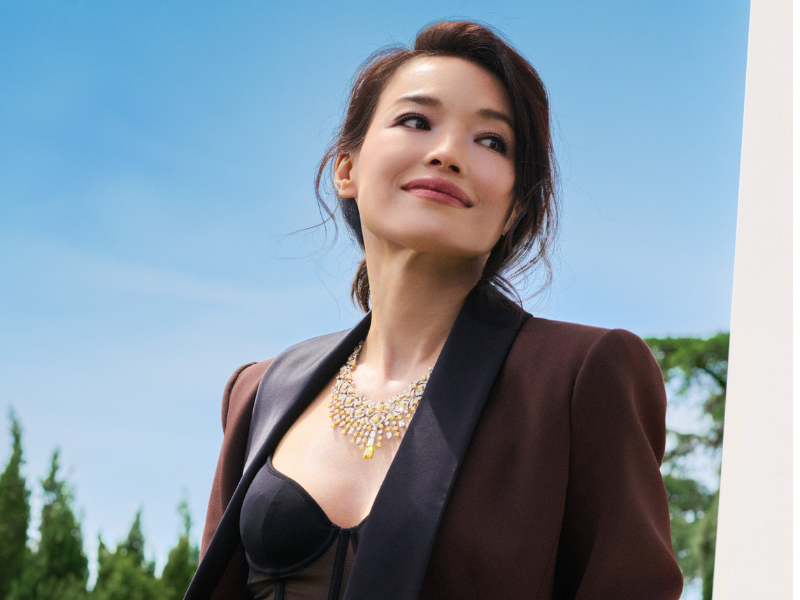
Taiwanese actress Shu Qi, who has recently transitioned to writing and directing, was also in Saint-Tropez for the event. The double Golden Horse Award winner, renowned for her delicate beauty, wore Enrubanne, a suite of jewels whose name is derived from the French enrubanner, or “to adorn with a ribbon”. Conceived with flowing lines and elegant openwork, the heart of Enrubanne lies in the generous smattering of yellow and white emerald-cut diamonds. For those who appreciate modularity, the earrings are composed of two distinct pairs, allowing them to be worn together or separately.
3.png
It would also be inconceivable to imagine a Cartier collection sans the panther, the maison’s emblematic mascot and an iconic motif since 1914. For anyone wishing to make a statement — and there can be no reason greater than this when it comes to wearing a high jewellery creation — the Panthère Kentia, which takes its name from the fern-like plant that inspired the piece, offers a necklace, bracelet, ring and earrings, each adorned with stunning cabochon-cut sapphires from Sri Lanka totalling over 100 carats. Custom-cut onyx spots bring to life the creature that jealously guards the intensely blue 50.13 carat oval-cut stone at the necklace’s heart. As always, it is the stones that dictate the form, and the Panthère Kentia drives home that point in beautiful style.
Collectors who prefer life to be lived singularly, the rings of Le Chœur des Pierres deserve special mention. Among them is Amberis, whose name alludes to the aged-cognac tones of the rare, radiant-cut diamond ring set with pink brown cabochon-cut and white brilliant-cut and square-shaped diamonds. There is also Keona, after the 17th-century Keo Pagoda in Vietnam’s Thái Bình province, which inspired the ring’s paved layers. Separated by openwork, they allow light to seep in under the central (and very rare) 11.60 carat fancy dark greenish-grey diamond.
Kheper, which means “beetle” in ancient Egyptian, pays homage to the power and sacred attributes of what has been a beloved motif in jewellery since the age of the pharaohs. In Cartier’s hands this time, the scarab is reinterpreted in abstract form, punctuated by an intense 11.09 carat pear-shaped green tourmaline. Admirers of this verdant palette, however, would do well to pay especial attention to Tetraya. Stemming from tetra, the Greek word for “four”, it refers to the four sides of the centre stone. But you would be forgiven for failing to notice the geometrics and losing yourself instead in the brilliance of the 20.24 carat Colombian sugarloaf emerald whose vivid, saturated green hue and luminosity epitomise a jewel of distinction.
4.png
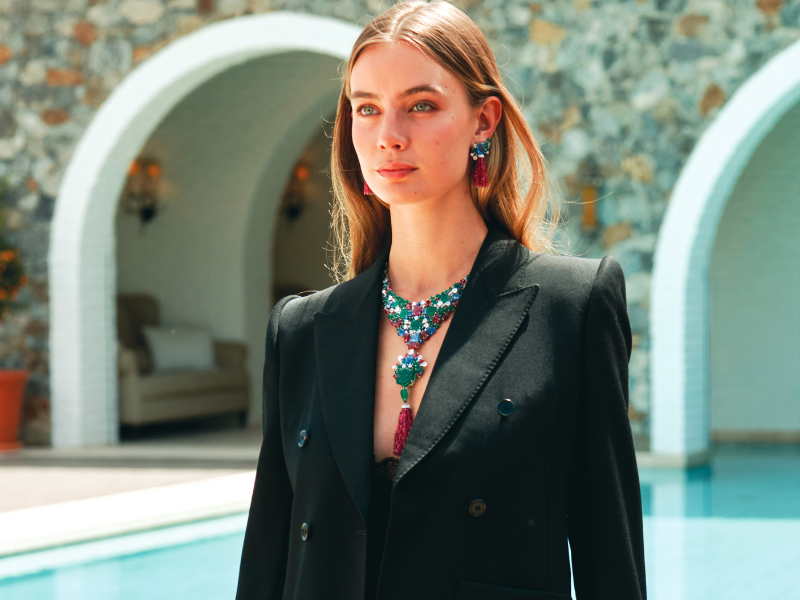
And although practicality is the very last quality one associates with high jewellery, the good folks at Cartier have ensured there is ample opportunity — and versatility — to flaunt their creations. The Pyra design, for example, may be donned as earrings, a brooch or even as a hair jewel; that is, if one is partial to the idea of weaving fancy vivid-yellow orange, pear-shaped diamonds into one’s tresses. The stunning Tutti Kanya, on the other hand, boasts a motif that can be detached and used as a brooch or pendant necklace on a chain, while its tassel can be worn at either the front or the back of the necklace.
“Modularity is not something that is new because, for all the different reasons, a piece of jewellery is literally an investment,” says Rainero. “So we have to propose many different ways to wear them. This is very much inscribed in our philosophy and is, you could say, a service to our clients. Having said that, it is also interesting to let people get creative and experiment with the myriad ways to style with Cartier. I think this is something we should cultivate… of giving the possibility to play with the pieces exactly the way our clients want to.”
Finding the treasure
As marvellous as Le Chœur des Pierres is, one cannot help but be reminded that the alpha and omega of the entire collection rests on a primary entity: the stones themselves. A finite resource and completely dependent on Mother Nature’s largesse, their procurement is getting progressively harder due to scarcity and rarity. “It is a good thing we have inherited a long, well-built reputation so we benefit from a stellar network that gives us access to very good stones,” Rainero says. “We have a long-standing relationship with the stone providers. And this is not a question of just trust, but also of ‘knowing’ each other. This creates a mutual understanding, whereby the people who actually have exceptional stones will think, ‘Oh, this is a stone for Cartier.’”
Beyond superior gems, part of the Cartier magic lies in not just design and craftsmanship, exquisite though they may be, but also in its ability to “play” with the stones, resulting in harmonious combinations that sit on the body like a second skin. “Aha, there you see,” Rainero exclaims. “That is the chœur, the choir, singing in one accord. Yes, the stone, the cœur, defines the Cartier creation and drives the style, the composition. But then, everything is sublimated by the savoir faire of our artisans who, through their expertise and collaborative dialogue with the designers, work together to compose a perfect symphony.
“The essence of all our work is to ultimately craft jewellery that is worn with pleasure. Of course, it must convey beauty immediately, but it should also encapsulate all the symbolism that jewellery stands for. Also, the Cartier philosophy is about creating pieces that accompany your every movement… and which do not represent a constraint. The object should be totally fluid on you, appearing even to be part of you. That is the origin of what we qualify as elegance,” he muses.
1.png
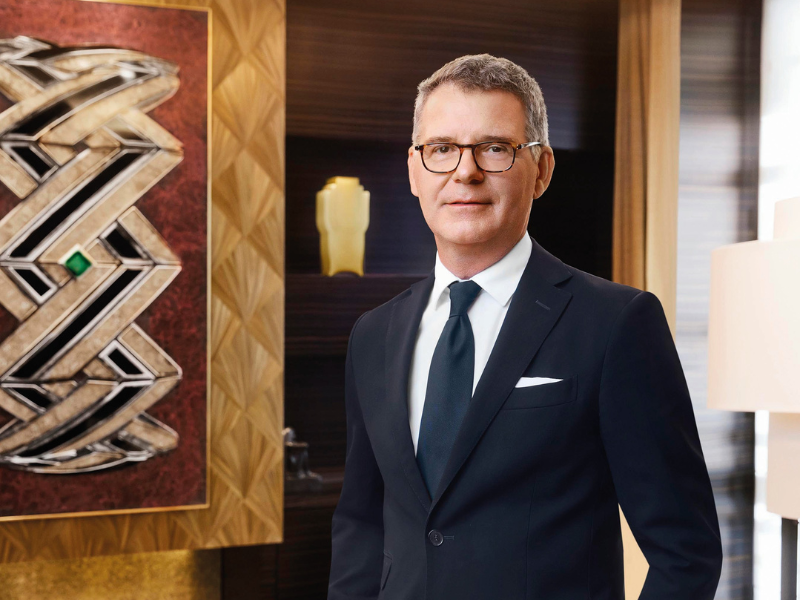
Beyond the tangible, Rainero reiterates the importance of ensuring a continuous stream of talent to tap, safeguarding the next era of master jewellers and beyond. “Having the different generations work together, side by side, is also key. We are constantly training and have agreements for apprenticeships with different schools in France. Yes, Cartier’s creations attract people, but we must also share this emotion. As high jewellery is not that easily visible to the youth or even general public, it is important we show the pieces — particularly through collaborations with museums and cultural institutions.
“The upcoming Cartier: Melbourne Winter Masterpieces exhibition in Australia, for example, will help more people see and realise just how incredible our designs are, and how they are inscribed into the history of art and the history of craft. High jewellery is still so active and alive. Just as the stones are eternal, seeing them all come together in a Cartier creation transmits the emotion and vitality of just what high jewellery is about.”
A keen enthusiast of the shapes a gemstone can take — “octagonal stones are so rare,” he says, smiling broadly — Rainero shares how he remains endlessly fascinated by the work of the maison’s lapidarists. “To be able to see what the designers at Cartier can accomplish, watching their mastery of the conception of shapes, integrating all the constraints of making and achieving an incredible, delicate work of art, is a really great source of satisfaction to me. After working in Cartier for so many years myself, I never tire of appreciating the different designs and directions the house may take. But if I had to state a preference, I am personally very sensitive to warm colours and the tiger designs. I have always liked them very much. Having said that, I am also very partial to the Tutti Frutti high jewellery style due to the sheer abundance [of different gemstones] and of the richness of colour play, which touches me deeply.”
In the final verse of The Song of the Stone Wall, Keller brings up the quality of faith, writing of “the rock not fashioned of human hands”. Granted, Le Chœur des Pierres is a hymn of an altogether different kind, lauding the coming together of fruit from the earth’s belly as well as man’s own vision and artistry. But all it takes is a closer look or, better yet, the chance to have these precious, modern-day talismans touch your flesh and adorn your body, to immediately understand why they command praise, reverence and — for those privileged enough to own one — devotion.
Quintet of showstoppers
Le Chœur des Pierres is the maison’s biggest high jewellery collection to date. Chapter 1, comprising over 100 unique pieces — out of a total of 250 in three chapters — was recently shown in Saint-Tropez. It was said that a staggering 85,000 hours of work, at the very least, was needed to create the oeuvre. If it all proves too dazzling, here are five necklaces to pay particular attention to.
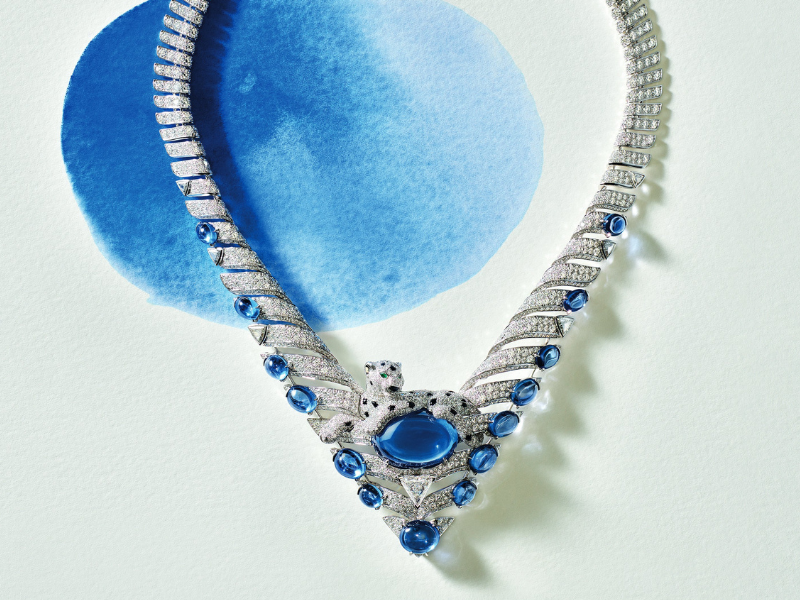
Panthère Kentia
Cabochon-cut sapphires are the mainstay of this suite, where a bejewelled panther guards its precious treasure. Custom-cut onyx spots bring the majestic creature to life.
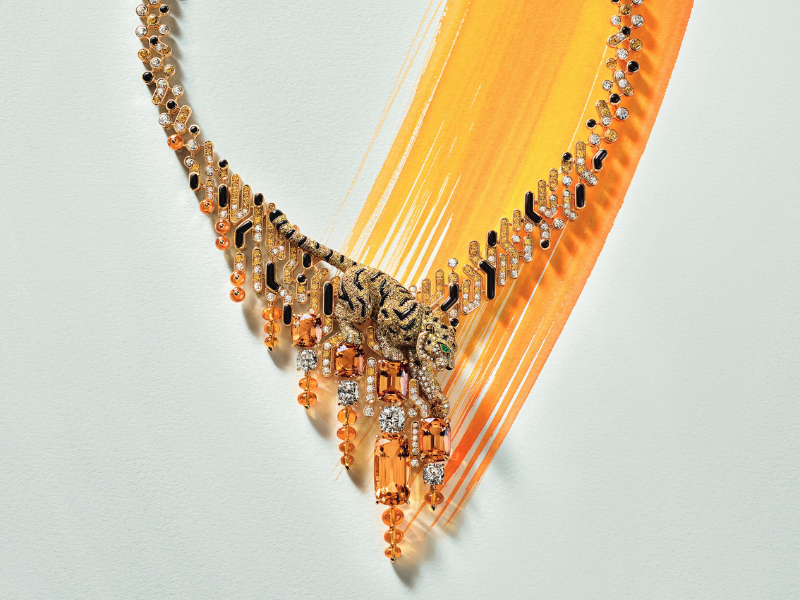
Haryma
Along with the panther, the tiger is a key animal in Cartier’s bestiary and its design has evolved greatly in the maison’s history, from a naturalistic 1929 brooch to another commissioned by the heiress Barbara Hutton in 1957. The 2026 Haryma embodies all of the harimau’s grace and majesty.
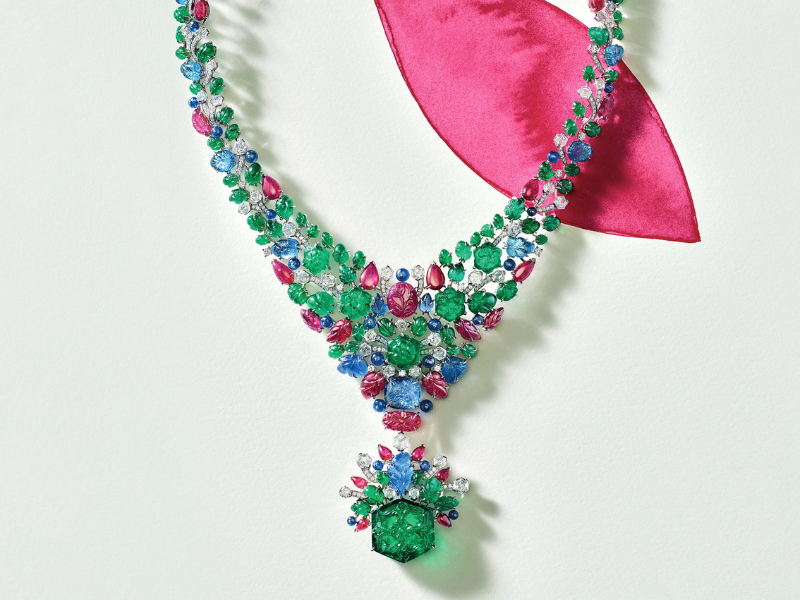
Tutti Kanya
It is hard to tell which is the “star” stone here: a hexagonal carved emerald from Zambia (30.33 carats), an oval-shaped carved ruby from Mozambique (8.05 carats) or a cushion-shaped carved Ceylonese sapphire (8.46 carats). The Sanskrit name for Virgo in Vedic astrology, Kanya is traditionally associated with the earth element.
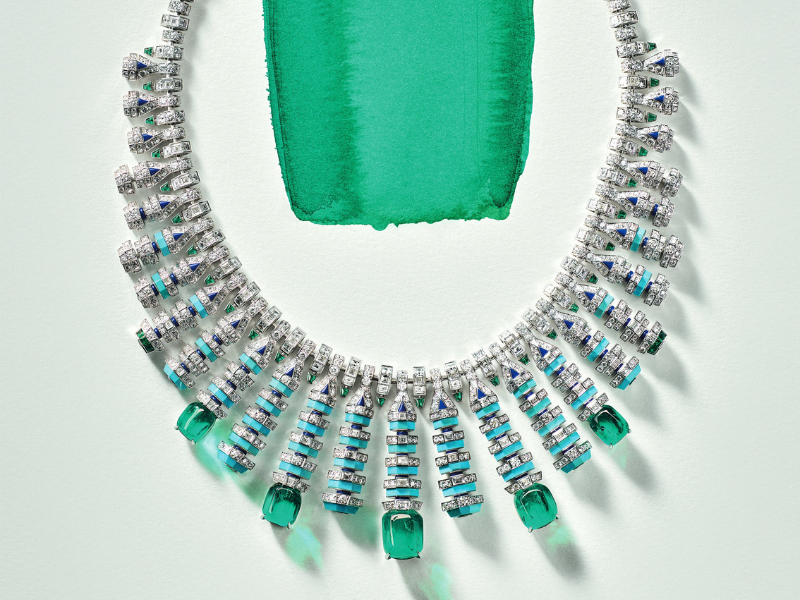
Olorra
Emeralds are the pillars of this stunning necklace, which features five hexagonal Colombian emeralds (40.67carats) and embodies the green-blue, colour contrasting peacock pattern pioneered by Louis Cartier in the early 20th century.
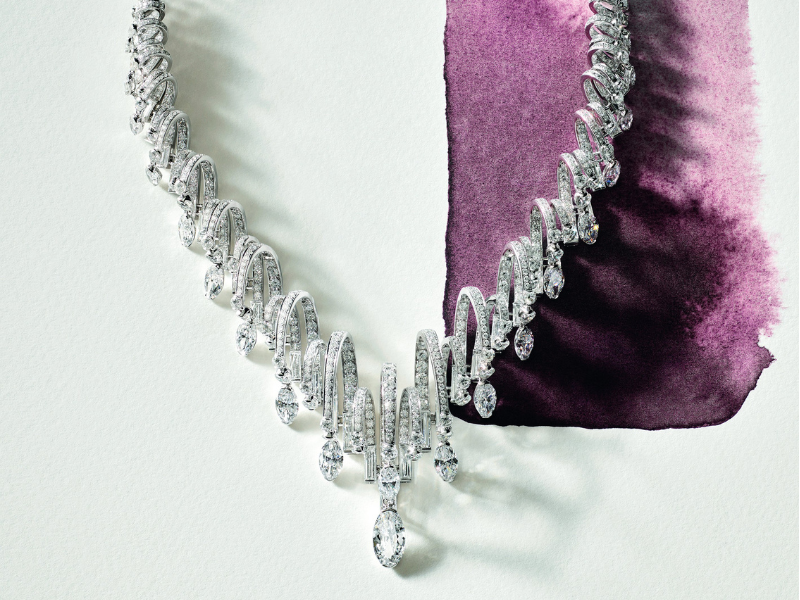
Tellura
Expect nothing but brilliance from the Tellura, with diamonds in all shapes and cuts, from oval and marquise, to rectangular and square. It comes with matching earrings.
This article first appeared on June 15, 2026 in The Edge Malaysia.