
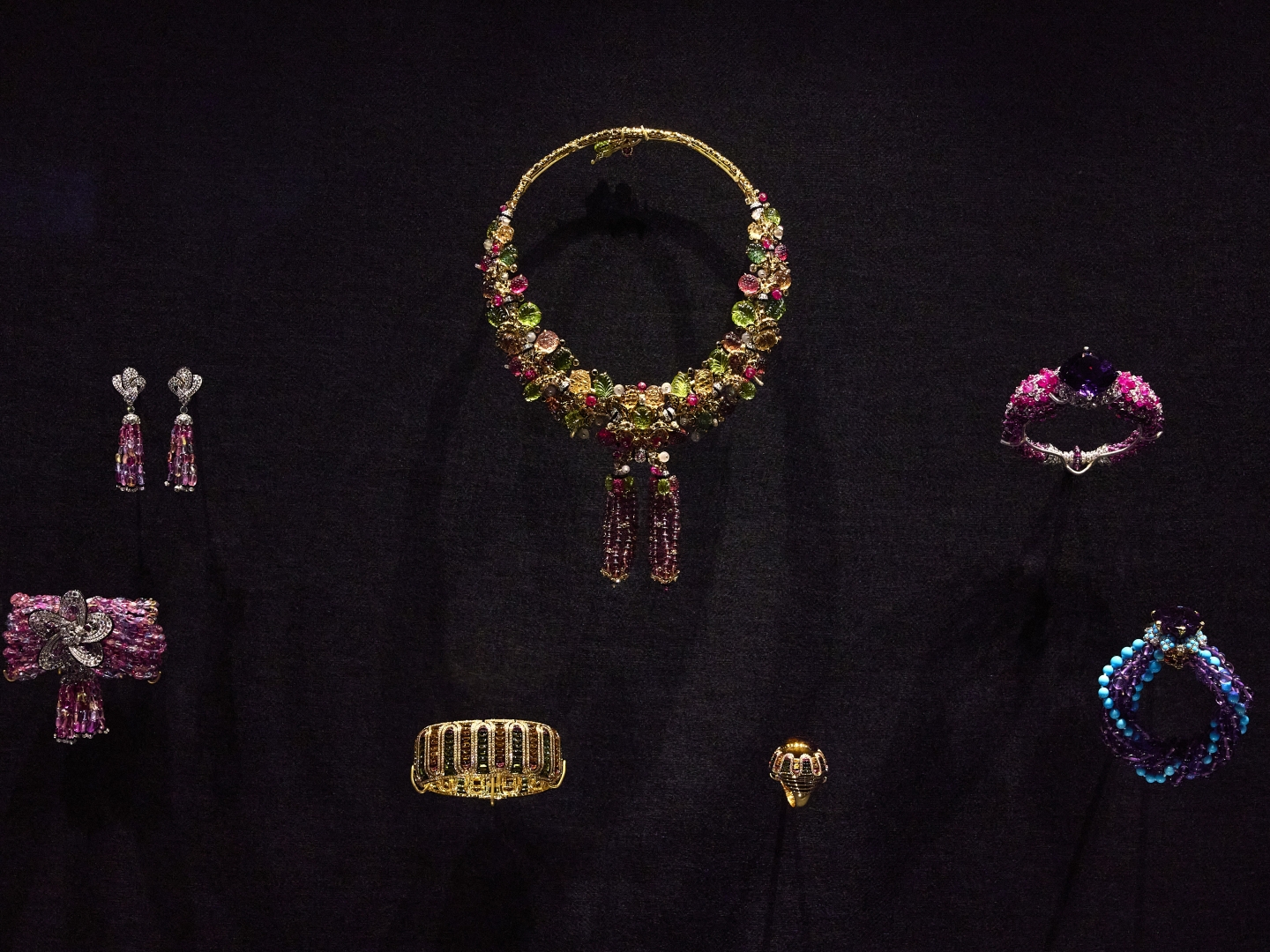
Cartier has a longstanding connection to colourful jewels that have influenced the house’s design and craftsmanship (Photo: Sean Fennessy)
Just like how a painter’s creativity can be instantly activated at the sight of a colour palette, a jeweller’s imagination runs wild upon beholding bright-hued gemstones. This proved especially true for Jacques Cartier, the youngest of the three powerful and innovative siblings, who was hit by a flash of inspiration to create striking adornments following his maiden voyage to India for the elevation of King George V as the Emperor of India at the Delhi Durbar in 1911.
Then responsible for Cartier’s London operations, Jacques immediately made his way to their headquarters in Paris — where his eldest brother Louis was based — to discuss his spectacular discovery of jewels after the fruitful business trip. In a book that chronicles the family dynasty, told by direct descendant Francesca Cartier Brickell and published in 2019, Jacques expressed his absolute admiration for India’s vibrant culture and remarkable landscapes.
“Out there everything is flooded with the wonderful Indian sunlight. One does not see as in the English light, he is only conscious that here is a blaze of red, and there of green or yellow. It is all like an impressionist painting. Nothing is clearly defined, and there is but one vivid impression of undreamed gorgeousness and wealth.”
5.jpg
His fascination for the extraordinary ultimately led to the birth of the now-iconic Tutti Frutti collection, debuted in 1925 in the form of a platinum bracelet. Marrying Art Deco style with Indian gemstone carving traditions, it incorporates emeralds, rubies and sapphires sculpted into lush floral, leaf and berry motifs.
The introduction of this design altered the trajectory of the French jewellery house’s visual identity, allowing it to attract a wider range of customers from around the globe, from aristocrats and the elite to silver screen stars and discerning aesthetes, all of whom harboured a desire to own one-of-a-kind pieces.
The recently opened Cartier exhibition at the National Gallery of Victoria (NGV) in Melbourne, which runs until Oct 4, underscores the maison’s relationship with colourful gemstones and how they influence the brand’s artistic evolution and shape its creative legacy.
Flying colours
2.jpg
After successfully bedazzling luxe-loving Londoners at the Victoria and Albert Museum (V&A) from April to November last year, Cartier made its way Down Under to headline Victoria’s annual cultural series Melbourne Winter Masterpieces, launched in 2004 with the aim to welcome visitors to the state during the quieter tourism period.
When discussing taking the Cartier exhibition to different parts of the world, Australia was mentioned as the country that could possibly organise the blockbuster exposition, which V&A director of exhibition Daniel Slater describes as “highly complex” to materialise due to the extreme security and strict environmental controls required to safeguard the priceless inventory. He is especially delighted that Cartier eventually landed at NGV, the nation’s oldest and most visited public art museum. “I’m always talking about NGV — the most important museum in southeastern Australia. The only place that makes exhibitions with the same ambition and passion of the V&A,” he says.
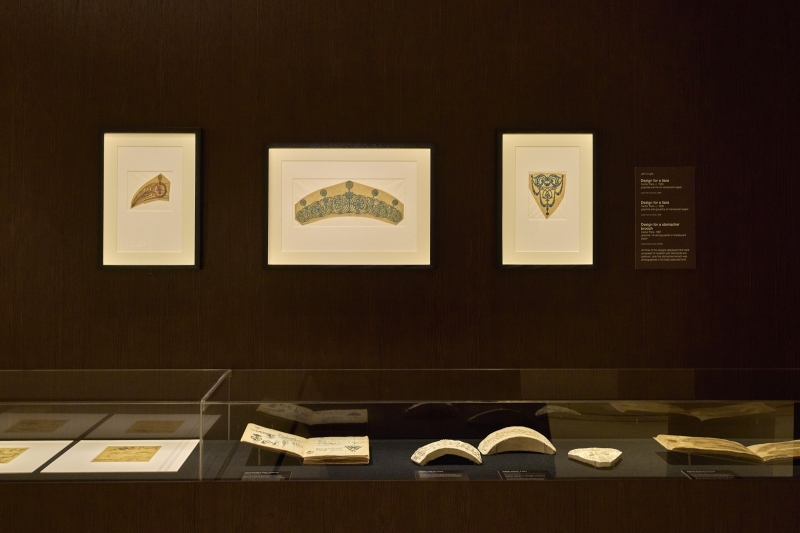
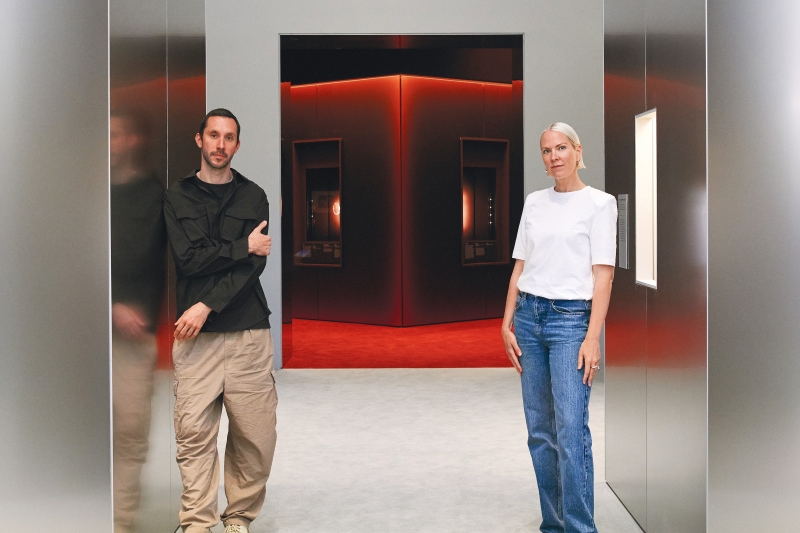
The largest retrospective dedicated to Cartier in Australia, the display boasts nearly 400 items ranging from tiaras, necklaces and bracelets, as well as rare archival materials including original design drawings, sketchbooks and photographs. To manage such a vast repository while introducing a distinct feature to the second iteration of Cartier, NGV teamed up with artist and designer Sabine Marcelis, principal of the eponymous studio, and Paul Cournet, director of multidisciplinary architecture studio Cloud.
Using colour, light and texture, Marcelis and Cournet employed their considered spatial and material approach to imagine a space with contemporary sensibility, creating an immersive environment that responds to the jewels and feels unmistakably Melbourne, a lively city famed for its intricate maze of graffiti-lined laneways and ever expanding arts and culture scene.
5.jpg
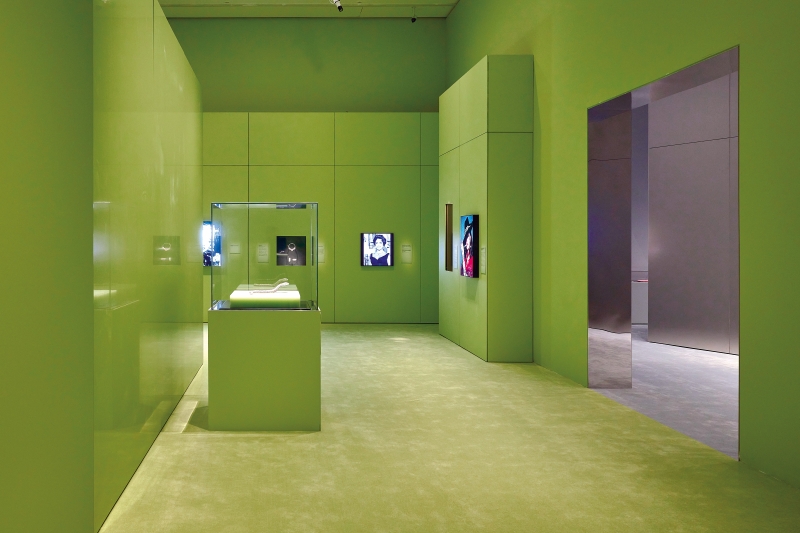
Marcelis, who hails from New Zealand and is currently based in the Netherlands, views the natural brilliance of gemstones as “one of the most vibrant phenomena on earth”. She believes in the power of colour to communicate ideas, evoke emotions and establish meaning without the need for explicit explanation. Hence, it is important to pay attention to the way light interacts with different materials to highlight the beauty and details of the subject. Referencing a key piece in each room, she opted for a monochrome palette of green, yellow, coral and burgundy composed of a mix of pigmented textiles, glass and signature cast resins to adorn the galleries.
Cournet emphasises that every design decision is grounded in thorough research into the maison’s rich heritage and unparalleled artistry. “We take the concept of a gemstone at the microscale and expand it to create a distinct spatial volume in each room, allowing the stones to inform both the form and the material character of each space.”
Their teamwork and expertise result in a thoughtfully curated setting that defies the conventional exhibition design, perfectly encapsulating the bold spirit of Cartier.
Treasure trove
3.jpg
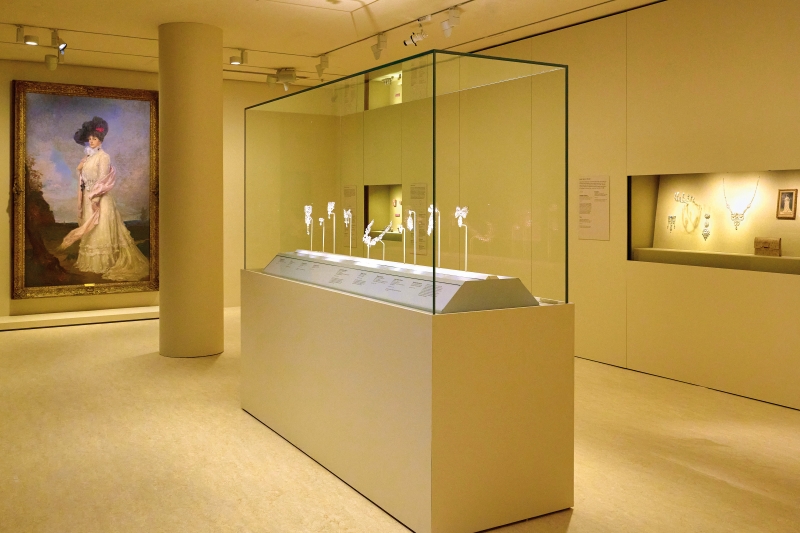
On the ground level, visitors enter the exhibition venue through a mirrored walkway animated by the coloured reflections of chromatic glass — a signature material in Marcelis’ work — before arriving in a yellow room.
The Manchester Tiara, commissioned by Consuelo Montagu, Dowager Duchess of Manchester, takes centre stage at the entrance. This stunning headdress symbolises the emergence of Cartier’s first distinctive design code called the Garland Style, heavily influenced by 18th-century French aesthetics and which features delicate motifs such as bows, floral swags and laurel wreaths. A glass display is positioned at the heart of the room to showcase the intricacy and details of a corsage ornament made for Australian opera singer Dame Nellie Melba, alongside brooches crafted using platinum and close-set diamonds.
Personal archives — like a portrait of Alfred Cartier with his sons Louis, Pierre and Jacques as well as a letter written by Pierre to Jacques — provide insights into the family’s tight-knit relationship, a core element that made their business burgeon at the international level. As the siblings successfully opened branches in major cities including London and New York, their desire to expand the brand portfolio and offerings increased, leading them to embark on a worldwide expedition to seek inspiration from across the globe.
The next section reveals the jewels crafted with reference to the traditions of ancient Egypt, India, Japan, China, Iran and the Islamic world, most of which are characterised by their unique form and colour. One of the showpieces is the Patiala Necklace, an instant eyecatcher commissioned by Sir Bhupinder Singh, Maharaja of Patiala, consisting of five rows of 2,930 diamonds and two rubies, with a 234.65-carat yellow De Beers diamond. Those interested in stone engraving may want to divert their attention to the Egyptian Striking Clock, a depiction of a temple entrance gate in mother-of-pearl and lapis lazuli; or enamelled vanity cases with motifs typical of Chinese decorative art, among others.
The Cartier brothers are known for their close connections with tastemakers of the day, which granted them the opportunity to experiment with daring new ideas and bespoke styles that reflected individual interests, culture and personality. When the motion picture industry experienced substantial growth in the 1920s to 1930s, the maison was able to ride on the wave of the popularity of some of its movie star patrons, including Oscar-winning actresses Grace Kelly and Elizabeth Taylor.
4.png
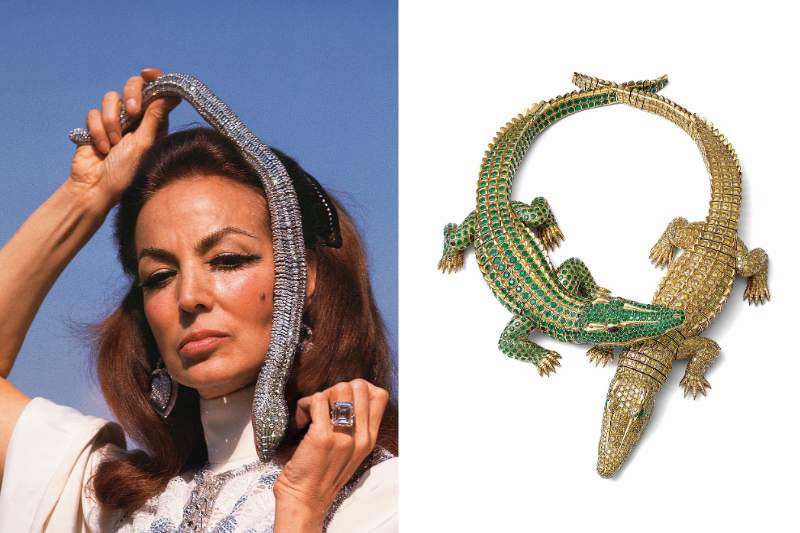
In a green space devoted to the brand’s association with the whimsical world of film, visitors will be first greeted with Mexican actress María Félix’s Snake Necklace. Bold and audacious, it is embellished with 2,473 diamonds and scales enamelled in the colours of the Mexican flag, a creation that beautifully captures a collaborative partnership between client and jeweller.
Another showstopper that evidently leaves people in awe is also a special order by Félix, who visited the house’s Rue de la Paix boutique in Paris with her live baby crocodile and asked for her next shiny acquisition to be realistically modelled after her precious pet. The request was fulfilled and it surpassed expectations, coming alive in the form of two crocodiles — one covered with intense yellow diamonds, the other emeralds — that can be worn separately as brooches or together as a necklace.
Building on Cartier’s reputation as the jeweller of kings and the king of jewellers — a title coined by King Edward VII of the UK in 1904 — the show culminates in a grand circular chamber where lighting is kept dim. This was a deliberate choice made by the designers to accentuate the shimmer emanating from a total of 24 tiaras on display. Among the crowning adornments are the iconic Garland Style Scroll tiara sported by Lady Clementine Churchill at the coronation of Queen Elizabeth II in 1953 and Rihanna on the cover of W magazine in 2016 (the enlarged editorial shot is plastered on the wall near the entrance); diamond and turquoise tiaras made for the Langhorne sisters (placed side by side inside the room); and the historic Diamond Lozenge Bandeau, now owned by Her Majesty Tunku Azizah of Pahang.
Though demand for these head ornaments is no longer as high as it was at the time tiaras were considered an essential element of a lady’s ensemble when attending a royal or aristocratic wedding, they remain the pinnacle of Cartier’s exceptional craftsmanship and artistry, rooted in romance and glamour.
The same can be said for all of the objets d’art presented at Cartier. While their splendour and colours may only captivate a select few with appreciation for the finer things in life, their mere existence is proof that the 179-year-old brand has always been striving for excellence and will continue to illuminate the world with its brilliance, despite it all.
'Cartier' is held at the National Gallery of Victoria in Melbourne, Australia until Oct 4. For tickets, visit here.
This article first appeared on June 29, 2026 in The Edge Malaysia.