
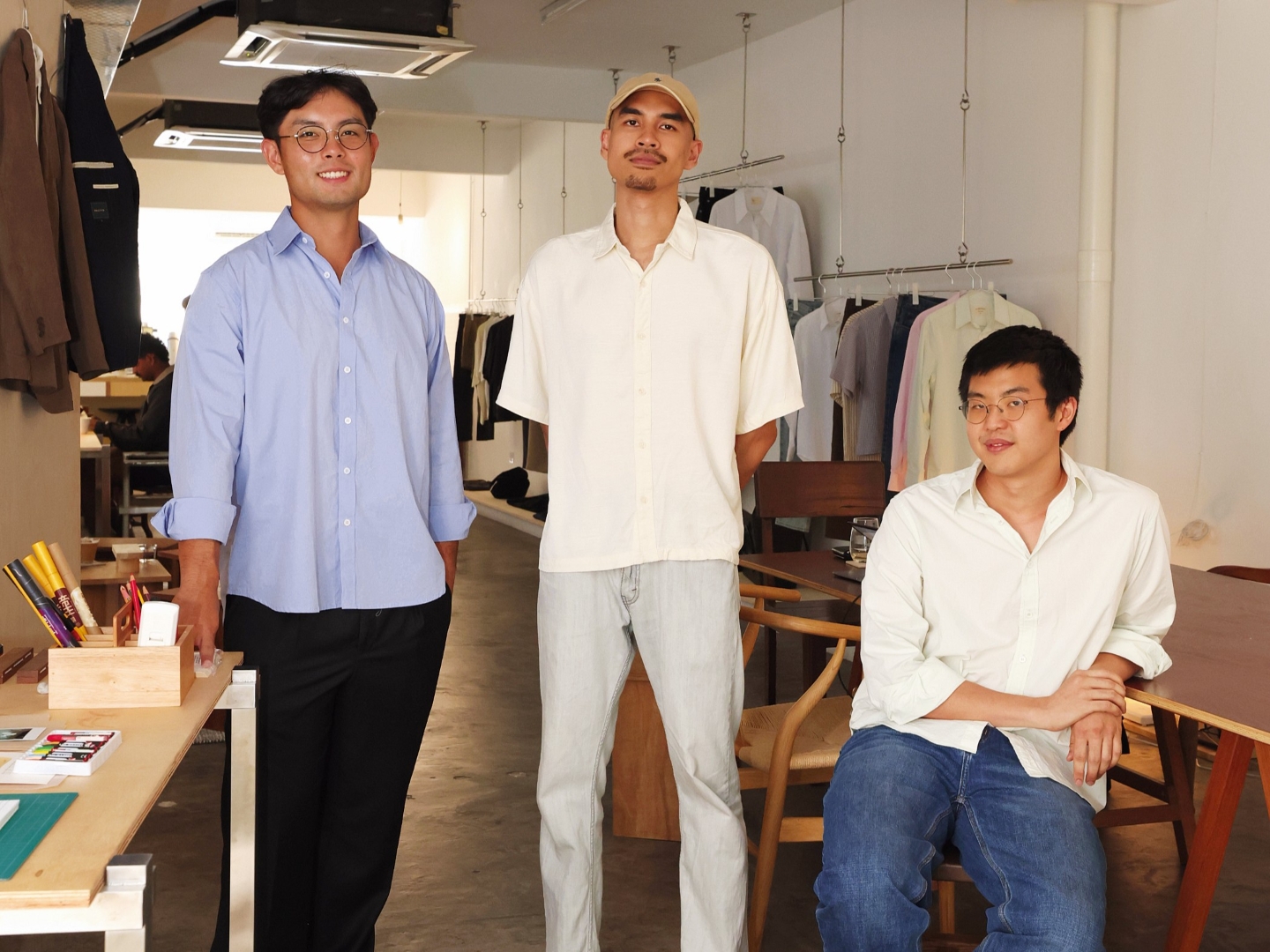
Co-founders Alistair Tan, Azril Izzat Zulkiflee and Wong Jian Eu (All photos: Patrick Goh/The Edge)
Although the English vocabulary boasts more than a million recorded words, some emotions, swathed in layers of nuance, simply cannot be expressed as accurately as other languages.
In Welsh, “hiraeth” means a deep sense of longing, often related to nostalgia and memory. This sentiment lies at the heart of Kuala Lumpur-based label Hiraware. The three founders had originally hoped to call the brand Hira, but with the Instagram handle already taken, they opted for Hiraware instead. In hindsight, the name they arrived at feels all the more fitting. Today, Alistair Tan, Azril Izzat Zulkiflee and Wong Jian Eu are less interested in defining hiraeth than providing a medium for people to experience it for themselves.
Hiraware does not like to be boxed in. What started out as a creative project between friends has transformed into a clothing brand, studio, café and third space. More than anything, it is an evolving expression of the trio’s shared curiosity.
1.jpg
“It is very much the essence of what we are personally into and what we discover as we explore ourselves,” says Azril.
“We have an idea around this way of life,” adds Wong. “Things can naturally fall into it quite easily; the clothes are the core and the space is part of it.”
Muted and earthy hues, alongside unique but tasteful forms, make up the artistic ambience of the brand. Tan points to calm, reflection, intention and purpose as Hiraware’s core philosophies.
“Broadly speaking, the clothes are not loud. But we are definitely not minimalist,” he says with a laugh.
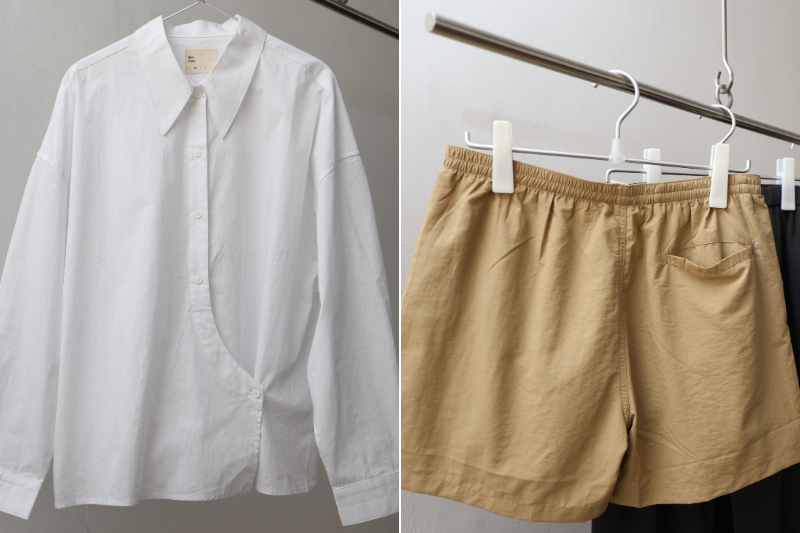
Hiraware’s fashion offering is a blend of flowy silhouettes and crisp lines that prioritise versatility and functionality. Embracing the concept of a modular wardrobe, each piece can be paired easily, thanks to neutral shades and styling flexibility.
Different drapes and proportions such as asymmetry and drop shoulders are incorporated to craft forms that look relaxed but still refined. On top of that, some pieces are customisable, enabling the wearer to interpret the garment according to preference. For instance, the popular twisted shirt features button options that allow it to be worn either as straight cut or cinched at the waist.
To help wearers brave the Southeast Asian heat and humidity in style, the label prioritises comfort with natural, breathable fabrics.
“People have become accustomed to the idea that heavier means better quality, but I don’t think that’s necessarily the case,” says Tan.
Instead, Hiraware’s collections favour ultralight materials that let heat escape. Its linen version, in particular, combines an open-weave construction with naturally hydrophilic fibres that wick moisture away from the skin.
2.png
This technical expertise has taken Hiraware beyond everyday wardrobes and into professional kitchens. Chefs at Fifty Tales, Akar and Singapore’s Two Men Bagel House wear the label’s pieces as chef jackets and kitchen uniforms, each adapted to the demands of the job. Standard buttons have been replaced with snap fasteners, allowing cooks to quickly remove their jackets in emergencies, such as hot oil splashes. A discreet hook at the back keeps apron straps from riding up the neck, while two deep front pockets provide easy access to essentials such as lighters, pens and other tools.
“Whether we’d wear them ourselves is a huge part of the design process,” says Wong. “It’s not just about looking good but the actual feel against the skin.”
The trio approaches every creative decision collaboratively. Drawing on backgrounds in corporate consultancy, engineering and advertising, they each bring a distinct perspective while sharing a love for the nuance and freedom that comes with making things. Beyond the creative process, however, roles have naturally fallen into place: Wong oversees the brand’s commercial direction; Tan manages social media; and Azril runs the premises.
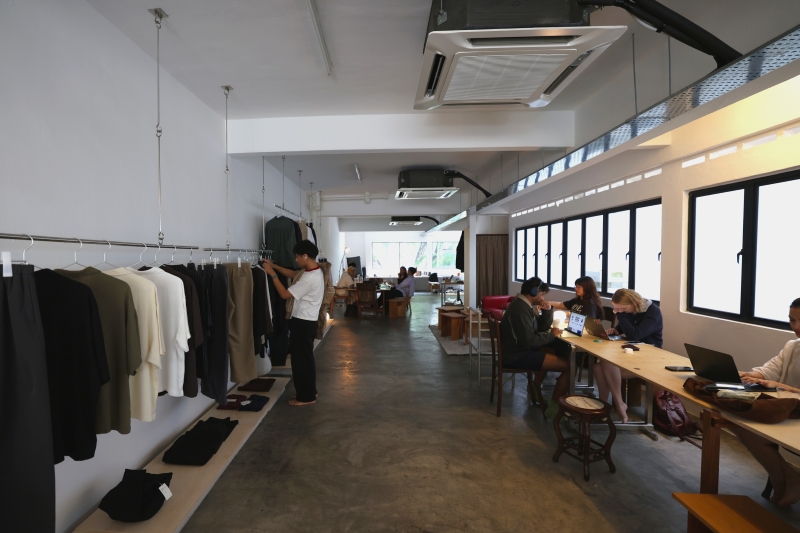
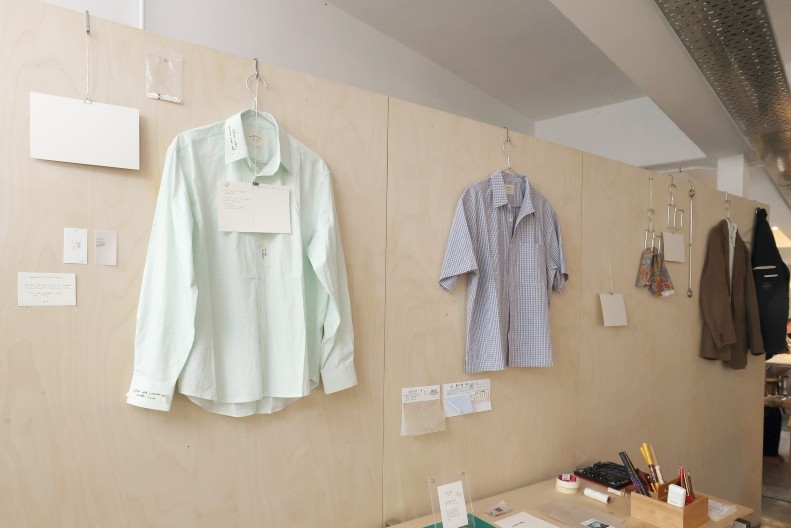
Located in Seksyen 19, Petaling Jaya, Hiraware Studio serves as the label’s experiential retail outlet — a physical expression of the brand itself. Concrete, wood and stone come together in an open-plan interior, flooded with natural light by day and cast in the warm glow of ambient lamps by night. Opposite the entrance, a central wall functions as a living mood board, displaying works in progress while cleverly concealing a fitting room and storage space. Throughout the studio, customers are encouraged to browse a curated collection of trinkets, magazines and artworks, or tinker with the stationery left out for anyone to use.
3.jpg
Clothing holds equal footing with coffee and culture. Visitors can fuel a work session or conversation over a cuppa, pastries and kuih from the café. The space can also be rearranged and transformed to suit the day’s needs, whether for a film screening, workshop, listening party, launch event, exhibition or brand photo shoot. Garment racks and furniture, produced by the team with local carpenters and metalworkers, are multipurpose and easy to shift around.
Rather than prescribing how visitors should use it, the co-founders have deliberately left room for the unexpected. Much like the brand itself, the space remains in constant dialogue with those who walk through its doors.
That openness has shaped Hiraware from the beginning.
“The energy coming into the project has been the same since the start,” reflects Azril. “It has just manifested in many ways, and now we are more receptive about where we can go.”
With the hectic pace brought about by modernity, Wong observes everyone is always chasing something. “This is a reaction against that.”
To this, Hiraware poses a question — could there be a different way to live? One centred on human connection, creativity and the capacity for design to make things better? Perhaps that is why Hiraware resists easy definition — it is an invitation to slow down, gather with intention and rediscover the quiet value of making, sharing and simply being present.
This article first appeared on July 20, 2026 in The Edge Malaysia.