
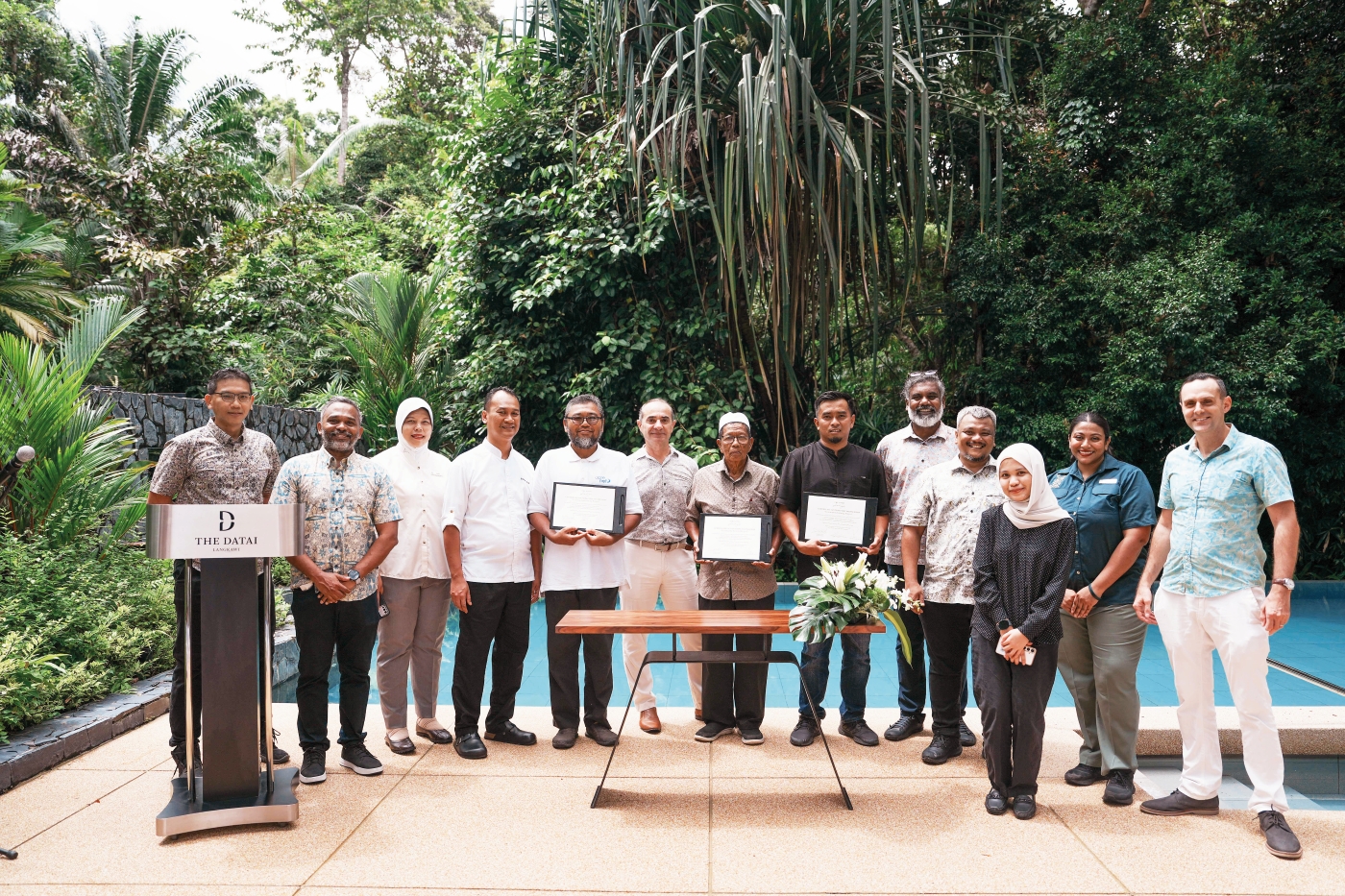
The Datai Pledge is to create a sustainable environment for the future (All photos: The Datai)
When it comes to championing sustainability, The Datai Langkawi takes the crown in the local hospitality industry. This luxury beach resort, nestled in the heart of a 10 million-year-old rainforest on the northwest tip of Langkawi, is led by a group of passionate nature lovers and patronised by international guests who share the same sentiment.
In 2019, the institution formalised its commitment to the planet and community under The Datai Pledge initiative, conceptualised by the country’s renowned naturalist, Irshad Mobarak. Since then, the hotel has rolled out many impactful programmes with one main goal: to create a sustainable environment for the future.
As it continues to uphold high standards of responsible business practices, The Datai launched a tripartite partnership that brings together local farmers and agriculture consultancy Very Green Ventures (VGV) to address and manage its carbon emissions; this time focusing on food consumption throughout all its on-site dining venues.
At the community-based farming initiative launch last month, general manager Stephane Duvacher highlighted that this partnership was rooted in shared values and a collective vision for a greener future for the island.
“We are advancing farming practices in Langkawi — strengthening local livelihoods, reducing reliance on imported produce and lowering our carbon footprint.
“Beyond the environmental benefits, this project is about community resilience, knowledge sharing and the belief that when we support one another, we all thrive. This may seem like a small step but, together, we pave the way for a lasting positive change.”
The seed for this project was planted in 2023, when The Datai’s director of quality control and improvement Remi Giromella — who has been actively involved in the resort’s sustainability initiatives for the last seven years — met with VGV CEO Paul Dass to discuss the company’s environmental journey and progress.
“We have been working with homegrown artisans, but something we found lacking was regarding food. After Covid, we really wanted to expand our collaboration with the community, especially farmers. For this initiative, we did not have the capacity or expertise to carry out our own research. So, we decided to engage VGV,” says Giromella.
“We have been sourcing our ingredients from the mainland and all over Southeast Asia, and it is starting to feel like it does not make a lot of sense when we have an abundance of good products on the island.”
use_for_main_story_the_datai_pledge_-_community_farming_launch_3.jpg
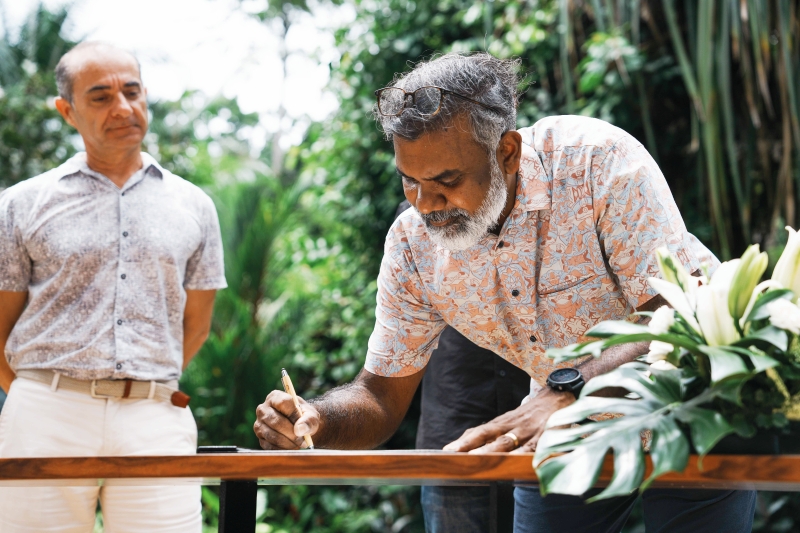
Giromella went to Dass and his team with a problem statement.
“They were figuring out how to reduce their carbon footprint. Their initial idea was to set up a farm and greenhouse internally, but that’s unsustainable because it uses too much electricity and the kind of vegetables they can grow are limited. Then, he asked whether we could get people from Langkawi who farm to supply for them,” Dass says.
For 1½ years, the consultants toured the island to scout for farmers who could meet the following requirements: readiness, proximity, adaptability, responsiveness, land size, technical know-how, stability, passion and attitude.
After speaking to more than 50 individuals, they shortlisted three small-scale farmers, who will be supplying most of the fresh produce, including lowland vegetables, free-range chicken as well as pandan coconuts and papayas, to The Datai’s dining venues.
“They do not necessarily tick all the boxes. They may not have the technical know-how but we can provide the training to hone their skills,” says VGV’s Melvin Tong.
Dass says: “Our task is to uplift and encourage them while changing public perception of agriculture, which is commonly associated with the 4Ds — dirty, demanding, dangerous and difficult — and make farming cool.”
Through this programme, the stakeholders wish to educate people and major corporations on the beauty of organic and sustainable agriculture.
“The message we want to deliver is that the best products out there do not always come in perfect condition, without blemishes or spots,” Tong says.
Reports have shown that a significant percentage of food waste is caused by disfigured fruits and vegetables. As such, VGV wants to spread awareness of the importance of appreciating a crop’s internal quality attributes, such as flavour, nutritional density and texture, instead of just its visual appeal.
“Unfortunately, the modern economic sense doesn’t place value on what cannot be seen. That’s what leads farmers to use chemical fertilisers, so their produce looks nice, big, fat and juicy because they are paid by the kilo.
“Our goal is to lead them in the right direction. We hope that one day, food will not be priced based on appearance and weight, but by how they are grown.
“We want people to embrace variables as part of nature and understand that unpredictable weather affects the condition of the crops. For instance, on rainy days, the soil will trap too much water. As a result, coconuts will not be as sweet as those grown in the dry season,” Tong says.
VGV guides participants in exploring different farming methods to ensure crop quality. “We want to help them achieve consistency because guests wouldn’t want coconuts that are sometimes aromatic and other times not.”
Indirectly, the farmers are pushed to up their game. “All this while, they have been selling by the beach; so, they were not so attentive. But now they are supplying to a top player in hospitality, which means there are certain requirements they need to meet.”
This pilot project serves as a good turning point in The Datai’s sustainability programme, as it sets an excellent benchmark for the hotel to work with more local entrepreneurs in the future.
“It will be easier to encourage more farmers to come on board once they see the positive impact of this initiative on the community,” Giromella says.
Each partner has received around RM100,000 for capital expenditure, allowing them to upgrade or refurbish their premises, infrastructure and furniture. The cost of purchasing essential raw materials, including chicks and fertilisers needed to launch the project, will also be covered.
Giromella says the programme is now in the development phase, and the team is working intensively to secure infrastructure and train farmers in responsible, ethical farming. “We hope to impart knowledge and empower the farmers so they can be financially stable and eventually supply to other hotels.”
Meat consumption is an issue to be tackled next.“What you see today is an initial commitment to something bigger. Instead of going for the net zero approach, we are working on a carbon reduction plan,” he says. The KPI for The Datai Langkawi is to reduce carbon emissions by 10% annually for the next few years.
This article first appeared on Dec 22, 2025 in The Edge Malaysia.