
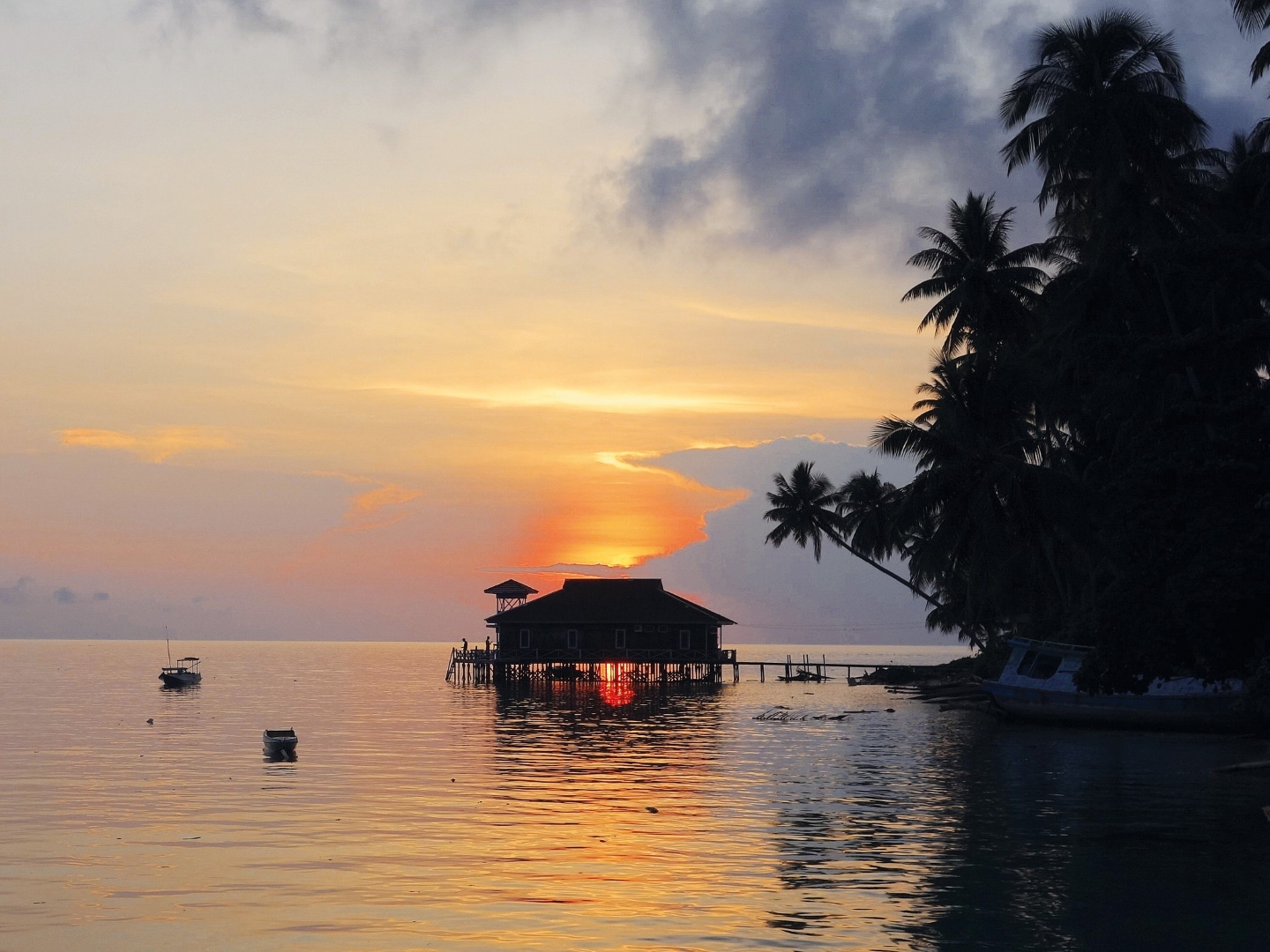
Dusk settles over a calm sea on Derawan (Photo: Lee Yu Kit)
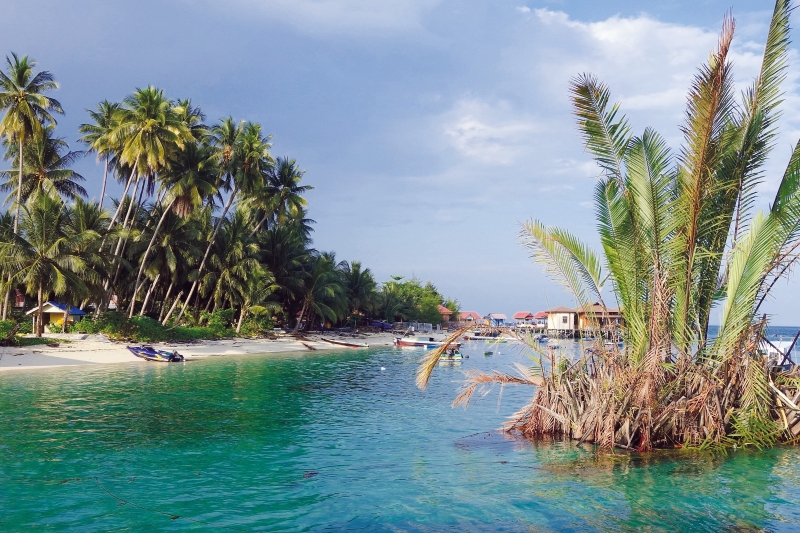
There was a small island outside my room, where there was none the day before. Overnight, a tropical storm had rolled in. By morning, waves crashed against the sandy beach below. And there was the mini island, with nipa palms sprouting from it, floating in the shallow water just offshore.
It was a fragment of forest, torn free and carried out to the shallows of the Derawan Islands.
“Always happens,” said the man who was cleaning the beach. “This is what saves people who are stranded at sea.”
Later in the morning, dive boats moored lines to the little island and towed it out into deeper water.
Derawan is the most populated of the islands of the eponymous archipelago, a cluster of islands off East Kalimantan, smack in the middle of some of the most biodiverse marine environment on the planet, a hotspot for coral and marine fauna that crowd its waters.
Here was uncluttered sky and glossy sea, endless and elemental in its simplicity, where the mind could unclench itself and breathe. Because of its remoteness, it was not easy to get to from Kuala Lumpur, involving several flights, an overnight transit, a 2½-hour road journey and 30 minutes by speedboat.
1-island.jpg
The road through burnt forest
At the Kalimarau Airport in East Kalimantan, I was met by a driver in a car with a flashy red customised interior. The road wended through scrubby forest, with small settlements along the way. This had all been towering rainforest, and it used to be cool and misty, the driver told me.
That was before the trees were burned, sending skywards plumes of black smoke and ash that turned the skies dark and blotted out the sun, over 10 years ago. The haze spilled into the airspace of neighbouring countries, the period corresponding to the infamous haze over Malaysian skies.
Blackened, twisted trunks stood, all these years later, amid the young pepper and oil palm plantations that had sprung up where verdant forests had once stood, and wild animals had roamed.
The living island
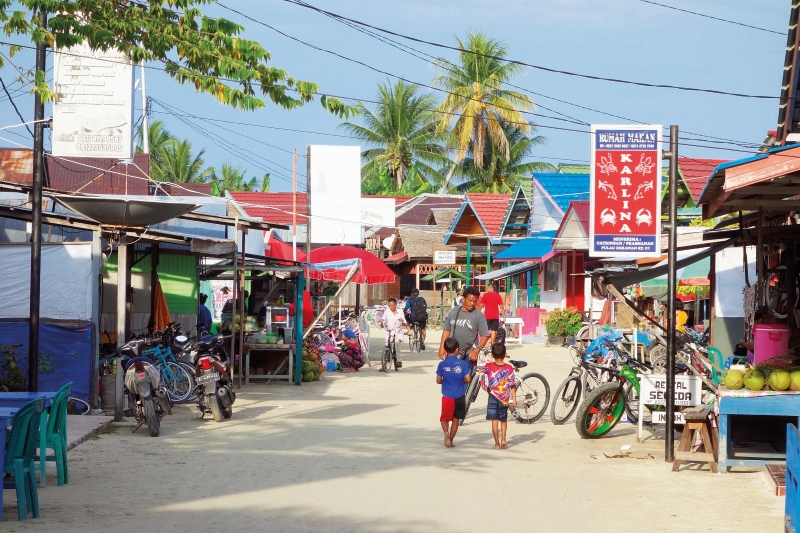
Derawan has long been settled, originally by the Bajau — the sea nomads. Several hundred families inhabit the island, with a well-established supporting infrastructure, such as a power generation plant as well as a solar-generation field. The island can be circumnavigated on foot in an hour or so, along swept-sand roads, with names and road directions. Motorcycles and bicycles ply the roads.
The amenities of an established community are evident — mosque, post office, school, police station, a bank with a functioning ATM. Tourism is one of the major economic drivers, with seemingly every other house being a homestay. Restaurants, shops, stalls, bicycle rentals and laundry service provide the various services of the tourism industry.
The island is quite clean, with spotless streets, and without piles of mouldering rubbish. A garbage service boat from the mainland services it. After tourists posted pictures of a debris strewn island, the authorities were galvanised to organise a clean-up campaign and educate the villagers against littering, but there are holdouts.
3.jpg
One evening, I stood at the end of a wooden jetty. An old man casually ambled along the pier, reached the end and nonchalantly flung a black bag of rubbish into the tossing sea, before strolling back.
At dusk, children emerge to play in the shallows with the carefree abandon of youth, somersaulting, jumping, running, being tossed by the waves on the beach. Urban youth have all the advantages of technology, and the children of Derawan have the vast open spaces of nature.
There are plenty hotels, with many occupying prime beachfront. These are mainly small, cosy, rustic affairs with swept sand compounds and wooden rooms. Some cater to local tourists, who can be seen on evenings, squealing on the back of inflatable banana boats towed by a speedboat, and snorkelling in the shallows. However, there is a whole segment catering to visitors who come to this remote island from far-flung corners of the world for the otherworldly scuba diving.
Derawan’s reputation as a scuba diving haven is completely out of proportion to its size. At its doorstep is some of the best scuba diving on the planet. A hothouse of marine biodiversity, innumerable coral species and marine fauna populate the shallow waters of the Sulu Sea. This is also the richest breeding ground in Indonesia for sea turtles, often encountered on dives.
There were even a couple of turtles, cunningly disguised as big boulders, in the water by the over-the-water dining room of the resort I was at, but boulders don’t move around with fins and emerge at the surface for a gulp of air.
4.jpg
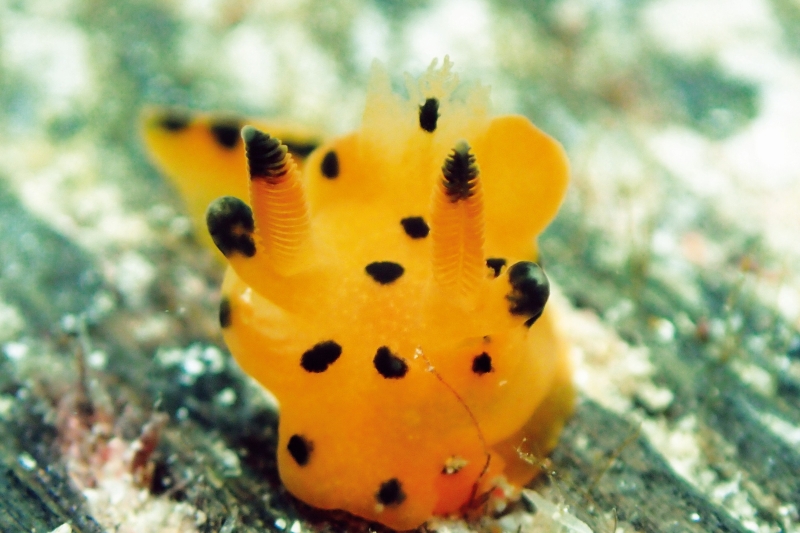
Beneath the surface
About an hour each by speedboat from Derawan are the islands of Maratua, Kakaban and Sangalaki. They are low, flat, forested islands, like mirages on the horizon. The largest of these is Maratua, which has several villages, resorts and an airfield. Sangalaki has a resort, while Kakaban is uninhabited with a very special feature.
On a dive boat bobbing on the surface of the aquamarine sea, one is able to see hints of what lies below: patterns of shifting light, evanescent and shimmering, with irregular patches of dark coral in the shallows.
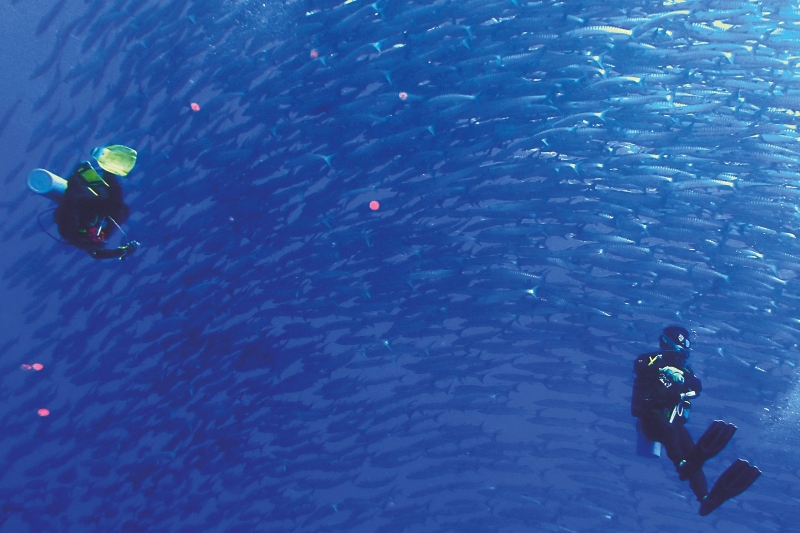
Descending into the waters, a different world emerges, hidden from the surface, a profusion of fluttering coral gardens of variety and colour beyond description, explosive schools of fish, like storms of scattered confetti, and the surging current. Strong currents carry food, and the large free-swimming fish that come to prey on smaller fish attracted to the seaborne banquet.
Off Kakaban island, I clung onto a rock, the bubbles from my exhalations emerging in a straight horizontal line behind me. It was like swimming in a fast-flowing river. Less than 4.57m from me, I caught the glimmer and gleam of steel jackets of a school of magnificent barracuda, their mouths gaping, their metallic bodies barely twitching against the current.
When it was time to go, I simply let go, swept along by the current past the sandy beds, coral encrusted walls, a multicoloured world flashing by, unknown and unseen from the surface of the calm, green sea.
Out by Sangalaki, giant manta rays swam, slow, gigantic, elegant and magnificent beyond words. Sharks, jacks, Napoleon wrasse, trevallies and turtles made almost every dive a special one.
5.jpg
The lake without fear
During the low tide, the coral reef fringing Kakaban was exposed. We stopped by the wooden jetty, and walked to the island, stopping at the outpost to pay the conservation fee, before proceeding on the boardwalk, climbing steps to dense, tree-covered forest, with jagged limestone below. The boardwalk crested and then descended, to the shimmer of water.
This was the inland lake of Kakaban. It was a microcosm of the sea, for it had once been a lagoon before geologic forces uplifted and enclosed it aeons ago, a large lake in the heart of the island. Seawater still seeped in, and falling rain had turned the water brackish.
Marine creatures in the lake had evolved, adapting to the lack of predators, and losing the need for their protective mechanisms. Kakaban is one of a handful of places in the world with stingless jellyfish, which, in their native environment of the sea, carry potent stings.
There are four types of stingless jellyfish on Kakaban, including the deadly box jellyfish. Isolated in the lake, the box jellyfish has not only lost its potent sting, it has also shrunk to a fraction of its size in the open sea. One of the jellyfish species has taken to swimming and residing upside down in the shallows of the lake, exposing the algae in its underside to the light and photosynthetic processes.
6.jpg
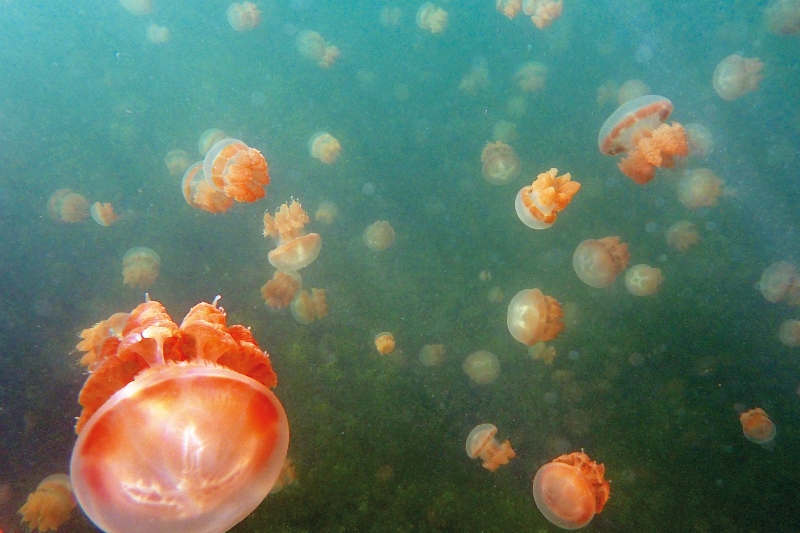
The water was warm as I slipped in at the wooden jetty, into a wonderland of bobbing jellyfish, millions of them, large and small, undulating gently in the water all around. It was strange and wonderful to swim among these creatures, in an alternate world where your natural fear of being stung was completely disarmed.
Small marine fish had also adapted, with their translucent bodies, swimming fearlessly in the cloudy, brackish water of the lake. Crabs, molluscs, sea cucumbers and other creatures can be found in the lake, adapted to the environment and confounding scientists and researchers on the resiliency of life and natural adaptation.
On the morning that I left, the little nipa-palm island was still bobbing in the shallow waters a few kilometres away. In the Derawan archipelago, even the land does not always stay where it belongs.
This article first appeared on June 15, 2026 in The Edge Malaysia.