
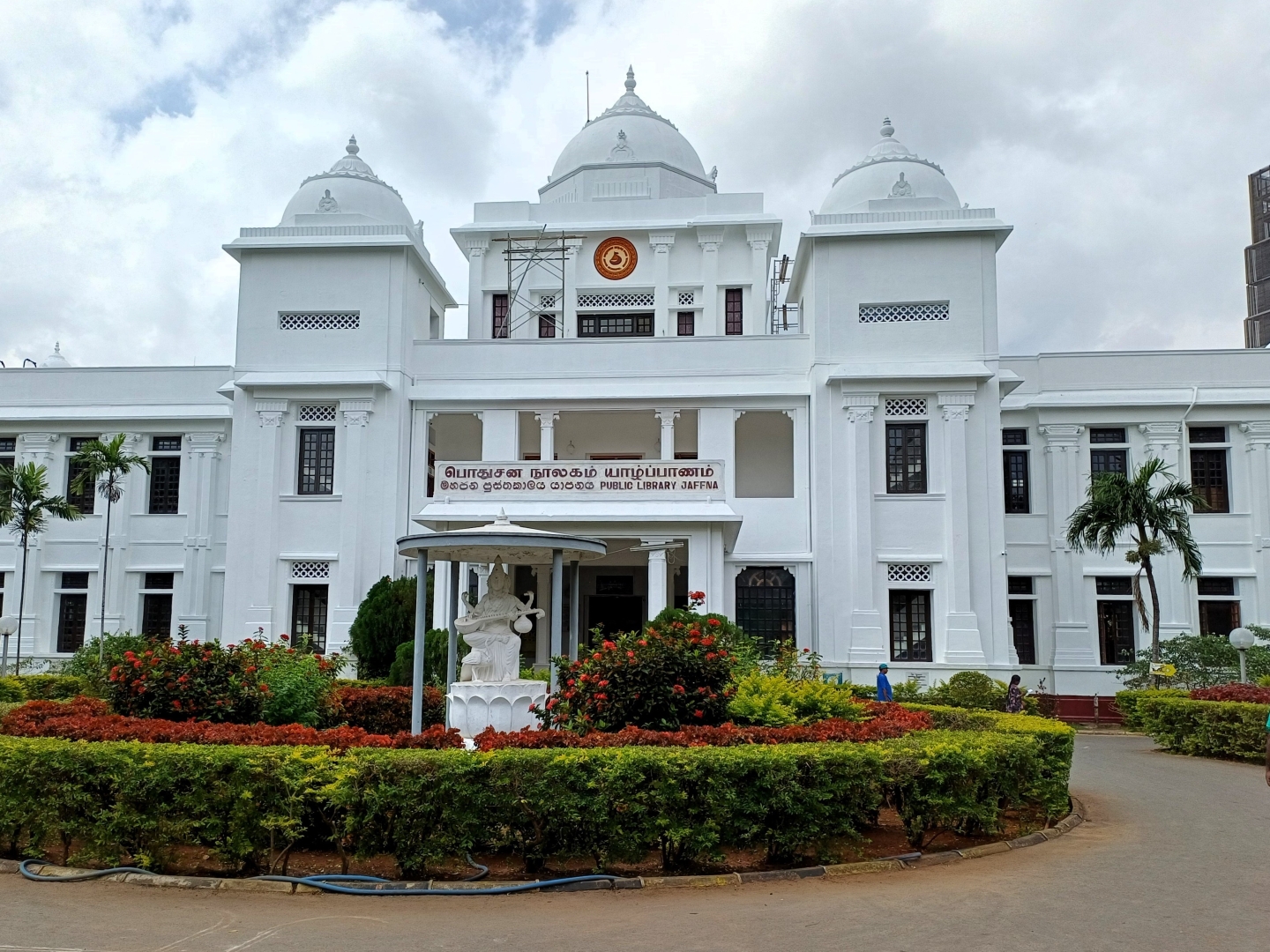
Renovation of the Jaffna Public Library — originally built in 1933 — was completed in 2001 (All photos: Lee Yu Kit)
A public library is not usually a stopover on a visit, but the Jaffna Public Library has a history. In the 1980s, it was one of the biggest libraries in Asia, housed in a graceful, Indo-Saracen building from the early 20th century.
In 1981, amid rising tensions, a mob set fire to the library, destroying some ancient and irreplaceable Tamil texts in the process. The repository was eventually rebuilt, but its destruction became a festering wound and one of the trigger points that ignited a full-scale civil war in 1983. It was a savage war — massacres and retaliatory killings, teeming with suicide bombers and child soldiers — that would consume the island nation of Sri Lanka until it ended, bloodily, in 2009.
I visited the bright and breezy institution. In the Periodical Reading room, people were browsing newspapers and magazines. Other sections were filled with books.
When I first travelled to Sri Lanka decades ago during the height of the civil war, the north and east of the country were embargoed. Now, I was completing that section of the journey that had been truncated.
1.jpg
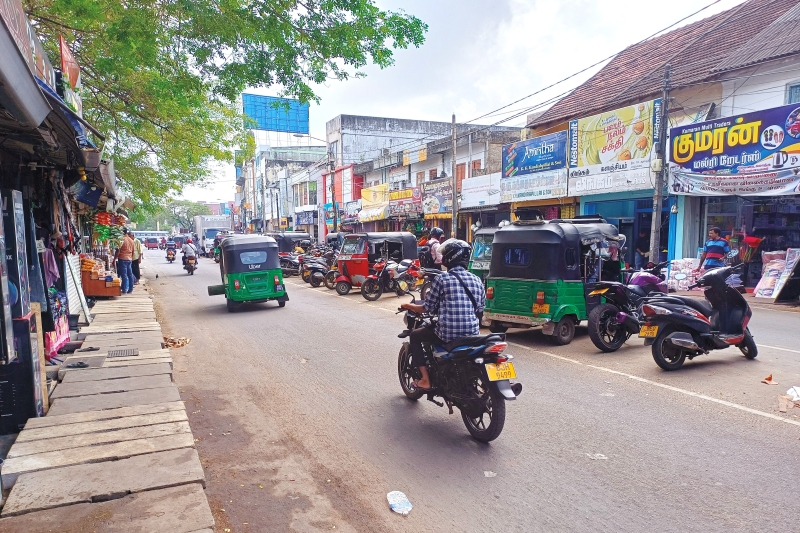
The country on the road north to Jaffna seemed strangely empty, with military garrisons on either side. The roadside stalls and restaurants that clutter the roads to the south were mostly absent. The landscape was lush, even verdant, but it seemed deserted.
“Young people don’t like to be farmers,” my driver Amila replied in response to my query. He did not say we were on the A9, the main route to the north which, a few decades earlier, had been much contested between the Sri Lankan military and the rebel Liberation Tigers of Tamil Eelam (LTTE), which were fighting for an independent Tamil homeland in the country’s Tamil-majority north and east.
We crossed the causeway of Elephant Pass, a militarily strategic choke point, and entered the Jaffna Peninsula, the northernmost part of Sri Lanka. Hindu temples of Dravidian architecture began to appear along the road as we drove further north and Jaffna felt unlike any Sri Lankan town I had visited.
Echoes of eternity
A web of interconnected roads ran thread-like across Jaffna, along which were houses, shops and stalls, yet without a built-up town nucleus. On its own, the Nallur Kandaswamy Kovil, the most important Hindu temple in Jaffna, exerted its gravitational pull. Within a defined perimeter around the building, meat was not consumed, so restaurants and shops served vegetarian food.
While the temple dates back to the 10th century, the current building, most visible by its towering gate, or gopuram, was erected in the 17th century. The temple’s lineage is from the Jaffna kingdom that ruled this part of the country. It unceremoniously ended when the Portuguese defeated and executed the last king, and destroyed many temples in the 16th century.
To enter, not only did I have to remove my shoes and hat but also my shirt [as a mark of humility and respect before the deity]. Inside, I recognised a policeman from the bottom half of his tan uniform. He was also bare-chested.
2.png
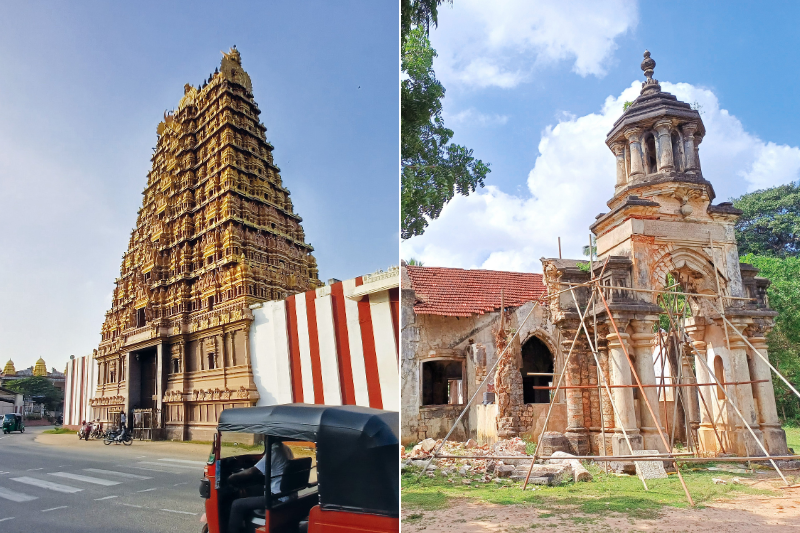
Elaborately engraved, gilded columns supported the arched porticos that surrounded the central open courtyard, with a sunken tank or pool. A puja ceremony was in progress, with priests moving through the incense smoke that swirled to the brightly painted ceilings.
Of the ancient kingdom that held sway over Jaffna before the coming of the Europeans and the imposition of their religion, the Nallur Kandaswamy was the most significant remnant. But it was not the only one. Off a busy road in town was the strange edifice of the Mantri Manai, thought to have been a residence of a minister in the Jaffna Kingdom, although scholars debate if its eclectic architecture was built or influenced during the later Portuguese or Dutch eras.
Outside, barefoot on the hot sand, after the heaviness of the temple, I deserved an ice cream. The place to go in Jaffna for this is Rio, which is a veritable institution. There are many pretenders to the crown, but where other ice cream parlours languish, Rio bustles, with locals and tourists alike thronging the shop and agonising over the choice of gaudily coloured creations.
I had a blueberry-mango fruit and nut ice cream with jelly and toppings. It was vibrant, milky and sweet, but Häagen-Dazs has no reason to sweat.
Stones of empire
Jaffna occupies a strategic location. This was not lost on the Portuguese, who built a seafront fortress not far from the Public Library. Jaffna Fort was used as a military stronghold by the Portuguese, then the Dutch, the British and the Sri Lankan military during the civil war.
As I approached the grassy compound of the entrance, I saw a few men practising one handed golf swings. They were grass cutters, swinging their crescent scythes over the lawn. The rhythm of their work, and the order it implied, recalled an older hierarchy of labour that once underpinned life in a colony.
The fort was massive, with a verdant area within, and blocks of rubble — the remnants of buildings. The Dutch reinforced the structure with five star-shaped bastions pointing outwards, giving it a strangely futuristic profile when seen from above.
3.jpg
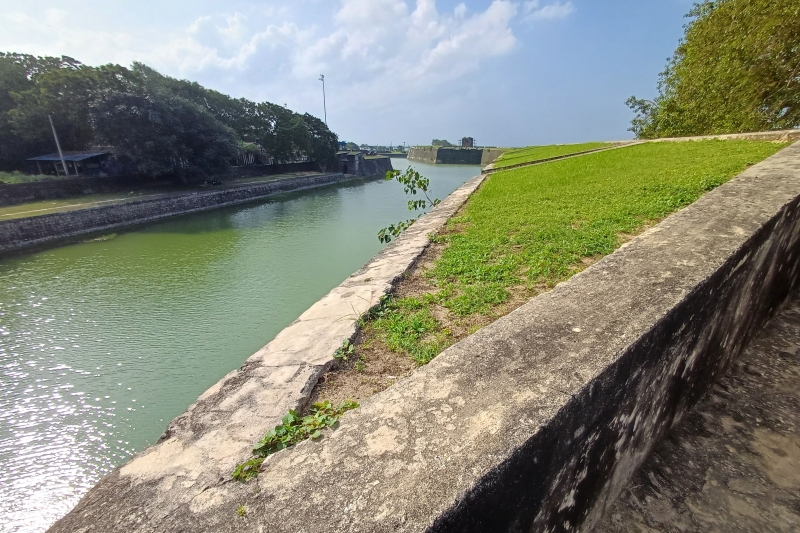
An information board noted that the Portuguese had destroyed hundreds of temples, using the stone from the ruins to build the fort. They had also used large blocks of coral from the sea.
I ran my hands over the rough coral blocks on the walls, tracing the beautiful patterns created by countless marine creatures. Their fragile beauty contrasted with their endurance and strength over centuries.
It was a forlorn place of ghostly memories. Even with the sea breeze and blue skies, I felt the weight of history bear down on those grey, silent stones, and weathered phantoms rise from the ruins.
Crosses on the coast
The sea is inextricably bound with Jaffna: its location, importance and livelihoods. Less than an hour’s drive from town, the northerly coastline of Sri Lanka unfurled into miles of white sandy beaches fringed by coconut trees.
I stood at Point Pedro, with colourful fishing boats bobbing in the shallows of the sea as it rolled towards shore in long, lazy breakers. The defunct British-built lighthouse stood empty, with a marker for the height reached by the seawater of the 2004 Boxing Day tsunami which devastated the Sri Lankan coastline.
There were churches and crosses here, indicating a largely Christian population. Beyond sight, but near enough for multiple swimmers to have crossed the approximately 30km Palk Strait, was India.
4.jpg
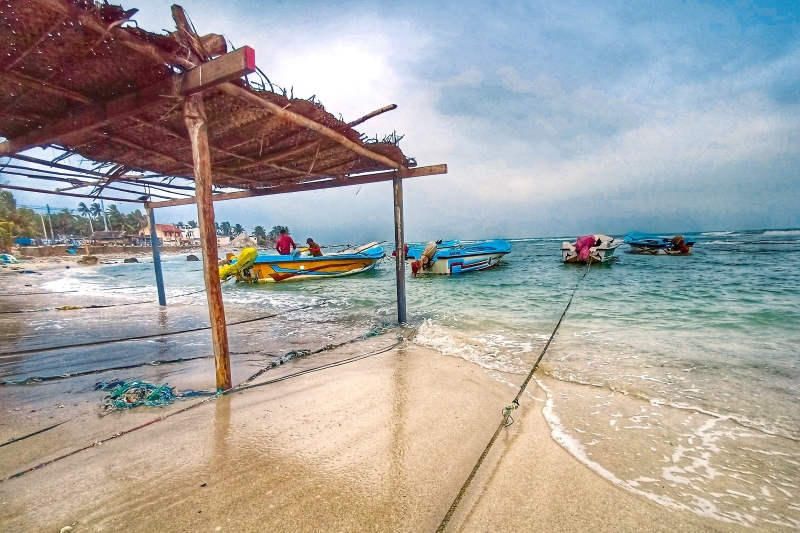
We drove along the languid coast, stopping briefly at Kankesanthurai Beach (also known as KKS Beach), where the sea crashed onto a golden sandy beach and a stiff breeze rustled against the few people out on that day. I sat in the shade of a canopy of a seaside café, sharing a vegetable roll and egg samosa with an underfed dog.
Further along and a little inland, away from the sea breeze, was the centuries-old Naguleswaram Temple with its towering gopuram painted in hues that would embarrass a rainbow. All male visitors, including me, entered shirtless. Revered as one of the five Pancha Iswarams or abodes of Shiva, in Sri Lanka, the temple was associated with the nearby Keerimalai Pond.
Deities had bathed in this turquoise pool arising from a hidden freshwater spring in Tellippalai-Maviddapuram, said to possess magical healing powers. It is just metres away from where the waves crashed onto the sea wall.
5.jpg
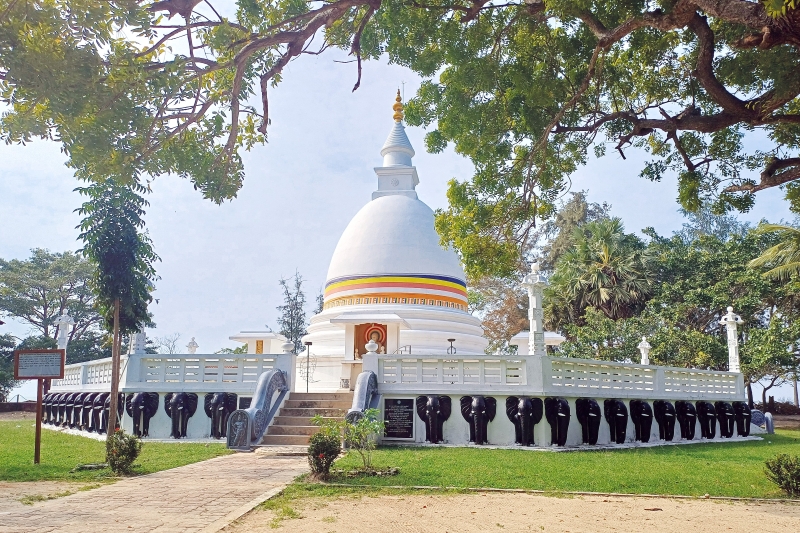
Circling back to the coast, I settled down at a café, sipping belimal tea after visiting the seaside stupa at Dambakola Patuna. It marked the spot where Emperor Asoka’s daughter set foot in Sri Lanka 2,300 years ago, bearing a sapling of the Bodhi tree under which Buddha had gained enlightenment.
The sapling was planted at inland Anuradhapura, where it continues to be revered by devotees. It is recognised as the oldest living human-planted tree. A sapling from that tree, in turn, was planted at Dambakola Patuna, where it has blossomed into a shady, spreading tree, completing the circle.
In Jaffna today, there are few evident signs of the devastating civil war that had consumed the country for so many years. I stayed in a hotel which was a mansion from 1908. It had been converted into a modern hotel with extensive and manicured lawns, a popular backdrop for wedding and graduation photo shoots.
The building was used by the Sri Lankan army and the LTTE during the war. The LTTE dug two bunkers under the structure, which have been transformed into a museum and art gallery by the hotel owners. Out of sight and underground, they run deep, these scars of a terrible war.
This article first appeared on June 1, 2026 in The Edge Malaysia.