
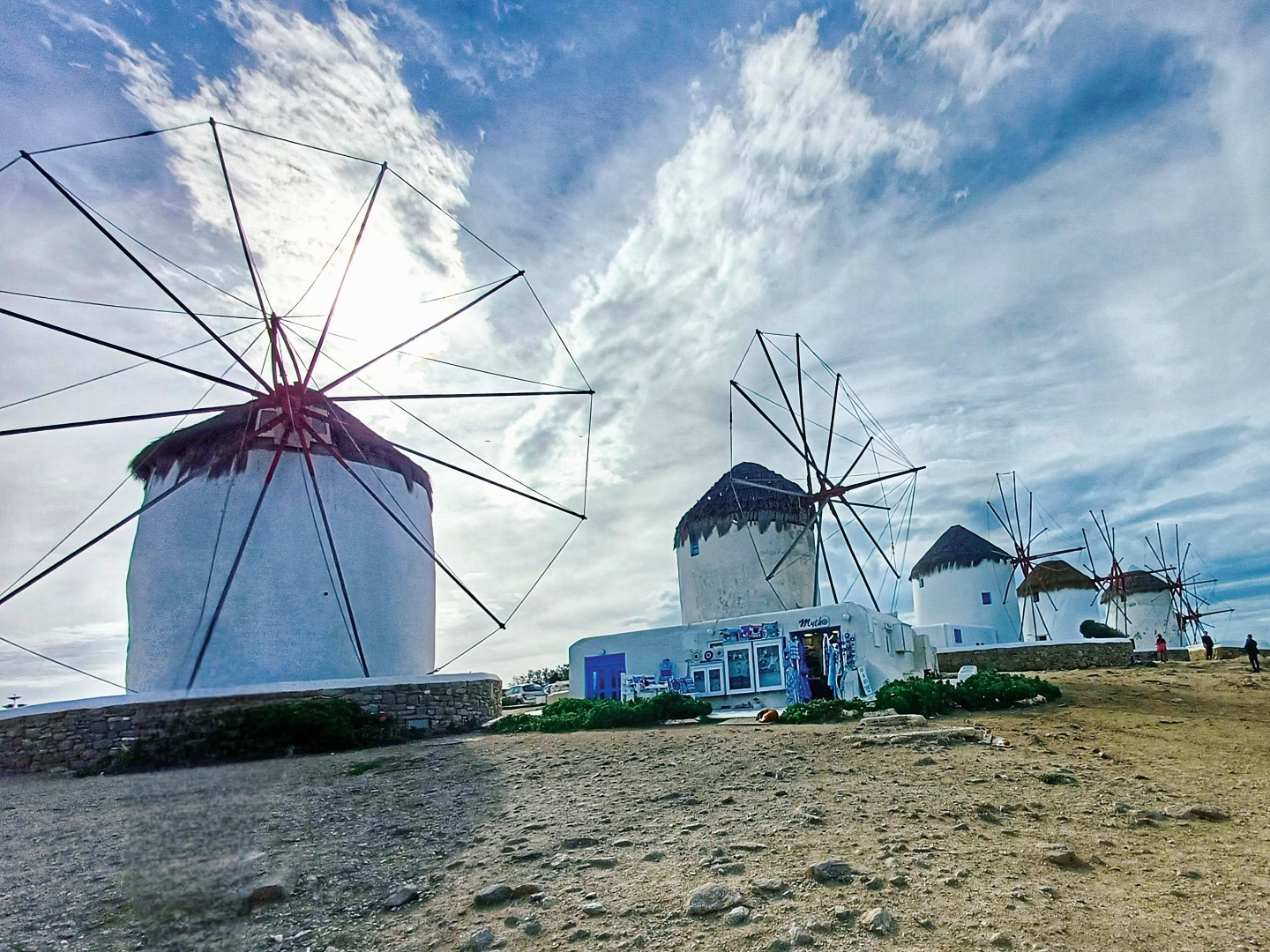
The windmills are a treasured part of Chora's history (All photos: Lee Yu Kit)
The windmills on the hill stand like sentinels. No longer turning with the wind, the empty frames for the canvas sails are a mere memory of a time when wind power milled wheat and barley on Mykonos. They are relics of Venetian rule from the 14th century.
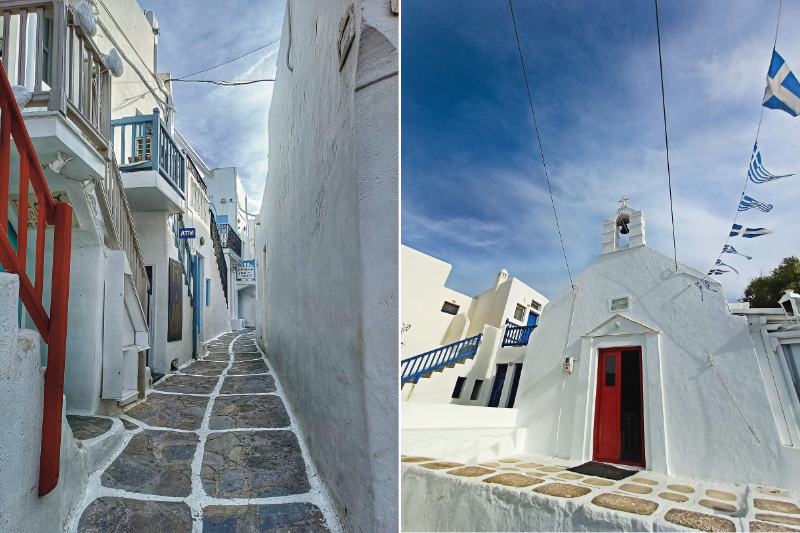
The aquamarine sea washes ashore in transparent sheets onto the beach of Chora or Mykonos town, overlooked by the static windmills on a small hill. The part of town called Little Venice kisses the sea, which splashes against the buildings. Behind is the labyrinth of narrow alleys hemmed in by rough, whitewashed edifices, canyons cleaved by light falling from the startling blue sky.
The white structures contrast with brightly painted doorways, balustrades and roof eaves, hung with pots of gaily coloured flowers. Once residences, most are now chic cafés, restaurants, guesthouses and shops.
Chora thrives almost purely on tourism. In the summer months, the island’s small population of 10,000 swells tenfold, with tourists drawn to the idyll of the rustic Greek island basking under the Mediterranean sun, burnished by its reputation as a getaway for the famous and beautiful.
1.png
Unlikely paradise
Mykonos was not always glamorous. Until the mid-20th century, it was a poverty-stricken backwater where farmers and fishermen eked out a living from the parsimonious land and sea. Donkey carts were the main form of transport; electricity was scarce; and water — then as now — was a precious resource.
During WWII, the population suffered terribly from the confiscation of their fishing fleet by the Germans and food privation.
But its natural allure began to attract travellers, who braved the difficulties of getting to the island in the 1950s for a simple and inexpensive village lifestyle, rustic charm and scenic magnetism. Backpackers, artists and nudists found the quiet, hedonistic life irresistible.
2.jpg
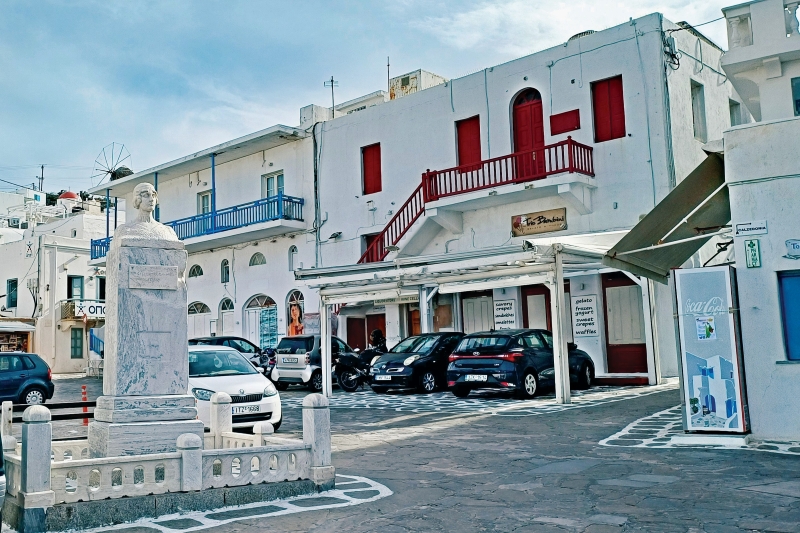
Real change came about in 1961 with the visit of Jackie Kennedy to the island. Mykonos began to attract the attention of the trendsetters, the influencers of the day: Brigitte Bardot, Grace Kelly, Richard Burton and Elizabeth Taylor, Marlon Brando, Sophia Loren, Valentino and Mick Jagger, among them.
Luxury hotels, nightclubs and bars began to spring up; the stark, stunning background of Mykonos started to appear in fashion shoots by glossy magazines. In 1971, an airport built by Greek magnate Aristotle Onassis was a game-changer. Mykonos began to rival Saint-Tropez and Ibiza as a glamorous getaway for the jet set.
In more recent years, the who’s who of celebrities — from business magnates and royalty to movie stars, singers and sports stars — have continued to visit the island.
3.jpg
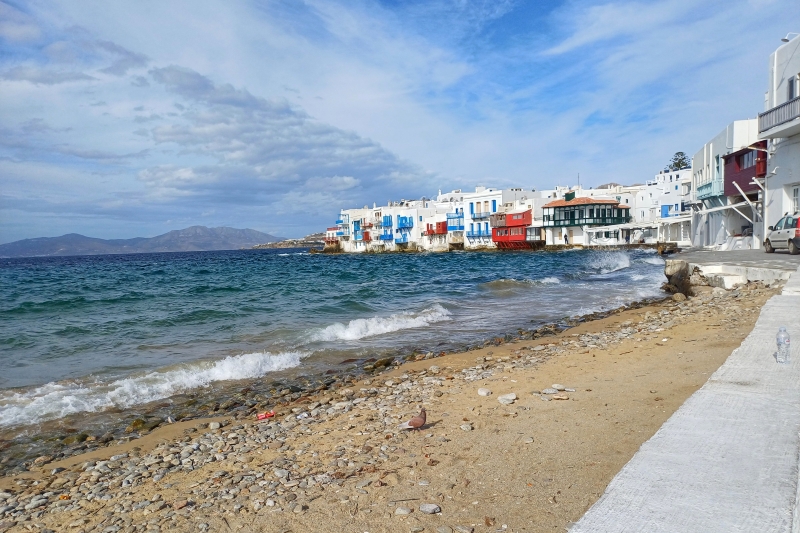
There is the Mykonos island of glitz and glamour, the luxe, sleek getaway for the wealthy and famous in their private yachts and airplanes, of exclusive villas and party destinations, stunning beaches for svelte bodies to be bronzed, fine cuisine and expensive wines, raucous nightlife and high fashion; and then there is the underlying, traditional Mykonos.
During the quiet months, the Greek isle reverts to its quieter, gentler side and the established rhythms of life. Rain lashes the islands and storms roil the seas in the winter, but there are cool days, with sunlight falling in shimmering veils from a crystalline sky, reflected in the glassy green sea. There is little traffic on the roads; cafés, hotels and shops are shuttered.
Inland heart
The traditional lifestyle can be sampled in the small inland town of Ano Mera, the second-largest on the island, away from the high life of the beaches. On the short drive, one might see an olden pigeon house or dovecote, originally built for breeding pigeons for meat, guano and as messenger birds. In modern buildings, the motif of the pigeon house, with niches of small geometric shapes, is ornamental rather than functional.
The centre of Ano Mera is the small town square with a large tree. It is surrounded by tavernas, where one can enjoy a glass of cloudy white ouzo with a plate of meze, comprising an assortment of small snacks and dips.
Behind the square is the main monastery of the island. The Greek Orthodox Panagia Tourliani Monastery dates from the 16th century. It is the patron monastery for the island, with the Virgin Mary as its patron saint. Within, it is cosy rather than spacious, rustic rather than intimidating. An elaborate gilded wooden screen, the iconostasis, is from 18th-century Florence.
4.jpg
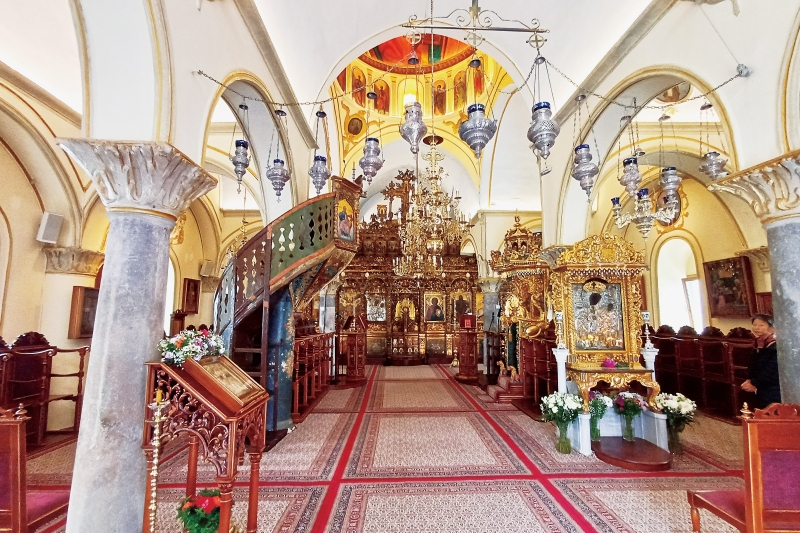
Greek Orthodox Christianity is the main religion on the island, inextricably bound to the religious and moral code that underlies daily life, but long before icons and monasteries, the island existed in the orbit of another belief system altogether.
Mykonos belongs to the Cyclades, a loose ring of islands encircling Delos, just 2km away.
Since antiquity, Delos has been sacrosanct ground. It was sacred before Leto was cursed by Hera, the infuriated and jealous wife of Zeus, the king of the Olympians, for her affair with the god of thunder.
Hera cursed Leto so that she could find no solid ground or island on which to give birth to the twins she had conceived with Zeus. Eventually, Leto found the floating island of Delos, which was not anchored to the earth, and there she gave birth to Apollo and Artemis. The floating island became anchored to the ground after the birth.
5.jpg
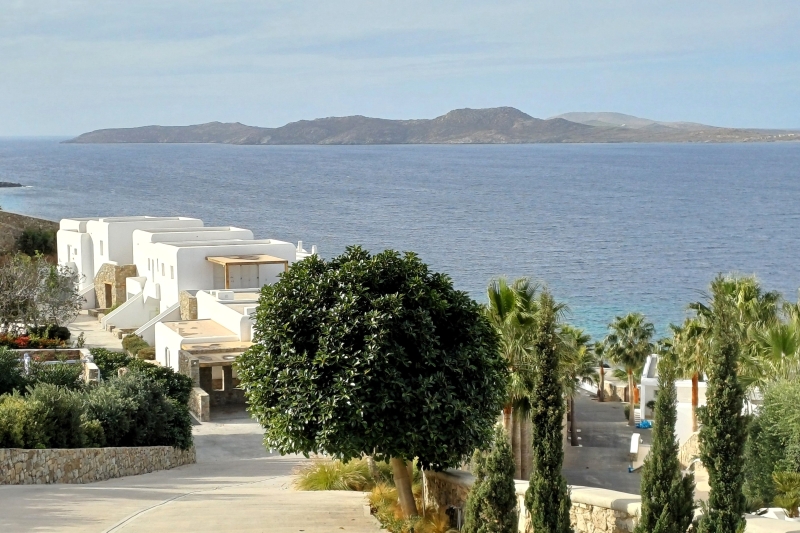
Delos was the most sacred island in ancient Greece, and it became a major cult centre for the worship of Apollo, representing divine guidance, the sun and daylight versus the forces of chaos. In 1990, Delos was declared a Unesco World Heritage Site for its central role in Greek mythology and the wealth of archaeological ruins on the island.
Mykonos was a major transit point for visitors to Delos, which has no permanent residents and where, historically, neither births nor deaths were allowed, the graves of the deceased having been relocated elsewhere in antiquity. There are day excursions to Delos, run from Mykonos, to view the ancient ruins.
This article first appeared on May 25, 2026 in The Edge Malaysia.