

Boats decorated with national pride in anticipation of Malaysia Day (All photos: Kalimullah Hassan)
Few probably remember the 2007 Hollywood movie Wild Hogs starring John Travolta. It was about four disillusioned middle-aged men with normal everyday problems who decide to escape their routine lives by going on a roughly 3,200km motorcycle road trip from a Cincinnati suburb to California.
It’s a funny story as these grown men try to relive their youth, jumping naked into a river, getting into fights with a gang, falling in love and overcoming their own insecurities and fears. I enjoyed the movie. Road trips are fun. I have enjoyed road trips all my life.
One such trip involved taking a 4WD from Kota Kinabalu in 1985 to the tranquil heights of Sinsuran and then descending into the valley of Tambunan and the then really rural Keningau and Tenom, looking for a roti canai shop where the Indian Muslim population was exactly the number of workers in the only mamak restaurant there, and where the then Sabah chief minister had built a luxurious Perkasa Hotel, where the vast majority of the population could not even afford a cup of tea. But when the politicians visited, at least they had a comfortable place to rest and recuperate.
Or driving up from Kuching in 1987 to the then controversial gold mining town of Bau and the beautiful but seemingly untouched fishing village of Lundu, being entertained to a simple, yet delicious kampung meal by the headman whom we had just only met, and enjoying the sea breeze from his veranda in the humidity. We took a boat up the “crocodile-infested” river for RM30; but of course, there were no crocodiles and because of the dry season, the boatman had to often get down and push us through the shallow waters. But it was a good story to tell our friends about how we bravely steered through “crocodile-infested rapids”. Returning to Kuching on the last ferry across a river — a shaky wooden boat operated manually by a pulley at both ends — was an adventure in itself. We were young(er) and completely oblivious to the risks we took.
scarecrows_amid_ricefields_1.jpg
I still made road trips after leaving journalism in 1995, but there was less time as I struggled with a different profession and starting up a fledgling business. These road trips were mainly from Kuala Lumpur to Penang for hawker food or to my hometown Pengkalan Hulu and the Thai border town of Betong to buy petai and have a great Thai meal. Not much excitement when you do the same route too many times.
The Covid lockdown reignited my desire to again explore the beauty of my country and as soon as we were allowed to travel within Selangor and the Federal Territory, I would just drive to Hulu Langat, Ulu Yam, Kuala Selangor, Sekinchan, Sungai Buaya, Rawang, Kuala Kubu Bharu, Batu Arang — wherever the road took me — stopping at small shops and having great thosai or nasi lemak. Of course, a few of these stops, like Sungai Buaya, were disappointing but by and large, there’s a lot of beauty in most towns and hamlets in Malaysia.
Last week, my friends and I planned a pre-Merdeka road trip to Penang. First, the chatter in the car was interesting. We left behind almost all talk of shady politics, corrupt businessmen and government officials and the everyday problems faced by the people, focusing on the beauty of the scenery or the overbuilding in towns like Teluk Intan, which most of us had last visited at least more than a decade earlier. But our first stop at the Nasi Dagang Hujung Tanjung turned out to be very pleasant. We asked the ladies running the packed restaurant what their favourite dish was and they replied, “Everything”. So, sans recommendations, we ordered what we preferred and, not surprisingly, the food was excellent.
the_wild_hogs_1.jpg

From Teluk Intan, we took a leisurely drive on the West Coast Expressway (WCE), exiting at Changkat Jering, driving past the infamous Kamunting Detention Camp and the Taiping Jail, which has been in the news lately, and onto Kuala Sepetang. Old-timers like us know it better as Port Weld, which is notable for being the terminal station of the first ever railway line to be built in Malaya. The whole railway line from here to Taiping was dismantled four decades ago and now only the ticketing booth and the original multilingual Port Weld railway signboard remain.
But Kuala Sepetang is a thriving fishing village. We hired a boat to take us up the mangrove swamp and were entertained by a 12-year-old tourist guide, who pointed out that the two banks of the river were inhabited by Hokkiens on one side and Teochews on the other. In the past, the Teochews had to take a boat across to the Hokkien side as the market was situated there. Now, a small motorcycle-and-bicycle-only bridge spans the river with colourful fishing boats lined up on both sides.
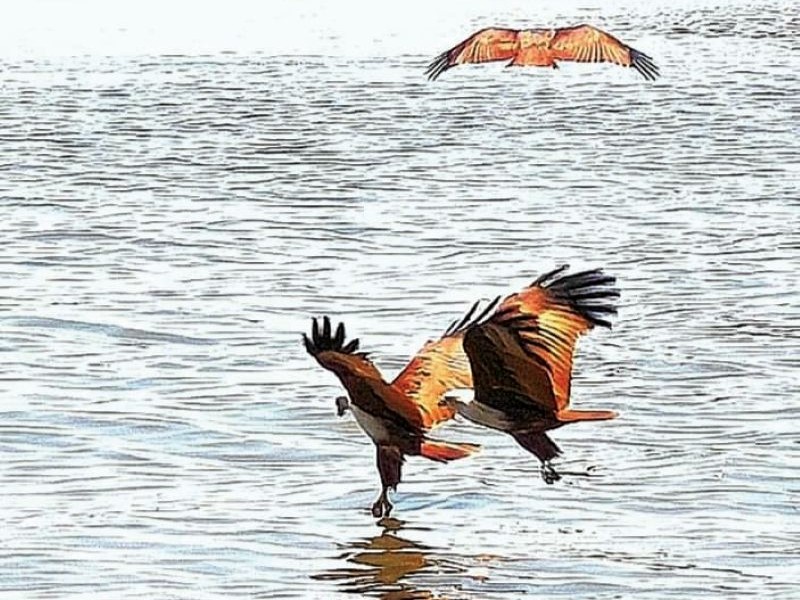
Further up, the boatman threw some chicken skin he had in a plastic wrapper into the mouth of the river heading into the sea. Suddenly, we were swarmed by eagles feeding off the flesh. It may not have been the most ecologically-friendly sight but was one to behold indeed — eagles swooping in from all sides. We also stopped by a fish-breeding jetty where puffer fish and horseshoe crabs were in abundance. Not my cup of tea, but people do come, especially during the weekends.
eagles_at_kuala_sepetang_1.jpg
Alighting from the boat, we left for Taiping to an old Hainanese restaurant, Yat Sun, which is reputed to have the best chicken rice in Perak. We had a variety of Hainanese dishes and I really enjoyed the Mee Hailam. But what struck me most was how the clientele represented a cross section of the peninsula’s three main races — Malays, Chinese and Indians. Sometimes, living in KL, you get so used to not seeing such things anymore.
After lunch, we walked across to a shophouse where an elderly Chinese lady was selling banana fritters, popiah, murukku and different types of kuih. When she found out we were visiting, she gave us some banana fritters for free and boy, were they good. That’s another thing you would almost never get living in the big cities.
We then spent some time in the serene and well-manicured Taiping Lake Gardens, stopping at the War Cemetery where people from all faiths and ethnic groups, who died in service of Malaya, are buried side by side. Another reminder of how together we were not too long ago.
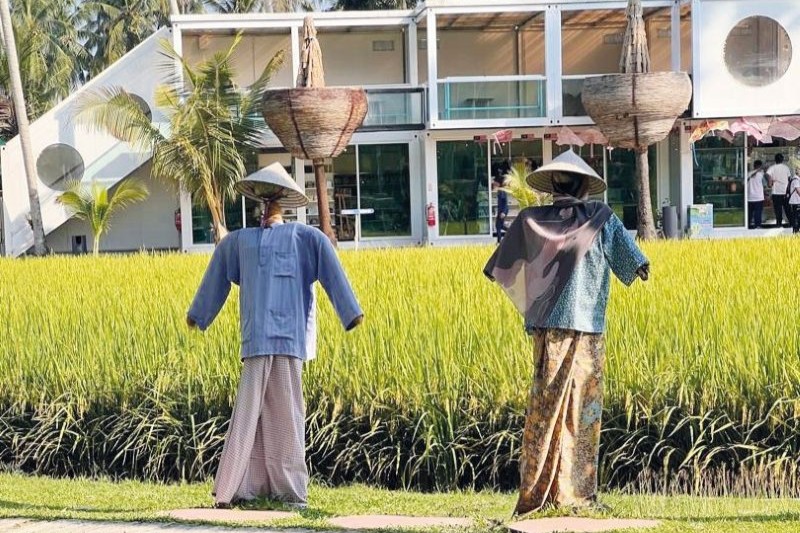
The last stop before we headed to the island of Penang was the scenic and beautiful Instagrammable village of Kampung Agong in Penaga, near Kepala Batas which was established in 1942. Planted with coconut trees and paddy fields, over time, it has blossomed and is now known as an agro-themed park. As its website says, “… it offers the perfect escape from the city for those wanting to experience traditional Malay kampung life”. It is beautiful but we didn’t spend much time there and scooted off to Penang.
shannon_teoh_and_k_ragunath_riding_a_rickshaw_1.jpg

After checking in and freshening up, what better way to end the day than a good meal at the 118-year-old famous Hameediyah Restaurant and a nightcap at the fashionable Hin Bus Depot. Many stops in one day but every stop was truly fulfilling and rewarding.
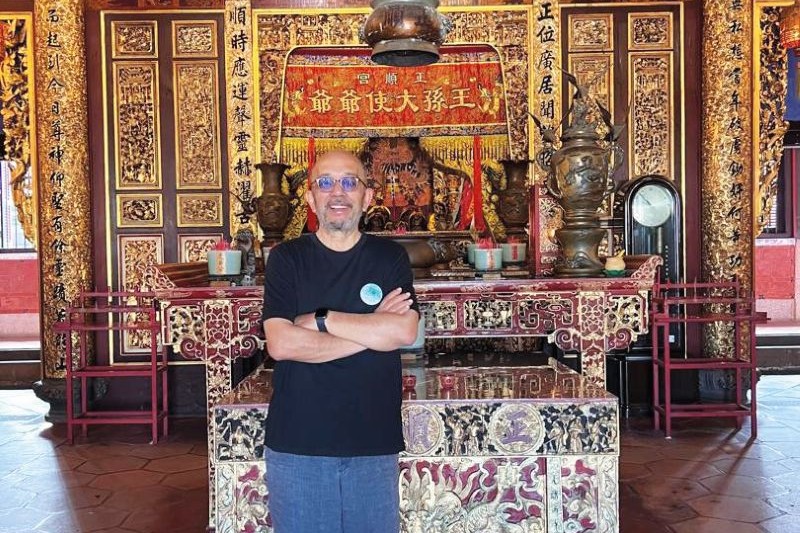
Saturday was a flurry of eating, starting with the coffee shop opposite the Pulau Tikus station where they had all the all-time favourites, the famous apom — for which the waiting time was 40 minutes at least — mee mamak, char koay teow and prawn noodle soup, followed by a quick recce of the market where numerous stalls sold cheap China-made products. After a drive around the rejuvenated Gurney Drive, we ended up at the beautifully restored Khoo Kongsi and the Armenian Street Heritage area. After a quick tour of the Acheen Street Mosque, we headed to the Ramzan Restaurant in Lebuh Ah Quee — famous for its duck curry and capatis.
khoo_kongsi.jpg
But the highlight of the day was watching the sunset at Bukit Genting Leisure Park and Restaurant. Quite a distance from our hotel and a steep, steep drive on a single-lane tarred road led us to a simple wooden structure serving Thai food. The food was average but the sight from the top of that hill was amazing. The sunset — what can I say? Brilliant. And in all my years, even when I was growing up in Penang, I had never heard of this place in Balik Pulau.
The next day, with a customary breakfast of nasi tomato at Pokok Ceri in Dato Keramat, two lunch stops at Samy’s in Chemor and in Anderson Road for a banana leaf, we returned to KL. A fulfilling trip without the Wild Hogs drama but what an insight into how beautiful Malaysia is. And how great Malaysians people outside the capital are. A word of caution, though: It’s not a trip for weight watchers. I put on 3kg over the two nights. But I would do it again in a heartbeat, as would my friends.
This article first appeared on Sept 8, 2025 in The Edge Malaysia.