
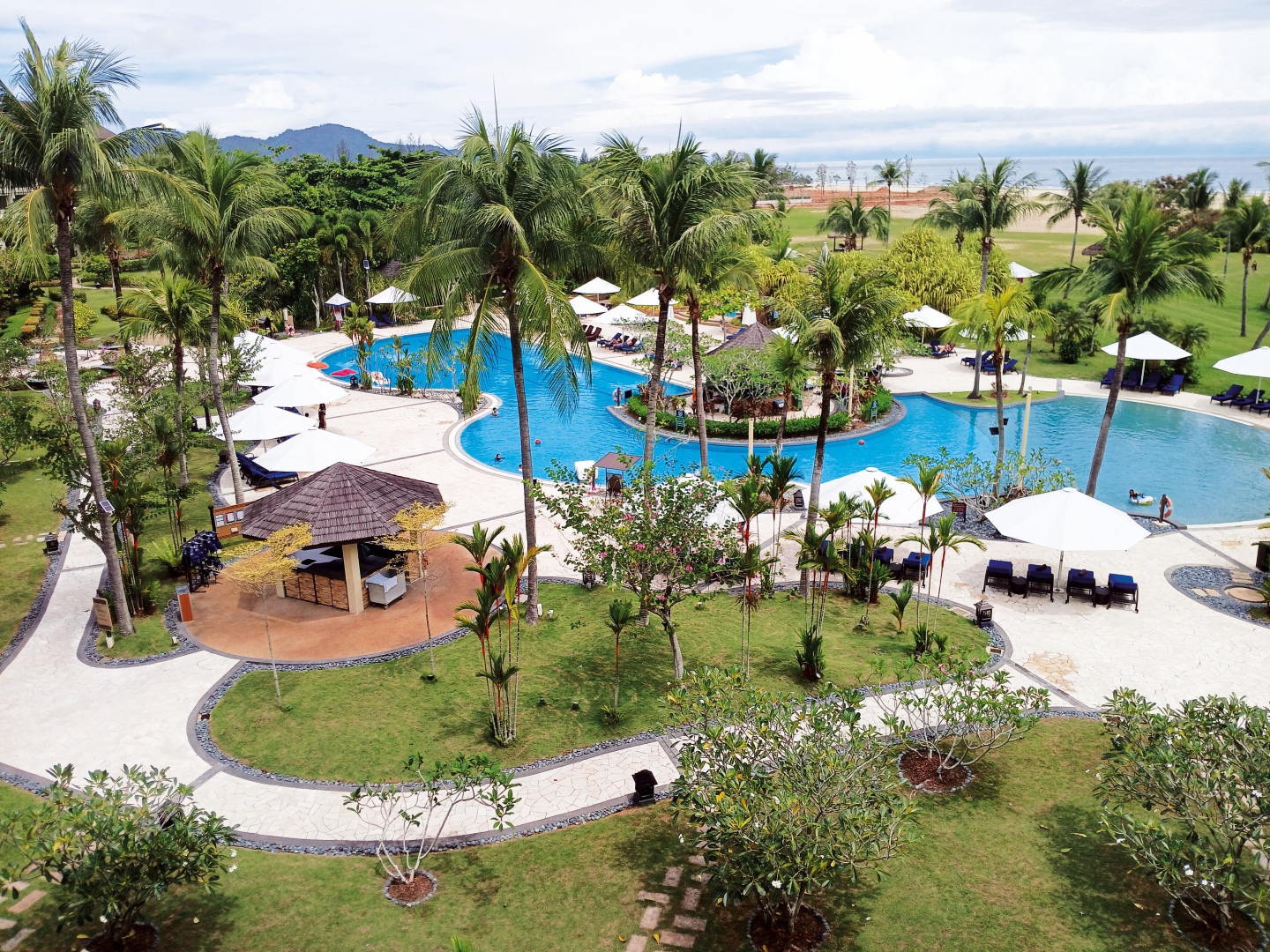
Guests are welcome to be a part of the ESG endeavours or find out more about caring for nature and what it offers in return (All photos: Tan Gim Ean/ The Edge)
A lightbulb moment sparked Fiona Hagan’s part in Shangri-La Rasa Ria’s sustainability story by shining the spotlight on a common item. The general manager of the Kota Kinabalu resort had asked her staff what they noticed most during their twice-weekly beach clean-ups and was told, plastic straws. “What do you think we can do about that?” Someone replied, “Maybe we can stop serving them.”
When Hagan turned up for work the following Monday, she learnt a handful of guests had complained about being served drinks minus straws! When she checked with the F&B department, they said: “Oh boss, we made a decision that we wouldn’t serve any more plastic straws.”
“That, for me, was a really humbling moment — the team knew what needed to be done. They understood the need for a framework to put the right plan in place so sustainability made sense. It was the start of my journey with them.”
The journey, which took off about 20 months after she joined Rasa Ria in 2017, is facilitated by easy conversations between management and employees, built on trust and the culture of the 29-year-old hotel, where 80% of employees are from Tuaran, the district it is in. Hagan sees herself as an enabler in that conversation.
Hiring locals is intentional for two reasons, the first being traffic, and access to work. Also, when Rasa Ria opened in 1996, there was not much happening around it. As it has thrived, so too have those living in its vicinity.
rasa_ria_kk_1.jpg
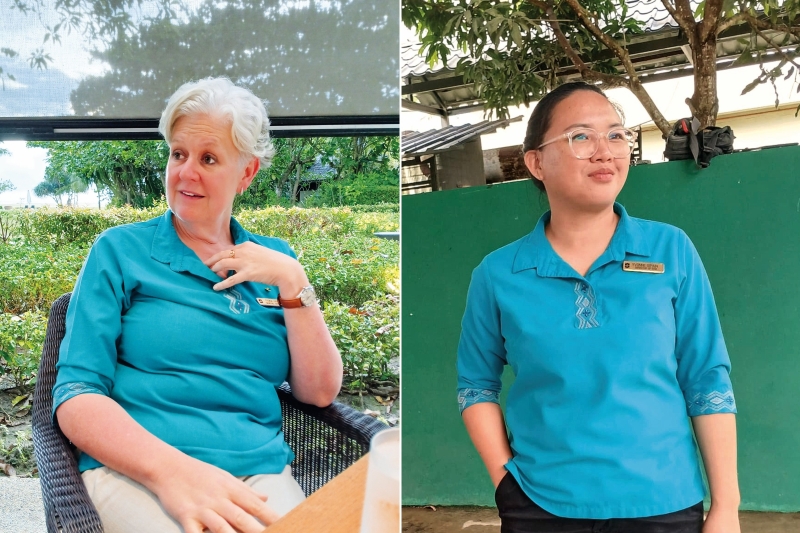
“Many of our staff — some third-generation — grew up with the hotel. They have prospered economically, so there is a great deal of trust between leadership and the team, and within the community. That really kick-started our sustainability programme.”
In 2019, when 350 American delegates arrived for an incentive stay, Hagan “sold them a dream, potentially one of mine”. The hotel would set up a market around the pool where everything was locally sourced or made and every dollar spent by the guests would go back to the locals involved. Instead of a welcome gift, they could get an ang pow to purchase products and every item sold would be accounted for.
The project mobilised the whole Rasa Ria team, from events to marketing, finance, engineering and F&B. They found community partners and suppliers and went into the interiors to meet women who could sew bags and other accessories. Every vendor had to be verified and there were health checks and hygiene training for those who came in to cook.
At the end of the day, the US group bought up whatever was left at the stalls and passed them to Hagan to sell in the hotel’s shop. “That demonstrated in a very meaningful way to our team that doing the right thing is good for business. Sustainability is not about cheap things; it can really sit with luxury. After this, working with different groups became part of our DNA.”
Sustainability was already part of the Shangri-La fabric when Hagan joined the company but it was parked under corporate social responsibility. When Malaysia rolled off environmental, social and governance guidelines for a sustainable future several years ago, Rasa Ria saw the opportunity to connect what it was doing to its business purpose. ESG became a toolbox that helped staff grasp what they were doing and why. Last year, it introduced a new role, director of ESG, which hygiene and CSR director Yvonne Sipain boldly took on.
uinah.jpg
ESG prompts them to think about the way they do business and, if necessary, make hard choices, adds Hagan. “From the outset, if we were going to do home delivery, it would always be in sustainable packaging. We are reimagining how we operate in every aspect. We want to ensure our team understands why sustainability is important to our resort and how it translates into good business practices. It is a lesson on the importance of aligning our actions with our core values and communicating the impact of our efforts clearly.”
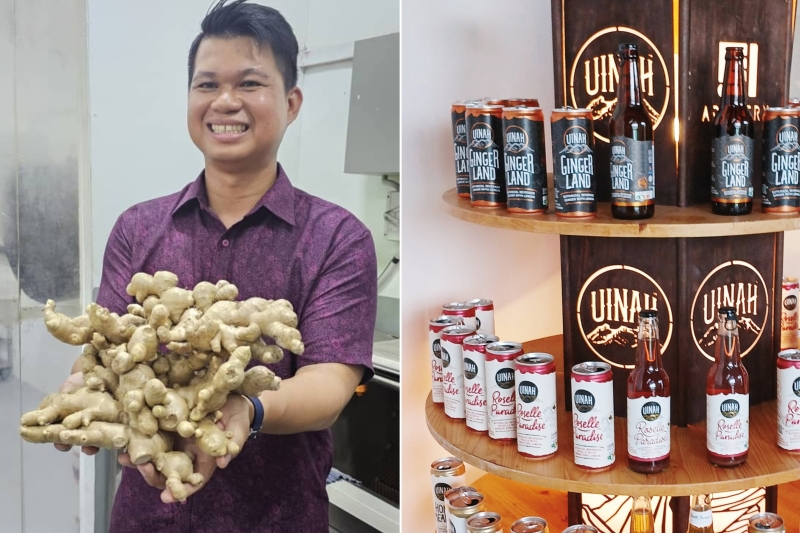
Engaging with the people and sourcing products from Tuaran’s farms are part of a day’s routine for the staff. They get fruits, snacks, drinks, gifts and even table décor — dried and dyed corn husks make pretty floral arrangements — from local enterprises such as DumoWongi, and Uinah, which develops and produces halal ginger beer.
Besides procurement, work processes and upgrades are in place to manage waste and reduce energy consumption. Meters installed to measure the amount of water used for daily cleaning can alert engineers to instances of leakage. The purchase of a new chiller this year, a heavy investment, is expected to save lots of energy in the long run.
Over the last eight years, Rasa Ria has stepped up its commitment to conservation and education, enhancing the natural environment around its 460-acre site that includes 64 acres of forest reserve and an 18-hole golf course, and caring for Pantai Dalit, the public beach fronting it.
Projects with schools involve improving facilities such as dormitories and toilets, or inviting students for workshops that introduce them to flora and fauna. Presently, it is funding a master’s student through Universiti Malaysia Sabah who is researching pangolins, a creature endangered by hunting, trafficking and habitat loss.
a_distant_view_of_mount_kinabalu_from_the_summit_of_timpak_pogimpan.jpg

The hotel’s focus on the environment leads it to engage qualified personnel at its nature reserve, where a 98m hiking track leads up to the summit of Timpak Pogimpaan. Visitors can catch their breath at the viewing platform and look out to clouds caressing the peak of Mount Kinabalu (4,095m), a Unesco World Heritage Site. Set out before 6am and, if the weather is good, you will be greeted by the rising sun. Naturalists on hand will gladly tell climbers more about the hills as well as plants and animals endemic to Borneo.
Naturally, guests are welcome to be a part of the ESG endeavours. They could engage in an afternoon of beach cleanup, support vendors and artisans who bring in their ware to mini bazaars on weekends, try their hand at batik canting, or find out more about caring for nature and what it offers in return.
“We need to take care of the environment around us; we have no choice. The key is how authentic you are in your approach. Do you do it for the sake of ESG or because it has become a part of your systemic culture and you want long-term change?” says Hagan. Guests have asked how to know if the activities they join have any impact on the hotel’s goals while some hold her team accountable to do more.
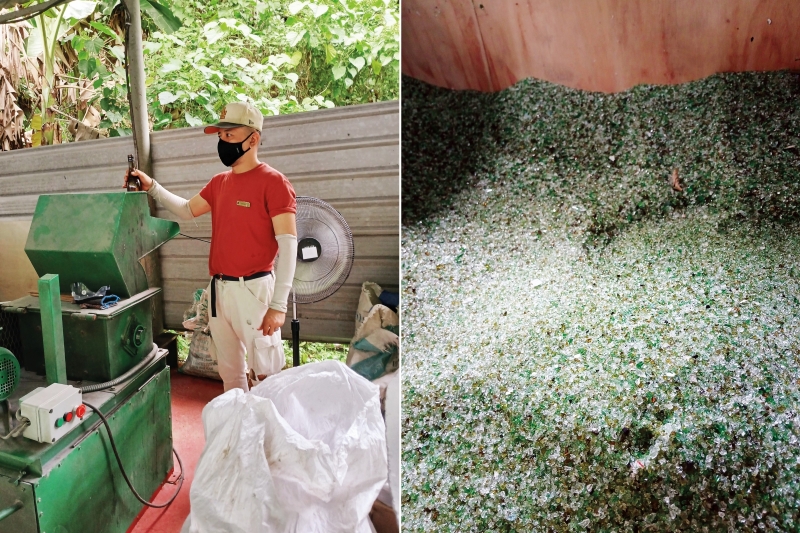
She hears them and welcomes every visitor to be a part of the hotel’s sustainable journey. At the Eco Ria hub, they can watch how used glass bottles that would have ended up in landfills are now weighed, washed, crushed and turned into glass sand, which find a new use as construction material around the hotel. They could also join cooking classes spiced with traditional ingredients, learn mindfulness about food wastage in the kitchens, and find out how switching to LED lights has cut down energy use by 8%.
rasa_ria_kk.jpg
Data is meticulously measured and recorded to trace the impact of initiatives undertaken. One example: 70% of the water used on the landscape at the resort’s Dalit Bay Golf & Country Club is harvested rainwater, which is collected in three huge tanks, straight from the gutter. Sipain says in 2022, Rasa Ria collaborated with the Korea Institute of Civil Engineering and Building Technology to install a machine that can treat rainwater for consumption. Research is ongoing for this project but tests conducted in April show no trace of bacteria or odour in treated samples.
In every project it does, “we hold ourselves accountable, although we don’t put that upfront or shout about it. Our staff often forget to tell people we do lots of things,” says Hagan.
Well, Shangri-La Rasa Ria’s initiatives geared towards responsible tourism, respect and care for the environment and empowering small businesses and local artisans have not gone unnoticed. On April 10, it became the first hotel in Malaysia to achieve ISO 20121 certification for sustainable event management. This is the resort’s third such recognition since it took the first step to remove single-use plastics and tackle glass bottle waste in 2012. Its first certification was for environmental management, followed by that for food safety.
Australian-born Hagan says the latest certification involved a lot of governance around supply chain and processes, and has been a leadership lesson.
People always think about saving water and power when it comes to sustainability, but “the social aspect is also powerful”: How many people you employ? Do you pay contractors as you should? Do you provide training and benefits for staff? How much of your labour comes from the local community?”
Stewarding staff and getting them to be on the same page as the company so they understand their part takes time. Hagan sees her biggest achievement as developing people and growing talent, and giving her team the opportunity to learn, grow and speak. “They can verbalise to you as a guest; they can tell their story and ours as a resort — that’s No 1 for me.”
This article first appeared on June 30, 2025 in The Edge Malaysia.