
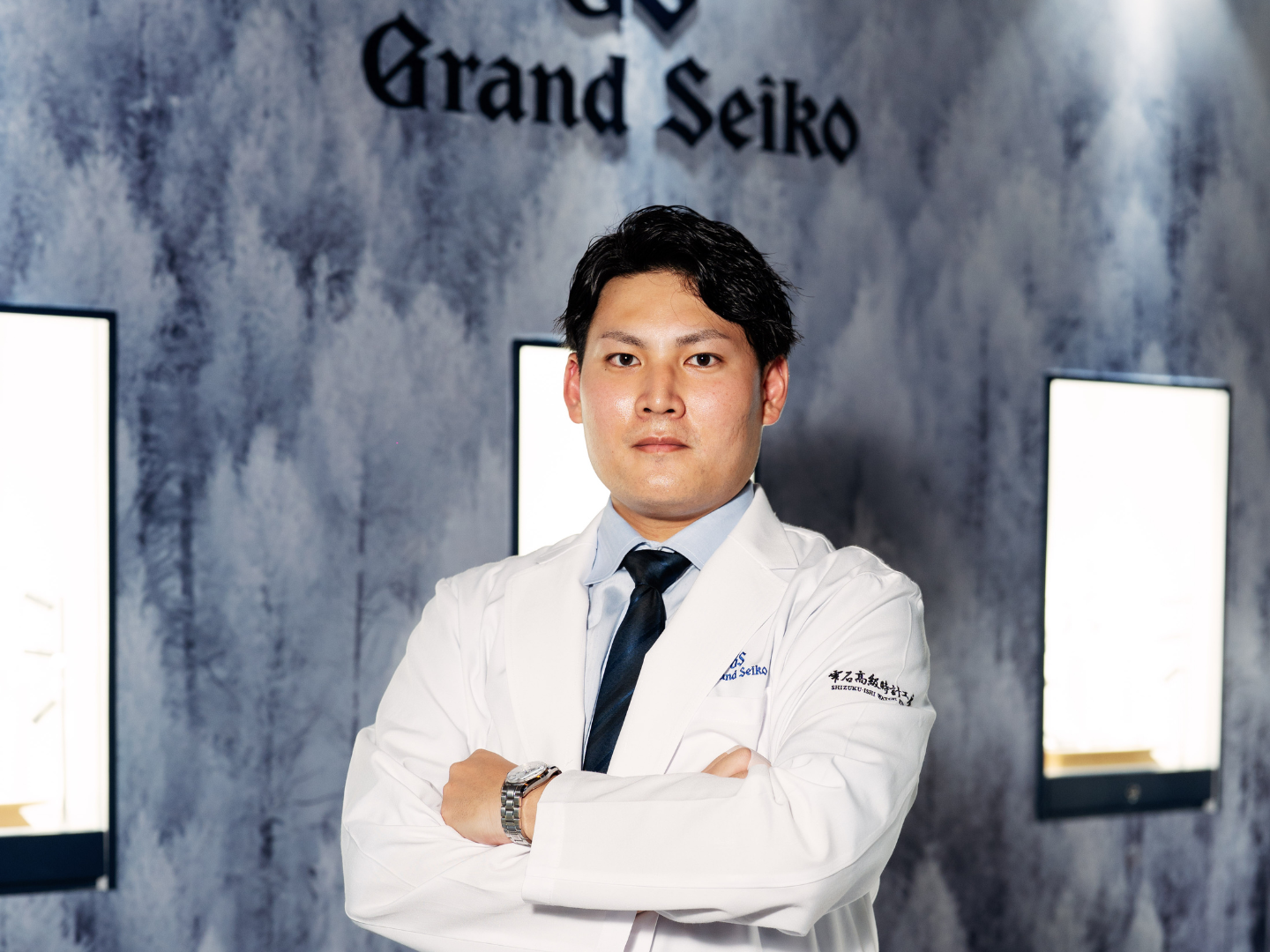
Kato joined Grand Seiko as a craftsman in 2018 (Photo: Grand Seiko)
What does it take to work on some of the most technically sophisticated timepieces in the world? Grand Seiko master watchmaker Tomoya Kato showed an enthralled crowd the exact level of expertise that goes into putting together a high-beat mechanical movement at a live assembly of the Calibre 9SA4, held in conjunction with the brand’s recent Alive in Time exhibition at EQ Kuala Lumpur.
When the coat is on, he handles the extraordinarily fine, minuscule components with a silent, stern deftness that belies his age; once the tools are down, the Iwate-born 28-year-old is more than happy to guide eager eyes through every part of his workbench. He speaks on discovering his passion for horology, overseeing the manufacture’s Shizukuishi Studio and how he continues to hone his skills.
Options: How did your interest in watches begin?
Tomoya Kato: I remember being fascinated by the timepiece my older brother used to wear when I was a child. One of the most memorable moments was around the age of 12, when I saw his broken watch and thought, ‘I wish I could fix it.’
Your journey into watchmaking began in 2016, when you joined Morioka Seiko Instruments, and two years later you entered Grand Seiko as a craftsman. Have you always wished to have a career in horology?
To be honest, I hadn’t been thinking about building my whole future around craftsmanship at first – I considered working in a technical support role. However, thanks to the training period after joining the company and the guidance from senior colleagues, as well as my aptitude, I am committed to improving my skills and expertise as a watchmaker, and putting my efforts into developing my abilities.
2.png
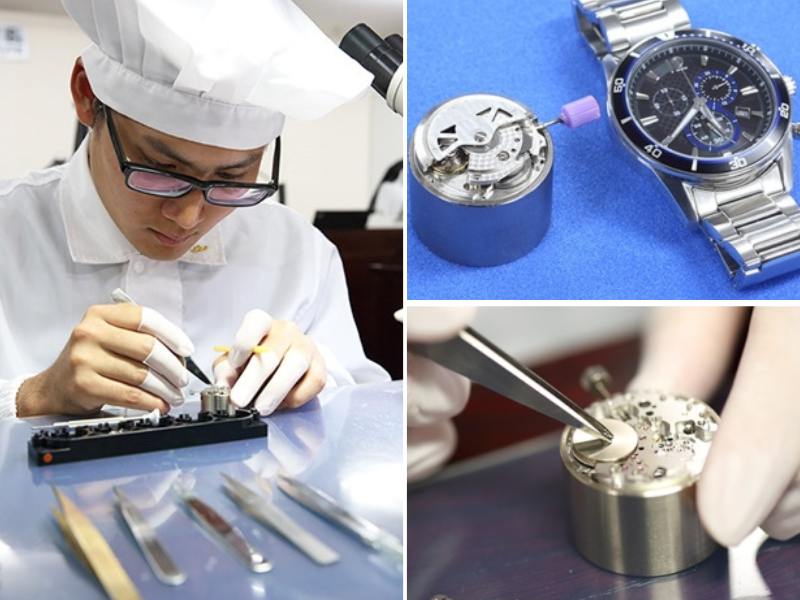
What made you choose Grand Seiko?
Seiko and Grand Seiko were always there as major watch manufactures in my hometown of Morioka City. [My path] started with three years of learning technical skills in the training department. At the time, winning the gold medal on my second attempt at the 56th National Skills Competition had a huge impact, especially because it was the first gold medal ever for my studio. The response was tremendous, both inside and outside the company. After competing, I began working on the assembly. Looking back, it feels like the process happened quite quickly!
Some watchmakers are especially passionate about certain parts of a movement, like escapements, or specific complications. Are there any particular elements of the watch that fascinate you, or which you like working with?
My favourite task is rate adjustment, and it’s still the main work I do today. I love seeing the accuracy of the watch improve step by step through my own hands.
Have there been any particularly challenging moments you struggled to overcome, or skills you found difficult to learn?
The assembly and adjustment of Grand Seiko’s timepieces are extremely sophisticated, so I feel there have been more challenges in that regard compared to anything else. It’s not just about putting the parts together: the process involves fine-tuning gaps as small as one hundredth of a millimetre. That level of precision is what makes working with the company’s creations uniquely difficult. I feel a real sense of growth when I can perform live assembly demonstrations in front of customers during events.
3.png
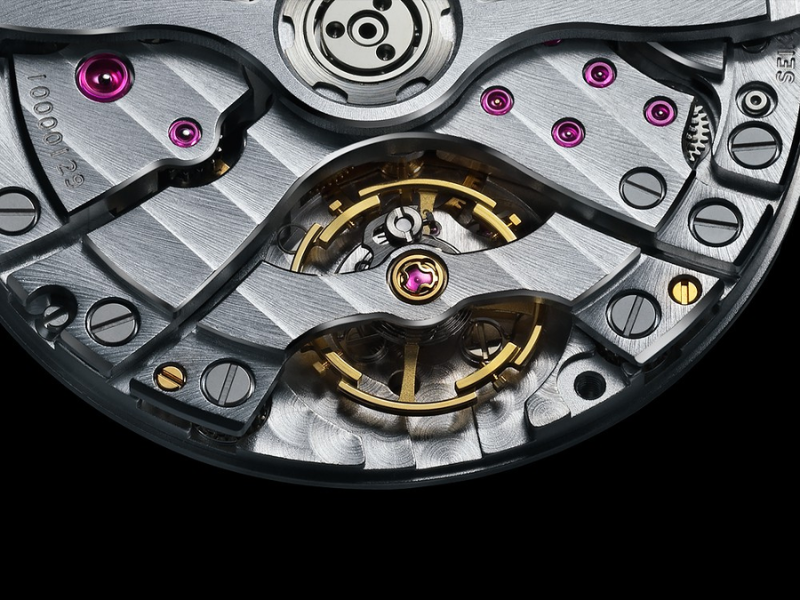
Aside from the 9RB2 and 9SA4, are there any other unique or historic Grand Seiko movements you appreciate?
Personally, I find the 9SA5 movement the most captivating. It was the first calibre I was involved in manufacturing, so I have a strong attachment to it. Beyond that, I truly admire its beauty – the flowing pattern on the bridges reminds me of the Shizukuishi River, a symbol of Iwate Prefecture, and that connection makes me appreciate it even more.
When producing a new movement, how much communication does the watchmaking team have with the designers and developers? Do the watchmakers give their own perspectives or feedback on prototypes, or do you usually only see the finished product?
While the movement design is centrally planned by the designer and development teams, watchmakers are occasionally consulted to assess assembly efficiency. The developers possess strong manufacturing expertise and pay close attention to even the smallest details to prevent issues, so feedback from our side is rarely required.
As the master watchmaker in charge of overseeing movement assembly in the Grand Seiko Shizukuishi Studio, how do you nurture new talents?
I still feel [I have] a long way to go to become a good leader. When new employees join, I sometimes take on the role of instructor and provide technical guidance, so I hope my ability to teach will continue to grow as well. I’m very happy to see young people joining every year to become watchmakers.
1.png
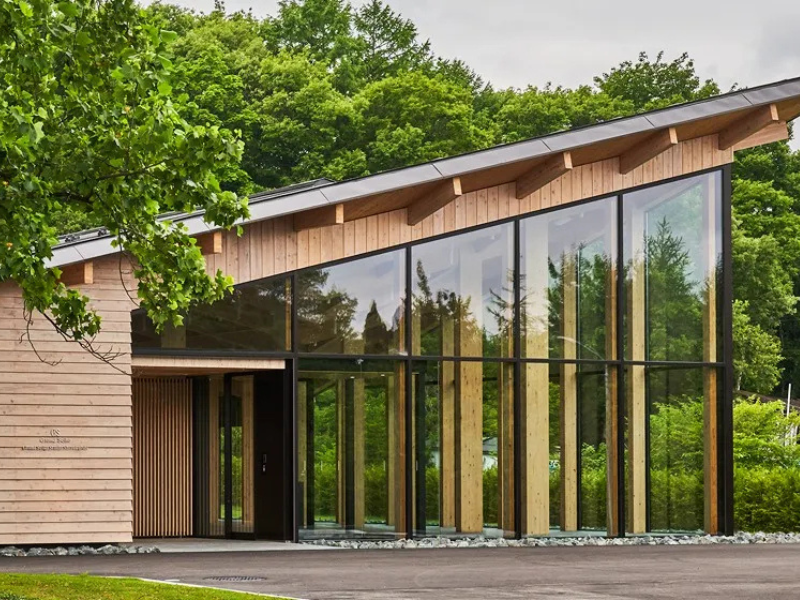
Watch assembly can be quite a physically straining profession. Is there anything you do to keep up your level of consistency and dexterity?
I make a conscious effort to maintain a disciplined lifestyle and steady mindset. While I enjoy playing sports as a hobby, what I prioritise most is keeping a regular daily rhythm and staying calm and focused at all times. I believe this consistency is essential for performing precise and high-quality work.
You have said before that your dream is to have customers purchase a watch because it was assembled by you. Are there any additional qualifications or awards you would like to attain?
I aim to grow to a level where I can surpass my predecessors as one of Japan’s leading masters of craftsmanship. Every day, I dedicate myself to continuous improvement so that I can one day receive the award of ‘Contemporary Master Craftsman’ (gendai no meikō), a title that represents the pinnacle of Japanese technical excellence.