
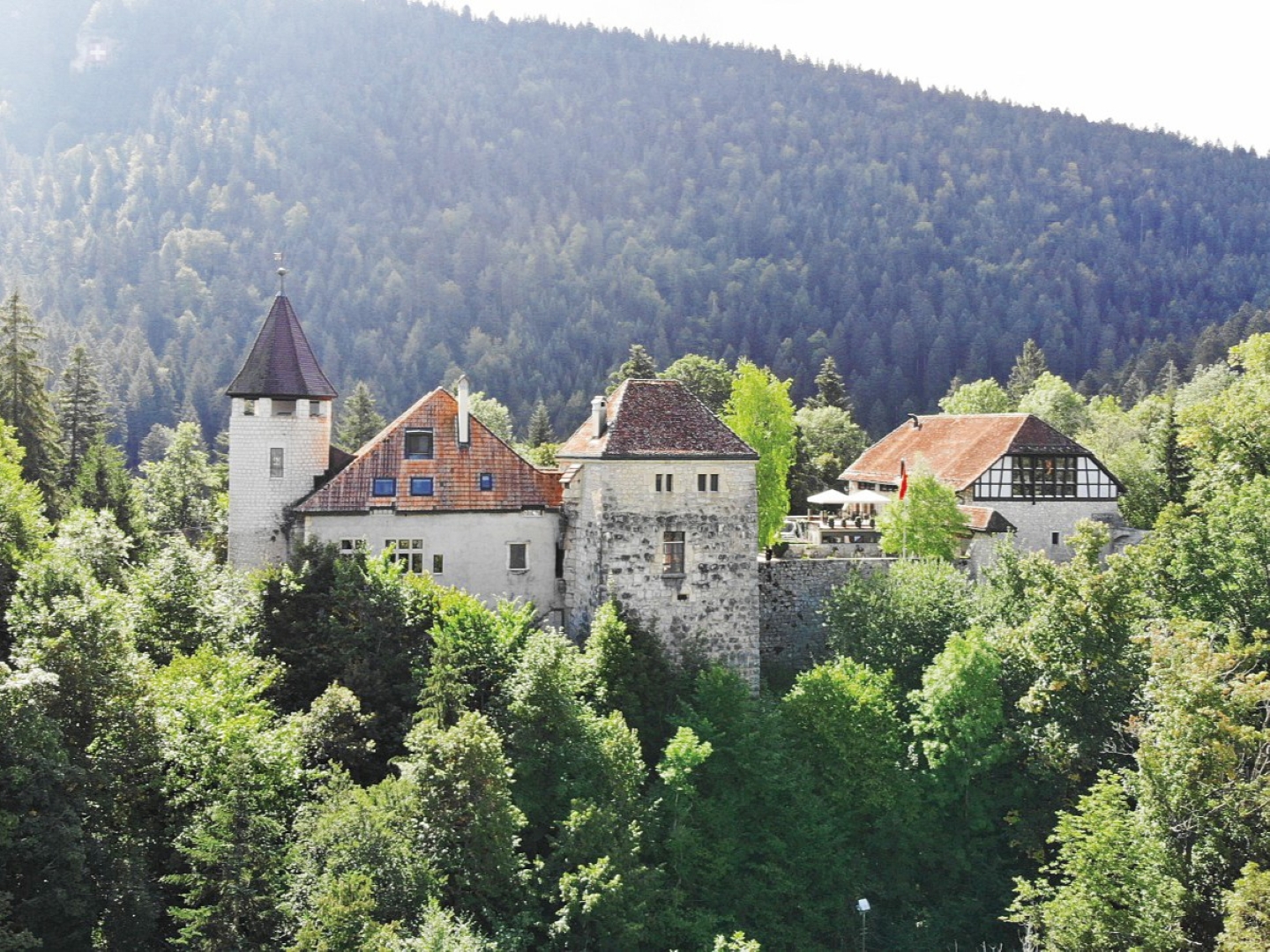
Château de Môtiers overlooking the village of Fleurier (Photos: Bovet)
Not many people can say their daily commute leads to a castle. But for the lucky few at Bovet, the drive through winding, wildflower-covered hills to Château de Môtiers comes with a catch: they must reverse park or risk triggering the pet peeve of Pascal Raffy — the man who owns both the brand and the fortress.
Founded in 1822 by Swiss watchmaker Édouard Bovet, the maison built its legendary reputation by captivating the Chinese imperial nobility, specialising in lavishly decorated, heavily engraved pocket watches that were sold in matching pairs. Although political upheaval eventually forced the founding family to sell the company, the Bovet name remained synonymous with peak artistic horology.
Its modern renaissance began in 2001 when Raffy acquired the brand to restore its historical grandeur. A few years down the road, he purchased a medieval castle overlooking Fleurier that had been owned by the Bovet family and even moved in himself.
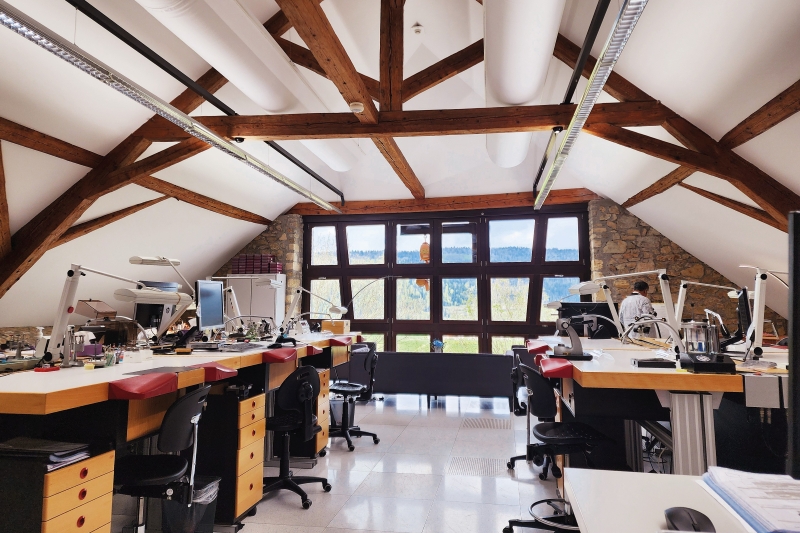
Part of his quarters, done up with viridian couches, vintage collectibles and half a dozen trophies from Grand Prix d’Horlogerie de Genève, is dedicated to hosting close friends and guests. Meanwhile, the team gathers in an office, scented with a medley of botanicals gathered from around the castle, just across the courtyard. Climbing up the tower leads to a spotless air-filtered atelier lined with benches, where timepieces are cased, decorated and undergo final testing by master watchmakers free from the hurried pace of modern assembly lines.
1.jpg
The majority of the production work takes place in a separate facility in Tramelan that was acquired 20 years ago. More than 95% of Bovet’s components are made in-house, including highly temperamental hairsprings, escapements and regulating organs, making them truly integrated. Annual production hovers around 1,000 pieces despite employing over 60 craftsmen and engineers — a testament to the sheer complexity of its timekeepers, which honours its storied past through innovation.
The Amadéo case, featuring a patented convertible system allowing wristwatches to transform into pocket watches or desk clocks without any tools, is a great example. Meanwhile, superlative creations like the Récital 32, the maison’s first GMT, demonstrate its prowess in translating complex mechanisms — in this case, a flying tourbillon with 10 days of power reserve — into intuitive and reliable companions.
At Bovet, “Swiss Handcrafted” boldly replaces “Swiss Made”, far exceeding the latter’s legal requirement of at least 60% of the watch’s total manufacturing costs being generated locally.
This article first appeared in 'Calibre' on July 27, 2026 in The Edge Malaysia.