
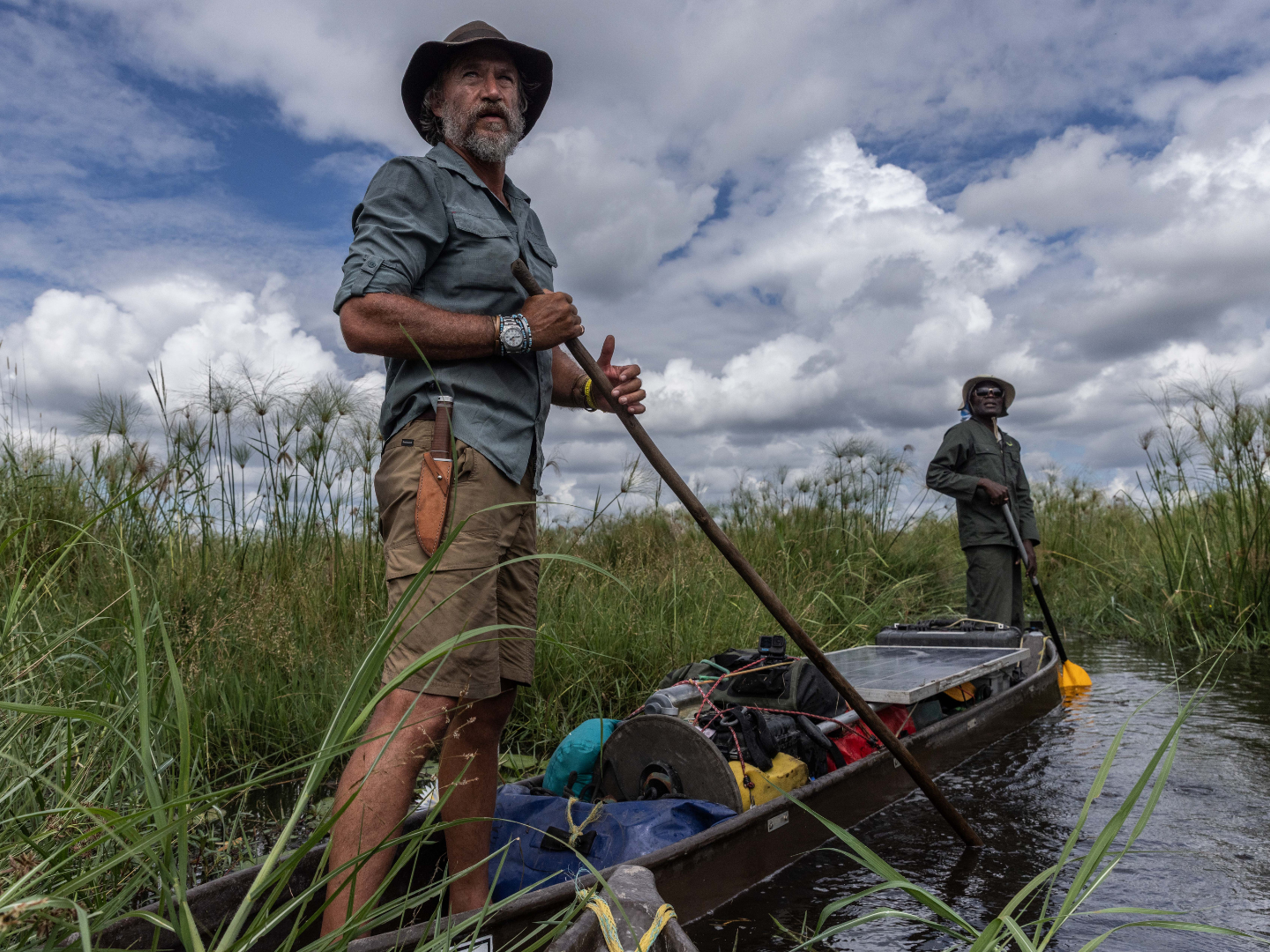
Boyes (left) and fellow expedition team member Gobonamang Kgetho navigating their way through tall reeds and marshy conditions on the Kwando River in Botswana (Photo: James Kydd/ The Wilderness Project)
As the first rays of light bathe the African continent in gold, the waters of the Okavango Delta awaken in a shimmer so brilliant it can be seen from space. Fanned out in landlocked Botswana, the vast wetland is the jewel of the arid Kalahari Desert and an oasis to the world’s most extraordinary wildlife.
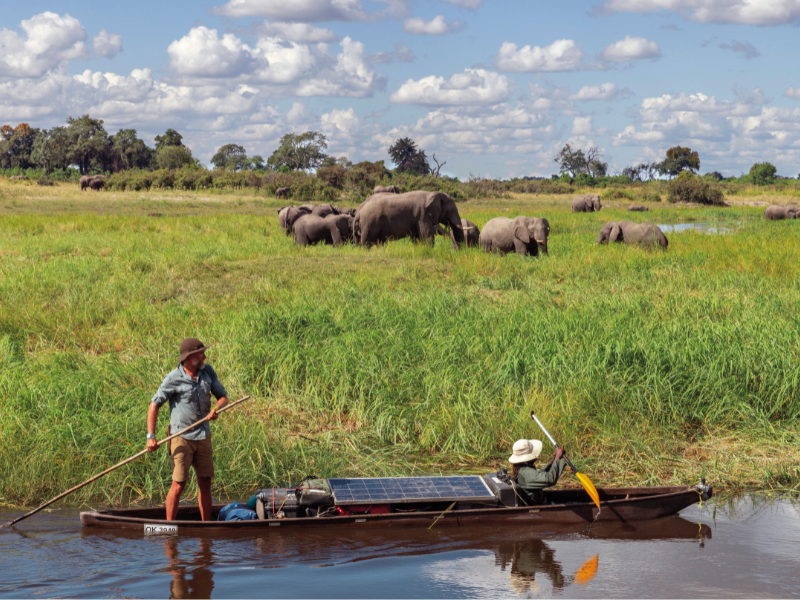
In 2014, it was dubbed our planet’s 1,000th Unesco World Heritage Site. On May 21 the following year, South African conservationist Dr Steve Boyes and his team embarked on a journey from the Cuito River to track the delta’s wellspring, tracing channels and tributaries in traditional dugout canoes or mekoro for 2,500km across 121 days.
His voyage for the “true source” led him to the highlands of Angola, where he was greeted by the largest unstudied river basin on the planet. Spanning an area bigger than California, these vast watersheds were frozen in time by 27 years of civil war. Gaining access required travelling in armoured vehicles and navigating active minefields. There was a reason the first Portuguese explorers dubbed the area “Terra do fim do Mundo”. It was, indeed, the Land at the end of the Earth.
“We found access through satellite imagery but I met no one. It was almost like a lunar landscape. It was eerie and lonely,” Boyes remembers of the seemingly infinite plain carpeted with algae gardens and lily pads. He eventually encountered the Luchazi forest people who have been living in isolation for decades. “We were quite surprised to find the village, which was near a waterfall that we were told was geologically impossible. Interactions with them take you back to the past, a time when a people’s languages, cultures and traditions were literally part of the ecosystem.”
The Luchazi told Boyes about their traditions and beliefs, warning his team against the mukisi, a water spirit in the form of a serpent that never stops growing. “We asked them what they called this vast landscape, this water tower structure with all the source lakes. There were many names for different parts of it, but the traditional leaders did say there is one used in general: ‘Lisima Lya Mwono’, which means ‘The Source of Life’.”
9.png
Sovereign waters
Boyes consulted top scientists studying the Okavango basin and was told that its eastern sources were seasonally flooded wetlands, but what he found were ancient acidic source lakes surrounded by previously undocumented peatlands. “It is astonishing when you’ve got hundreds of these blue springs coming up, almost like swimming pools reflecting the sky. In the larger rivers, it starts to go green, but they are still crystal clear to the bottom,” he says.
His team found that this boundless plateau in the Angolan Highlands, which receives intense seasonal rainfall from September to April, supplies water to 11 river sub-basins, eight of which are transboundary. It puts out about 423 cu km of water — “That is more than double the annual water usage of the whole of Europe!” Boyes quips — into the downstream river systems, not only to the Okavango, but also the Cuando, Zambezi, Congo, Cuanza and Cunene rivers. In 2018, he founded The Wilderness Project to accelerate the progress of intimately surveying and studying these rivers from source to end.
A recent finding established the peatlands in the Angolan Highlands as the second largest of its kind in Africa. Like a giant sponge, peat can hold 25 times its dry weight in water. “It’s a lifeline during the dry season because it’s a delayed release, similar to glacier melts. It also creates a year-round buffering effect to the El Niño-Southern Oscillation, which is getting worse in this part of Africa,” he explains. The phenomenon, a weather disruptor, has caused floods, droughts and extreme temperatures in many parts of the world.
“You can fly over the forest that sustains these catchments for hours. That’s 11 million hectares of intact high-altitude miombo. We’re still trying to understand the nature of these forests but they’re an extraordinary carbon sink when matched with the below-ground peatlands.”
body_pics_3.png
Boyes’ team also noticed an emerging endemism, adding over 270 new species to science. “We’ve got the smallest dragonfly in Africa, the lilliput prickleleg; a tarantula the size of my hand with a horn on its back; we have new lizards, snakes and what we think is the smallest large mammal in Africa — a grysbok subspecies, which is a tiny antelope the size of a bunny. Our motion- and heat-sensing camera traps have found new populations of vulnerable and endangered species — cheetahs, wild dogs, lions and hyenas — more than 500km away from where they’re meant to be. So these are new populations in new habitat types in this forest sanctuary,” enthuses the National Geographic explorer. The open-data project has produced over 50 peer-reviewed publications about the water tower structure.
After years of repeated visits and research, Boyes’ team published a landmark paper on the ichthyological assessment and monitoring of the Angolan Highlands. He was due to present it at the Esri User Conference in San Diego in 2023. “But as I was standing there, I was in full malaria fever. I had it for a month and just didn’t know it. Backstage, I thought I was having a stroke. But I just thought the world had to hear about the Angolan water tower. I was in the intensive care unit on machines with organ failure two nights later for six days.”
Thirst + thunder
When Boyes’ team started to model the Angolan Highlands water tower, they took the same method of description and put it into Google Earth Engine and found an archipelago of peatlands reaching up the continent. The modelling found 18 water towers, all of which are being and will be explored in The Great Spine of Africa series of expeditions supported by the Rolex Perpetual Planet Initiative. It began with the search for the Zambezi River’s wellspring. The expedition traced the waterway from source to mouth, which stretches to the Indian Ocean.
It was an opportunity of a lifetime for scientific research as they were establishing ecological and hydrological baselines along the way. While on the water, the team would take and upload a 360° photograph every 30 seconds and stitch them together to create an interactive view of the river. Every 10km, an aerial shot would be captured by a drone. “We were recording all people, wildlife, fishing nets, boats, burnt areas, habitat sites, agricultural crops and dwellings — pretty much everything we saw was being recorded and then populated onto an interactive experience,” he says.
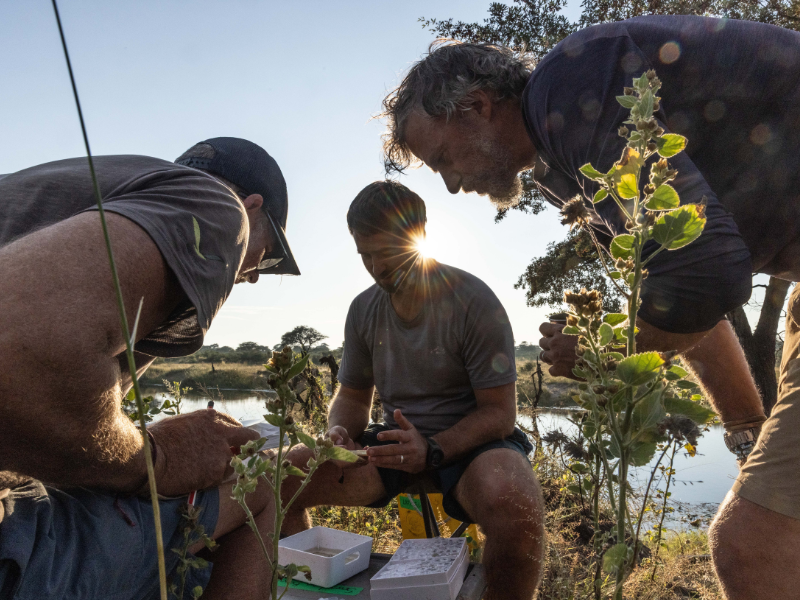
Water samples were pushed through a specialised filter, then analysed in a lab. “We can determine every single fish that’s been swimming in that water over the last two weeks. That gives us a wonderful picture of fish diversity in all of these river systems.” While exploring the Linyanti Swamps, Boyes’ team came across ghost and dwarf stonebashers, mormyrid fish that have the largest brain-to-body mass ratio of any vertebrate. “That’s because they use sonar to locate the environment around them as they hunt,” he explains.
An acoustic doppler current profiler was utilised to perform submillimetre scans of the river beds to estimate water discharge while quality tests were conducted to detect changes in water chemistry.
body_pics_2.png
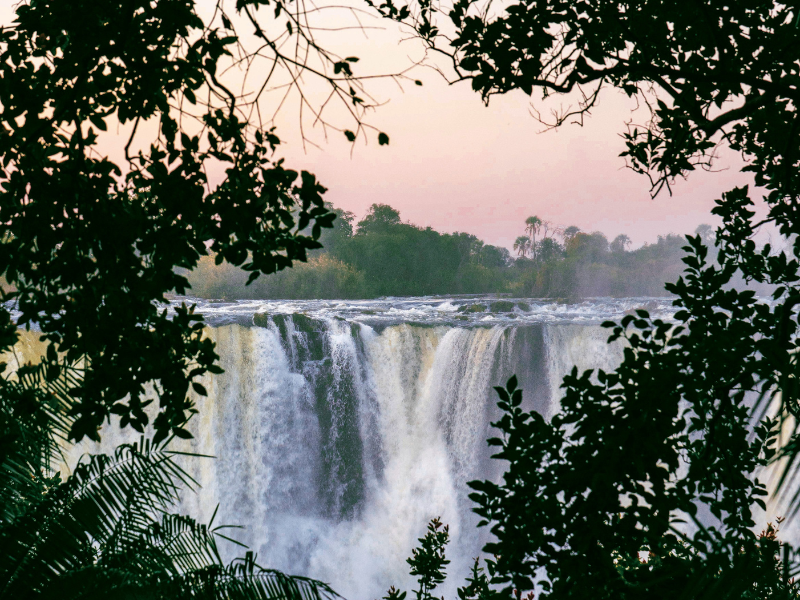
Combining ground measurements with high-resolution satellite data, the team identified the Lungwebungu River in Angola as its most distant origin, adding 342km to its officially recognised length. They also found that the Angolan portion of the upper Zambezi sub-basin contributes over 70% of the river’s total flow, which is eventually channelled to Victoria Falls — known to the locals as Mosi-oa-Tunya, or “the smoke that thunders” — the largest curtain of water on Earth.
“Our next expedition was breaking away from the Zambezi and starting at the source of the Congo Basin in Angola, which is also the source of the Cassai, the second-largest river in Africa by discharge — bigger than the Nile and Zambezi — and is the main tributary of the Congo itself. It starts as a trickle up in the Angolan Highlands. We demonstrated its true source is actually the Munhango. This river was completely clogged by trees due to the deep peatlands formed on either side. But there’s a big drop on this river, so it was our first experience with rapids,” Boyes recounts.
His team would tread the rapids almost daily. Capsizes happened often and gruelling portages were required to manoeuvre around thickets. Each portage involved the crew carrying hundreds of kilograms of equipment down the riverbank to the next safe relaunch area. “The hippos we found were very strange. They were kind of this pink colour and it wasn’t because of the sun. They were much smaller and living in the rapids, which complicated our calculations going through them,” Boyes recalls.
The Cassai is also Africa’s largest example of stream piracy, a phenomenon where one river captures part of another. There, a portion of the upper Zambezi catchment collapses into the Congo Basin. “With that, you’ve got Zambezi fish fauna that had been trapped there for hundreds and thousands of years.”
7.png
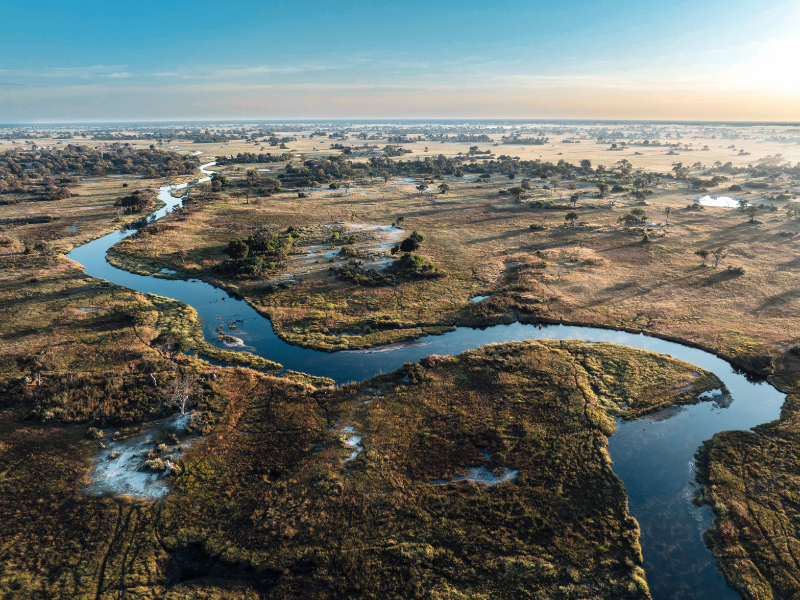
Another Rolex Perpetual Initiative-supported adventure tackled Congo’s Chambeshi River and Bangwuelu Swamps, both of which were documented as part of CNN’s Call to Earth series in 2024. The mystical wetlands are a refuge for elusive animals such as the endemic black lechwe. The moving sight of over 50,000 of these antelopes running across the open floodplains is etched into Boyes’ mind.
“After much searching, we found shoebills there too,” he says. The endangered storks can grow up to 5ft tall with a wingspan of 8ft. No more than 215 of these strange, dinosaur-looking birds are surviving in these wetlands as they are at risk of being captured and sold to the exotic animal market. “We’ll find more of them as we explore the Nile Basin in the next chapter of what we do.”
Boyes’ team has started at the Nile’s southernmost source in Burundi in the Ruvubu River. “The Nile is probably the most famous river basin in Africa. In February, we’ll be launching into the most distant source, the Nyabarongo, going into the Kagera then Lake Victoria in Rwanda. The team will go through Uganda and come into South Sudan, where we’ve been working for the last few years since it opened up after the peace deal,” he explains.
Beyond the delta
Since the launch of these expeditions with Rolex’s support, The Wilderness Project has doubled its operations every year for the past three years and the team has grown to over 100 people. “We are running three to five expeditions at any one time and are working with 30 partners across Africa, so this programme has scaled extraordinarily across the continent.
“The overall objective of The Wilderness Project through The Great Spine of Africa expeditions is to better protect 1.2 million sq km of irreplaceable African watersheds, water towers and wetlands in partnership with local communities. We hope by 2030, we will have finished 200 expeditions,” says Boyes.
Following years of intensive research, he presented his findings on the Lisima Lya Mwono landscape to the 2025 Ramsar Convention in Zimbabwe in a bid to have it recognised as a wetland of international importance. Before the convention, he was able to bolster his speech with local knowledge provided by kings and chiefs of communities living along the Zambezi banks, who gathered for the first time in 60 years to review his findings. “These listings acknowledge that there’s a key biodiversity area, adding weight to any future discussions with the government.”
8.png
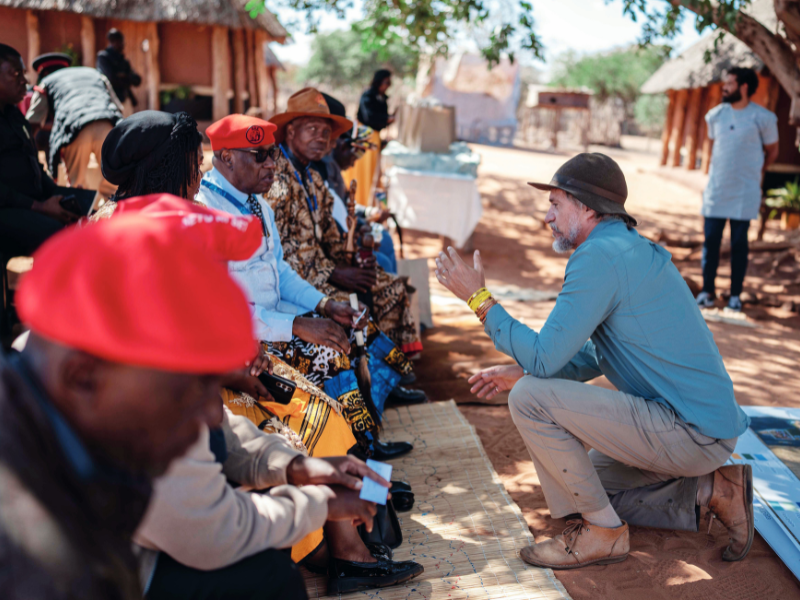
In January, Lisima Lya Mwono was officially recognised as Angola’s first Ramsar site. This momentous acknowledgement will ensure the area is protected by national and international conservation frameworks, with a particular focus on sustainable use and land management.
Furthermore, Boyes maintains that traditional leadership and indigenous knowledge must serve as the primary mechanisms for conservation, stressing their importance in maintaining nature’s balance. “We couldn’t do this without traditional leaders. When you go to these source rivers, you’re going to find people living off the grid connected to language, culture and tradition. They are river guardians. They are the protectors of those rivers and certainly the protectors of Africa’s water security.”
The locals have also been instrumental in providing information on wildlife behaviour. “It was the King of the Nkangala that has been helping us find the descendants of the Fénykövi elephant,” he says. Nicknamed Henry, the largest elephant ever recorded stands taxidermied in the entrance hall to the Smithsonian in Washington DC.
“Over the last two years, I’ve been taking DNA swabs from elephant dung. With Stanford, we are relating those genetic findings back to the ancient DNA we extracted from Henry to look for his descendants lost in the Angolan Highlands,” he adds.
Following Boyes’ journey, Ghost Elephants, directed by Werner Herzog, premiered in Venice last year and will be available on National Geographic on Disney+ in March. His book Okavango and the Source of Life: Exploring Africa’s Lost Headwaters will also be launched the same month.
body_pics.png
The long meander
Looking back at his lifelong adventures in the wild, there was really no defining moment that led Boyes to this path. “For as long as I can remember, as early as five years old, all I wanted to do was to be an explorer. The best thing that ever happened to me was giving up on my master’s degree to take on a job as head of housekeeping at Vundumtiki Camp in the Okavango Delta. There I got to just immerse myself in what I loved. Very importantly, I got to meet tourists and describe what I felt to them. It taught me how to speak. I thought that was really important. It made my PhD three years longer, but that was good for me, to just live out there and commit myself to it.”
While standstill traffic is the cause of our Monday blues, Boyes’ most nightmarish commutes involve a hippo smashing its tusks through the hull of his boat. “We’ve had crocodiles take an entire 6m boat in its mouth and swim across the channel with it,” he laughs. Bad days also include sweat bees at the end of summer. “Millions around you. They don’t sting but they sure can irritate you to death.
“Meanwhile, we get to visit sites where local people hardly get to visit. On that Cassai expedition in Congo and Angola, we got to visit sacred places. We were told to leave the boats and walk. It was silent in the valley and very dark. The locals told us this was the place where God made man. There were carvings all over stone, kneeling spots carved into the rocks. Those experiences make you feel so deeply connected to everything around you, to the people around you.
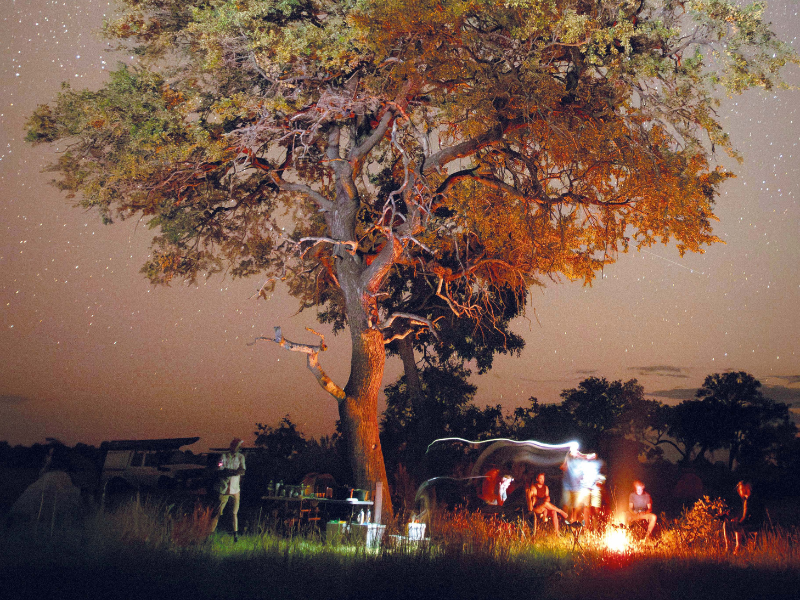
“Then you have what would drive any scientist or explorer — moments of documentation and discovery. But to me, it was also every sunset, every sunrise, every Milky Way. It’s something I wish everyone could experience.”
The next adventure will lead the team to the most isolated parts of the Congo and Nile. “We’re going to find hundreds of new species in those basins. South Sudan in the Boma Plateau and Imatong mountains — these remote rocky outcrops in the middle of the floodplains are going to be extraordinary. It’s going to take six years to do the whole Congo. Three or four for the Nile. Similarly for Chad and Niger, almost at the same time,” says Boyes.
“We’re going to see the impact scale. Our team will go from 100 to 500 people. The legacy I’m looking forward to as we expand into these basins is the people whom we meet and activate — river guardians, ecologists and scientists.
“The research that we’re doing is early 21st century ecological and socio-economic baselines. We want to know exactly what the rivers are like now, so that in 2050, we can compare back and see the changes. That explains our urgency of conducting 200 expeditions in eight years.
“Let’s discover some things now. Let’s document them now. And most importantly, let’s meet the people now.”
This article first appeared on Jan 26, 2026 in The Edge Malaysia.