
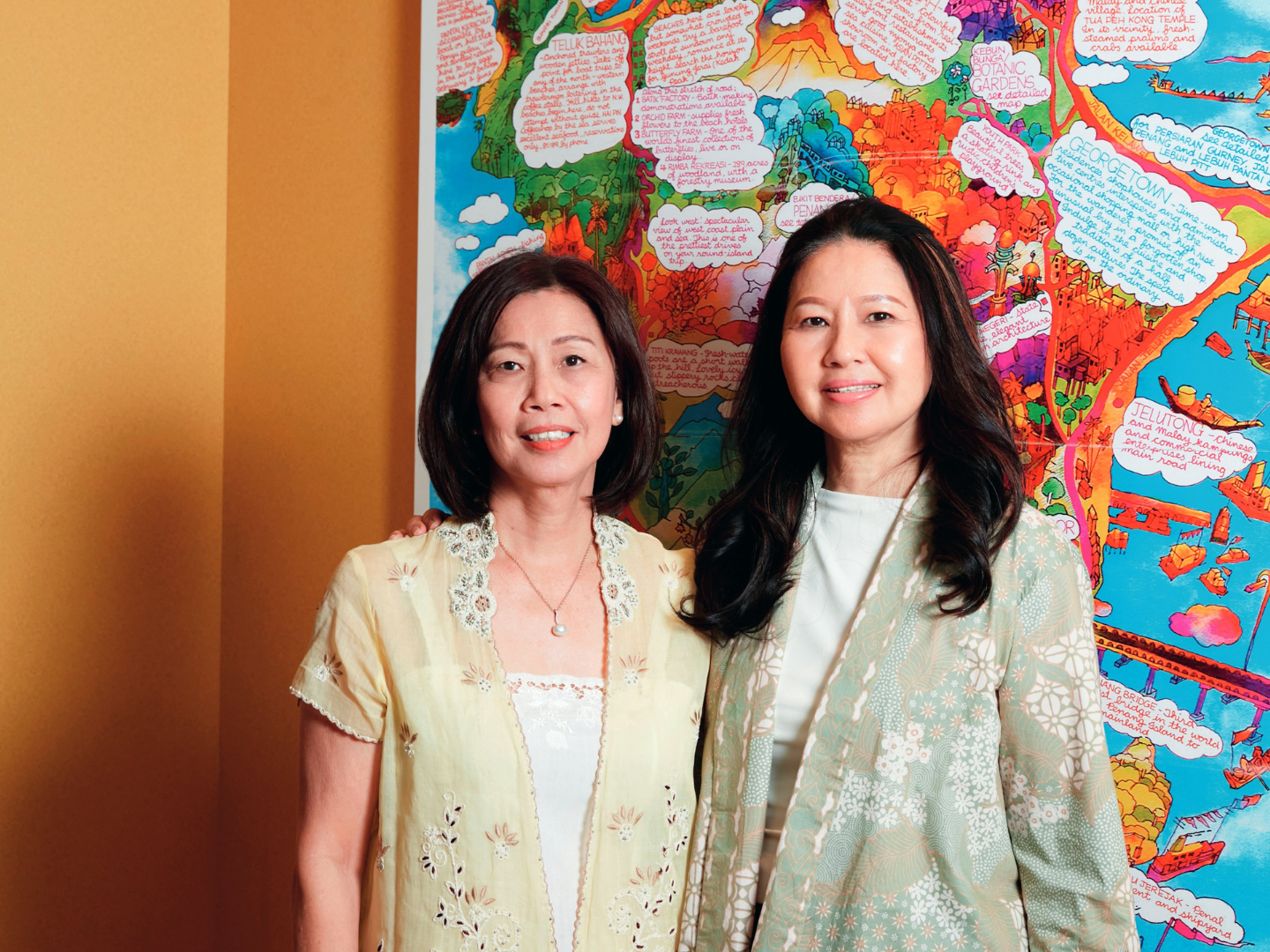
Vivian (left) and Cecelia (All photos: SooPhye)
It is a breath of fresh air when you meet entrepreneurs who do not immediately set their sights on world domination. But that is just how it is for Cecelia and Vivian Chan. Together with two other sisters, Rosalind and Josephine, and an ever-expanding gaggle of nephews and nieces joining the fold, the Chans have unwittingly left an indelible mark on the Malaysian dining landscape.
As co-founders of Little Penang Kafé, the sisters went from possessing zero F&B experience to running an enduring — and still-thriving — string of restaurants. There are three Little Penang Kafé outlets today: two in Petaling Jaya (Atria Shopping Gallery and IOI Mall Damansara) and one in downtown Kuala Lumpur (Suria KLCC).
The first outlet opened in 1999 at Mid Valley Megamall, where wizened foodies might remember its rapid growth in a quiet corner of the shopping centre. “We were surprised the business took off so quickly,” says Cecelia. “There was never any grand plan to create a culinary legacy. But yes, Penang lang, or all Malaysians for that matter, love nothing better than food, be it preparing, eating or talking about it. So while it is hard for us to believe that it has been almost 30 years since we started Little Penang Kafé, I am glad to say that many of our regulars have been with us from Day One. Now, we often see two, three generations all sitting down to eat together.”
Rasa utara
The seed for Little Penang Kafé germinated when Cecelia, who had moved to KL from Penang in the mid-1980s, could not find any authentic Penang cuisine in the Klang Valley. “It was different in those days,” she says. “Yes, there were one or two restaurants but no place that served easy, one-dish meals that gave you a taste of the island without costing too much — and in comfort.”
In relating how she would regularly return to Penang to indulge in the food, Cecelia says she also began trying to replicate the dishes so as not to have to travel all the way back each time. “Also, in Penang, each hawker centre had a few star dishes. So you often had to hop from one spot to another to eat the things you liked. So I had this idea of consolidating all my favourite dishes on one menu, under one roof.”
It was this push factor that made Cecelia and her niece Elizabeth decide to open Little Penang Kafé despite having no F&B experience whatsoever. Serendipity also played a part as both women had just quit their stressful jobs with international ad agencies. Realising that some additional muscle, support and know-how would be welcome, Cecelia managed to persuade her sisters Vivian and Rosalind to join their fledgling business as well. “I reluctantly agreed,” Vivian says half-jokingly. “I was very happy running my own construction set-up and busy working on the Mid Valley project. I told her she could only have one month of my time. Who knew it would end up being permanent?” she laughs.
“We wanted to preserve our mother’s recipes and share our love of Penang food too,” Cecelia adds. “And what better way to do all that than with a family-run café?” And family-run it certainly is. Despite Elizabeth having exited in 2019 (to focus on caring for her mother, who sadly passed away a year later), Cecelia and Vivian remain extremely hands-on. Both can be found making their rounds daily, although it is Bunga Kantan, their latest offering, which takes up the lion’s share of their attention these days.
1.png
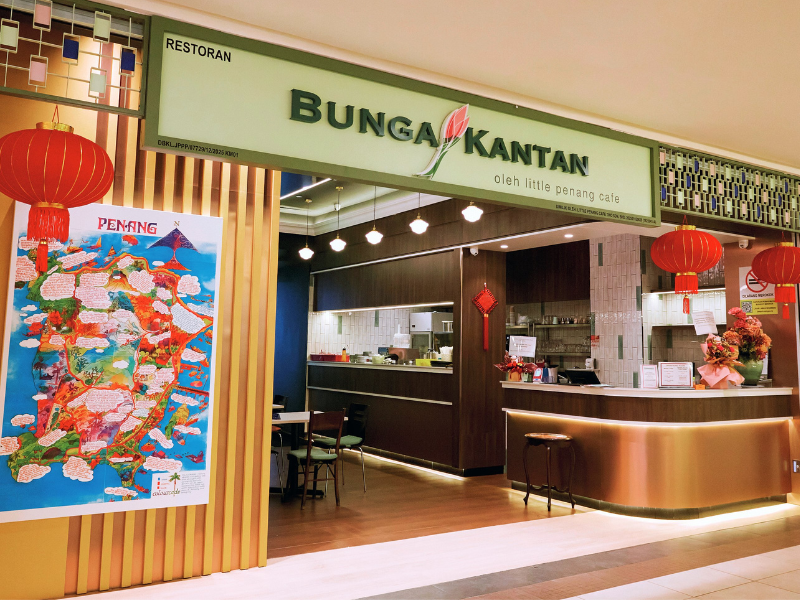
Expanding their culinary boundaries slightly, the Chan sisters recently opened Bunga Kantan in Bangsar Village II. Segueing slightly away from Little Penang Kafé’s modus operandi, the 2,600 sq ft restaurant (named after the Malay word for the edible pink bud of the torch ginger flower) veers from one-plate, Penang hawker-style fare to more elaborate dishes, designed for sharing and enjoying en famille. “To set up another Little Penang Kafé would be boring, kan?” Vivian says cheekily.
On the tropically evocative moniker, they share how they wanted to initially incorporate the word “nyonya” in the restaurant’s name. “Initially, it was Nyonya this or Nyonya that. In the end, we thought we should just pay tribute to this new venture by honouring an ingredient that is intrinsically present in Nyonya food.”
Looking around the charming surroundings, a niece can be seen whipping up a signature drink — a tempting-looking bunga kantan mocktail made using torch ginger-infused syrup, fresh lemon juice and soda, while Cecelia’s husband Jared mans the till. “He’s actually an incredible cook. He comes up with a lot of recipes for the restaurant too!” Vivian volunteers.
Each family member possesses their own culinary super power. Cecelia specialises in noodle dishes, namely curry mee and laksa of all sorts. “I do noodles well as I don’t have the patience to tumis spices,” she sighs, referring to the painstaking process of sautéing chillies and hand-pounding spices in hot oil until they release their fragrance. “The title of ‘Miss Tumis’ is actually Viv’s,” she teases. “She is a pro at it. Jared is the master of char koay teow, while Jo’s lobak, mee jawa and ju hu char can’t be beat.”
Naturally, only the best and most authentic ingredients are used in the Little Penang Kafé and Bunga Kantan kitchens. “We make it a point to get key items from Penang,” says Vivian. “Our asam jawa, for example, is sourced from a shop near Prangin Road and our belacan comes from Penang as well. We also make our own pie tee shells as Cecelia’s husband cleverly created a special bhor (dipper) which can fashion four shells in the hot oil at once.”
A Penang childhood
3.png
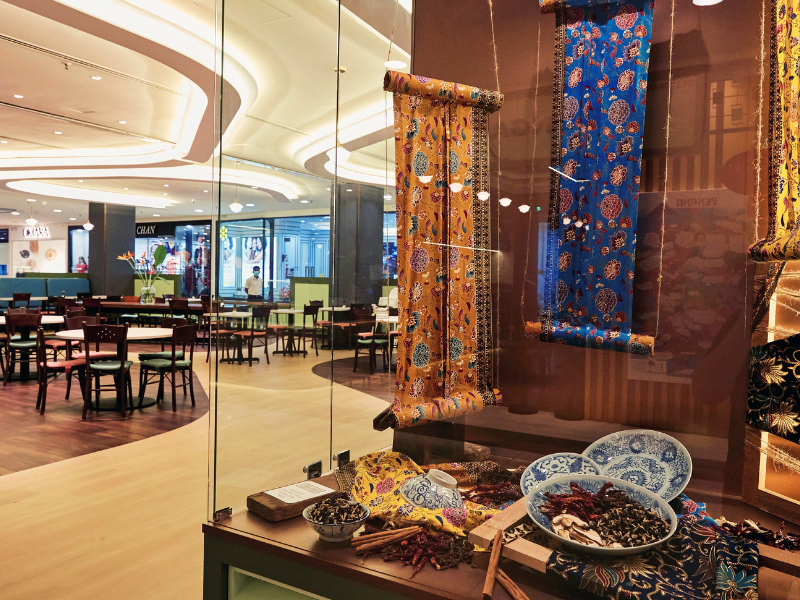
Hailing from Tanjung Bungah, Penang, a former fishing village turned tiny beachside neighbourhood famous for landmarks like Masjid Terapung (floating mosque), the sisters originally grew up in the Kelawei Road area and attended Convent Pulau Tikus. And it was Mama Chan who proved to be an extraordinary cook and doting mother. As a stay-at-home parent to 11 children — “Yes, there were almost a dozen of us, being a typical Roman Catholic family,” the sisters laugh — there was always more than one hungry mouth to feed. “Our father worked in construction, so he left all matters pertaining to the household to mum,” says Vivian.
Growing up in such a big family meant that life was always action stations, with school mornings a blur of getting plates of bread and mugs of Milo ready. It was only during the weekends that their mother would prepare more elaborate meals. “She would always have something extra special on Saturdays and Sundays for us to eat,” Vivian smiles. “She also made very good kuih which, to this day, none of us, except maybe Josephine, can replicate. I remember mum’s kuih bangkit, a must-have for Chinese New Year, was simply the best. She would also regularly make kuih bingka, onde-onde freshly rolled in grated coconut and a big mountain of fried beehoon, all of which would be waiting for us when we woke up. Then it would be steaming hot rice and an assortment of lauk which we would enjoy for lunch and dinner as it was common practice to cook just once and then have the dishes for both the afternoon and evening meals.”
Truth be told, the Chan kids only learnt to cook much later in life. “Mum did everything and, besides, none of us ever wanted to set foot in the kitchen. We would run away whenever she asked us to come watch and learn or help her,” Cecelia laughs. “It was only when we left home and missed her food that we started to experiment. We are lucky Josephine, who stayed back in Penang and lived with mum, learnt a lot.”
2.png
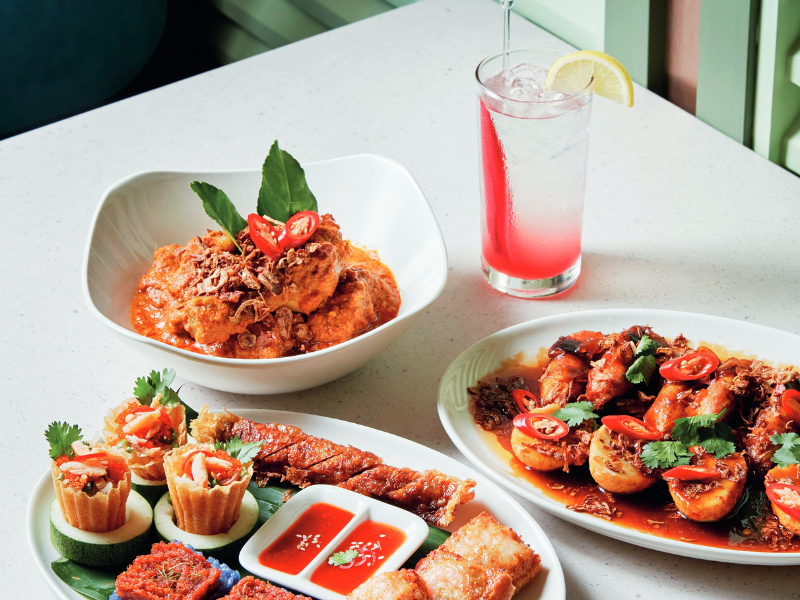
Although it is primarily Penang Nyonya dishes on Bunga Kantan’s menu, Eurasian influences can also be detected, namely the Kari Debal or Devil’s Curry. “Oh, this was because Kelawei Road used to be home to a lot of Eurasian families who had settled in the area since the 19th century,” says Vivian. “In fact, their main neighbourhood of Kampong Serani was not far at all, near Leandro’s Lane.”
For those desiring a taste of colonial Malaya, Bunga Kantan has you covered as well, offering Asian-style Scotch eggs (using salted egg yolk, versus a regular hen’s egg, and minced chicken accented with five-spice powder), while those who grew up in traditional Penang households will delight in the nostalgic flavours proffered by the homemade chicken meatballs, redolent of Hainanese chicken chop and which come swimming in brown onion gravy — guaranteed to necessitate a second helping of rice. There is also the stellar rempah-stuffed fish, which stars black pomfret instead of cencaru. “It is what we would call ko cha bi flavours, which is a Hokkien phrase that means ‘old-school taste’. We believe this is the food people remember… and want to eat,” says Vivian.
Futures market
Although the humble sisters downplay their enterprise, it is rare to find someone who has not heard of or dined at Little Penang Kafé or, increasingly, Bunga Kantan. And while four outlets in just under three decades may not seem like much, particularly in these days of double-digit expansions for brand new F&B start-ups, often quickly followed by an initial public offering and strong debut on Bursa Malaysia’s ACE Market, Vivian quickly snaps that it is more important to have four well-run cafés than 10. “She is fierce like that… garang like a tigress which, by the way, is her zodiac animal,” Cecelia laughs.
For such a motley bunch of personalities and characters, it is to the Chan family’s credit that they make navigating the pitfalls of working with loved ones look like a walk in the park. “I think you either can or you can’t,” says Vivian with characteristic succinctness. “But it helps that we have always been very close as a family in the first place. Our friends always joke about how we survived 27 years without killing each other!” says Cecelia, adding that working together also means a constant case of give and take. “Greed doesn’t factor into the equation and every one of us sincerely cares about each other. Of course, there are arguments, but we always make sure to check ourselves. In the end, family is more important than personal pride and ego.”
Naturally, a successful business would invariably invite the attention of people seeking out joint ventures or even franchises, all of which have been gently turned down. “We prefer to keep things small. Small and happy is better and we don’t mind being ikan bilis,” Vivian jokes. “Like we said, we never had grand plans. We never set out to create an empire and we are honestly very happy doing what we love. What could be better? We get to earn a living surrounded by family. I come to work daily and see my nephews and nieces… we cook for each other in the kitchen. We don’t need to wait for Chinese New Year. Every day is a reunion for us.”
This article first appeared on March 2, 2026 in The Edge Malaysia.