
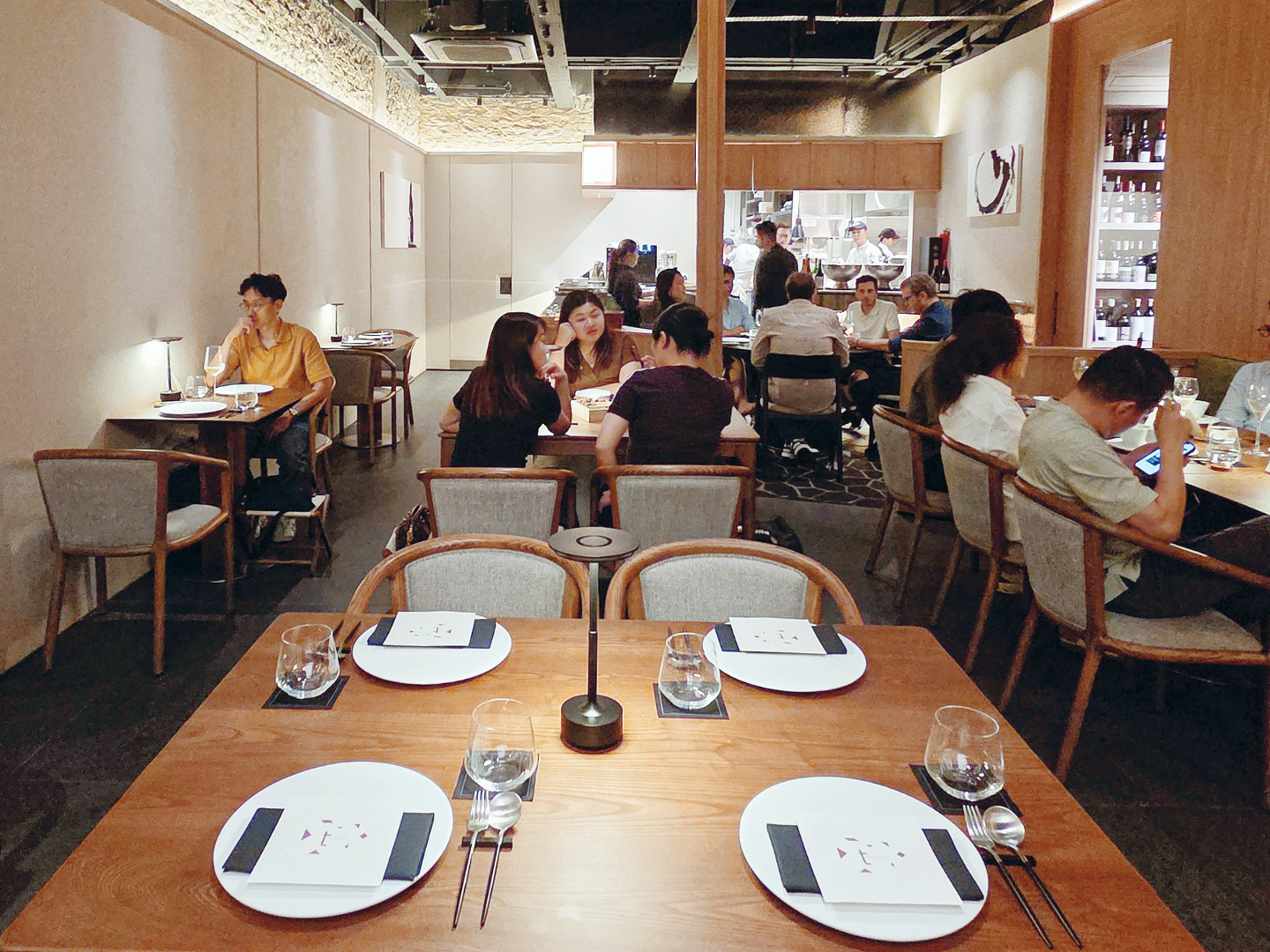
The restautant is the latest additon to Bangsar's vibrant food scene (All photos: Kong Wai Yeng/ The Edge)
Speckled with tweezered microgreens, the garland of tomatoes on our ceramic plate at Tangram Kuala Lumpur has no business promising this much intrigue. Yet, here we are, momentarily riveted by an appetiser that, in lesser hands, could easily have passed for decorative filler. These nightshades can be many things — juicy, acidic and aggressively virtuous — but rarely do they command a crowd into silence. Among these sun-drunk jewels rests a quivering sphere of jellied five-flavour sauce, a reimagining of Taiwan’s classic accompaniment to blanched seafood, consisting of dill, red sorrel, coriander, red amaranth and green mizuna. A prick of the fork punctures its delicate membrane, revealing the prize within: a cache of plump mussels sourced from Penang.
If you arrive at this Bangsar newcomer armed only with headlines — namely, that homegrown bar Unwined’s Hsiao Tung Wei has partnered with a certain Taipei eatery — you would be forgiven for expecting a procession of the island’s greatest hits: lu rou fan, that mahogany tumble of slow-braised pork and glistening fat over rice; or xiao long bao, those pleated parcels brimming with broth. But the collaboration in question is with Johnny Tsai of one Michelin-starred tapas specialist T+T, who recasts hawker fried chicken as frog legs wrapped in crispy crackers and reinvents the wheel, quite literally, with a chelun bing filled with truffle and duck. Familiar references rarely survive untouched under his watch.
Tangram takes its name from the age-old Chinese puzzle — seven geometric polygons that can be endlessly rearranged into an assortment of shapes. The parallel with Tsai’s cooking is difficult to miss, as his menu (an affordable five courses at lunch, eight at dinner) combines Taiwanese roots with French, Japanese, Korean and Malaysian influences in a living composition dictated by season and mood. Eating your way through it may evoke the curious effect of catching a familiar perfume on a stranger. Recognition comes in flashes — a curl of fermented funk here; a murmur of charred allium there; and flavours that seem to have travelled through molecular kitchens with Scandinavian vowels in their names.
1.png
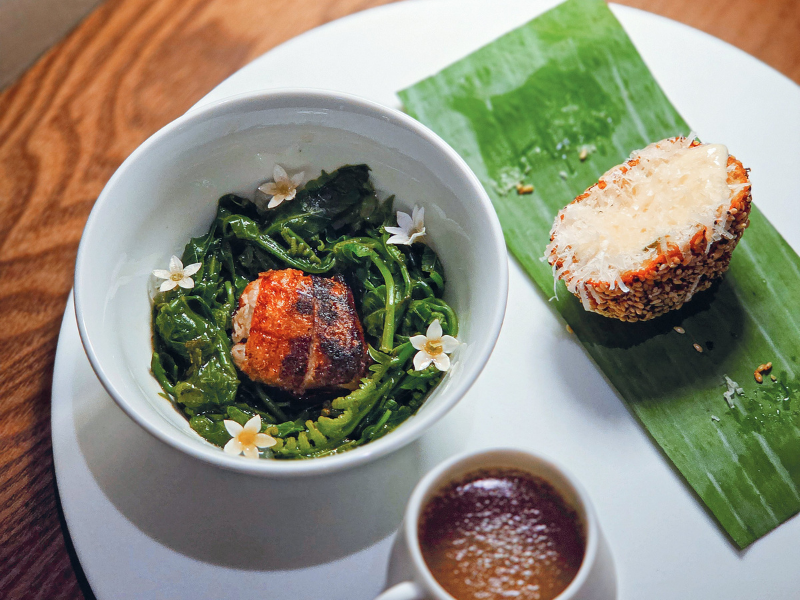
At its best, fusion cuisine takes a cherished template and presents it from several vantage points. The restaurant’s interpretation of a traditional Taiwanese staple — rice stuffed into a deboned chicken wing — swaps the expected filling for squid mousse, seating the assemblage atop pucuk paku piqued by a Japanese vinaigrette. The sesame and black pepper-crusted doughnut, flush with garlic aioli and parmesan, is a luxe two-bite homage to cong shaobing, or scallion buns; while a side cup of double-boiled kombu-bonito concoction — the sort you crave after a wild night of carousing — restores both body and dignity.
Clearly, the house elects not to pace itself, following up with halibut smoked over rice and sugar that nods to a coastal delicacy from Yilan typically prepared with sharkfin. Lifted by some measure of citrus relief in the form of an orange wedge and yuzu gel, the flatfish stands in admirably for the real thing without any moral inconvenience. The clean profile serves as a deliberate pause before the next act: a steamed egg that, against a field of louder personalities, hatches a surprise.
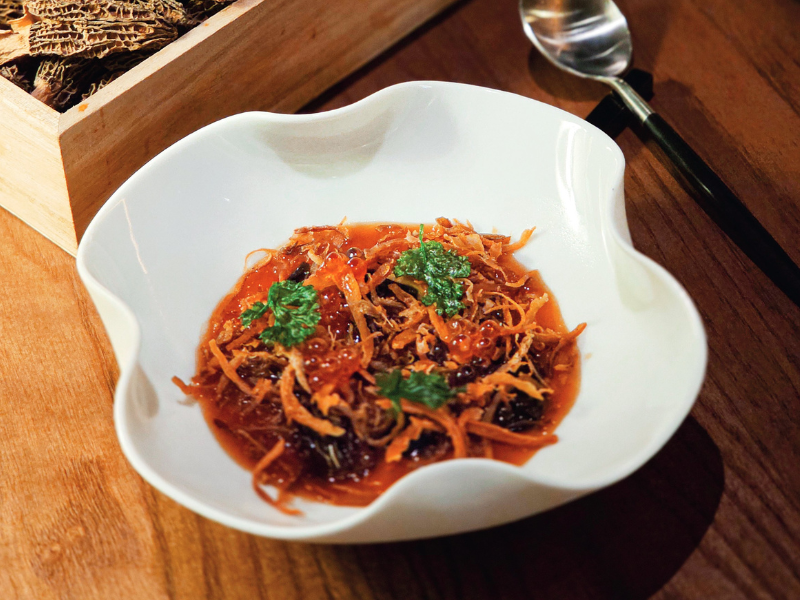
Its glossy surface, with a slight wobble that leans closer to custardy chawanmushi than fluffy gyeran-jjim, is layered with dried scallops and the concentrated depth of nutty morels and shimeji cooked in Mu soy sauce, an artisanal non-gluten option fermented under our local sky. Careful timing on the stove yields a structured silkiness beneath a scatter of deep-fried oyster mushrooms and coriander leaves that double down on the crunch factor. The kitchen crowns this with a lobe of ikura, though the saline punctuation feels largely unnecessary for an already umami-forward affair. No longer confined to supporting roles, shrooms — with their beefy minerality and earthiness — are treated with the reverence reserved for prime cuts, right down to being issued a steak knife. KL may still be some distance from full fungi evangelism but Tsai seems intent on nudging it along.
3.png
Navigating dishes that ricochet from fragile to forceful by way of smoke and spice demands more than mundane libations. For an alcohol-free alternative to rosé, Lyserød’s sparkling oolong tea from Copenhagen rises to the occasion, drawing out the sweetness of seafood without competing. It is worth noting, too, that the restaurant keeps a commendable cellar, and the wine pairing — three glasses for RM128+ — mirrors the chef’s fervid imagination. The sommelier was away during our visit; yet, nothing felt absent once Château Rieussec’s R de Rieussec, hinting of fruits, asserted itself. The union of Sauvignon Blanc and Sémillon meets the palate with tamed acidity, resetting it between a succession of heady starters.
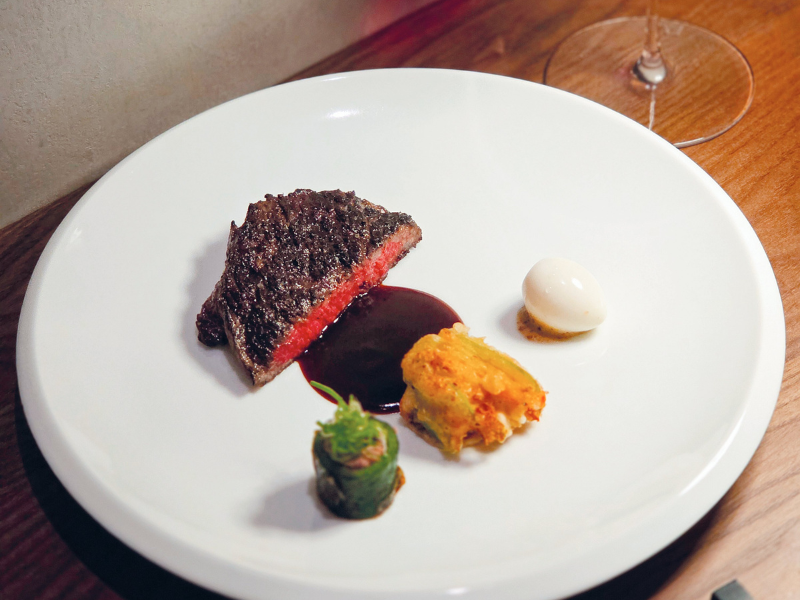
A glimpse of the ruby-hued Coteaux Bourguignons Les Noces being decanted at the neighbouring station signals, rather unmistakably, that the mains are imminent. The waft of black garlic and sesame oil lands first; only then does the lamb saddle emerge, its skin crisped through confit, giving way to tender meat underneath. Although the accompanying spring rolls in tofu skin are dutiful and well meaning, they are, it must be said, little else. Which is precisely why, should the option arise to upgrade to A5 wagyu for RM88+, any hesitation would be an act of self-sabotage. Not to be overlooked are the complementary bites that provide a welcome contrast of textures — the trio comprising a quail egg on mayo mustard, tempura zucchini blossom stuffed with potato salad and jalapeño pepper encasing minced wagyu is very much mourned once gone.
2.png
If there is a throughline to the latter half of dinner, it is one of unrelenting richness. The koshihikari rice and nai bak that follows — dotted with foie gras, which is, obviously, cheating — carries the comforting inevitability of a Chinese banquet rice course before dessert. A sharper zing or pickled element might have lent greater definition to some of the heavier passages, especially as the meal culminates in a wu kok-inspired fried dough concealing a molten salted egg centre, alongside coconut sorbet, gula melaka gel and T’lur caviar topping. Still, any quibbles feel faint in the face of such unabashed decadence, enough to make this penultimate offering one of the evening’s triumphs.
No less memorable is a glossy dome of whisky nama chocolate and Taiwanese-style pineapple tart made from Johor’s premium MD2 variety. We cannot think of a more respectful tribute to the fruit than a crumbly biscuit in a buttery shell, its fibrous character faithfully preserved without surrendering to jammy excess.
For all its shape-shifting tendencies, Tangram resists the temptation to turn a dining experience into an endurance test, complete with grindingly self-important tableside speeches about provenance. Service is delivered at a sensible clip, and the focus stays squarely on the pleasures of the table rather than the performance around it. Fun and games are about not having to commit to one identity for an entire sitting, after all.
61 Jalan Telawi 3, Bangsar, KL. Lunch, RM98+; dinner, RM298+. Mon to Sat; noon-3pm, 6-11pm.
This article first appeared on June 8, 2026 in The Edge Malaysia.