
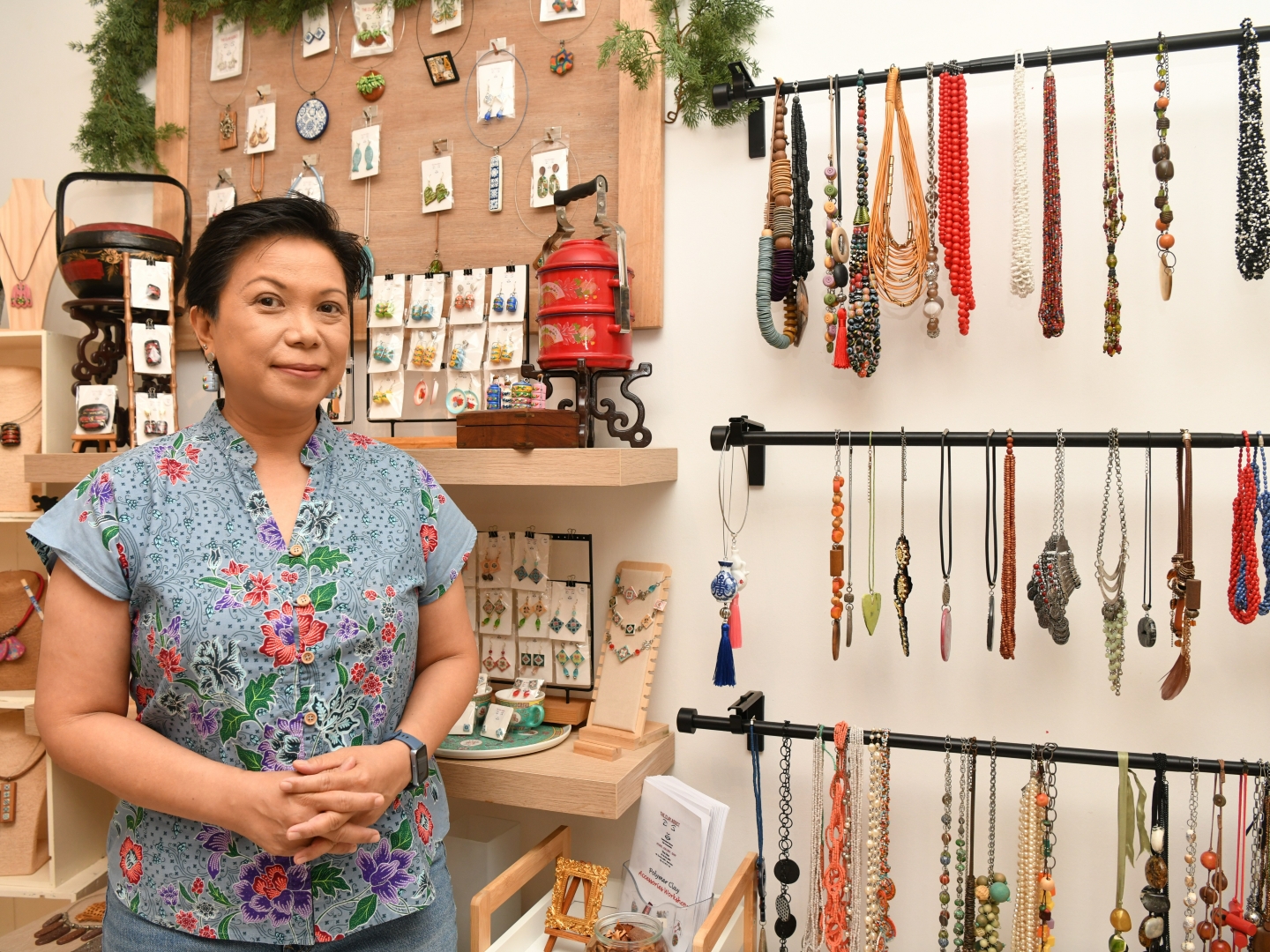
Tina Chua, who also goes by The Clay Addict (All photos: Shahrin Yayha/The Edge)
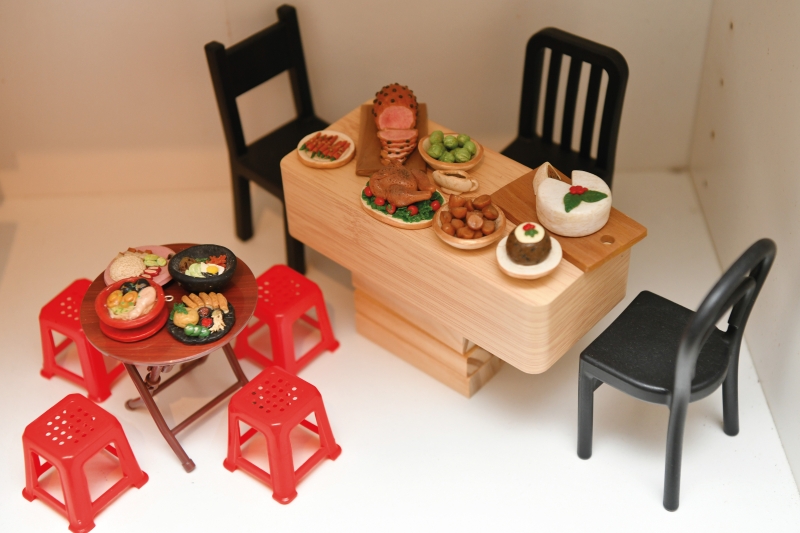
When a hunger pang kicks in, it is totally normal to surrender to the siren call of a snack. Some might even muster up the energy to cook a meal for themselves. For Tina Chua, restrictions during the Covid-19 lockdown period only intensified the desire for her favourite nibbles. Instead of caving in, she wisely sought out appetising but inedible alternatives, looking towards clay to satiate her cravings. The result was tiny versions of dishes that looked incredibly realistic and, one might even say, delicious. (Warning: do not consume!)
According to the lecturer and self-avowed foodie, she has always been creative and maintained that outlet while pursuing her academic and professional journey. Artistic interests were not something her father, whom she describes as old-fashioned, approved of.
Despite this, time spent overseas gave her freedom to explore. After SPM, Chua attended boarding school in Australia. Hotel management took her to Switzerland and then to the UK. She also worked in Singapore for six years and lived in the Netherlands for nine, before returning to the motherland and becoming a lecturer. Throughout all this, she dabbled in various art mediums such as mosaic tiling and clay sculpting.
When the pandemic struck, academic institutions were one of the most underprepared sectors. As weeks turned into months and online teaching persisted, Chua noticed she actually had a lot of extra time on her hands. She thought to herself, “I’m a do-er, I can’t just go home, sit down and do nothing.”
She remembers driving to an art supply store nearby, aiming to look for terracotta clay so she could start sculpting again. During her search, she came across polymer clay and, awestruck by the colours, opted for a starter pack.
1.jpg
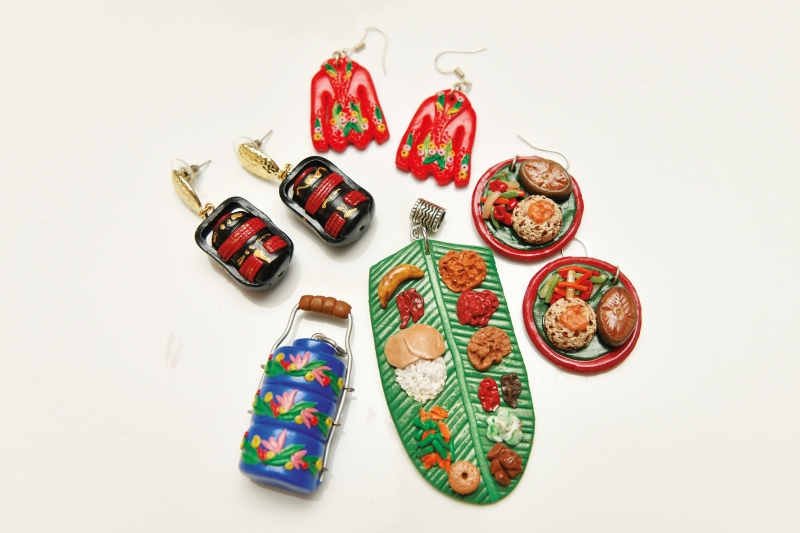
Her first creations were pendants, which later turned into huge statement earrings. Assembling various beads together could transform them into a necklace or bracelet. Once she discovered she could create mini masterpieces with her hands, long hours spent with the material and her imagination led to a stream of bite-sized baubles.
Finally, someone suggested that she start selling her handiwork. “My friend said to me, ‘You don’t have enough earlobes for the number of earrings you are making,’” the artist laughs.
Now, as The Clay Addict, Chua crafts miniatures of all kinds, with a very Malaysian essence. From kebaya to lemang and even a banana leaf spread, much of her work centres on objects rooted in culture and identity. This stems from her Peranakan heritage and, of course, her love for all things local, especially food.
“The reasons I make so many items revolving around food are one, I teach food and beverage. And two, I am a true foodie,” she says.
The Clay Addict offers a variety of designs. Depending on her inspiration, Chua conjures up anything that comes to mind. Some are fun takes on current happenings. She once made traditional Chinese chamber pots based on the 2021 viral incident of the spittoon being sold on Amazon as a multipurpose container.
Chua also constructs ornaments for awareness such as solidarity ribbons. Other thoughtful models include “miscoloured” flowers representing the experience of a colour-blind student and colourful puzzles symbolising autism.
The process definitely requires meticulous attention. “Polymer clay is actually quite a robust material, but you still need to knead it well,” she explains.
Chua recently invested in an electric pasta maker, which acts as a roller to help her condition the material properly. This is to prevent hairline cracks from forming while it bakes in the oven for 45 minutes.
2.jpg
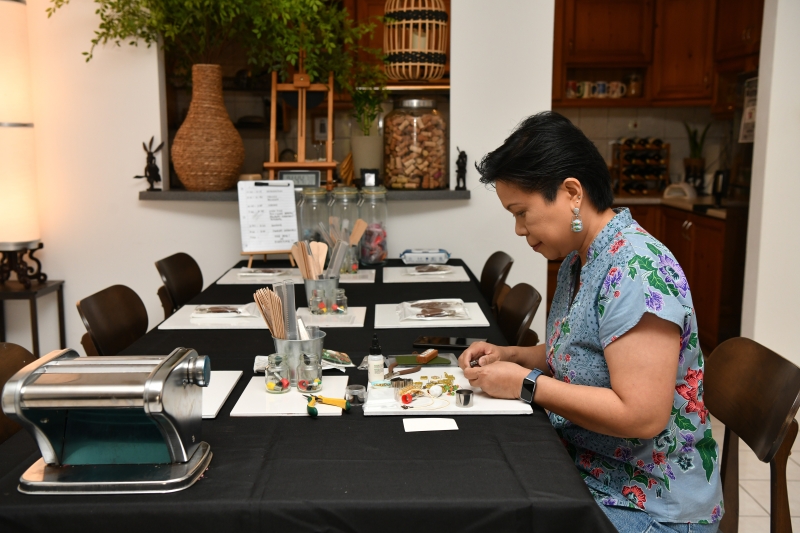
Depending on the design, Chua utilises different techniques. She uses silk screening to transfer images and imprinted mats to achieve texture. Patterned cutters allow for endless shapes and extruder canes give a unique marbled look. On the other hand, the more detailed creations are quite complex and require a higher skill set to attain the true-to-life effect. Plus, there is no mould, so everything is made from scratch.
The last few steps are to sandpaper the sides, although Chua often prefers leaving them slightly rough around the edges to maintain the handmade aesthetic, rather than producing something that looks perfectly manufactured. Finally, it is sealed with glaze.
The sculptor is now trying her hand at upcycling. She has already successfully built a lamp and lampu pelita (oil lamp) out of glass bottles. Numerous découpage oyster shells sit prettily in a porcelain bowl — recycled keepsakes that can hold jewellery and other trinkets.
Since requesting early retirement two years ago, Chua now lectures part-time. Classes take place twice a week, allowing her to hold more workshops for polymer clay crafting. “I used to only host them during the semester break because teachers still have to go back to school on weekends and the long holidays,” she explains.
Each workshop runs for five hours at Chua’s home studio in Mont’Kiara, Kuala Lumpur. While the initial plan was to teach beginners about clay, she also has dedicated sessions for specific types of designs. “I suppose teaching is like my second nature,” she muses.
Although her educational background framed the structure of the quick course, she now implements an approach that takes into consideration people’s skill sets and targets. “Some want to take this seriously and start selling, while others just want some time to make things with their hands,” she observes.
3.jpg
The structure of the sessions enables “crafters” to put their own spin on their handiworks. Chua emphasises, “I want people to walk away with distinct creations instead of building similar things.” They usually bring home two pairs of earrings, but can opt to convert these into other pieces of jewellery.
This platform created in the comfort of her own apartment has somehow turned into a safe space for participants — usually women — to form new relationships and talk about diverse topics, including matters considered taboo in usual social settings. For instance, as someone who struggled through menopause, Chua shared her experience of perimenopause with the ladies and how best to take care of their bodies. She also mentions that “a lot of them will start complaining about work, or we start sharing recipes, and at the end of the day, they become and stay on as friends”.
Finding solace in clay has taught Chua the virtue of patience. “My mum says that I am usually an impatient person. But with all things art, I become the total opposite,” she divulges.
To her, creating is a form of escape — something that she believes is crucial in leading a balanced lifestyle. “You need to have a hobby or an outlet to channel your emotions into, otherwise you will be easily caught up in the hustle and bustle,” she states.
As The Clay Addict reminds us that release is a necessity amid the grind of modern life, those looking to slow down and rediscover themselves may find moulding clay to be the perfect antidote. While Chua’s intricate miniatures are currently showcased in a dedicated room in her house, the ultimate vision points to a standalone studio. In the meantime, her tiny yet whimsical world can be viewed online.
This article first appeared on June 15, 2026 in The Edge Malaysia.