
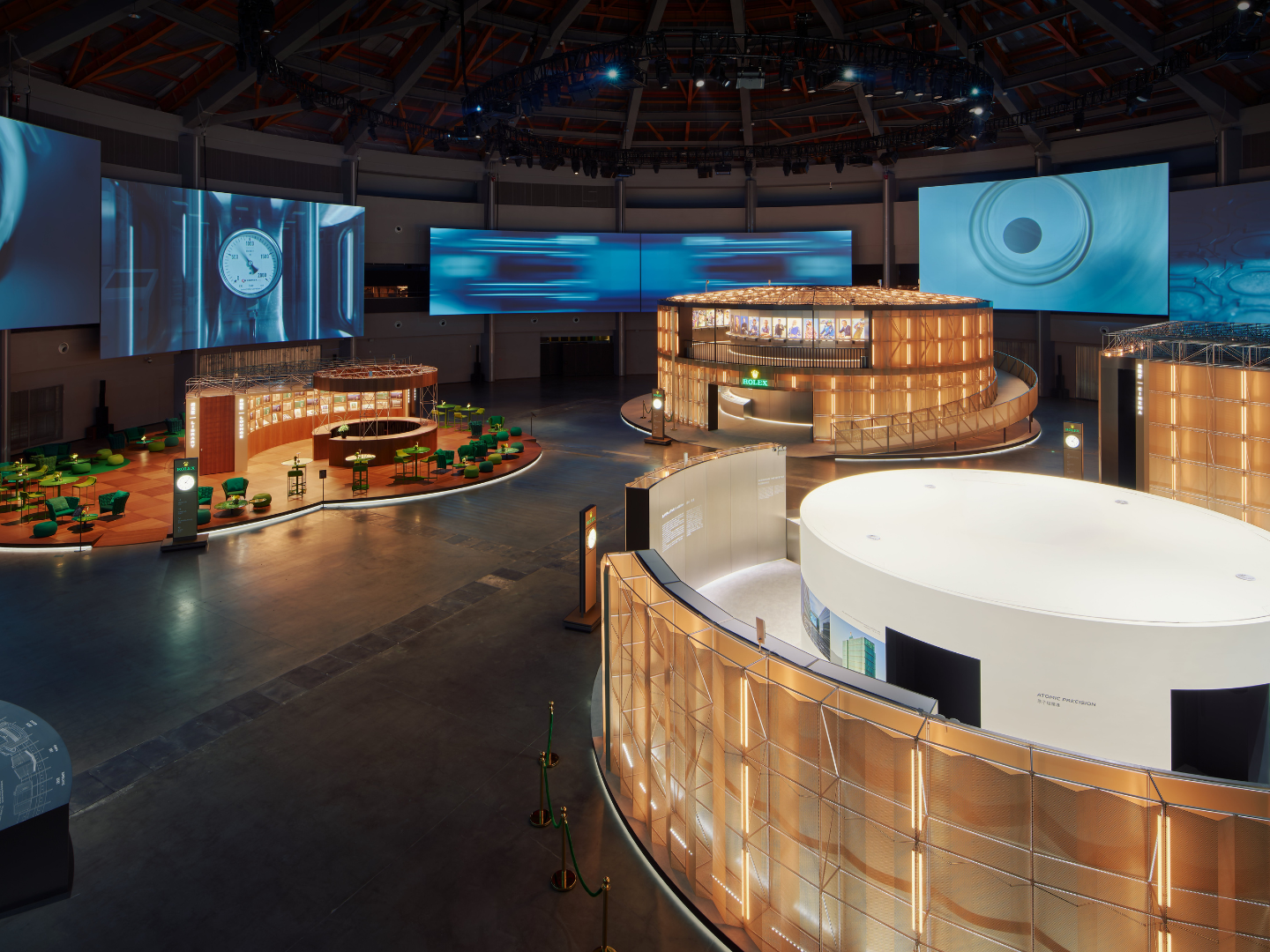
The four pavilions that made up the Oyster Story exhibition (Photo: Anthony Reed/ Rolex)
A hundred years ago, Rolex founder Hans Wilsdorf did what many thought impossible: he built a watch that could not be breached. To ensure it could brave any environment, he devised a way to protect the movement from all forms of intrusion. By hermetically screwing down the bezel, caseback and winding crown against the middle case, he created an impervious sanctuary that was completely waterproof and dustproof. A stroke of genius, the Oyster was a watershed moment in horological history.
“Gentlemen, we make the best wristwatch in the world,” so proclaimed Wilsdorf in an address to an assembly of retailers months after its launch. At a time when pocket watches still dominated the market, the invention of the Oyster fundamentally redefined wrist-worn models. Back then, the latter were largely dismissed as fragile jewellery that were imprecise and highly vulnerable to the elements. By introducing a completely sealed case, which would eventually give its name to the entire timepiece, Rolex elevated the delicate accessory into a resilient instrument that could match the precision of marine chronometers.
A few years later, the debut of the Perpetual rotor, a self-winding system with a free rotor, further elevated the capability of its timepieces. Patented in 1931, it provided the Oyster with an inexhaustible source of energy, bestowing upon it a “perpetual” status. Unified, the inventions catalysed a lineage of specialised timekeepers designed to master any challenge. Throughout the decades, these purpose-built models, from the Submariner and Explorer to the GMT-Master and Cosmograph Daytona, served as vital companions to those in pursuit of excellence.
Uncharted territory
“Proof by trial” was the philosophy of Wilsdorf. He maintained that exceptional performance and reliability must be demonstrated under real-world conditions, measured by a watch’s endurance, precision and ability to withstand the test of time. He equipped a vanguard of explorers, scientists, aviators and divers venturing from the highest peaks to the ocean floor with an Oyster. The world, in fact, became Rolex’s living laboratory. Feedback from these extreme expeditions allowed the brand’s engineers to continually refine the mechanisms, ultimately forging benchmarks for all who pushed the limits of their discipline and expanded the horizons of discovery.
The first of many remarkable stories took place in 1927, when British swimmer Mercedes Gleitze wore an Oyster while swimming the English Channel. After more than 10 hours in freezing water, the watch emerged in perfect working order. Gleitze later wrote to Wilsdorf: “The reason I wear a Rolex Oyster wristwatch when swimming is because it is the only watch I know that is absolutely waterproof and also immune to damage from sand or salt air. Furthermore, I know that no other watch would stand up to the severe conditions experienced during long-distance swims.”
2.png
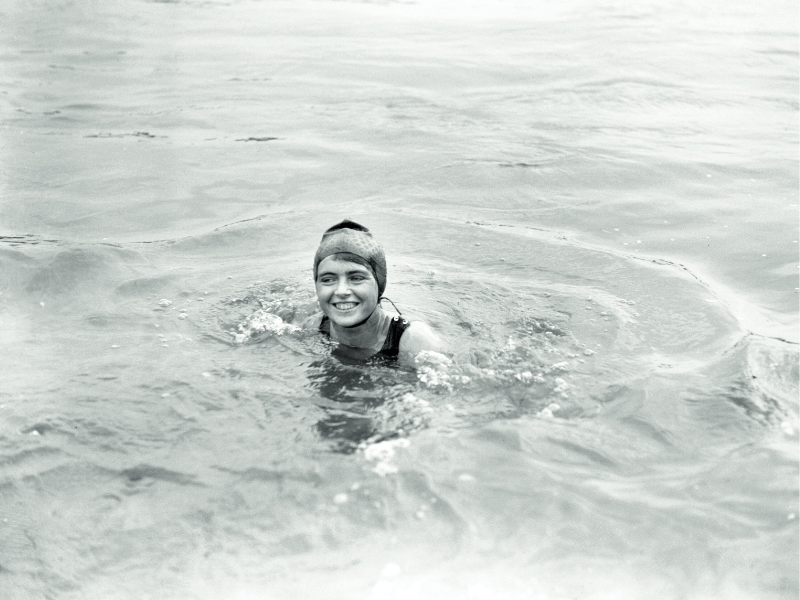
The milestone marked the birth of the Testimonee concept and signalled the dawn of numerous lifelong partnerships between Rolex and extraordinary individuals.
The Crown was present on the wrist of Sir Malcolm Campbell in 1935 when he became the first man to break the mythical speed barrier on land of 483kph in his iconic Bluebird across the Bonneville Salt Flats in Utah, the US. With an Oyster strapped on, Chuck Yeager entered aviation history by becoming the first person to break the sound barrier (Mach 1) with the Bell X-1 in 1947.
The brand also played a pivotal role in marking mountaineering achievements, accompanying Sir Edmund Hillary and Tenzing Norgay on the legendary British expedition that conquered Mount Everest in 1953. A year later, an Italian group equipped with Oyster Perpetual Explorer watches scaled K2, the second highest peak on Earth.
On Jan 23, 1960, within Pacific waters southwest of Guam, Swiss oceanographer Jacques Piccard alongside US Navy lieutenant Don Walsh guided the bathyscaphe Trieste down the Mariana Trench to an unprecedented 10,916m. Fastened externally to the vessel was an experimental Rolex watch, the Deep Sea Special, which successfully endured a crushing force exceeding one tonne per square centimetre.
1.png

“During my voyage around the world in Gipsy Moth IV, my Rolex watch was knocked off my wrist several times without being damaged,” Sir Francis Chichester wrote to the brand in 1968 after becoming the first yachtsman to circumnavigate the globe from west to east solo. “I cannot imagine a hardier timepiece. When using [it] for sextant work and working the foredeck, it was frequently banged, also doused by waves coming aboard; but never seemed to mind all this.”
Travelling well beyond the stratosphere, Nasa astronauts Edgar D Mitchell, Stuart A Roosa and Jack Swigert relied on their personal Rolex watches during the historic Apollo 14 and 13 lunar expeditions. Upon his return to Earth following a ruptured oxygen tank, Swigert sent Rolex executive René-Paul Jeanneret a message with these few words: “To my long-time friend René, who enabled me to always be on time, with sincere thanks.”
A fitting tribute
A century after that fateful invention, Rolex remains steadfast to the promise made in 1926 to provide a reliable, precise and waterproof timepiece capable of accompanying its wearer in all their activities. The new Oyster Perpetual 41 distils this legacy, crystallising a hundred years of pioneering achievements into a single celebratory model.
Offered in an unprecedented configuration, it is presented in a yellow Rolesor version, combining a bezel and winding crown made of yellow gold and a case and bracelet in Oystersteel. These gilded accents pay homage to early Oyster references while a wealth of commemorative details honour the centenary. The number 100 is stamped on the winding crown while the slate-grey dial features a special “100 years” inscription at 6 o’clock, supplanting the traditional “Swiss Made” signature. The brand’s emblematic green hue also graces the face, adorning the moniker as well as the pad-printed square markers outlining the minute track.
resize_rolex.jpg
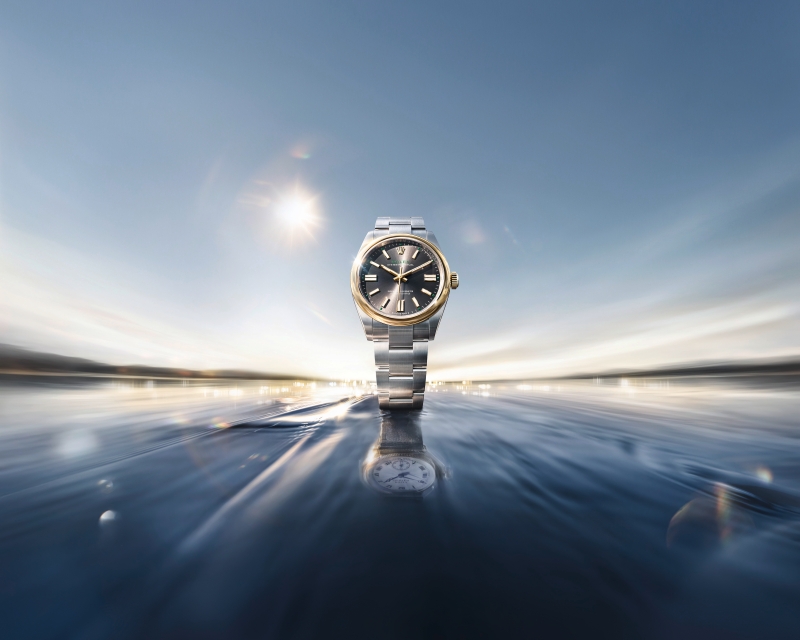
Beating at the heart of the timepiece is the manufacture Calibre 3230. This self-winding movement incorporates the patented Chronergy escapement, blending exceptional energy efficiency with absolute dependability. It further integrates a paramagnetic blue Parachrom hairspring and high-performance Paraflex shock absorbers, granting the watch superior resistance to both magnetic fields and impacts. The timepiece boasts a 70-hour power reserve and is waterproof to 100m.
The Oyster Perpetual 41 exemplifies the strengthened Superlative Chronometer certification implemented this year. Expanding on the criteria of precision, waterproofness, self-winding and power reserve, it now also includes resistance to magnetism, reliability and durability. The certification is strictly controlled by internationally recognised, independent Swiss entities. It ensures the excellent on-the-wrist performance of each of the brand’s timepieces, based on the seven areas of expertise that now define watchmaking excellence according to Rolex.
Ahead of its time
2.png

In June, the brand took over Shanghai’s West Bund Dome with Oyster Story, a landmark exhibition in China that traced Wilsdorf’s original intuition back to its roots. The retrospective revealed how his pioneering vision sparked a defining breakthrough that reshaped the entire horological landscape.
On the eve of the opening, guests were welcomed into the shadowy expanse of the dome, illuminated only by the ethereal glow of four pavilions. Rolex Testimonee and Bulgarian soprano Sonya Yoncheva’s melodic voice filled the air with a moving rendition of Hymne à l’amour before Arnaud Boetsch, director of communication and image of Rolex SA, took to the stage.
“Tonight, we are not only celebrating the centenary of the Oyster, but also honouring a century of innovation and the vision that continues to drive Rolex forward. The Oyster not only shaped the identity of Rolex, but also redefined the future of watchmaking.
“It is especially meaningful to celebrate this milestone in Shanghai, a city of energy, openness, modernity and confidence that holds a special place in the strong and lasting relationship between Rolex and China. As we open Oyster Story, we are honoured to share this moment with the public, retrace this extraordinary journey and look with confidence to the future it continues to inspire,” he said.
Also in attendance were fellow Rolex Testimonees acclaimed film director Jia Zhang-Ke and tennis legend Li Na, who shared their own intimate bonds with the iconic Oyster. Following a commemorative toast, the guests were guided into the heart of the exhibition, exploring each immersive station in turn.
Inside the main pavilion, the spotlight fell on the star of the show. This space explored the flagship model’s history, ongoing transformation and the extraordinary pioneers who defined the brand’s enduring legacy. It was truly a treasure trove, filled with rare and iconic models to contemporary creations.
1.png
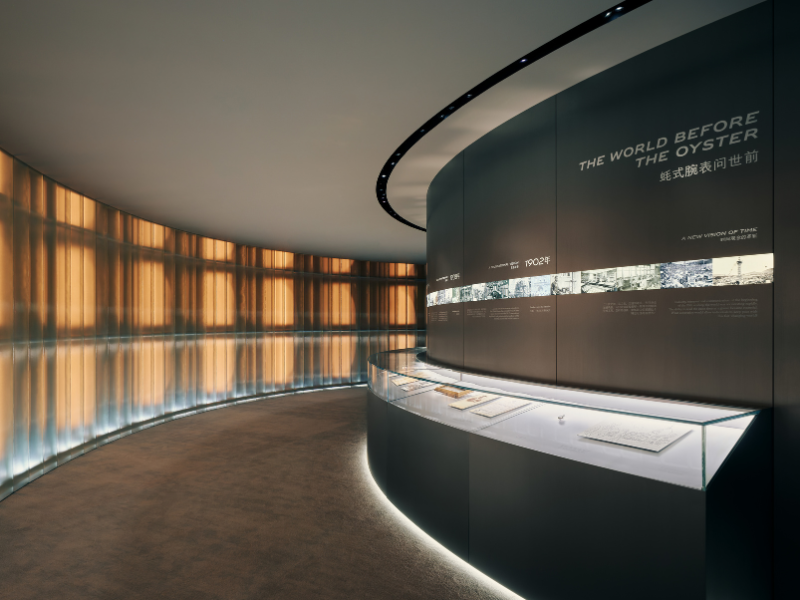
Major highlights included the original timepiece Gleitze donned around her neck while crossing the English Channel, the GMT-Master worn by Swigert during his Apollo 13 mission in 1970, actor and racecar driver Paul Newman’s iconic Cosmograph Daytona from 1995 and an engraved Sky-Dweller worn by Roger Federer following his victory at the Australian Open in 2017.
A hall of fame awaited on the first floor, where visitors were greeted with a display of 100 portraits of iconic personalities from the realms of sports and the arts to environmental conservation. Among them were familiar faces such as golfer Tiger Woods, racer Sir Jackie Stewart, filmmaker Martin Scorsese, concert pianist Yuja Wang, oceanographer Sylvia Earle, conservation biologist Steve Boyes and social entrepreneur Denica Riadini-Flesch.
The story continued in the Superlative pavilion, which explored the brand’s complete mastery in the manufacture and maintenance of its timepieces. Cases, bezels, bracelets, materials, movements — every stage of watchmaking, from design to final inspections, was showcased here. Unsurprisingly, the dial counter proved to be a crowd favourite, with attendees marvelling at the brand’s mastery of rare handcrafts. The space was abuzz with collectors closely examining the vibrant, puzzle-motif dial from 2023 rendered in exquisite champlevé enamel, alongside variations crafted from organic hardstones.
Visitors also took part in an immersive experience dedicated to the optical atomic clock. Developed by Rolex as an ultra-precise reference instrument, it uses laser-stimulated rubidium atoms to define the second with exceptional accuracy. The section also highlighted its importance within the enhanced Superlative Chronometer certification programme.
Within the adjacent screening room, an evocative short film brought the storied history of the Oyster to life. The narrative illustrated how the world’s first waterproof wristwatch earned its legendary reputation in the field, serving as an indispensable instrument on the wrists of brave pioneers and visionaries who charted the globe’s most extreme frontiers.
3.png
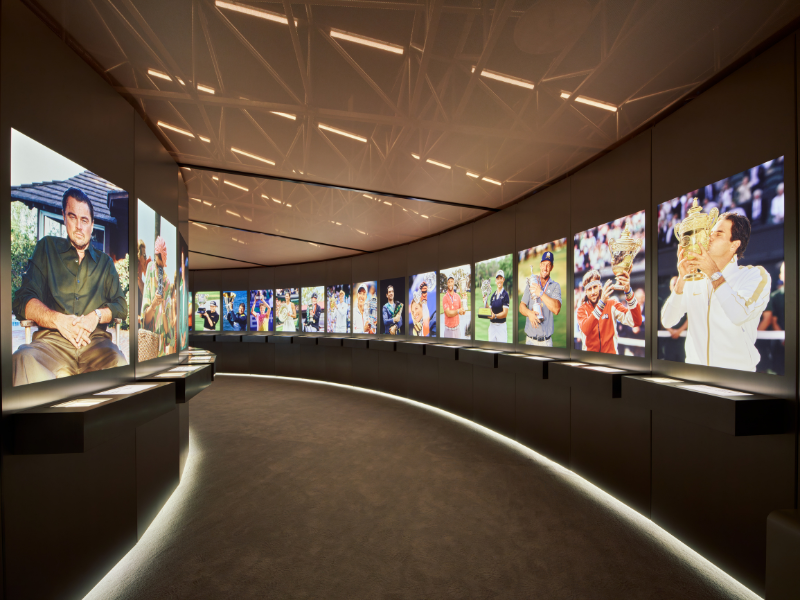
The exhibition culminated in a beautifully appointed library lounge and bar. Stocked with a curated selection of literature highlighting the brand’s milestones, the space provided an exclusive setting for attendees to pause, converse and enjoy a glass of champagne or two. It served as the perfect interlude, re-energising guests before they ventured further into the showcase.
The evening reached its crescendo along the banks of the Huangpu River. High above the water, a synchronised drone display illuminated the night, artfully tracing the epic legacy of the Oyster before culminating in a brilliant Rolex crown and the historic “100” emblem suspended against the city skyline.
Serving as a brilliant opening salvo, the Oyster Story exhibition, which ran until June 28, marked the start of an extensive, global programme honouring the historic centenary. As the curtain falls on this initial showcase, watch enthusiasts and collectors alike can look forward to more activations and special events poised to unfold across the globe in the months ahead.
This article first appeared in June 29, 2026 in The Edge Malaysia.