
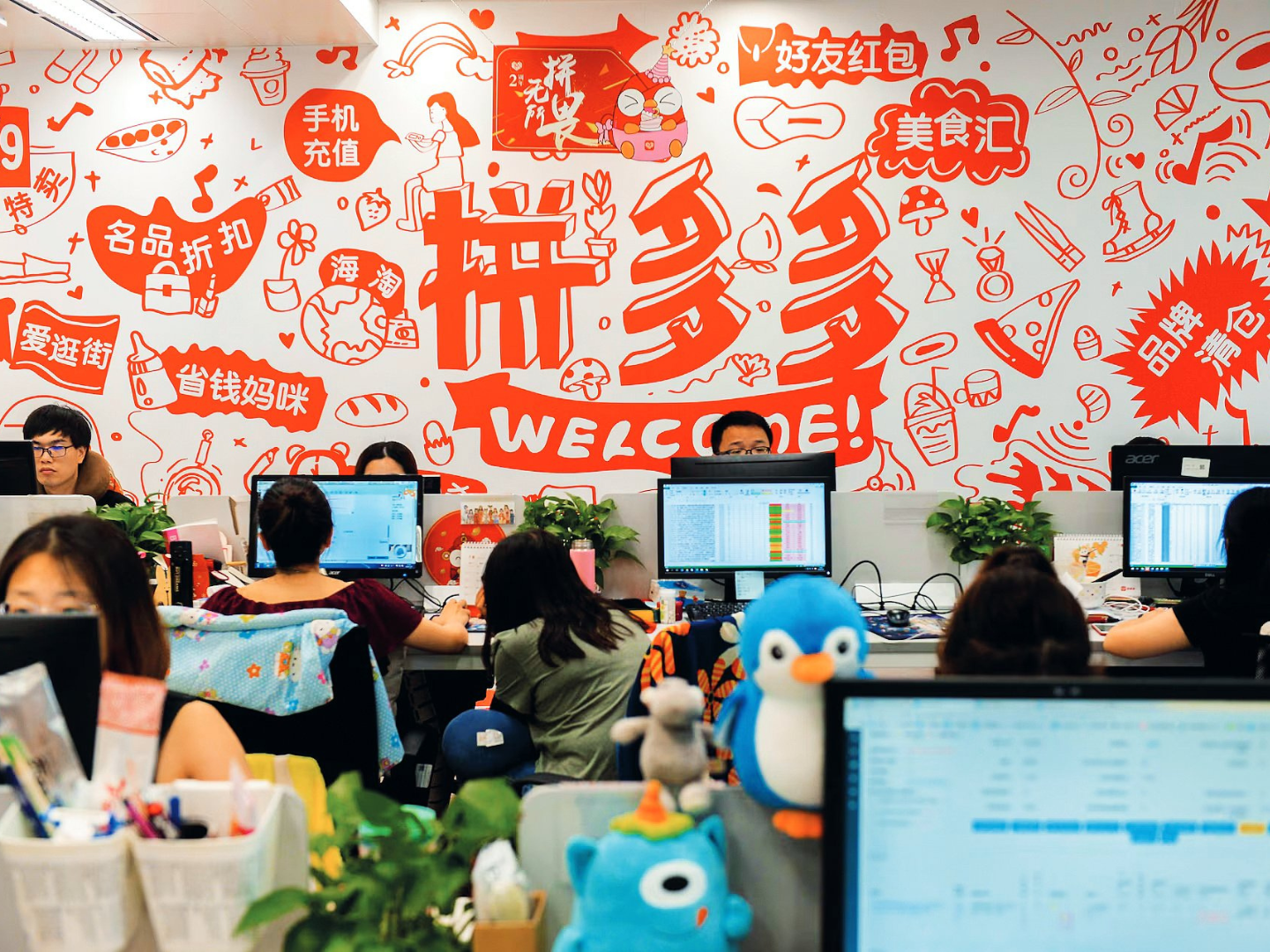
Pinduoduo headquarters in Shanghai, China (Photo: Reuters)
Sometime in 2018, millions of consumers began opening Pinduoduo not to buy anything but water a tree. The plant was virtual. The reward, oddly enough, was not. Duo Duo Orchard, an in-app feature released by the Chinese e-commerce juggernaut, invited users to tend a digital sapling using droplets earned by browsing, sharing products and making purchases. Keep at it long enough and a box of real fruit would arrive at their doorstep.
This strategy is instantly recognisable to anyone who lived through FarmVille, the early social game that badgered players into recruiting friends as neighbours, swapping gifts and returning obsessively to harvest virtual crops.
Pinduoduo, founded in 2015 by Colin Huang and now part of PDD Holdings, merely mimicked that familiar formula for a far more calculating goal. Embedding gamified incentives through every tap transformed an otherwise mundane online marketplace into an addictive habit, giving people a reason to linger even when they had nothing to procure. By late 2019, research counted its daily active users had topped 60 million.
Over the next few years, PDD Holdings used that hyper-optimised playbook to fundamentally rewrite the rules of retail. In China, it leveraged factory-direct sourcing to undercut incumbents such as Alibaba and JD, effectively democratising access to cheap goods across less affluent cities. The real masterstroke, however, came in late 2022 with the launch of its international arm, Temu. By exporting its fully managed, manufacturer-to-consumer pipeline and blanketing Western airwaves with multimillion-dollar advertising blitz, including back-to-back Super Bowl commercials telling viewers to “Shop Like a Billionaire”, Temu achieved scale at unprecedented speed. Within 18 months, it became the most downloaded shopping app on the planet, bypassing traditional distribution networks entirely to deliver low-cost items straight from Chinese industrial belts to American and European doorsteps.
2.png
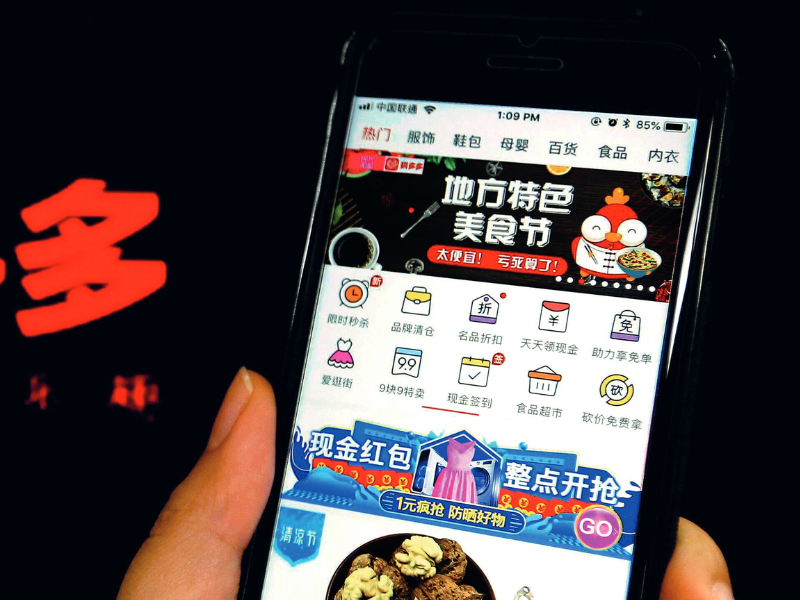
When PDD Holdings finally turned its sights towards Southeast Asia, Malaysia was among its earliest beachheads. Temu was rolled out in September 2023, barely a year after its US debut and second in the region only to the Philippines. It entered an already saturated market where Shopee and Lazada had long hooked Malaysians to flash sales, free-shipping vouchers and double-digit holiday sales; while TikTok Shop was collapsing the remaining distance between entertainment and checkout. Now, Pinduoduo itself has joined the fray. Following a trial phase driven by viral sharing, it eventually established a presence in May, backed by an English interface and Touch ’n Go integration.
Predictably, that arrival has thrown domestic trade groups into a tailspin. What looks like welcome relief for inflation-weary households is causing widespread panic across local supply chains, exposing just how vulnerable independent merchants are to an unmitigated flood of imports. So, just how deep will this disruption cut?
At its core, Pinduoduo’s entry threatens the viability and livelihoods of small and mid-sized home-grown retailers. By sourcing directly from Chinese manufacturers and leveraging massive bulk-purchasing efficiencies, it can provide everyday items at rates many sellers simply cannot match. These operators — already bearing the brunt of import duties, warehousing costs and intermediary markups — now find themselves disintermediated by the very factories that once supplied them. Few can hope to go head-to-head with Pinduoduo on affordability and survive.
The broader risk lies in a permanent reset of consumer expectations. As ultra-cheap deals become commonplace, shoppers are conditioned to regard rock-bottom costs as the baseline. Seamless payment methods, free international shipping and zero service charges strip away much of the hesitation around impulse purchases. When a transaction takes only seconds, the most economical option can easily become the most compelling, sidelining considerations such as seller reliability or after-sales support.
Then, there is the signature mechanism, pin dan, or group buying. Unlike traditional storefronts built around a fixed amount, shoppers are presented with a choice — buy individually at standard cost, or unlock a better markdown by joining others. Those savings are secured by circulating links with friends, family or strangers across social messaging networks. Compounding the pressure, each offer comes with a ticking clock; if the required number of buyers is not reached in time, the discount vanishes and the order is cancelled. This urgency converts bargain-hunting into a fast-moving “group sport”, sparking real-time coordination across social circles before the window closes.
1.png
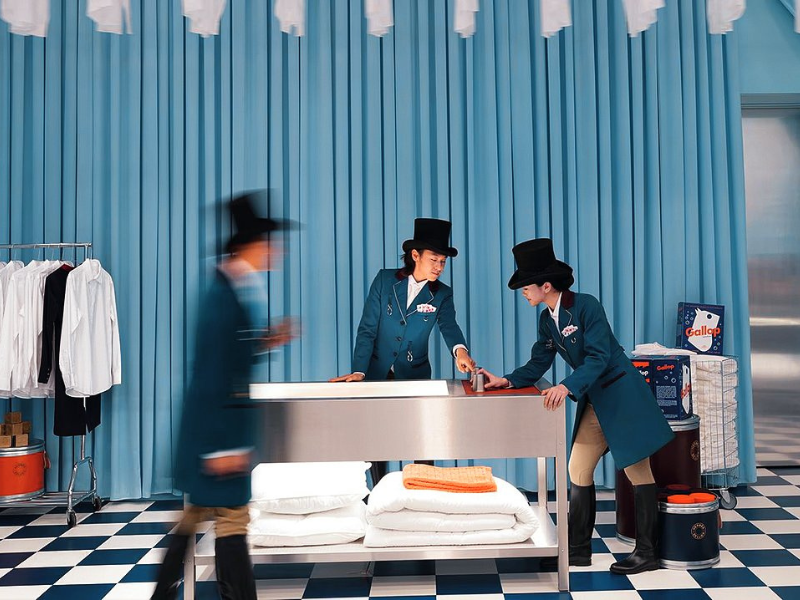
Crucially, this race to the floor is not confined to unbranded paper towels and phone accessories; its tremors have extended all the way up to high-end retail, where it has revived an awkward psychological question over value: what exactly are consumers paying for when the markup runs into the thousands?
As economic headwinds push more aspirational luxury consumers towards promotions, the rise of direct-from-manufacturer models is also puncturing a long-held perception of exclusivity. McKinsey estimates that most of the sector’s growth in the years leading up to the recent slowdown came from pricing rather than higher volumes, a lever the consultancy now says has reached its ceiling. And the definition of desirability itself is shifting: its 2026 survey of more than 2,000 consumers in the US and China found emotional connection outranking traditional markers such as craftsmanship, heritage and cachet, while relatively few cited scarcity alone as a reason to pay full fare.
Beyond squeezing margins, this recalibration is also radically reshaping how premium labels vie for attention. Where legacy houses once relied on pristine, aspirational storytelling, many are now giving way to something far more participatory: daily check-ins, reward ladders, quests and limited drops crafted to lure customers coming back. For example, Hermès experimented with an equestrian-themed game showcasing iconic collections; Dior staged a treasure hunt to mark a Shanghai store opening, while Tory Burch turned its Christmas campaign into an advent-style countdown offering prizes.
Desire is no longer cultivated but engineered through play.
Pinduoduo’s ultimate triumph in global commerce is that it has permanently normalised the thrill of a deal, while forcing brands — across every spectrum — to abandon passive prestige and work twice as hard to construct genuine emotional resonance. Caught in the middle, alas, are millions of traditional vendors or players finding themselves obsolete in a landscape where purchasing has become inseparable from tapping, competing and chasing near-instant gratification.
In the end, the store of the future is not a destination — it is a game you can never quite finish playing.
This article first appeared on Aug 24, 2026 in The Edge Malaysia.