
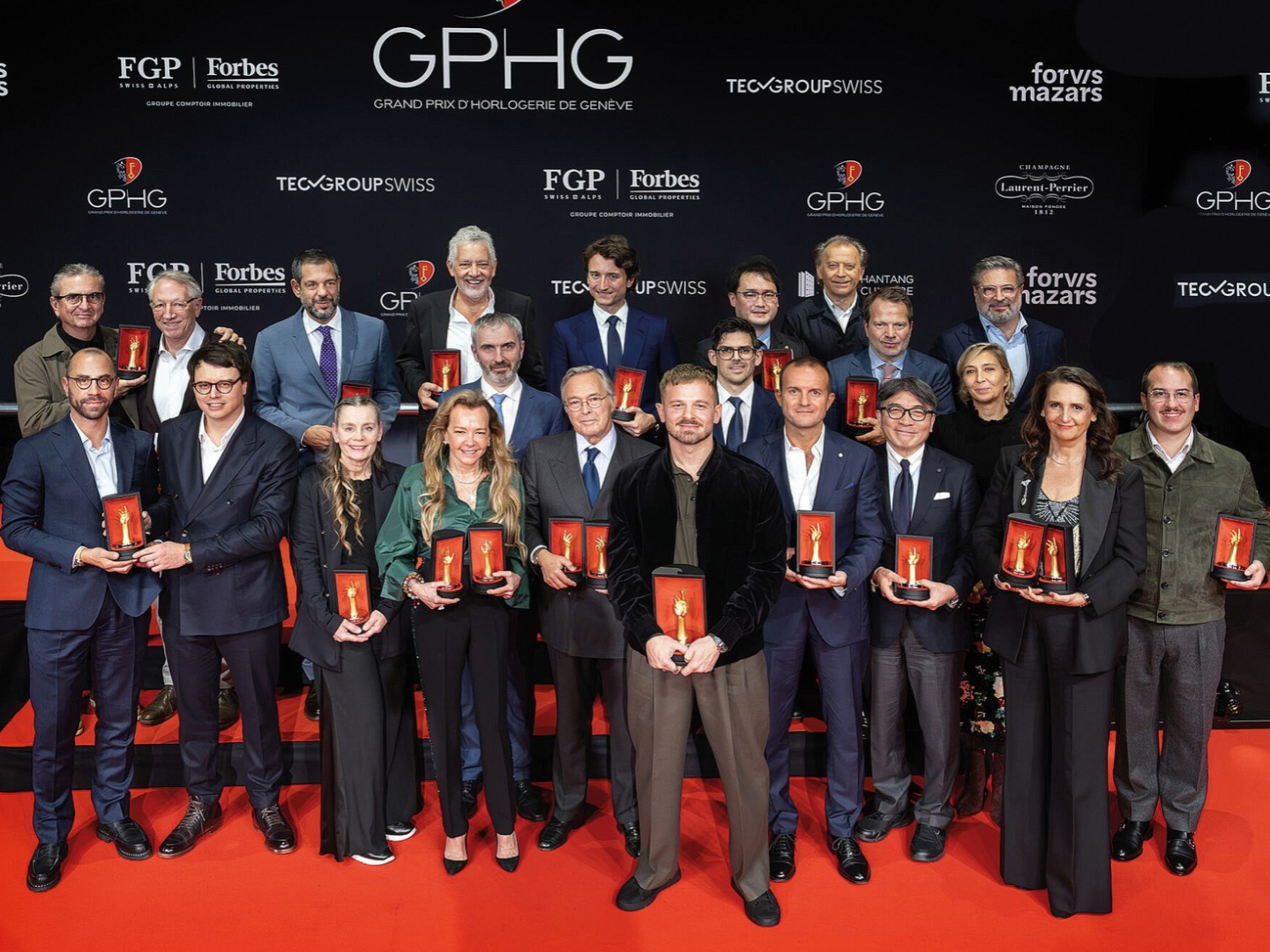
This year's edition of the GPHG marked a pivotal shift for the foundation (Photo: GPHG)
Horology’s most anticipated awards ceremony, the Grand Prix d’Horlogerie de Genève (GPHG), wrapped in Geneva, Switzerland, earlier this month, delivering what may well have been its finest instalment to date.
The event marked a pivotal shift for the organisation. By retiring traditional gender-based (Men’s and Ladies’) categories in favour of two new technical classifications — Essential Watch and Complication Watch — the foundation finally adapted to evolving purchasing patterns and created a more universal structure that better reflects today’s fluid market boundaries.
The reform was long overdue. In the past decade, a stark disconnect had emerged between brands championing genderless products and the industry’s premier awards still forcing those timepieces into binary boxes. After all, whether it is a Serpenti or Luminor, all it takes is a wrist (and the confidence) to pull it off.
This edition also introduced a dedicated bracket for gem-set creations featuring up to six carats, leaving the Jewellery and Mechanical Clock accolades for exceptional, one-of-a-kind masterpieces.
Meanwhile, the Iconic Watch prize broadened its scope to include any novelty reinterpreting a classic with at least 20 years of heritage, regardless of whether it was formally submitted for contention or not. Eligibility for the Special Jury prize was likewise extended to brands alongside individuals and institutions.
Beyond these updates, the 2026 edition brought a passing of the torch as Revolution founder Wei Koh stepped in as jury president, succeeding British historian and journalist Nick Foulkes after his five-year term.
body_photo_-_2026-11-19t190518.019.png
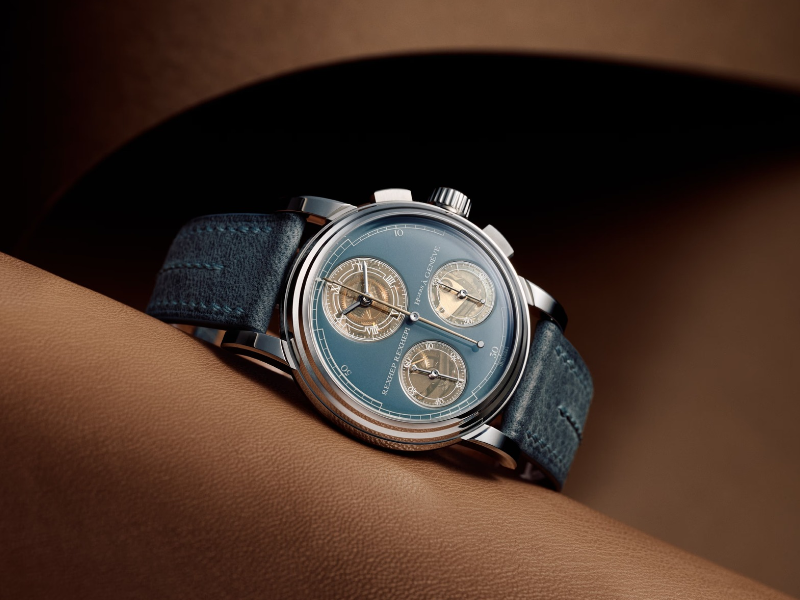
Although industry heavyweights Chopard, Audemars Piguet and LVMH’s La Fabrique du Temps each took home multiple trophies, the evening belonged to Rexhep Rexhepi. He claimed horology’s top prize — the revered “Aiguille d’Or” Grand Prix — for his RRCHF Chronograph Flyback, marking a major triumph for the independents.
The recognition was all the more special given that the winning model is the first flyback chronograph released under his eponymous brand, which exists alongside Akrivia. Built entirely from scratch, the timepiece embodies a true labour of love.
“This watch represents the passion I have for watchmaking,” he remarked during his speech, noting his goal was to craft “something thin, something I can wear that will represent the quality I’ve learnt all these years”.
With a diameter of 38.8mm and thickness of just 9.7mm, the RRCHF’s slender proportions demanded a total architectural rethinking, rendering an integrated chronograph as the only viable solution. The calibre adopts an unconventional, asymmetrical layout where only the chronograph elements, shaped for visual harmony as much as efficiency, are exposed through the sapphire caseback.
Mid-century influences show in the double-stepped bezel and razor-sharp bevels along the lugs and pushers. In the platinum reference, a traditional storm-blue grand feu enamel dial is punctuated by translucent smoked sapphire counters that reveal hints of the underlying mechanics.
For those new to the phenom, Rexhepi escaped the Kosovo War in his youth and found sanctuary in Switzerland. By age 15, he was already training at Patek Philippe, subsequently working with BNB Concept and FP Journe before launching Akrivia and his self-titled atelier.
“I have to tell you, I was expecting a prize, but not this one,” he admitted, expressing gratitude to his family, team, collectors and supporters. “I take it with honour and responsibility.”
5.png
Winning streak
Siblings and co-presidents of Chopard Karl-Friedrich and Caroline Scheufele took turns accepting awards on behalf of the maison, including the Time Only prize for the LUC 1860.
“What an anniversary,” Karl-Friedrich remarked, recalling the establishment of its Fleurier manufacture 30 years ago and pointing out the dial’s Areuse blue hue was inspired by the river flowing through the town.
He also received two trophies on behalf of Ferdinand Berthoud, which Chopard acquired in 2006. The Naissance d’une Montre 3 — modelled after an 1806 astronomical clock by the master horologist himself and handcrafted by 80 artisans over six years — dominated the Chronometry category.
“I think Ferdinand Berthoud will be very happy with this prize as the centre of his attention was always chronometry,” he noted, thanking friends Philippe Dufour and Greubel Forsey for pushing him to take on the challenge.
Meanwhile, the Chronomètre FB 2TV was named best Tourbillon, showcasing 1,240 hand-finished components that exemplify the maison’s relentless pursuit of mechanical perfection — a fitting triumph a decade after the original FB 1 won the “Aiguille d’Or”.
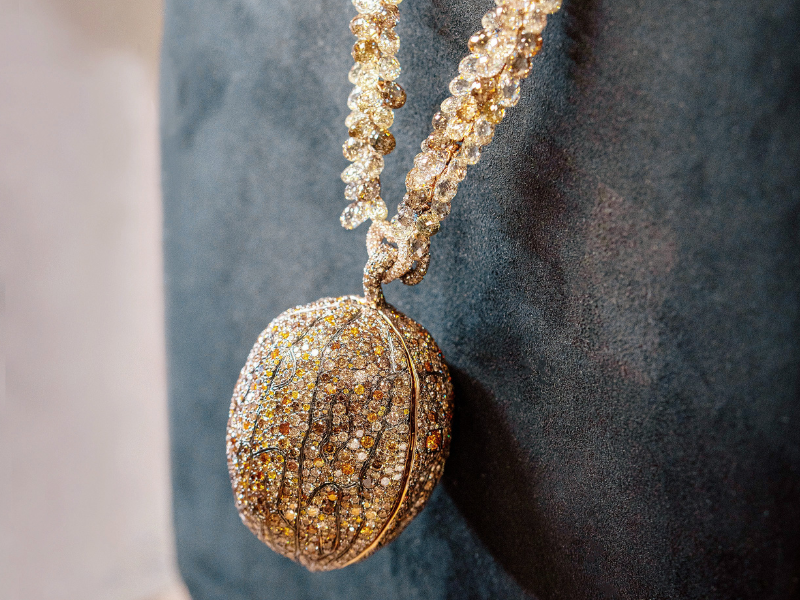
Caroline, who serves as Chopard’s artistic director, shared further insight into the Mystery Nut, which claimed the Jewellery prize over bold contenders from Bvlgari, Dior Montres and Jacob & Co. Sculpted in 18-carat ethical rose gold and presented on a sautoir adorned with nearly 430 carats of diamond briolettes, the extraordinary walnut pendant reveals a moonphase display on one side and a diamond-encrusted dove on the other.
“My inspiration has been, for many years, nature. It basically started with our 150th anniversary, where I was crazy enough to design all sorts of animals from our beautiful planet. Maybe you don’t know, but the nut has a lot of symbols. First of all, longevity. Second, unity of family. And the brain — maybe that’s why people say, ‘You’re nuts!’”
She paused with a smile before adding, “This time of year, they are actually falling from the trees. And this morning, when I was in my garden picking some nuts, I thought maybe I’d get lucky tonight. So thank you very much.”
4.png
Stature + style
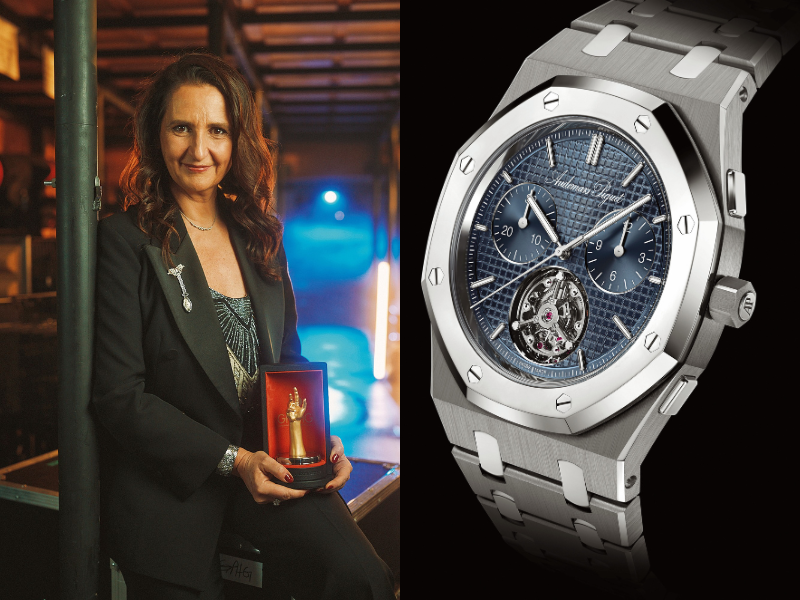
Audemars Piguet CEO Ilaria Resta also made multiple appearances on stage as the manufacture celebrated two landmark anniversary creations. For the Calendar and Astronomy segment, the 150 Heritage pocket watch scored big. She explained her desire to recontextualise the pocket watch for today’s world, moving beyond nostalgia to make it a daily staple.
While its Royal Pop collection certainly did so, the 150 Heritage ups the ante with 40 functions, including a minute repeater, perpetual calendar and flying tourbillon. Moreover, inside its caseback is a universal calendar that unites solar, lunar and lunisolar cycles, which are capable of indicating the dates for Ramadan, Chinese New Year, Deepavali and more for any year between 1900 and 2099.
On the other hand, the Royal Oak “Jumbo” Extra-thin Selfwinding Flying Tourbillon Chronograph RD#5 took top honours in the Iconic Watch category. Resta highlighted how it drew cues from fields beyond traditional horology, noting that they even examined the buttons on a smartphone to replicate the same tactile satisfaction.
“This is really for the team who went beyond watchmaking to find inspiration, challenged the status quo and made an object that belongs to everyday life with a simple pusher to activate this wonderful movement. To those who dared to strive for the extraordinary, I want to thank you and this award is for you,” she beamed.
3.png
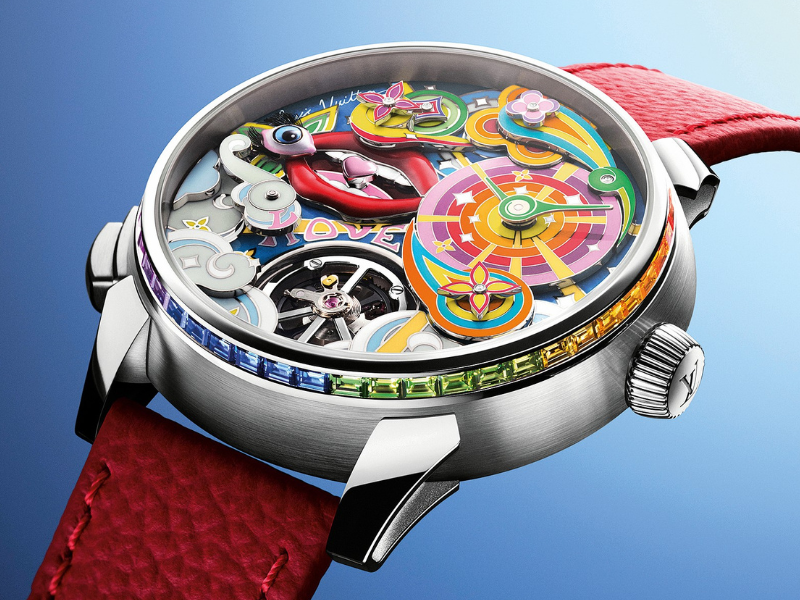
Dialled in
Competing for the Artistic Crafts award, the nominated timepieces demonstrated an extraordinary array of decorative disciplines, ranging from fine enamelling and intricate gem-setting to hand-engraving, lacquering and guilloché. But uniting these métiers into a single creation was Louis Vuitton’s Tambour Taiko Arty Automata. It comes to life at the press of a pusher, where a sequence of seven animations unfolds, from the batting of an eyelid to spinning floral motifs and shifting hidden messages.
“As you might imagine, a very colourful and crazy watch like this doesn’t go unnoticed at the Louis Vuitton headquarters,” Jean Arnault, director of the maison’s watchmaking division, joked. “Mechanically, the design is incredible. Getting these enamel colours was no easy feat.”
La Fabrique du Temps also secured a distinction for the Essential Watch prize with the Daniel Roth Extra Plat Rose Gold Skeleton, an openworked reinterpretation of one of the brand’s most celebrated creations that preserves the classical proportions and architecture of the original’s double-ellipse case.
During their acceptance speech, master watchmakers Michel Navas and Enrico Barbasini took a moment to acknowledge their colleagues at fellow LVMH maison Zenith, who are currently facing potential layoffs amid structural changes.
2.png
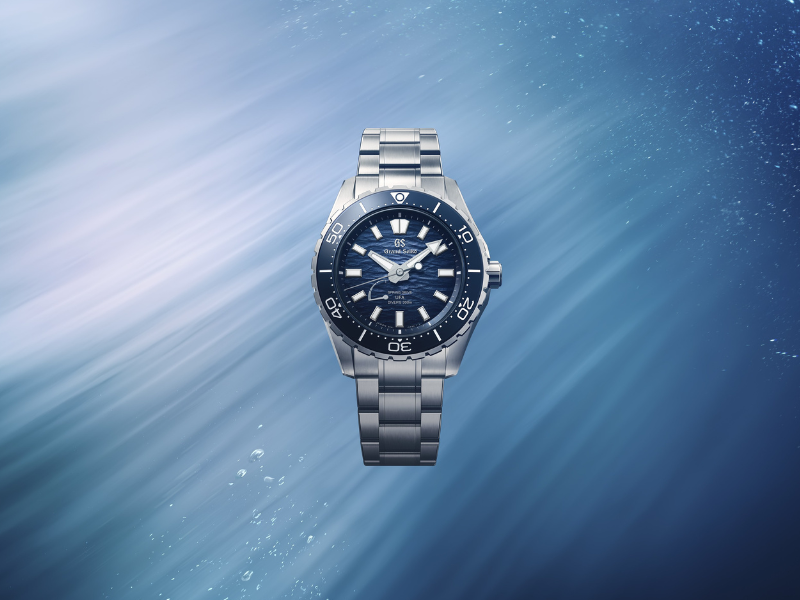
Art of the East
Two Japanese names also earned recognition at GPHG this year. Besting Laurent Ferrier, IWC Schaffhausen and H Moser and Cie, Grand Seiko captured the Sports Watch prize with its Spring Drive UFA Ushio 300 Diver, which achieves a staggering accuracy of ±20 seconds per year.
“The Spring Drive movement was first conceived by an engineer named Yoshikazu Akahane, who was then with Suwa Seikosha. For nearly a half century, generation after generation of engineers and watchmakers have meticulously maintained, with passion, the uncompromising quest for excellence. And this creation is what they have achieved in the year 2026,” Seiko Watch Corp president Akio Naito said proudly.
For the Petite Aiguille, a highly competitive category for timepieces priced between CHF4,500 (RM22,147) and CHF10,000, Otsuka Lotec scored with the No 8, inspired by the mixing consoles of London’s Abbey Road Studios, known globally for recording albums by The Beatles, Pink Floyd and Amy Winehouse. The hour jumps on a channel and the minutes slide along a fader on a unique industrial dial design.
Sales and marketing general manager Keisuke Okahara thanked the brand’s supporters on behalf of founder Jiro Katayama, promising to celebrate together when he returns to Tokyo.
1.png
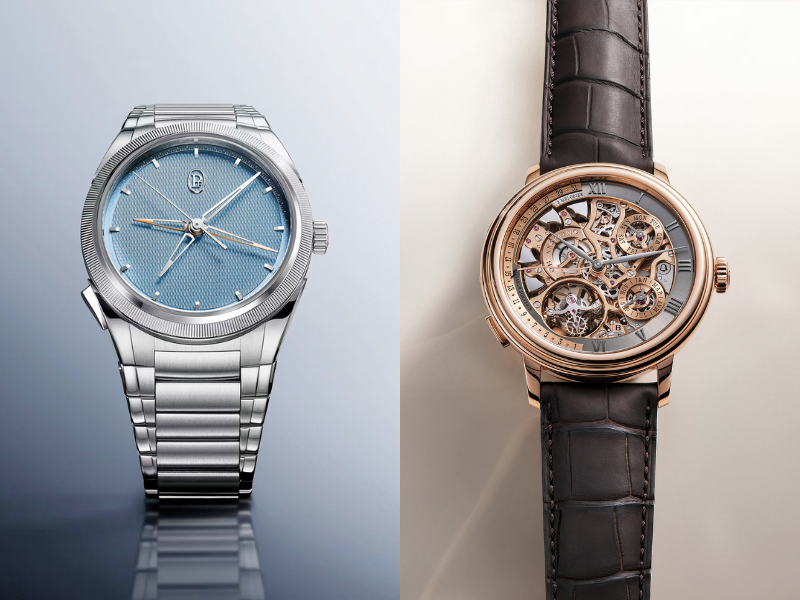
Mega mechanics
Special mention must also be given to Parmigiani Fleurier for winning the highly contested Chronograph category. Its Tonda PF Chronographe Mystérieux, released in celebration of its 30th anniversary, introduces a world-first system that hides the chronograph’s hands when not in use, keeping the dial clean and pure.
CEO Guido Terreni dedicated the achievement to his team, admitting that he had no clue the thought he had in September 2021 would bring about so much complexity. “To have an idea come to life, you have to really dare to go forward. And this is what Michel Parmigiani has always done. He has dedicated his life to perpetuating mechanical art, but he also believes that mechanical art looks forward, not backward. And the knowledge he developed through restoration must bring you to a better place with new emotions.”
The culmination of eight years of work yielding 21 patents and comprising 1,116 components, the Blancpain Grande Double Sonnerie stood out as a deeply fitting recipient of the Mechanical Exception award. Combining a grand sonnerie, petite sonnerie, minute repeater, perpetual calendar and flying tourbillon, it is perhaps the brand’s most complicated watch to date. The grand sonnerie plays two melodies, one of them composed by Eric Singer, drummer of the rock band Kiss, using the four notes of the Westminster chimes.
Rounding out the evening’s triumphs, Konstantin Chaykin secured the Audacity prize for the ThinKing Mystery, which holds the record as the world’s thinnest mechanical watch at 1.65mm. Piaget’s Swinging Pebble prevailed in the Gemset class, Dominique Renaud’s Pulse60 Titanium Black earned distinction as the Horological Revelation and Cleguer’s Inspiration One claimed best Complication. The Challenge trophy went to the SpaceOne X Baltic Seconde Majeure and La Vallée’s Cosmo dominated the Mechanical Clock discipline. Finally, the Special Jury recognition celebrated Patek Philippe for its immersive Watch Art Grand Exhibition in Milan.
This article first appeared on Nov 16, 2026 in The Edge Malaysia.