

Sarang by Yee I-Lann (All photos: Balai Seni Negara)
Seen from above, the islands resemble a series of speckles — like a broken chain or an endless ellipsis. In Visayan mythology of the Philippines, the seas fall under the domain of Magwayen (or Maguayan), goddess of the sea and water — embodying the female principle of creation, formed as a counterpart to Kaptan, the god of the skies.
She is calm and nurturing — a provider of sustenance, especially to the communities of the region, offering fish and other fruits of the sea to them. When appeased, the goddess is gentle; but when angered, she becomes the source of the ocean’s great upheavals: tsunamis, torrential rains and the most deadly of water’s forces — whirlpools.
Countervailing myths — making sense of, in the words of Sabah-Malaysian artist Yee I-Lann, “the confusion of everything”— continue to shape how they relate to contemporary life in the region.
What was the Magwayen/Maguayan legend but an exhortation to harmony, balance and a sense of community equity?
Throughout its history, the Sulu-South China Seas region has been dominated variously by tensions, concord, resolution and fracture: the Philippines’ claim to Sabah; Konfrontasi — Indonesia’s opposition to the formation of Malaysia; the separatist struggles of Mindanao for autonomy, then independence; incursions into Lahad Datu, Sabah.
Efforts to pacify and integrate various states were framed by the promise of prosperity through a heightened sense of regionalism — predictably packaged within the brackets of an acronym.
The BIMP-EAGA (Brunei–Indonesia–Malaysia–Philippines East Asean Growth Area) was established in 1994 “to spur development in remote and less developed areas in the four participating Southeast Asian countries”.
This year, the grouping announced its BIMP-EAGA Vision 2025, which, “prepared with support from the Asian Development Bank, provides a way forward for members to continue narrowing development gaps, for sustainably managing natural resources, and promoting stronger connectivity”.
With growth and sustainability as its core pillars, BIMP-EAGA’s Vision 2025 presents itself as “a blueprint for keeping itself relevant, going forward. It aspires to become resilient, inclusive, sustainable and economically competitive”.
2.png

Resonating with these aspirations, and aligned with Malaysia’s chairmanship of Asean 2025, Balai Seni Negara conceived KePulauan: Refleksi BIMP-EAGA Melalui Seni Kontemporari — an intriguing, if understated, exhibition that brings together established and emerging artists from across the region. The show is also part of efforts by the Ministry of Tourism, Arts and Culture to enhance its cultural diplomacy programme.
“Through this exhibition, the Balai Seni Negara focuses on the reflections of artists from the four nations of the grouping that explore the economic, social relations, environmental sustainability, knowledge as well as, and most importantly, local mastery in the regions of Eastern Asean,” the National Art Gallery states.
KePulauan displays a variety of forms of expression, including mixed media, installation, catan, photography, audio and videography. A total of 12 works are exhibited, including one from the National Art Collection by Yee.
Among the artists featured are Josrie Haral, Muslim Mattajim and Dr Mohamad Faizuan Mat from Malaysia; Umi Zaty Bazillah Zakaria and Asilah Maziyah Dr Mohamad Yussof from Brunei Darussalam; Chester M Mato, Romy Jones Mata, Leonard B Ansiong, Brendale Taj Hassan Tadeo and Alynnah Macla from the Philippines; and Indonesia’s Audro Chrustofel Rompas and two collectives — Susur Galur from Pontianak, comprising Muchamad Riduwan, Tito Prastio dan Elfrida Citra Rominggagas; and Muara Suara from Samarinda, represented by Robby Ocktavian, Prashasti Wilujeng Putri and Rio Raharjo.
The regional gathering reflects KePulauan’s collaborative curatorial approach, featuring key figures such as Zakaria Omar from Brunei, Gusti Hendra Pratama and I Wayan Seriyoga Parta from Indonesia, and the Philippines’ Al Nezzar B Ali, alongside other curators from the region.
body_pics_2.png
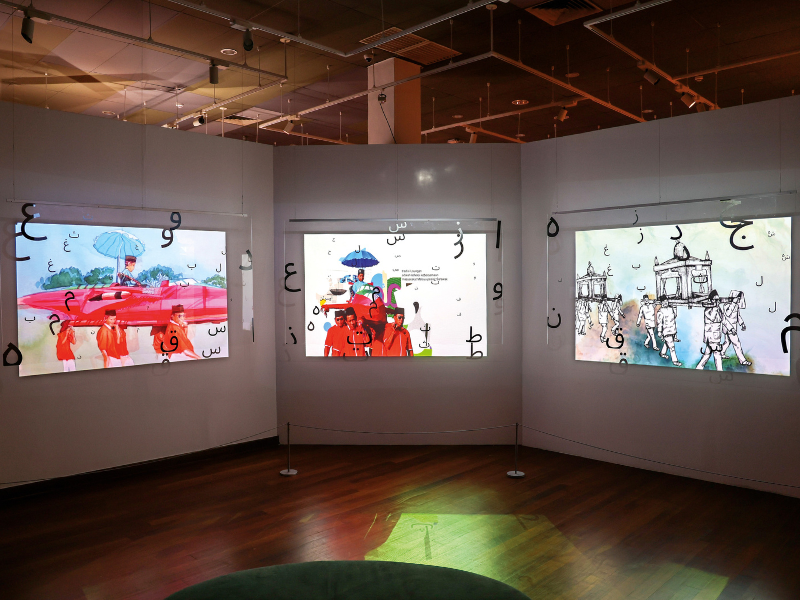
Stepping into KePulauan, one is immediately drawn into “the burden of history”. This weight is embodied in Mohamad Faizuan Mat’s An Ode to the Usungan — a brightly coloured work illuminated with Jawi letters, serving as both an “ode” and, perhaps, a parody of the act of bearing that is so central to Muslim and Malay communities in the region. It symbolises piety, the communal responsibility of carrying the dead and the collective burden. Yet, implicit within this evocative piece is also a subtle critique of social inequities and overwhelming social hierarchies.
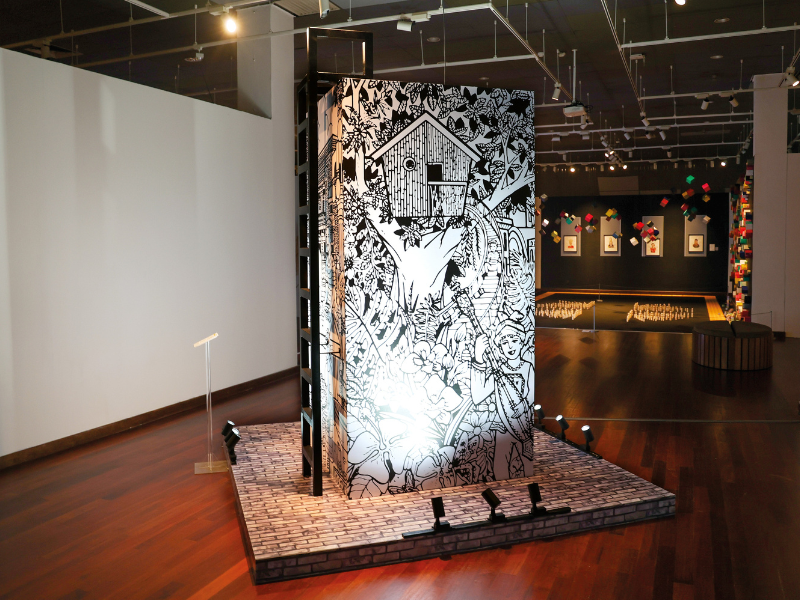
The act — and art — of bearing prevailing narratives and histories, while interrogating and creating counter-metaphorical stories, is where contemporary forms such as video and installation converge. The disruptive nature of technology challenges received or imposed wisdom, viscerally deconstructing what is accepted and how it is questioned. This is most evident in Tagainup Na Bay (A Dream House), an installation by Alynnah Macla and Taj Hassan Tadeo that is reminiscent of the migrant housing settlements of Sabah.
A clear example of the “history becomes sentimental/nostalgia” transmutation is Ugat Sin Tau: A Journey through Heritage — a thought-provoking installation that challenges the simplistic, popular notions of “heritage”, as seen in the separate but common pursuit of heritage status across countries and exemplified by the collective Muara Suara’s Verses of Stone.
Leonard B Ansoing’s By the Spears of the Past, in the Shadow of Tomorrow offers a moving reflection on painting styles and the use of art to convey social messages, reminiscent of the Propaganda Movement era in Philippine art.
3.png
But perhaps the most striking and accomplished of works are Parts 4 to 8 of Yee’s evocative Sulu Stories. She remains one of contemporary Malaysia’s most introspective artists. Her Sulu Stories series — a profound exploration of space, time and the seas — stands as one of the most notable and subversive bodies of work in the country’s contemporary art. History, community narratives and anthropology flow through her pieces, especially in this series, revealing a deeper yearning for personal location, reflection and history — much like the restive gaze of the emerging lizard in the striking Sarang.
KePulauan, in its scope, is both beguiling and beautiful, and it further raises the question at the heart of groupings such as BIMP-EAGA: Why is culture always treated as an aside? In this modest exhibition lies, after all, what Yee has identified as urging the region: “What can we do to each other to reduce temperatures — bring down the fever, if you like — and share a space? That’s the intent, to slow down and celebrate our deep locality. I’m very into that because we work in Malaysia, at our deep local level, neighbour to neighbour, and as a country.”
'KePulauan: Refleksi BIMP-EAGA Melalui Seni Kontemporari' will be held until May 31, 2026, at Galeri 3A, Balai Seni Negara, Kuala Lumpur.
This article first appeared on Sept 22, 2025 in The Edge Malaysia.