

Performances span several days and locations (All photos: Penang Puppet Festival)
Always the empty chairs. At Chinese temple festivals, or to commemorate the month of the Hungry Ghost Festival, in the front row of the evening’s “entertainment”, occasioned to placate and assuage the gods and ghosts, are a pair of empty chairs saved solely for the presence of the “heavenly beings” or the spirits “set free to roam when the gates of hell open”. At more lavish and extravagant settings, there might even be a whole row of “empty” chairs, depending on the degree of propitiation requested.
Before these festivals were taken over by the passion for getai (pop performances in various Chinese dialects, replete with all-girl ensembles in gaudy, short dresses) the stage would feature an elaborate Chinese opera, while smaller, more modest temples particularly in Penang would have makeshift, propped-up stages featuring the infectious glove puppet tradition of potehi.
A principally Hokkien tradition, potehi followed the trail of emigration of the Hokkien-speaking people from the Fujian regions of Southern China who settled in various parts of the Malay peninsula, and in Thailand and Indonesia, forging variants of the tradition throughout the Southeast Asian region.
Traced first to Hokkien settlements in Johor, potehi found a distinctive home in Penang, following a tradition of acculturation in the trend of the Hokkien vernacular itself in that wildly cosmopolitan island.
In the early years, potehi was a prominent and mainstay feature at temple festivals and social occasions, even flourishing, with several active troupes and performers.
Among these was the Beng Geok Hong Potehi theatre troupe, whose principal performer today is Ooi See Han, a third-generation descendant of potehi performers. As is common in such traditions, potehi was passed down orally to Ooi by her grandfather, even as it fell upon Ooi to see through the many years of evolution and innovation that would affect and further shape the potehi tradition.
beng_geok_hong_potehi.jpg
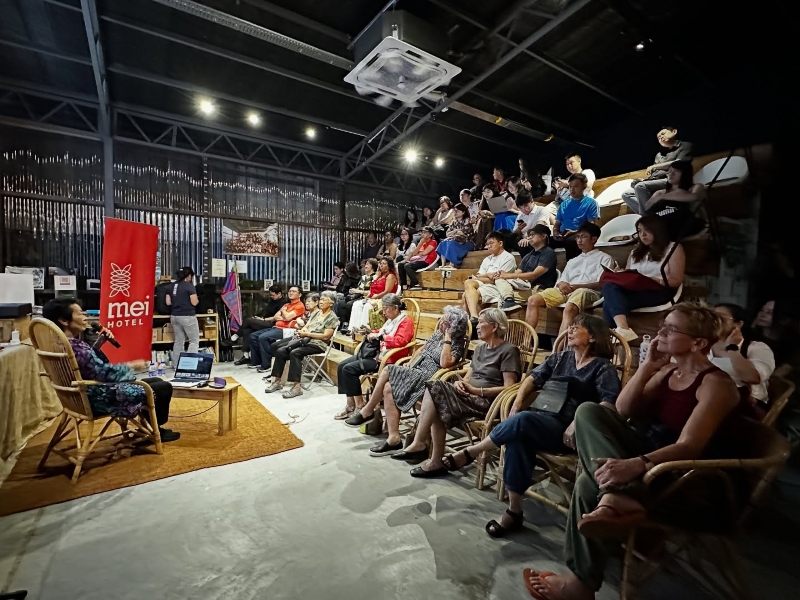
A recipient of the Adiguru Cendana award, she recounted in an interview upon the selection:
“The stories I perform are old,” Ooi recalled. “Some of them were told to me by my grandfather. Some of them are modified from books. We would write down important scenes, and improvise dialogue and actions. Many stories are about war. Some need to be performed across several days, several sessions. These days, the stories we do depend on what gets requested. Some old, some new, some funny, some about the war. Even the duration of this can be modified.”
By the 1980s, however, potehi, like many traditional performance forms, confronted manifold challenges: altering tastes, shrinking attention spans, rapid shifts in technology, the devouring beast of change.
In that time, study immersions by the respected Universiti Sains Malaysia scholar Tan Sooi Beng — author of an enduring study of the Malay opera Bangsawan and, most recently, recipient of the BOH-Cameronian Lifetime Achievement Award 2025 — into puppet and many forms of social theatre was urged by members of the Beng Geok Hong Potehi theatre to go beyond “all this study” and find novel and new ways of revitalising potehi.
An innovative book and kit entitled Potehi — Glove Puppet Theatre of Penang was launched as part of an effort to engage younger people in the art of potehi. The objective included “study(ing) and aim(ing) to master the skills required with hopes of promoting and keeping the art [of potehi] alive for future generations”.
The troupe gets its tutelage from the Beng Geok Hong Potehi troupe and, while grappling with such traditional stories as The Monkey King, has also devised, created and performed such evocative puppet stagings as Kisah Pulau Pinang and Kisah Pulau Pinang II — a series of quite mesmeric renditions of the social history of Penang, gleaned from interviews and the collection of generational memories from “people on the street”.
rebirth_of_scrap_reimagining_shadows_through_light_and_waste.jpg
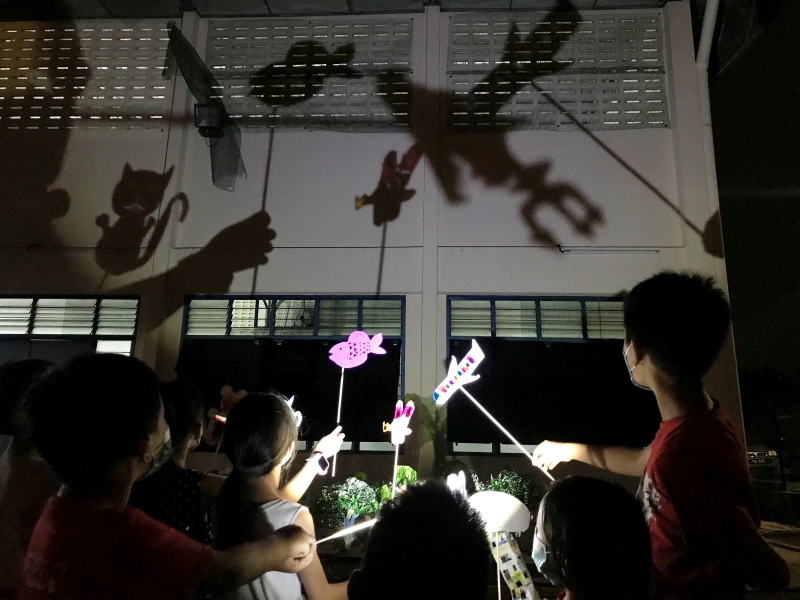
Much of the efforts of Ombak Potehi have resulted in the resplendent Penang Puppet Festival, now in its second edition.
“The emphasis of the festival is very much on the idea of the ‘local’,” says Keith Song, brand and marketing manager of Ombak Potehi.
This edition of the festival, themed Tanah Air, will feature various regional puppetry styles, including a stalwart potehi troupe from Indonesia, and experiment in “voicings” with a troupe from Taiwan. Apart from separate stagings, it will also feature collaborations, workshops, public lectures and public screenings.
Education, especially on the meaning of preservation, will serve as an integral aspect of the festival.
“We don’t want to just showcase performances,” Song elaborates. “We would like to lead audiences into areas that impart the knowledge of potehi and the art of puppetry itself.
“There must be multiple ways to engage, especially with regards the young. For many years, we have had a sense that tradition is being imposed from above, when tradition, actually, is organic, and can be made a part of young people’s lives. Besides, tradition itself has always been open to innovation.”
For Tan, the attraction to puppetry has been “not just in the wielding of the puppets, but in watching the puppets do what the human body cannot do”, and in the telling of stories, to discover “the ordinary persons’ perseverance for the good life”.
05_paper_monkey_02.jpg

Penang Puppet Festival will feature such performances as the Ombak Potehi-conceived Tanah Air Kita, featuring Ombak Potehi and a variety of Penang puppet troupes, as well as Listen to the Song of Crossing to the Southern Sea, which is a collaborative and special music showcase and sharing session. A particular highlight will be a performance and sharing session that offers rare insight into the Indonesian potehi puppet tradition as presented by one of its stalwart figures, Oen Boen Ing.
Prior to his passing in 2005, one of Malaysia’s leading and most influential shadow puppeteers Dalang Abdullah Ibrahim, known popularly as Dalang Dollah Baju Merah, had professed, “I find this distinction between traditional and contemporary very strange. Perhaps it is a problem with contemporary people; it is not for us, who are called ‘traditional’. For us, tradition has always been contemporary — of and with the times.”
This is perhaps one of the more enduring aspects of the Penang Puppetry Festival and the approach and pedagogy of Ombak Theatre itself, that tradition has always been driven by novelty and innovation, and works most effectively from the spirit of community and community life itself.
And what of the enduring appeal of puppetry itself, whether in the enigmatic play of shadows or the narrative cleverness of the puppets of potehi, wielded by the index finger on the head, and the thumb and the rest of the fingers for the arms?
Tan says: “Puppets are allowed to say things that humans cannot. They provide spaces for social commentary. The clowns in folk theatre, for example, have played this role for a long time; they poke fun at the faults of elites and politicians. In our potehi stories, puppets bring back memories of the past that have been misremembered.”
Or, in the worldview of many a venerated puppeteer, to “tell with liberty and remembrance, that which we hide or choose to not remember”.
Sign up for workshops, performances and talks here.
This article first appeared on Aug 18, 2025 in The Edge Malaysia.