
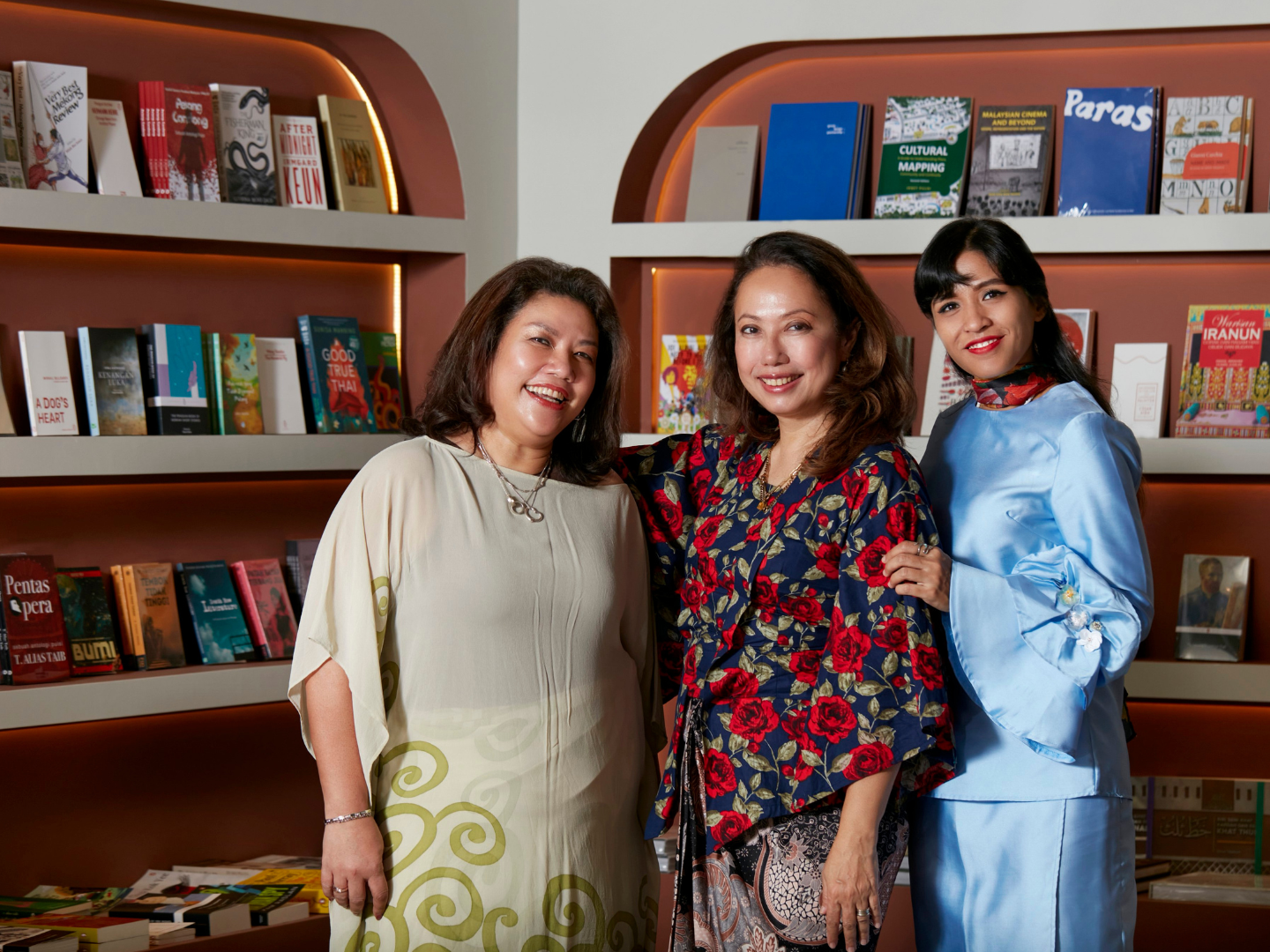
From left: Shera Fadzlin, Dina Zaman and Ashikin M (Photo: Soophye/The Edge)
The last 10 days of Ramadan are some of the most sacred nights in the Islamic calendar as Muslims around the world engage in intensified acts of worship in the hope of witnessing the Laylatul Qadr, known as the Night of Decree, where good deeds are rewarded immensely.
It is also a period when people start ticking off their Raya checklist in preparation for the major event that marks the end of the fasting month. Malls bustle with shoppers buying new clothes and home furnishings, while markets grow crowded with customers restocking groceries. Villages and suburbs become livelier as city dwellers make their way back to the kampung, eager to help their parents prepare the home for the occasion with freshly decorated living space and traditional Malay delicacies.
Three Malaysian authors — Shera Fadzlin, Dina Zaman and Ashikin M — spoke about their experiences celebrating Eid through the years in conjunction with a special talk held in collaboration with Eslite Spectrum Kuala Lumpur on March 15.
Shera, who wrote Gutsy Asian: Tales of Extraordinary Asian Women with her daughter last year, remembers living a “privileged childhood” as the daughter of a firstborn daughter from Negeri Sembilan, the only state known for practising the matrilineal custom of Adat Perpatih. “My mother was the eldest. We never stayed overnight at my grandma’s house in Kuala Pilah since it is not far from KL. So, around 10 o’clock on the morning of Raya, we would visit the residence, where our relatives had already arrived a few days back and prepared everything. All that was left for us to do was mingle and eat,” she laughs.
She strongly believes Eid is meant more for children than adults. “Raya is a lot more fun when you are young. After becoming a mother, even when I didn’t feel excited about celebrating, I still did my best to make it memorable for my kids.”
For writer and researcher Dina — whose recent work Malayland reflects on what it means to be a Malay in the 21st century — her early days in Kuala Terengganu were mostly quiet, except during the festive season, when loud celebrations would fill her grandparents’ house. “Besides the usual routine of waking up early and going to the mosque first thing in the morning, we would stop by the istana, as my late grandparents were courtiers. At that age, all I looked forward to was getting duit raya,” she reminisces.
As a teenager, Dina was roped in, along with other girls in the family, to do household chores a few days before or on the day itself. “Though we had helpers, we still had to do many things, while the men just sat around. My family was very patriarchal. The weight of the world was always on us, the girls. I hate bean sprouts to this day because I was always tasked with plucking their tails,” she says.
Her friendly grandparents would always welcome guests from the village to their home. “That was a bit hard for me since I’m not an outgoing person, except with close friends. But as I grew older, things became less intense. There was more of hopping from one house to another, visiting our relatives and friends. I really enjoyed that bit. The best part for me, though, was going to the sea. It’s where I found peace amid the chaos.”
Since the passing of her grandparents, whom Dina describes as “the epicentre of the Terengganu house”, travelling to the state for the festive season has become optional. “When my mum talks about celebrating Raya in the kampung, I keep telling her I can’t because I’m too heartbroken. Besides, she had hip surgery and my dad cannot do long walks anymore. And there is no one else left to visit in the kampung, as people have moved out to the city.”
Ipoh-born Ashikin, who has produced short stories, novels, poetry and lyrics, recalls fond memories with her relatives. “I have a very big family and my mum likes to cook. She wants to make everything herself, even the lemang and dodol. She would even make biscuits two weeks earlier. Whenever I went back for the holidays, I could already foresee the tiredness I would be feeling in the next few days.”
Shera chimes in, saying it was the norm for people of that era to make Raya staples such as ketupat and kuih from scratch. “In those days, there was no such thing as ordering or buying ready-made products.”
The fifth of eight siblings, Ashikin finds joy in mundane activities, especially when the load is shared evenly among family members. Coming from a household that ensures equal distribution of labour between boys and girls, she empathises with those whose ancestral practices put women in charge of the kitchen.
“Some lament on social media about losing interest in the celebration because they are tasked with washing dishes all day. One thing about my family is men and women are treated equally and everyone plays his or her part to get the job done,” she says, adding that her cooking skills were nurtured by her grandfather. “I always cooked with him. He was the one who taught me to peel pumpkin, pineapple and many more.”
When it comes to cleaning the house or going to the market early in the morning for groceries, everyone is assigned different tasks and responsibilities. “The ladies are prohibited from lifting heavy furniture to protect our backs. In the kitchen, I’m always the one on kupas bawang duty. It is teamwork; so, everyone shares the burden and happiness together,” she says.
“These are the stories I want the audience to hear, so people understand that Raya is about coming together. I hope my experience inspires other families to rethink customs that may place a burden on one party and start making the necessary changes, so everyone can truly share the joy of the occasion.”
Dina, who is active on Threads (a conversational platform developed by Instagram), notices a significant change in priorities among the younger generation in the way they prepare for Eid. While securing fresh produce was the most important part for our elders, Millennials and Gen Z are drawn to acquiring sophisticated traditional attire popular on social media, often at the expense of their time and savings.
“As we become richer and more educated, I think we also get more arrogant. While I understand we all want to look good, I wonder whether we are forgetting the spirit of Raya, which is rooted in community and friendship,” says Dina.
In response to this phenomenon, Ashikin says people need to be reminded of the true meaning of Hari Raya. “It’s not a time for making comparisons about who has better or more expensive outfits, but rather for spending time with those you care about and who are still around. At its core, Raya is a celebration of love.”
This article first appeared on March 16, 2026 in The Edge Malaysia.