
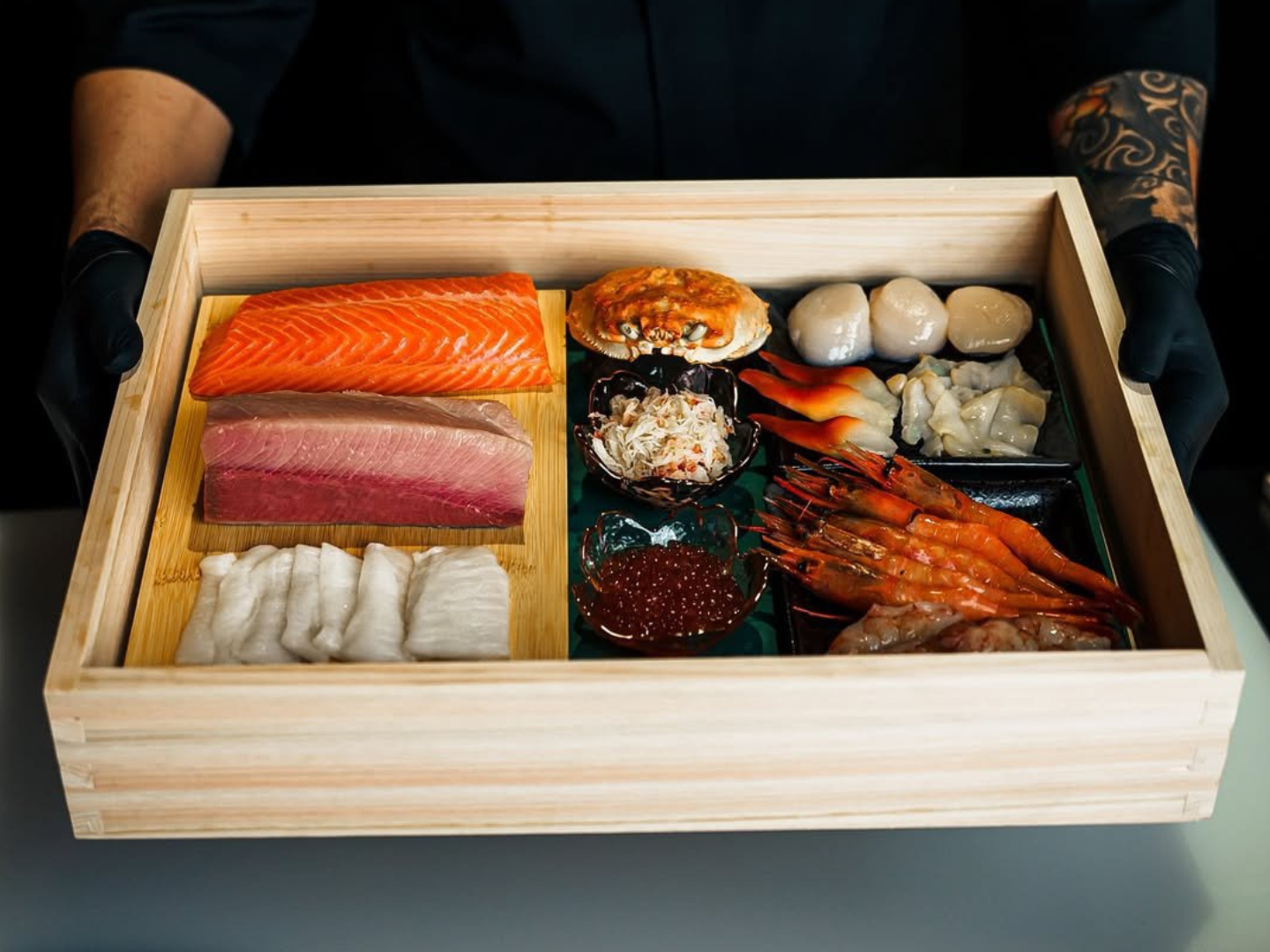
Don Omakase offers a vast selection of seafood to indulge in (Photo: Don Omakase)
Many things do not compare to settling in the cosy corner of a restaurant after a busy morning or a long day before digging into a meal packed with vibrant and tangy flavours. These Japanese restaurants — from using authentic ingredients to infusing Malaysian spices into their fare — offer such nourishment that is thoughtfully prepared and are ultimately worthy considerations for your next dining experience.
ramen_david.png
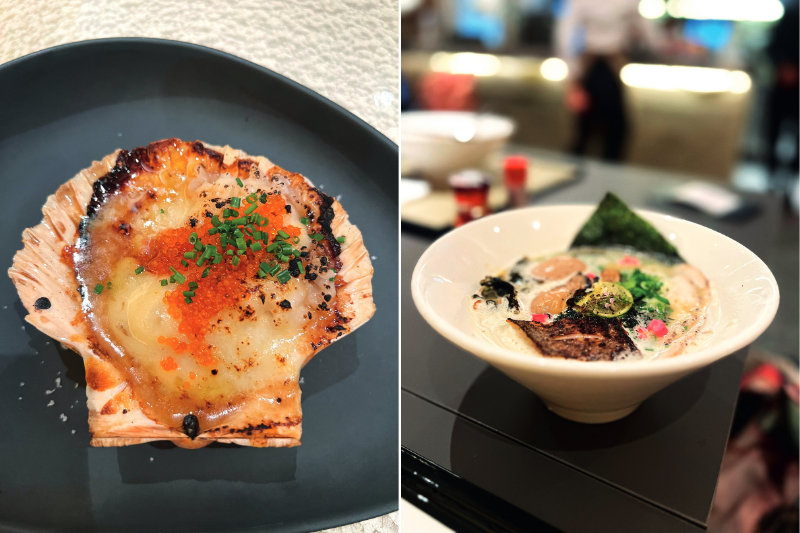
Founded by David Chin, one of the industry’s culinary captains and himself father to Darren of the one Michelin-starred DC Restaurant, Ramen David is the latest outpost in what seems to be his conquest of the Aminuddin Baki stretch. The veteran restaurateur had cut short his retirement plans to open Café-Bistrot David in 2020 and, above it, The Grill whose Mibrasa charcoal parilla and oven make magic out of legs of baby Spanish suckling lamb and thumping Black Angus porterhouse steaks.
Early patrons would remember seeing ramen on the bistro’s menu. It stuck out like a sore thumb, for sure, but those deviant enough to have ordered noodles in a bistro were well rewarded for their bravado. It was good then, but definitely even better now at Chin’s dedicated ramen bar just a door away. It is pork-free, but die-hard advocates of full-fat, full-flavoured tonkotsu would do well to remember that Tokyo has its own league of chicken- and fish-forward noodle legends, such as Fuunji, Menya Itto and Niboshi Tsukemen Miyamoto. And, honestly, in a tropical climate, a light yet complex broth works better sometimes.
The menu is minimal, offering Oyster Ramen (RM58), Tori Paitan (RM48), Gyokai Tori Cintan (RM48) and Tsukemen (RM58). All are wonderful and comforting, and the selection of sides makes it a full meal. The usual suspects — from chicken and prawn gyoza (RM18) to karaage (RM18) — are listed but there are also unusual offerings, namely the Arabiki cheese sausage (RM18), lamb bao (RM15) and A5 wagyu sushi (RM28), all of which we, alas, had no belly bandwidth to squeeze in.
To perfect his technique, Chin travelled to Osaka to learn the foundations of noodle-making from Rikisai Miyajima, a noted ramen sensei. And the results are palpable. No artificial flavourings or MSG are used at Ramen David and they are not even needed in the first place. The broths are lovingly simmered for up to 12 hours, drawing out all the goodness, depth and umami that serves as the foundation for every bowl. Japanese cooking wine is used but guests are welcome to ask for a mirin-free version as well. The noodles are also made fresh in-house daily.
If you are dining with finicky children, there is fail-safe fried rice with egg (RM10) or chicken chashu (RM13). Keep them happy with these guaranteed-to-please options so you can slurp away untroubled, and preferably in the company of a mug or two of Ramen David’s signature haiboru or sours, or a carafe of house saké.
139 Jalan Aminuddin Baki, TTDI, KL. Open Wed-Mon, 12-2.30pm and 6-10pm. Closed on Tues.
lumi_yakitori.png
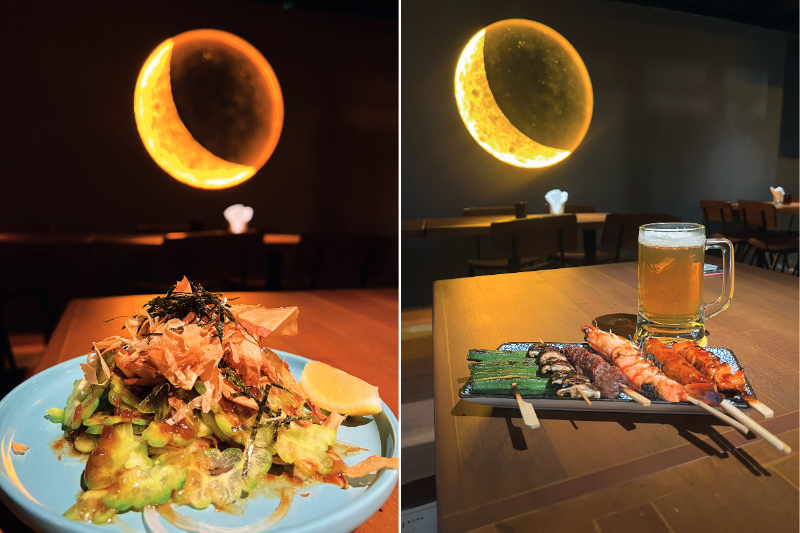
An Italian-accented yakitori joint in the heart of Taman Tun? Sounds good to us. After all, few among us can fault food cooked on sticks over a white-hot grill. And Lumi Yakitori (perched atop the neighbourhood 7-Eleven) is a good spot to head to should cravings strike earlier than expected. It is open from 3pm until late (superbly convenient for turning a late lunch into an early dinner and drinks). Owned by Sasaki Yaeko-sama, who hails from Daisen, in the flatlands of central Akita Prefecture, the enterprising lady is also the proprietress of several other kushiyaki spots around town, all called Yae, a truncation of her name.
Going fusion this time, Lumi Yakitori is inspired by the Italian word for “light” and also the charcoal-fed flames that are the backbone of any yakitori joint worth their shio. Chicken is, of course, the mainstay but you will also find duck, beef and seafood skewers here at Lumi. One of the most popular drinks would be the yuki or snow beer, chilled to frosty perfection. There are Kirin, Sapporo, Tiger, Carlsberg and even Guinness to choose from, although it was the former that popularised the trend of drinking frozen beer slushies way back in 2012 when the Japanese brewery opened special summer beer gardens to serve them.
Typical watering hole snacks and nibbles are available, and light Italian accents may be detected in the form of arancini rice balls (RM18 for three pieces), southern Italian crackers called taralli (RM16) or roasted garlic with olive oil, truffle and salt (RM18). There is edamame, of course, but if you like your flavours clean, avoid the spicy version which is simply too overbearing with miso paste. The Okinawan bittergourd salad (RM25) makes for a more virtuous beginning compared to the sinful but sublimely done grilled chicken wings. The white tuna skewer (RM8) is different but no less delicious and you won’t go wrong with classics like the chicken skin (RM5); negima, or chicken thigh (RM6); and bonjiri, aka “the bishop’s nose” (RM5). The yakimono squid (RM25) is also well worth ordering and pairs perfectly with icy beer.
There are fusion and yoshoku dishes to try, such as teriyaki onsen egg pizza (RM28) and wagyu hamburger steak (RM78) that are ideal for sharing. But having spied yakisoba (RM18) on the menu, it would be remiss not to order a plate. What makes this dish a rarity in most Japanese places is that it is deemed too humble, too simple, to warrant a menu listing. And yet, Japan’s version of mee goreng is not without an addictive charm. Cabbage adds customary crunch while onions, carrots and sprouts — all tossed in a Worcestershire tinged sauce — add texture, savouriness and sweetness. The perfect filler-upper should you wish to balance your proteins with carbohydrates.
Lumi Yakitori is pork-free but has a well-stocked bar. Beers are available by the bucket as well as by the bottle. If you prefer draught, there is only Suntory.
96A Jalan Burhanuddin Helmi, TTDI, KL. Open daily, 3pm-midnight.
don_omakase.png
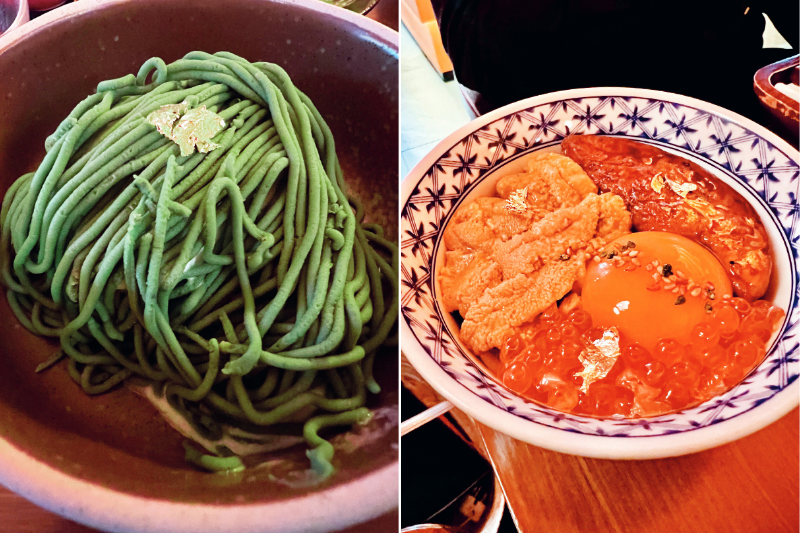
If you have a thing for donburi, that simple yet satisfying Japanese rice bowl dish topped with meat or seafood, chances are you would be making repeat visits to this simple and efficient Taman Tun Dr Ismail hotspot. With at least 40 different dons to choose from on the menu, what keeps the crowds happily returning is its egalitarian approach to eating like a king — but without a right royal bill chucked in your direction at meal’s end. Its 5 Star Don (RM108), for example, comes replete with uni (sea urchin), akami (a leaner cut of tuna but no less prized in Japanese cuisine), nama hotate (wild-caught Hokkaido scallops), aka ebi (red shrimp) and yuzu ikura (citrus-marinated salmon roe), all served atop fluffy, glossy white rice cooked with salt, kelp and handcrafted red vinegar. A tiny but much-appreciated smidge of Avruga caviar makes you feel as if you have splurged big-time but for a fraction of what a fancy omakase experience would cost.
First-timers (or the indecisive) tend to go for the 10 Ocean Don (RM65) as it has practically everything a seafood lover needs or wants, including but not limited to flounder fin, salmon, scallops and yellowtail. There are also other combos like surf ‘n’ turf, brought to life in the 4 Empires Don — sea urchin, wagyu sirloin, scallops and salmon roe (RM128); healthy-ish — chopped avocado and tuna (RM25); and cholesterol-raising — sea urchin, salmon roe and foie gras (RM288), with the premium ones even flecked with gold leaf.
An endless stream of patrons (there are rows of chairs placed outside to let people queue in comfort) is a good sign that produce is used up quickly, assuring freshness. A decent selection of side dishes is also offered, ranging from salads to fried shrimp or chicken and the perennial fave of gyoza, while the set options allow you to make a full meal out of it, adding miso soup, hot tea, salad and egg custard for just a modest top-up. If your dinner companion is a small eater or watching his/her diet for whatever reason, Don Omakase is thoughtful enough to offer mini dons for many of the options, giving you the chance to indulge but in a controlled manner.
Oh, and if you have been dreaming of that viral Matcha Mont Blanc you had at Chacha Kobo Futatsume near Senso-ji Temple in Asakusa, Tokyo, Don Omakase offers something similar but less complex. Choose from pureed chestnut, sweet potato or green tea squiggles served over a simple dollop of ice cream.
123 Jalan Aminuddin Baki, TTDI, KL. Open Tues-Sun, 11am-2pm and 5.30-10pm. Closed on Mon.
tobon_izakaya.png
The latest addition to Diane Ong and Jack Weldie’s little Paramount empire (the couple are the brains and palates behind healthy fusion café Awesome Canteen, creative space Awegallery and Sabahan-Japanese omakase restaurant Chipta 11a), Tobon Izakaya gives you another reason to head to Paramount Garden. Not that you need it. For several years now, the quiet 1960s-developed Petaling Jaya neighbourhood has been upping its cool ante consistently. But hipster cafés and thrift shops aside, true-blue chow hounds also make a beeline for its mom-and-pop stalls, cze char joints and authentic kopitiam culture.
Located along the same row as Chipta 11a, the new izakaya on the block gets its name from a derivative of “tobonon”, a Kadazan-Dusun word (a nod to Weldie’s heritage) that means “incubation” or “sprouting”. The kitchen is aptly headed by Louis Choo, who started with Chipta 11a as an intern in 2021 before coming onboard full-time after graduating from Sunway University in 2023, mirroring Tobon’s etymological representation of growth and the owner’s vision for it to be a place where people can blossom and turn their dreams into reality.
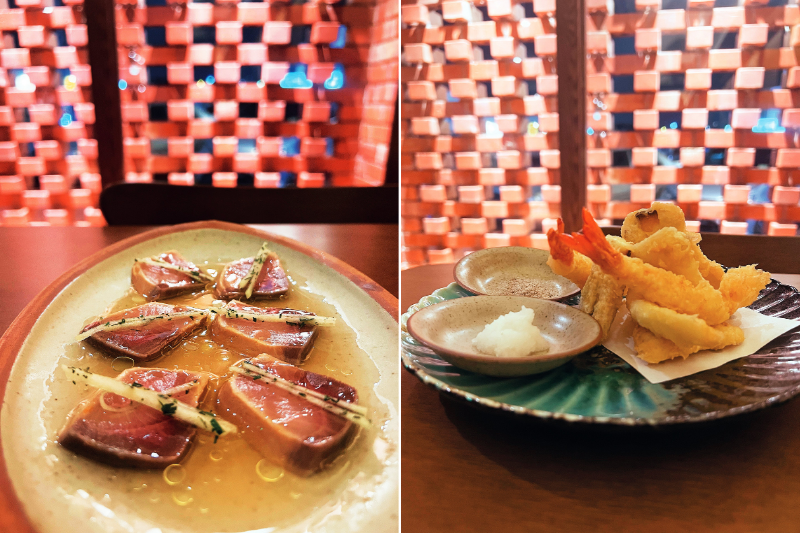
The approach to the restaurant is dramatic, yet whimsical. A red pierced brick wall serves as part of the façade and, upon entering, guests walk along a long passageway where a slim water feature, running along the entire length of the wall, is filled with goldfish — a traditional symbol of prosperity, abundance and the accumulation of good fortune in both Chinese and Japanese cultures. Start with a cold beer (a half pint of Suntory will set you back RM27 while a set of five costs RM130) as you decide what to order. The signature charred salad (RM18), featuring seared romaine tossed in scallion oil and kombu, makes for a health-conscious start, as does the cold tofu (RM8), topped with crispy seaweed and chilli oil.
Continue the light and easy phase by scarfing sashimi (prices range from RM18 for three pieces of salmon to RM45 for five pieces of hamachi) or Tobon’s wonderful crudos — pick from salmon ponzu (RM35) or hamachi calamansi (RM48). After you have had your fill of clean eating, ask for at least two portions of the assorted tempura (RM35), each a generous serving of deep-fried, battered prawn, kisu fish, eggplant, king oyster mushroom and lotus root.
The skewers are beautifully done and, if you are lucky, there are also off-menu specials which may include treats like sea urchin handrolls.
Those wanting to avoid carbs can easily do so with the grilled mackerel lightly dressed in a Malaysian version of chimichurri sauce, made using kesum, coriander, bunga kantan and lime (RM23), or the dry-aged squid (RM52) anointed with kaffir lime leaf oil. But unless it is the doctor’s orders, no one should leave without having the wagyu claypot rice (RM88), a glorious mélange of beef cooked with doubanjiang beef tallow butter. A fatty explosion of flavour!
Be sure to hail a ride here as Tobon’s drinks list is well worth perusing. The saké selection begs exploration, while there are the regular highballs, cocktails and even clarified cocktails. Those who like local tipples should try the Kallu.1996 (RM25), toddy or traditional palm wine, now modernised and served in a can. If you are still thirsty after Tobon’s shutters come down, stroll over to nearby award-winning Bar Terumi, owned by pioneering female bartender Shirmy Chan, one of the Klang Valley’s best.
5 Jalan 20/16, Taman Paramount, PJ. Open Wed-Sat, 12.30-2.30pm; Tues-Sun, 6-10pm. Closed on Mon.
This article first appeared on March 16, 2026 in The Edge Malaysia.